As the demand for computing power continues to rise, the challenges of thermal management are becoming increasingly severe—high-density computing generates a significant amount of heat, placing high demands on the operating environment.Efficient and sustainable monitoring solutions are becoming more important. They are not only the cornerstone of ensuring system safety but also a key enabler for achieving extreme energy efficiency and intelligent operation and maintenance.
I. Data Center Sensor Technology
-
Temperature Sensors: Temperature is the most direct and important parameter for measuring the performance of cooling systems. By accurately monitoring the temperature changes at various key nodes in the cooling liquid circulation path, the system’s heat dissipation efficiency can be evaluated in real-time, potential problems diagnosed, and energy consumption optimized.
- Pressure Sensors: Pressure is a key parameter reflecting the health status of the liquid cooling system’s piping and fluid dynamics. Continuous monitoring of system pressure can effectively prevent failures caused by leaks, blockages, or pump malfunctions.
- Flow Sensors: Flow directly determines how much cooling liquid passes through the heat-generating components in a unit of time, which is fundamental to ensuring heat dissipation effectiveness. Accurate flow monitoring and control are crucial for achieving efficient and balanced cooling.
- Leak Detection Sensors: For liquid cooling systems, especially those using water-based coolants, leaks are the biggest concern for operators. A small leak can lead to damage worth hundreds of thousands or even millions of dollars in IT equipment, critical business interruptions, and data loss. Therefore, deploying a highly sensitive and reliable leak detection system is a “mandatory requirement” for liquid cooling solutions, rather than an “optional configuration.”
- Auxiliary Sensors: In addition to the four core sensors mentioned above, a comprehensive liquid cooling solution will also integrate various auxiliary sensors to achieve comprehensive control over system health. These include liquid level sensors, coolant quality sensors (conductivity/resistivity sensors/pH sensors), humidity sensors, and vibration sensors.
II. Recommended Excellent Sensor Companies for Data Centers
1.Setra Systems
Setra Systems, a subsidiary of FDI Technologies, is a high-end sensor manufacturer based in the United States, established in 1967, known for its revolutionary high-precision capacitive technology. It provided precision sensors for the Apollo lunar program and is now part of Danaher Corporation. Its core products include pressure, differential pressure, acceleration sensors, and temperature and humidity transmitters, widely used in HVAC/R, industrial process control, and ultra-pure measurement fields.In data center solutions, Setra offers the FLEX environmental monitoring system for precise monitoring of key parameters such as micro differential pressure, temperature, humidity, and airflow speed within the server room, with a differential pressure sensor accuracy of up to 0.25%. The application advantage lies in effectively ensuring the reasonable distribution of airflow in data centers, preventing the mixing of hot and cold air, enhancing cooling efficiency, and ensuring the stability and reliability of the IT equipment operating environment, thereby helping to reduce the PUE value.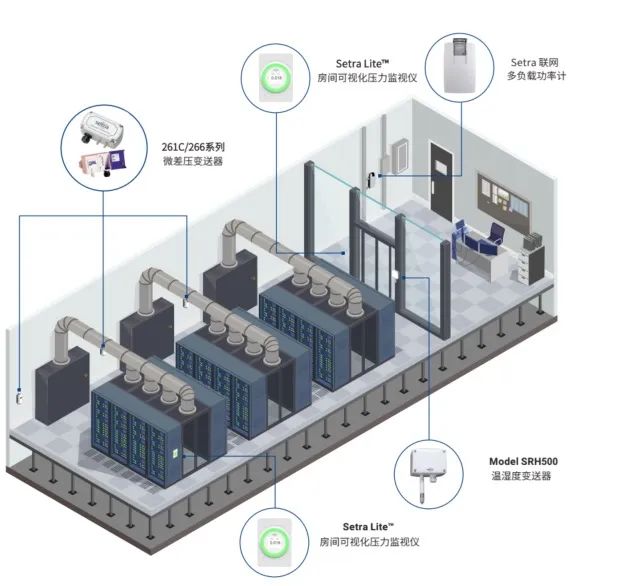 Setra Data Center Solutions2. Gems Sensors & ControlsGems Sensors & Controls, established in 1955, is a sensor brand based in the United States and is now part of Danaher Corporation. The company focuses on designing and manufacturing liquid level, flow, pressure sensors, and miniature solenoid valves.In the data center field, Gems provides a comprehensive sensor solution for liquid cooling systems, including the ULS-200 solid-state point level sensor and XT-800 series continuous level sensors for coolant level monitoring, the 3100/3500 series pressure sensors (made of 316L stainless steel and MEMS technology, resistant to chemical corrosion and high precision) for pressure monitoring, and the FT-110 flow sensor and B series solenoid valves for flow control. The application advantage lies in effectively preventing overheating and equipment failure by accurately monitoring the pressure, flow, and level of the cooling system; the products feature corrosion resistance, wide temperature range operation, and compact design, supporting data centers to achieve PUE value optimization as low as 1.08, enhancing system reliability and reducing energy consumption, providing one-stop fluid measurement and control assurance for liquid-cooled servers.3.ifm electronicifm electronic, established in 1969, is a German company and one of the leading manufacturers of electronic sensors in the global industrial automation field, with its China headquarters located in Shanghai.With a full range of robust and reliable sensors for flow, temperature, pressure, and IO-Link digital technology, it provides one-stop real-time monitoring solutions for temperature, flow, liquid level, temperature and humidity, and vibration in data center liquid cooling (cold plates, immersion, spraying), ensuring equipment status visibility, data reliability, and system stability, meeting the reliable needs of diverse data centers.
4.Huba Control AG
Huba Control, a Swiss professional sensor manufacturer established in 1945, is now part of Zhilv Capital. Its unique thick-film ceramic measurement chip technology allows its pressure sensors to have excellent long-term stability in low-pressure ranges, a technology recognized across various industries.Huba’s products include pressure sensor chips, pressure sensors, and flow sensors, which feature high precision (e.g., ±0.3%FS), excellent long-term stability, outstanding EMC performance, and wide temperature range operation (e.g., -40~150℃), and support IP67 protection level.In the data center field, Huba’s sensor solutions are mainly used for monitoring liquid cooling systems, effectively preventing leakage and overheating risks by real-time high-precision measurement of the pressure, flow, and level of the cooling medium, ensuring cooling efficiency; its ceramic chip technology is corrosion-resistant and shock-resistant, combined with a quick installation design, significantly enhancing the reliability and energy efficiency of data center thermal management, helping to reduce the PUE value.
5. Shenzhen Jianheng Measurement and Control
Shenzhen Jianheng Measurement and Control Co., Ltd. (referred to as “Jianheng Measurement and Control”) was established in 1993 and is a national high-tech enterprise focused on the research, production, and sales of ultrasonic flow meters and thermal (cold) energy meter series products. Jianheng Measurement and Control’s main products include ultrasonic flow meters, air conditioning energy meters, and central air conditioning billing systems, such as the DCT1288i portable flow meter and F5 series smart air conditioning meters, which feature high precision, high stability, and low power consumption.In data center solutions, Jianheng provides liquid cooling ultrasonic flow meters for managing and monitoring the flow of liquid cooling systems, constructing temperature control models by collecting flow and temperature data, achieving precise thermal management, reducing thermal blockage, and ensuring stable server operation. Its application advantages in data centers include high dynamic response, non-contact measurement (avoiding pressure loss and contamination), powerful data recording capabilities (such as SD card storage), and safe monitoring for toxic and corrosive media.
6. Danfoss Sensing Solutions
Danfoss Sensing Solutions is a business unit under the Danfoss Group, formerly Danfoss Industrial Automation, dedicated to providing high-precision sensor products and solutions for global industrial automation since 1933. Its core products include intelligent pressure sensors (such as the DST P300, MBS 4000 series), temperature sensors (such as the MBT 3252), and digital platforms supporting protocols like IO-Link and CANopen (such as the Edix™ communication tool), which feature programmable, remote diagnostics, and seamless data integration capabilities.
In the data center field, Danfoss provides high-precision temperature and pressure sensors for liquid cooling systems (e.g., MBT 3252 temperature sensors for monitoring coolant flow and pressure and MBS 4000 pressure sensors), effectively ensuring cooling efficiency and preventing overheating and leakage risks through real-time data collection and intelligent monitoring. Its products are characterized by high reliability (e.g., vibration resistance, corrosion-resistant design) and precise measurement (accuracy up to ±0.5%FS), helping data centers reduce PUE values and enhance system energy efficiency and operational stability.
7. Vaisala
Vaisala is a Finnish measurement technology company founded in 1936, focusing on providing high-precision measurement solutions for industrial and environmental applications, known for its outstanding accuracy and long-term stability. The company’s main products include various sensors and transmitters for monitoring temperature, humidity, dew point, carbon dioxide, pressure, and meteorological parameters (such as the Indigo series modular platform, TMI110 immersion temperature transmitters), widely used in multiple fields.
In the data center field, Vaisala provides comprehensive environmental monitoring solutions, including indoor and outdoor temperature and humidity, differential pressure sensors, and weather stations for real-time monitoring of the server room environment, optimizing cooling systems (such as preventing overheating and excessive cooling), and supporting high-precision temperature measurement for liquid cooling systems. Its application advantages lie in significantly improving cooling efficiency, reducing energy consumption (such as PUE values), extending equipment lifespan, and its modular design (such as daisy chain connections) supports quick replacement and calibration, reducing maintenance costs and downtime, helping data centers achieve sustainable and reliable operations.
8. Sanqiaohui (Foshan) New Materials Co., Ltd.
Sanqiaohui (Foshan) New Materials Co., Ltd. was established in 2019 and is a national high-tech enterprise located in Foshan, Guangdong Province, focusing on the manufacturing of sensitive components and sensors, research and development of electronic special materials, and manufacturing of industrial automatic control system devices. The company has strong R&D capabilities, and its core technological achievements (especially in magnetic sensitive materials and sensors) have been rated as “internationally leading” level.
In the data center field, Sanqiaohui can provide high-precision temperature and humidity sensors with I2C digital, analog, RS485, and Modbus outputs, covering a range of 0~100% RH, and has completed the first energy industry standard for temperature and humidity sensors in China.
9. CODACA
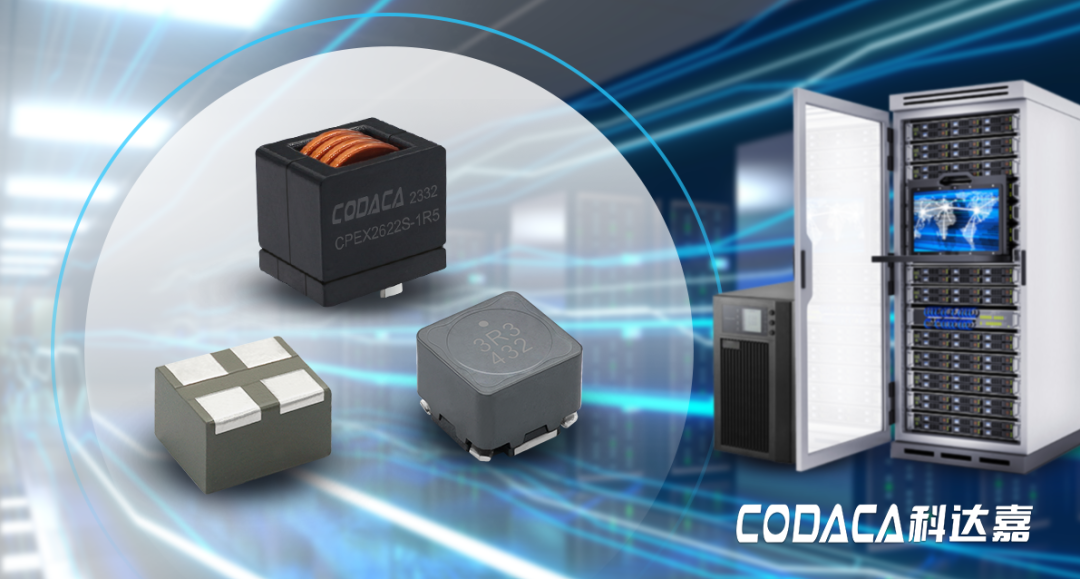
CODACA Electronics, as a national high-tech enterprise focused on the research and manufacturing of high-performance magnetic components, provides a series of high-performance inductive solutions to address the increasingly severe energy consumption challenges faced by data centers in the context of the AI computing power explosion (global data center energy consumption has exceeded 3% of global electricity consumption). Its products include high saturation large current inductors (such as CPEA/CSCF series, meeting the high working current, high frequency, low loss, and high power density requirements of data center power supplies), integrated inductors (such as CSAB/CSEB series, meeting the requirements for small size, large current, and electromagnetic interference resistance), and high-frequency large current inductors. These inductors feature high saturation current (up to 350A), low DC resistance, high-frequency low loss (supporting MHz switching frequency for GaN/SiC devices), high power density, and wide temperature operation (-40℃ to +165℃), and are AEC-Q200 certified.
They are widely used in data center server power supplies, UPS, HVDC systems, and distributed power supplies, significantly enhancing the energy efficiency, power density, and operational reliability of power systems by improving DC-DC conversion efficiency (up to 98%), optimizing transient response, suppressing electromagnetic interference, and reducing temperature rise, helping data centers achieve energy savings (such as reducing PUE values) and stable operations.
In addition, CODACA inductors are also widely used in data center switches, routers, storage systems, and monitoring systems, including large current inductors, integrated inductors, common mode/surface mount inductors, etc., which can be flexibly customized according to customer needs.
10. Shenzhen Xiangwei Measurement and ControlShenzhen Xiangwei Measurement and Control Technology Co., Ltd. (referred to as “Xiangwei Measurement and Control”) is a national high-tech enterprise established in 2009, focusing on liquid leak detection and environmental safety monitoring. Its independently developed leak detection cable with positioning function breaks the foreign technology monopoly. The company mainly provides point-type, non-positioning, and positioning water immersion sensors (response time ≤ 1 second), cabinet temperature and humidity sensors, and complete dynamic environment monitoring solutions, which are widely used in data center server rooms, micro-modules, and liquid-cooled server clusters for real-time monitoring of key parameters such as water leakage, temperature, and humidity. The application advantages in data centers include high-precision leak positioning (accuracy up to 1 meter), second-level rapid response, and seamless integration of dynamic environment systems with RS485/MODBUS protocols, effectively preventing equipment short circuits and downtime caused by liquid leaks or environmental anomalies, ensuring the stable operation and physical safety of data center infrastructure.11.GMC Instruments
GMC Instruments, a globally renowned manufacturer of testing and measurement instruments founded in 1906, owns several historic brands such as Gossen Metrawatt and Camille Bauer, with R&D and production bases in Germany, Switzerland, and other locations. Its Chinese subsidiary, GMC Instruments (Tianjin) Technology Co., Ltd., was established in 2009, focusing on providing high-precision electrical measurement products and system solutions for energy production, transmission, and application fields. The company’s main products include power analyzers (such as the LMG600 series), power quality analyzers (such as LINAX PQ5000 CL®), electrical safety testers, and various sensors. In the data center field, it can provide PCT series high-precision current sensors, supporting measurements of thousands of amps, suitable for energy efficiency assessment of high-power power supplies and large-capacity UPS batteries.
12.Shiheng ElectronicsShiheng Electronics (Nanjing Shiheng Electronics Technology Co., Ltd.) was established in 2002 and is a national high-tech enterprise focused on the research, production, and sales of sensitive components. The company provides critical NTC thermistor solutions for data centers, mainly including temperature measuring NTC thermistors (such as the MF52B series, with high precision ±1%, high stability, and a working temperature range of -55℃~+125℃, suitable for monitoring the temperature of server environments and equipment) and NTC surge current limiters (such as the MF73 series, with a maximum steady-state current of 80A, capable of effectively suppressing instantaneous surge currents up to 1000A, protecting data center power systems and UPS from overcurrent shocks). Its application advantages lie in enhancing thermal management efficiency through high-precision temperature sensing to ensure stable server operation and enhancing the reliability and safety of power infrastructure through strong surge suppression capabilities. All products are certified by CQC, UL, etc., supporting data centers in achieving efficient energy savings and stable operations. III. Application Guide for Liquid Cooling System Sensor Technology
|
Sensor Category |
Technical Example |
Main Functions |
Best Deployment Location |
Key Parameters Monitored |
Contribution to System Goals |
|
Temperature |
NTC thermistor, RTD (PT100) |
Performance evaluation, efficiency calculation, condensation prevention |
CDU inlet/outlet, server inlet/outlet, pipe surface |
Coolant temperature (T), temperature difference (ΔT) |
Efficiency, Reliability |
|
Pressure |
Pressure transducer |
Pump health monitoring, pipeline integrity diagnosis |
Water pump inlet/outlet, system main pipeline |
Pressure (P), pressure difference (ΔP) |
Reliability, Safety |
|
Flow |
Ultrasonic, vortex |
Ensure heat dissipation effectiveness, dynamic energy-saving control |
CDU main outlet, cabinet/server branch |
Volume/mass flow (V˙/m˙) |
Efficiency, Reliability |
|
Leak Detection |
Positioning sensor cable, point probe |
Liquid leak detection and positioning |
Bottom of the cabinet, pipe joints, drip trays, under raised floors |
Presence of liquid, leak location |
Safety, Reliability |
|
Liquid Level |
Capacitive, float |
Prevent pump dry running, monitor coolant inventory |
CDU storage tank/expansion tank |
Liquid height (h) |
Reliability, Safety |
|
Humidity |
Capacitive/resistive |
Dew point calculation, condensation risk warning |
Server room environment, cabinet air intake |
Relative humidity (RH) |
Safety, Reliability |
|
Vibration |
Accelerometer |
Predictive maintenance of rotating equipment |
Water pumps, motors, fan housings |
Vibration frequency and amplitude |
Reliability(predictive maintenance) |
|
Coolant Quality |
Conductivity sensor, pH meter |
Monitor liquid purity and corrosiveness |
In the CDU storage tank or circulation pipeline |
Conductivity, pH value |
Reliability(corrosion prevention) |
Data center liquid cooling technology is rapidly evolving, driven not only by the continuous demand for AI computing power but also by advancements in sensor technology, artificial intelligence algorithms, and system integration capabilities.
IV. Evolution of Sensors: Miniaturization, Integration, and Wireless Technology
The progress of sensing technology itself is providing new possibilities for the refined management of liquid cooling systems.
Miniaturization: As server internal spaces become increasingly crowded, sensors must also become smaller to be embedded closer to heat sources or critical fluid nodes without interfering with normal air or liquid flow. For example, miniaturized temperature and pressure sensors can be directly integrated into the inlet and outlet of CPU cold plates or motherboards, providing more precise local data.
Sensor Fusion: Integrating multiple sensing functions into a single chip or device is a clear trend. For example, a single sensor can measure both pressure and temperature, or flow and temperature simultaneously. This not only reduces the number of required sensors and wiring, lowering system costs and complexity, but also ensures better synchronization of different parameters measured at the same physical point.
Wireless Adoption: The application of wireless IoT sensors is simplifying the deployment of liquid cooling systems, especially when retrofitting existing data centers. Using wireless leak detection, temperature, humidity, or pressure sensors eliminates the need for complex and expensive signal cable wiring, allowing sensors to be flexibly placed in any location that requires monitoring. Advances in battery technology (with battery life up to 12 years) and the maturity of low-power wireless communication protocols have made the reliability and maintenance costs of wireless solutions acceptable.
Conclusion
As global data demand continues to rise, efficient and sustainable monitoring solutions are becoming increasingly important. They are not only the cornerstone of ensuring system safety but also a key enabler for achieving extreme energy efficiency and intelligent operation and maintenance.