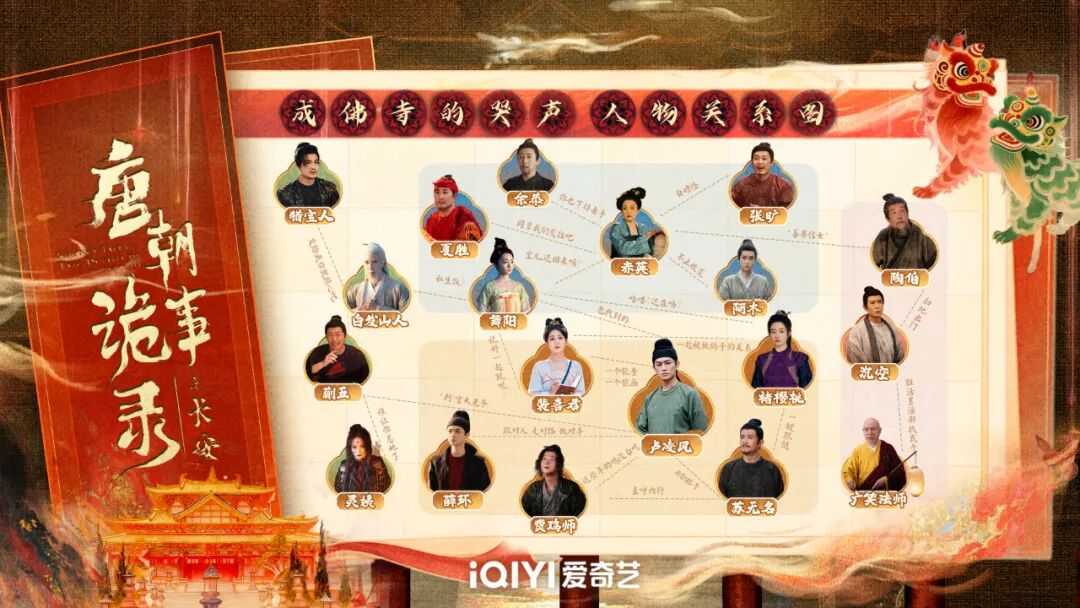
When it comes to the hottest drama currently, it must be ‘The Tang Dynasty Mysteries: Chang’an’.
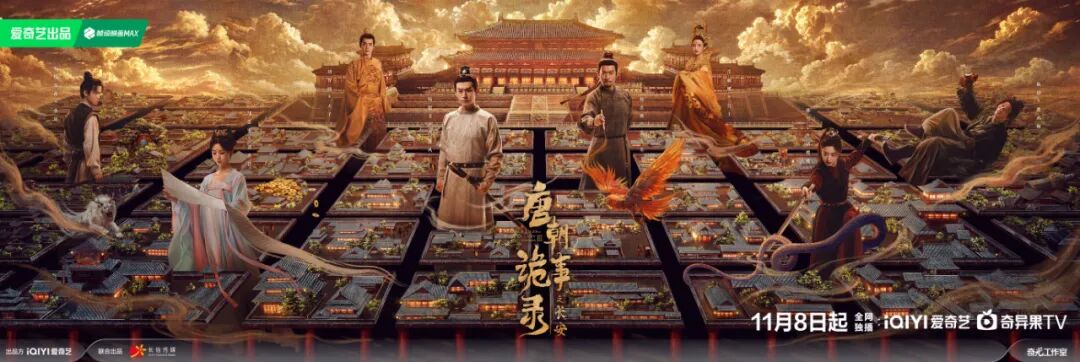
It is not only a historical, suspense, action, and light comedy, but also a feast of Tang Dynasty cultural relics.
The production team strictly follows historical prototypes, integrating multiple national treasure-level cultural relics into the plot, with many props directly modeled after museum collections in a 1:1 replica.
Dear viewers, please follow me as we trace the storyline and sort out the cultural relics that appear in the drama:

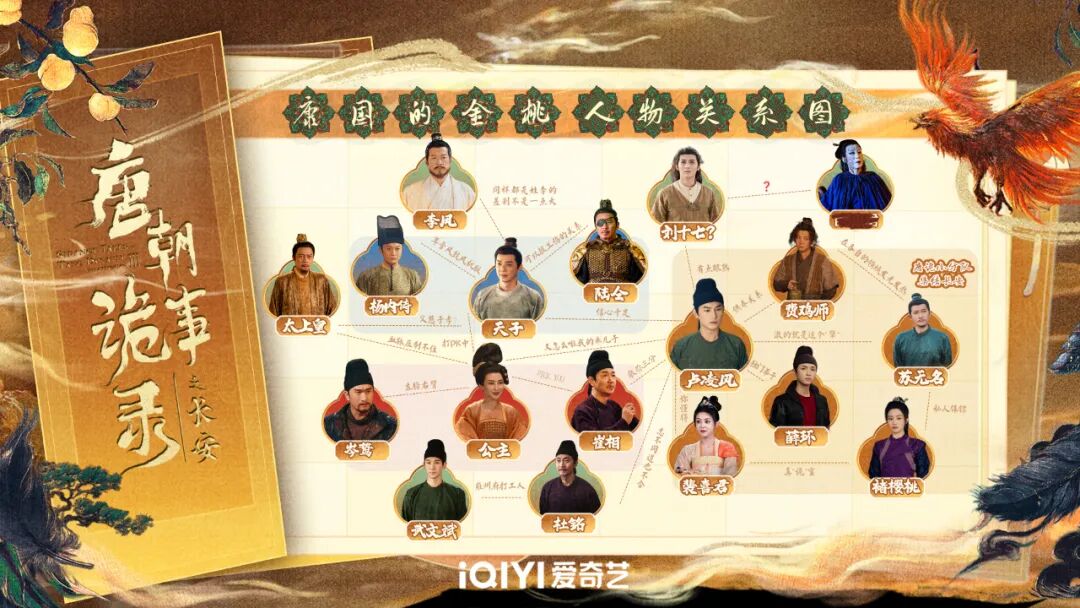 1 | Golden Peach
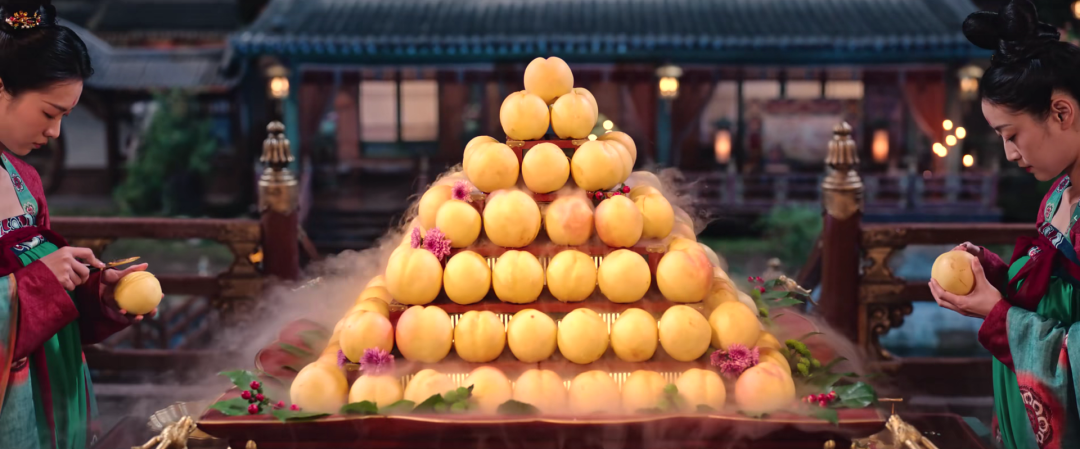
The golden peach presented by the Kingdom of Kang to the Tang Dynasty is the core of the first case, and its prototype is not simple.
The Kingdom of Kang was an ancient country in Central Asia, located near present-day Samarkand, Uzbekistan, and was the leader of the “Nine Kingdoms of Zhao Wu” during the Sui and Tang dynasties. The ‘Book of Wei: Western Regions’ records:
The Kingdom of Kang is named after the descendants of Kangju.
Its migration is irregular, not fixed in one place, and has been passed down since the Han Dynasty.
The Kingdom of Kang was an important economic, cultural, and transportation center on the middle section of the Silk Road.
The people of Kang were good at business, and this golden peach has been presented as a tribute since the time of Emperor Taizong of Tang, sent to Chang’an by envoys.
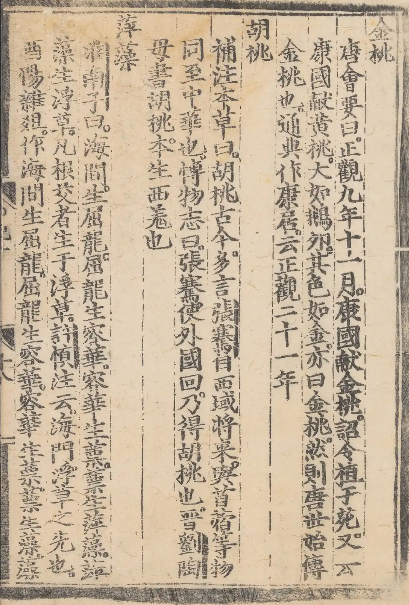
The golden peach, as recorded in the Tang Hui Yao: In the ninth month of the ninth year of Zhenguan, the Kingdom of Kang presented golden peaches, and an edict was issued to plant them in the garden.
It is also said: The Kingdom of Kang presented yellow peaches, as large as goose eggs, with a color like gold, also called golden peaches.
Thus, the golden peach was first transmitted in the Tang era.
——Compiled by Gao Cheng of the Northern Song Dynasty in ‘Chronicles of Things’
2 | Map of the Western Regions
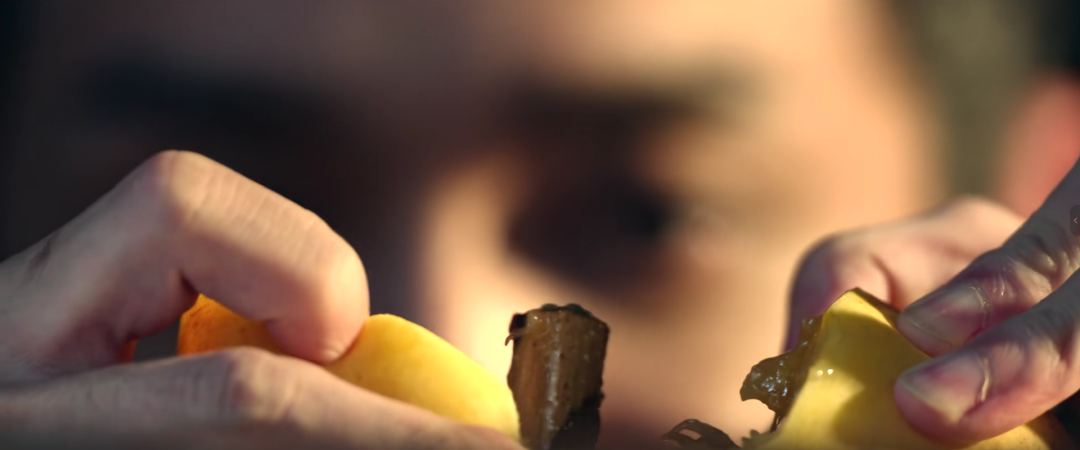
The ‘Map of the Western Regions’ hidden within the golden peach is a key clue to the relationship between the various countries in the Western Regions and the Tang Dynasty.
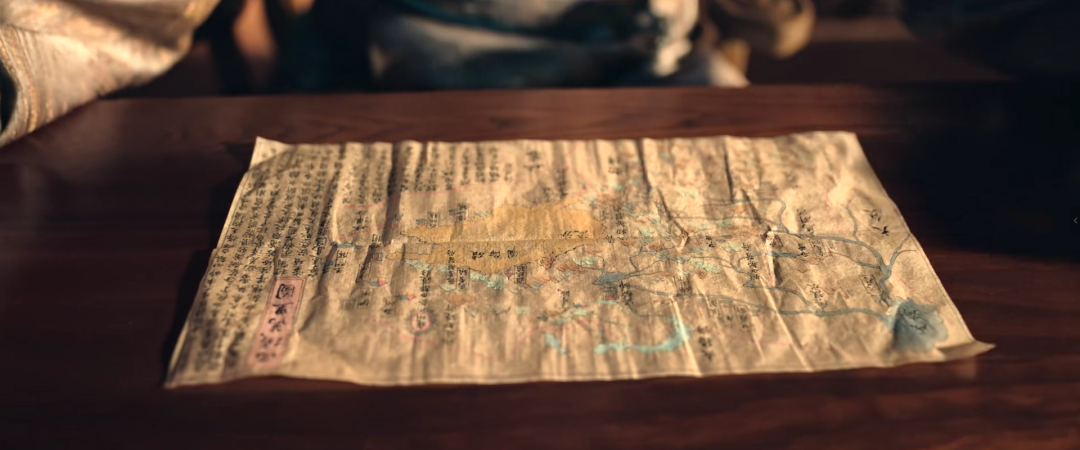
We can find a version of the ‘Complete Map of the Western Regions’ drawn in the sixth year of the Daoguang era (1826), currently housed in the Leiden University Library in the Netherlands.
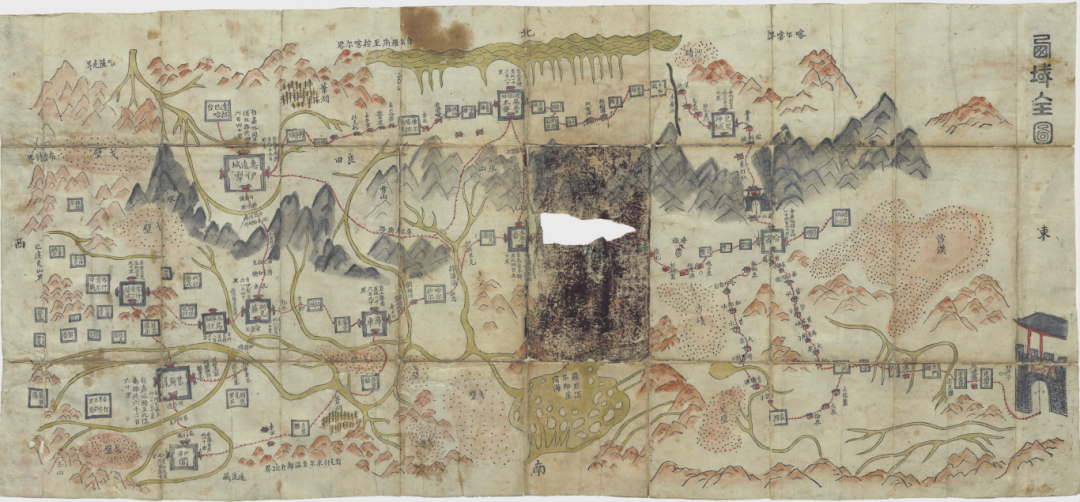
The ‘Complete Map of the Western Regions’ is oriented with north at the top and south at the bottom, covering areas from Jiayuguan in the east to Kazakhstan, Brute, and Badakshan in the west, reaching Russia in the north and the entire Qing Dynasty’s Western Regions to the southern foot of the Kunlun Mountains.
3 | Golden Bowl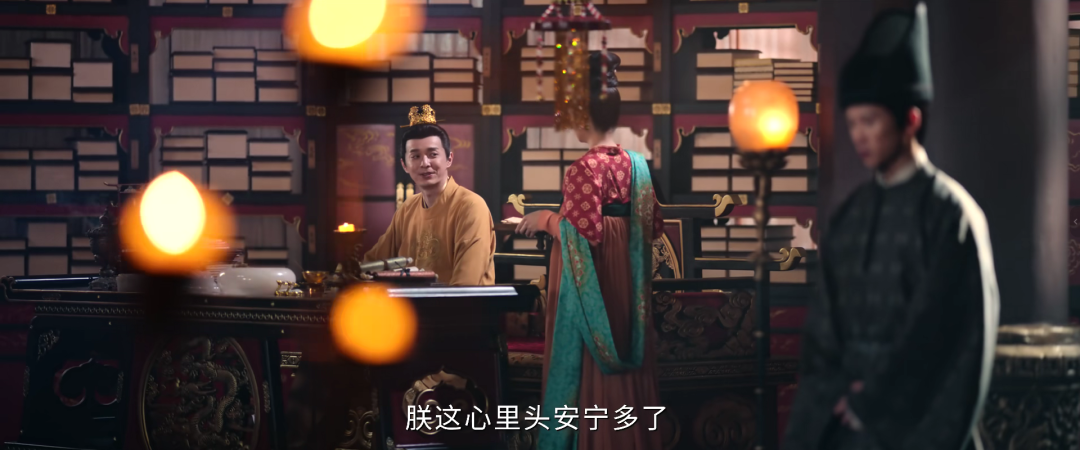
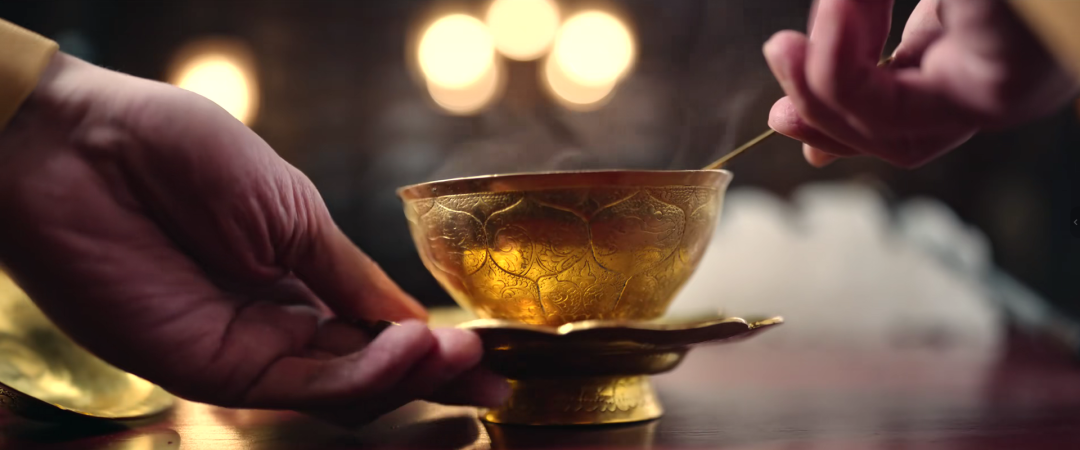
The golden bowl used by the emperor to eat red arrow powder is indeed a golden rice bowl, and its prototype:
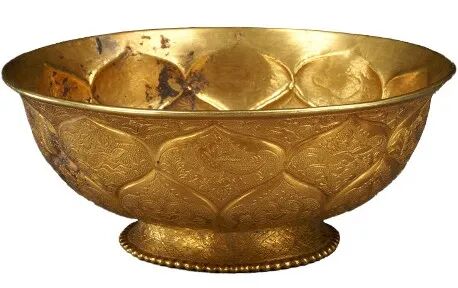
Two Tang Dynasty gold bowls with mandarin duck lotus petal patterns
Collection of the Shaanxi History Museum
Relic Level: First-class relic
Excavation Information: Excavated in 1970 from a cellar in Hejiacun, southern suburbs of Xi’an
One is 5.5 cm high, with a mouth diameter of 13.7 cm, a foot diameter of 6.8 cm, and weighs 392 g.
The other is 5.6 cm high, with a mouth diameter of 13.5 cm, a foot diameter of 6.8 cm, and weighs 391 g.
Here, I must insert a golden plate of the same style from the Guanfang Museum:
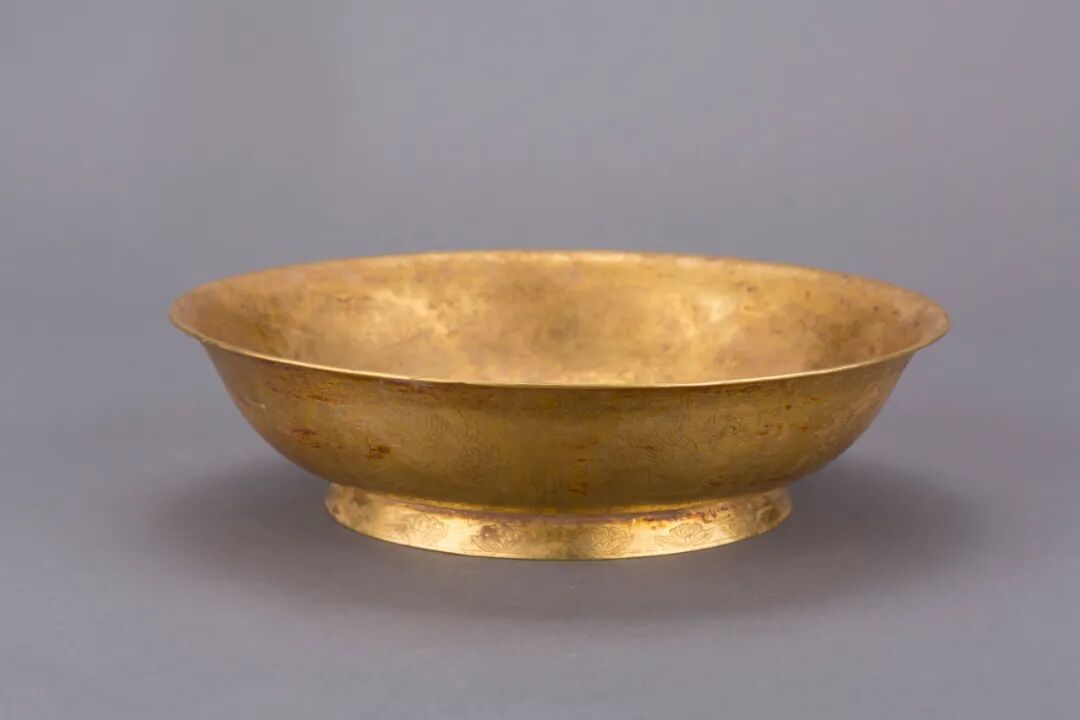
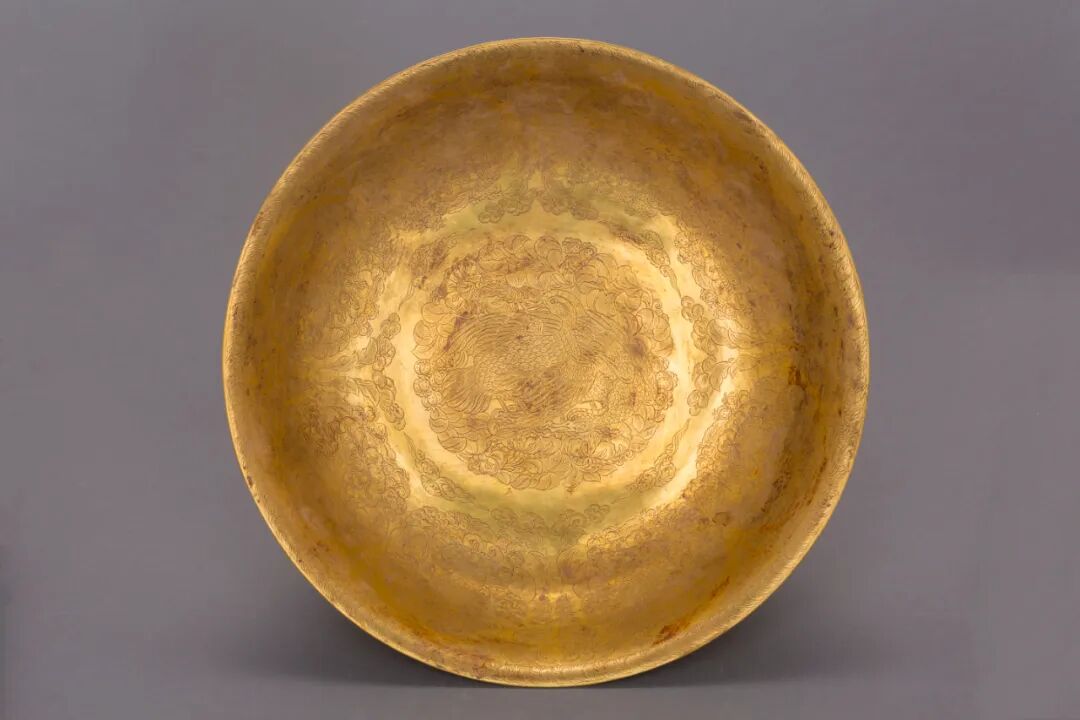
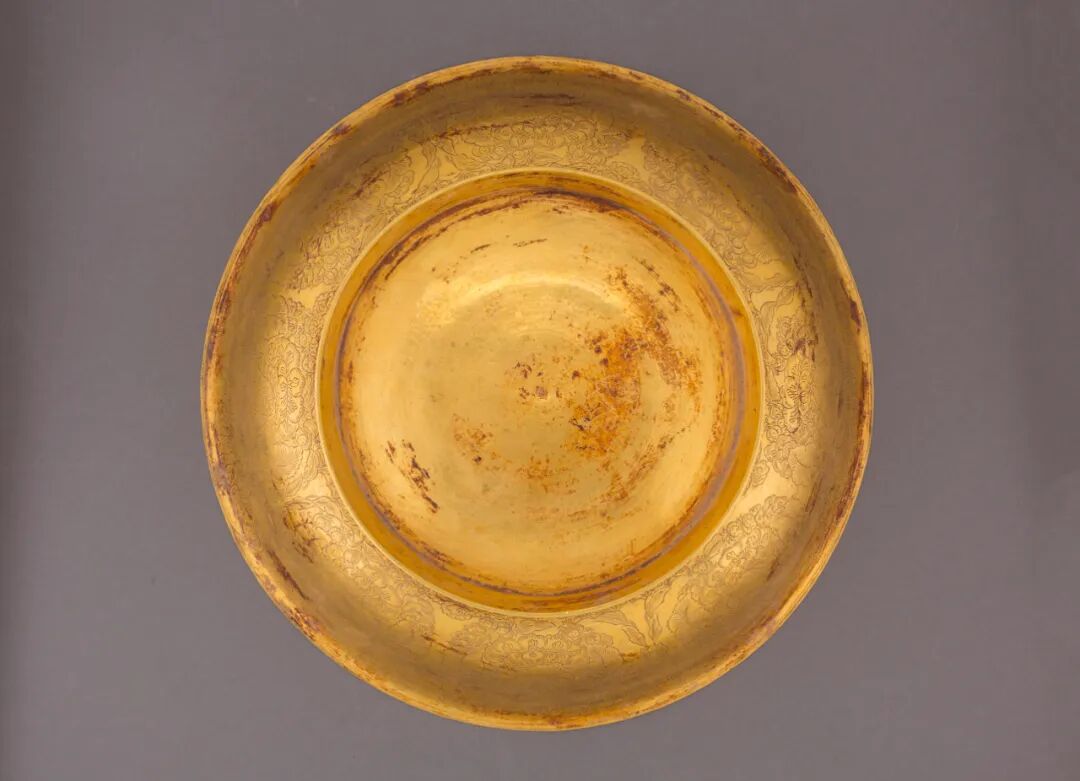
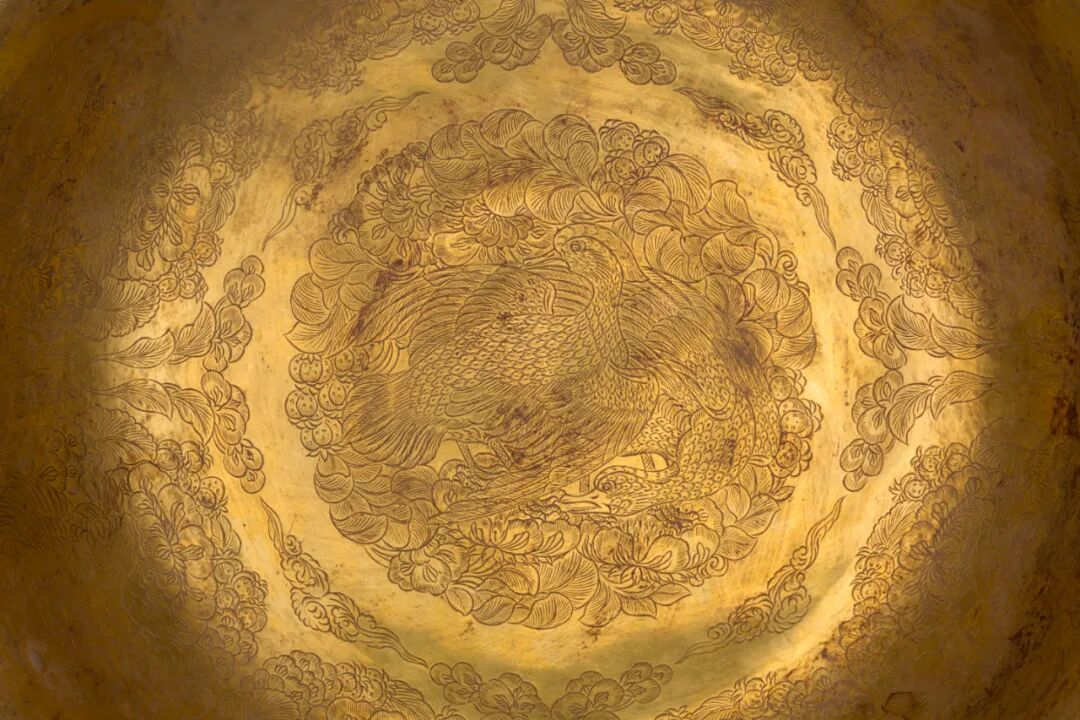
The Tang Dynasty gold plate with mandarin duck floral patterns
Collection of the Guanfang Museum
This gold plate is made of thick material, hammered from thin gold sheets, with a separately welded base.
Both the inside and outside of the plate are intricately engraved with patterns, with a pair of mandarin ducks engraved in the center, standing on blooming flowers, one looking back with wings spread, and the other bowing its head, creating a protective posture, making it charming and endearing.
The inner and outer edges of the plate are engraved with the same floral patterns, forming an opening, with mandarin ducks poised to fly, facing each other.
The base is also engraved with flowers, echoing the plate body.
Mandarin ducks, larger than ordinary ducks, are often purple with colorful feathers, commonly known as purple mandarin ducks.
Purple mandarin ducks are often seen in pairs, symbolizing love, and are frequently described by poets of the Tang and Song dynasties.

 1 | Mural of the Chengfo Temple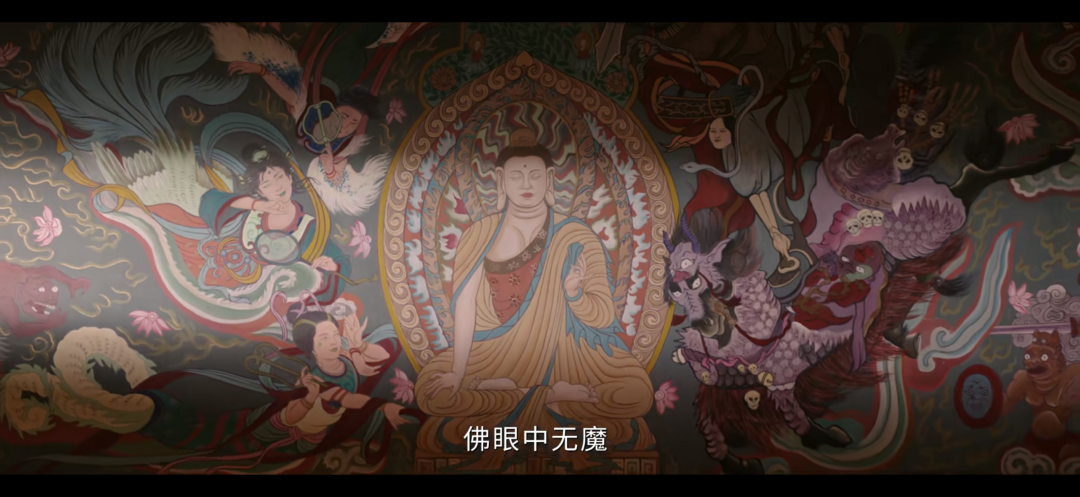
Prototype of the relic:
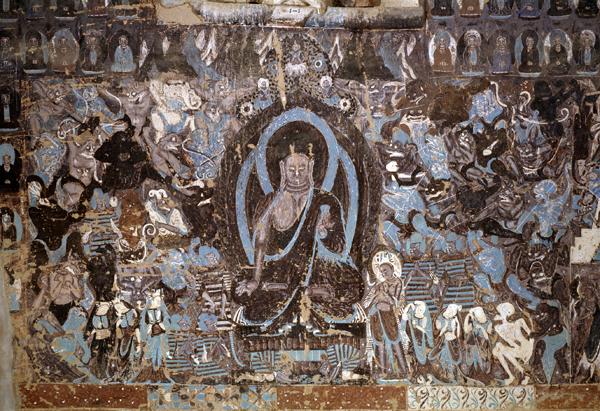
North Wei ‘Subduing Demons’
South wall of Cave 254, Dunhuang Mogao Caves
Story:
As Shakyamuni was about to attain Buddhahood, the demon king Poshun led demonesses and demon armies to disturb Shakyamuni’s meditation, first tempting him with beautiful women, then threatening him with force, trying to destroy his determination to become a Buddha.
Shakyamuni used the ‘Demon Subduing Seal’ to ultimately defeat Poshun and the demon army.
2 | Reclining Buddha of Chengfo Temple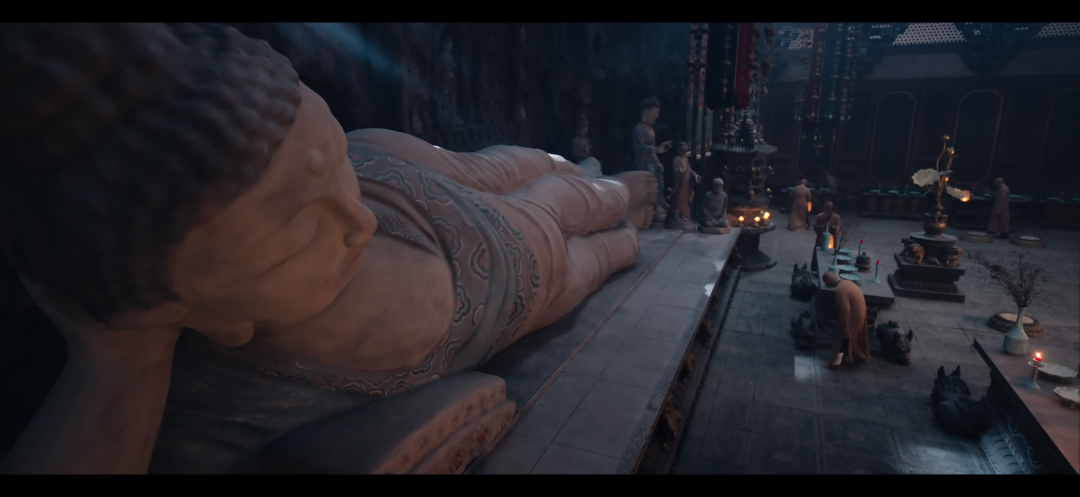
Prototype relic:
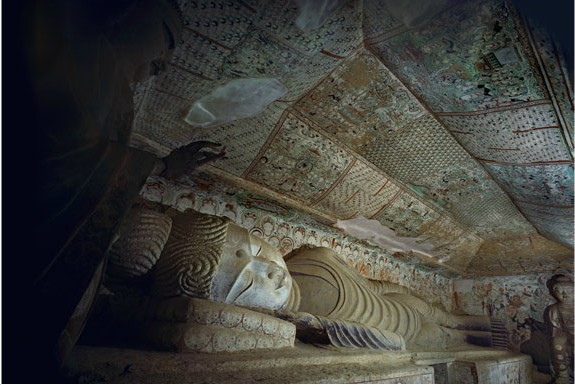
Tang Dynasty Nirvana Cave Reclining Buddha
Located in Cave 158 of the Dunhuang Mogao Caves
This Nirvana statue is made of stone and clay, measuring 15.6 meters in length, with the Buddha’s eyes half-closed and a smile on his lips, showing no pain or sorrow of a mortal lying down, but rather a sense of comfort and satisfaction, as if peacefully asleep, deeply expressing the state of ‘Nirvana is bliss.’
3 | Golden Tablet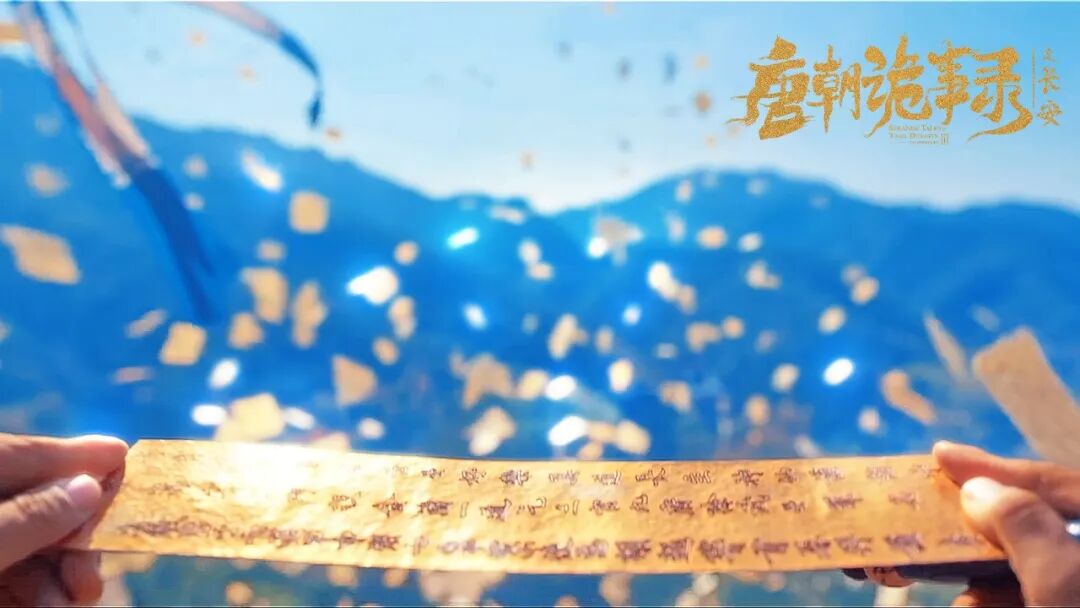
Is there anyone like me who watches this drama as a“side dish for electronic food,” but when I saw the“Empress Wu’s Golden Tablet” appear, I almost spat out my food!
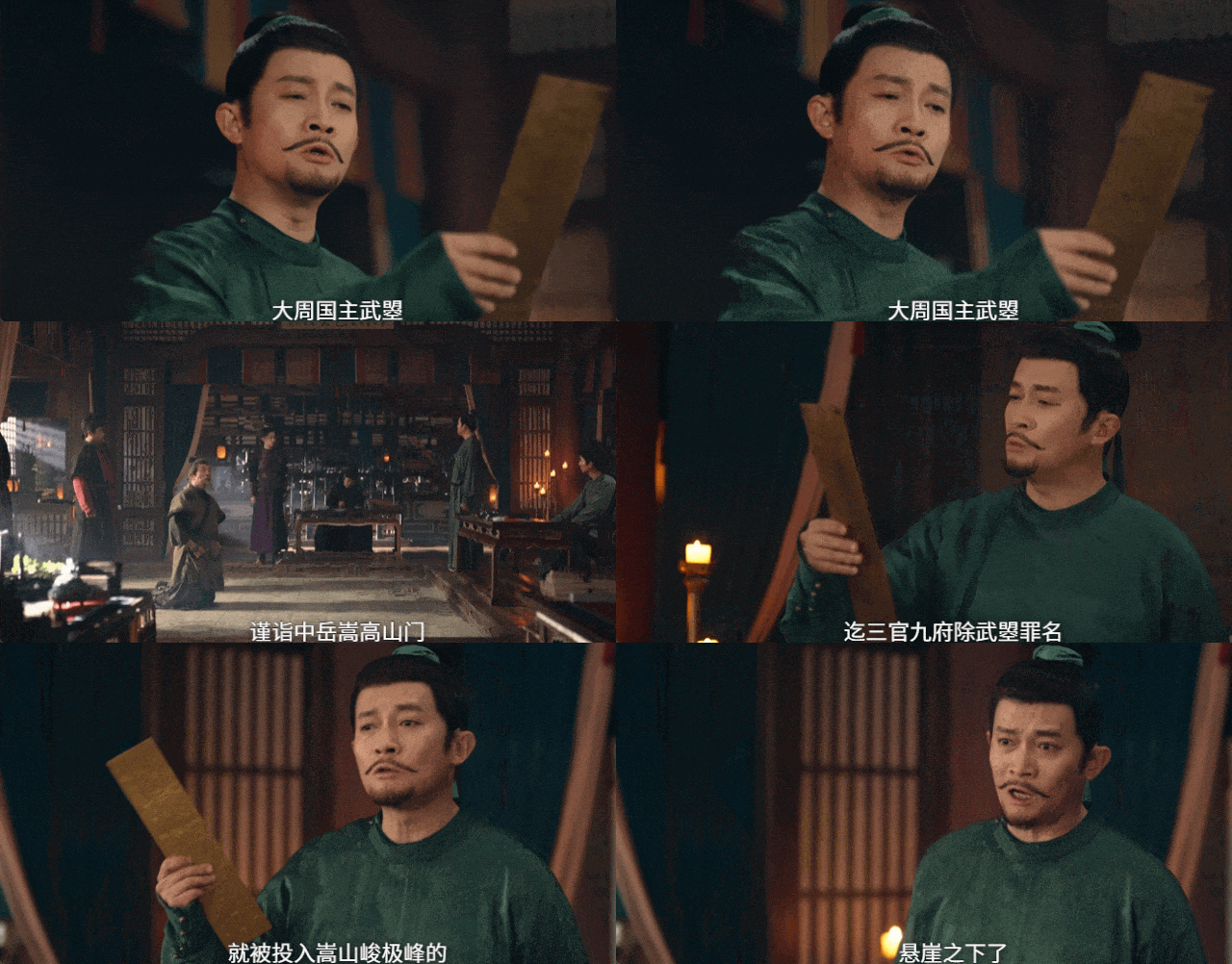
Not for anything else, but because this item truly exists, undoubtedly belongs to Wu Zetian, and is undoubtedly a national treasure that can shake the heavens!
Indeed, it is the last relic to appear in this article, coming from the Henan Museum’s treasure:
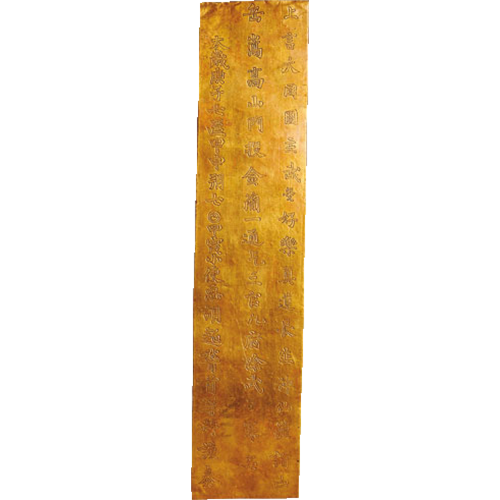
Tang Dynasty Golden Tablet of Wu Zetian
Collection of the Henan Museum
Excavation Information: Found in 1982 in a stone crevice on the north side of the peak of Songshan, Dengfeng, Henan Province
Specifications: Length 36.2 cm, width 8 cm, thickness about 0.1 cm, weight 223.5 g, gold content over 96%
Engraved with double-hook inscriptions (3 lines, 63 characters):
The ruler of the Great Zhou, Wu Zhao, loves music and the true way of longevity and immortality
Respectfully presented at the gate of Mount Song, Zhongyue
Throwing a golden tablet
To absolve Wu Zhao’s crimes from the Three Officials and Nine Departments
On the seventh day of the first month of the year of the Metal Rat, the small envoy Hu Chao bows and respectfully reports
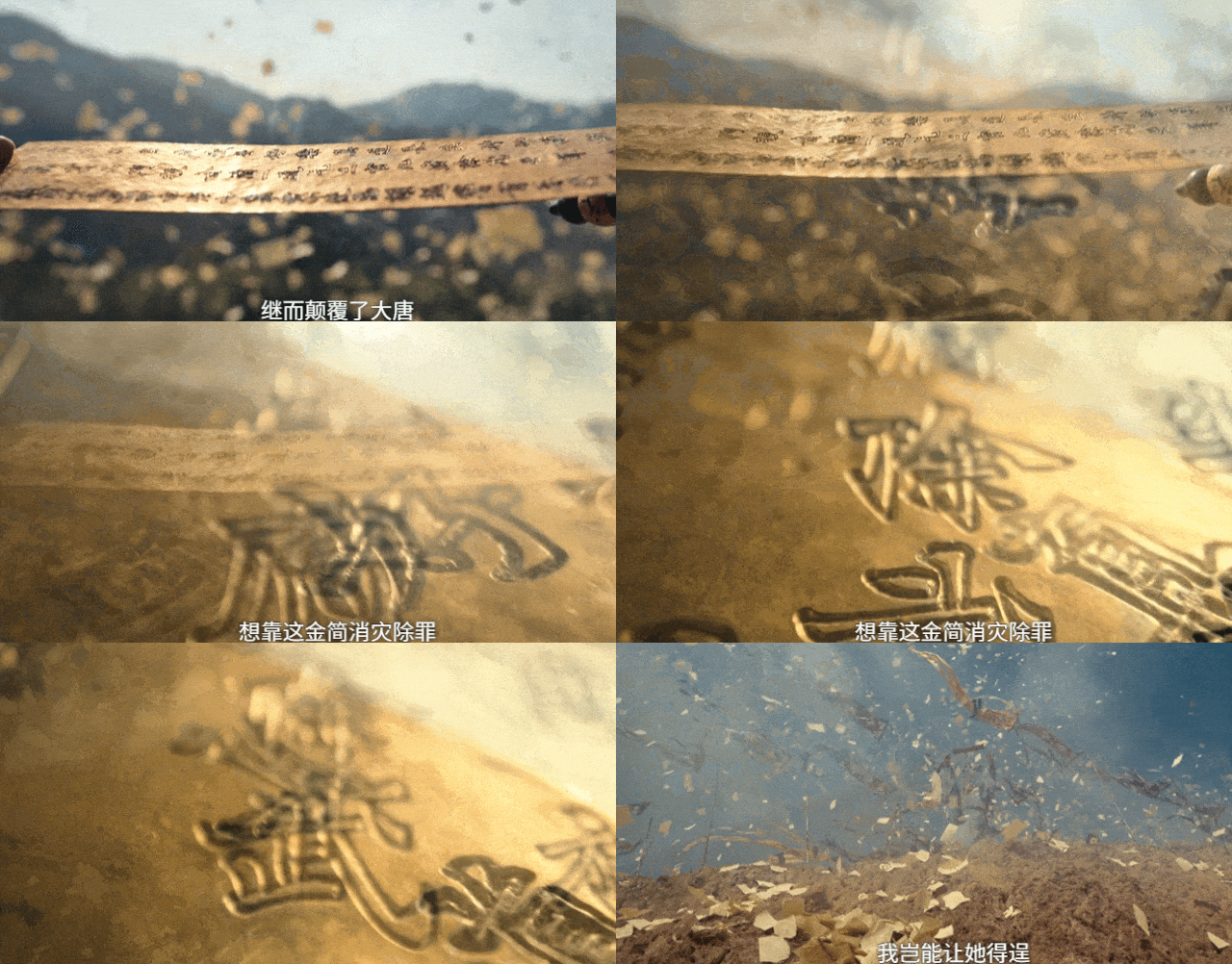
The ancient emperors throwing golden tablets down the mountain is known as ‘throwing dragons’, ‘throwing tablets’, or ‘throwing dragon tablets’.
These tablets are often made of luxurious materials, either gold or jade, but once thrown down, it is uncertain where they will end up, as they could land in cliffs or deep abysses.
Dear viewers, don’t rush to the mountains or rivers after reading this, as life is precious. It’s better to see these rare items in museums, as they are mine to behold.
If you enjoy this drama and like to see me introduce cultural relics, feel free to comment in the comment section. If there is a high demand, I will slowly continue to present the national treasures………