
Let the “AI assistant” evolve into an “AI partner”.

In 2025, AI hardware will usher in its true inaugural year.
After the technological upgrades of GPT-4o and Gemini 1.5 in 2024, multimodal large models have the potential to transition from theoretical research to practical application. AI is no longer limited to text generation or voice Q&A it can now understand images, perceive environments, and respond proactively. AI hardware is finally not just a “toy” for geeks but can truly enter the lives of most people. Consequently, this year, AI hardware has almost exploded onto the stage.
From voice recorders, cameras, and speakers to glasses, rings, and necklaces, each item is being redefined: some pursue the efficiency of instant recording, others explore more human-like and immersive interactions, and some value the connection between emotions and semantics. Regardless of form, these are all attempts to bring AI closer to humanity.
The larger question behind this is: in what form should AI integrate into the physical world?
At this pivotal moment, on November 13, Baidu launched its new multimodal AI smart assistant—Super AI—at the World Conference’s smart hardware sub-forum. Unlike most AI hardware startups that focus on a single scenario, Baidu chose to comprehensively reshape its entire product line, upgrading all its products across the board.
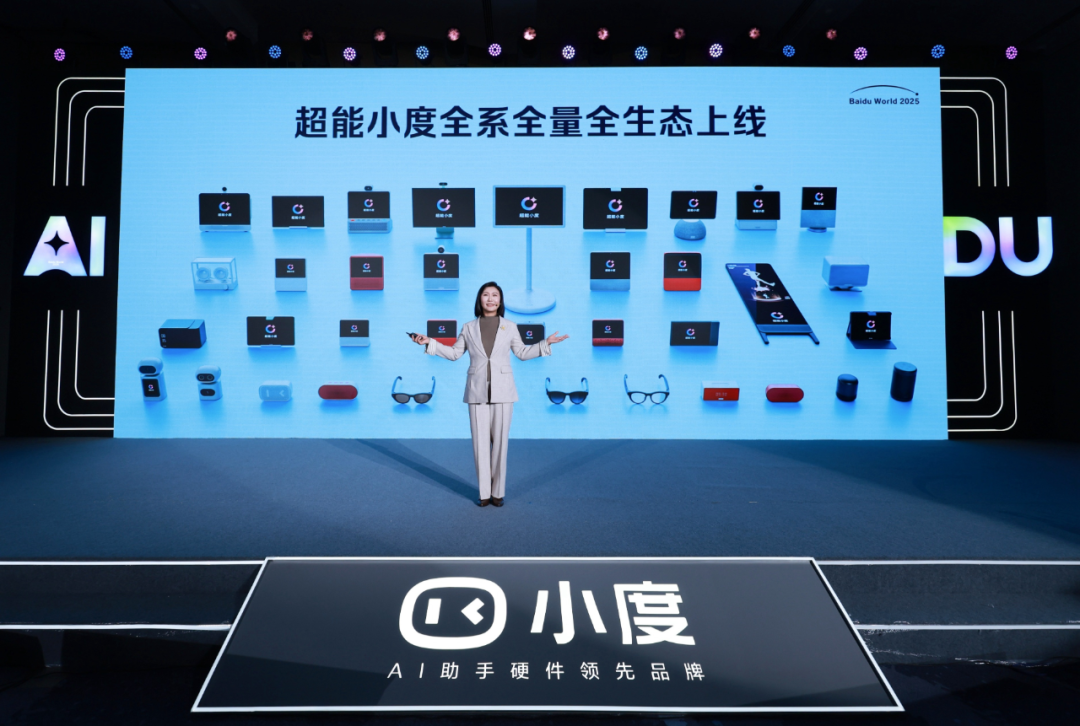
Among them, the new hardware products equipped with Super AI—Baidu AI Glasses Pro, Baidu Smart Camera C1200 with three cameras, C800 video call version, and Baidu Smart Speaker Fun—were also showcased at the forum.
Baidu aims to seize the intersection of AI and the real world. “Since its inception, Baidu has always pursued a revolution in human-computer interaction. Super AI is the new carrier of this mission,” said Baidu Technology CEO Li Ying on site.

From Assistant to Partner
The Super Evolution of Baidu
If AI is merely regarded as an added value to hardware, then regardless of how hardware forms change or software functions enrich, it is essentially just a stack of technologies; only when AI becomes the intrinsic driving force for transforming hardware interactions, even redefining them, can the true arrival of the “next generation of human-computer relationships” be possible.
While most global hardware manufacturers are competing on “how to better integrate AI assistants into devices,” Baidu has chosen to focus on the evolution of the AI assistant itself in terms of “perception, learning, and memory,” and to reverse-engineer hardware product innovation based on this.
The launch of Super AI is the ultimate embodiment of this logic.
Building on its existing voice interaction capabilities, as a multimodal AI smart assistant, it also possesses the ability to process visual information such as images and videos, and can even combine its perception of surrounding environmental information to perform complex reasoning and planning.
One particularly impressive case presented at the launch event was the “Smart Object Finder”: when you ask the camera, “Where did I put the remote control?” Super AI will first scan the current real-time image of the room; if it doesn’t find it, it will automatically review historical footage from the past 24 hours or even longer to locate the last time and place the remote appeared, displaying the video record from that time.
While it addresses the everyday problem of “losing the remote control,” the significance behind this concept goes far beyond that.
From a technical perspective, this means that AI must not only be able to “see” and “identify” objects but also “understand” spatial and temporal relationships, thereby constructing a multidimensional, dynamic mapping of the real world—this is also one of the main challenges currently faced by large models.
Baidu summarizes the upgrades of Super AI into three major evolutions:
1. From Point Response to Global Understanding: No longer limited to executing single commands, but capable of deep contextual understanding and comprehensive judgment based on time, space, people, and actions, achieving more comprehensive and multidimensional perceptual decision-making.
2. From Passive Intelligence to Active Intelligence: Unlike the past interaction model of “you call, I respond” and “you ask, I answer,” it actively understands, analyzes, and even anticipates user needs, providing solutions.
3. Personalized Memory Enhancement: Not only can it remember habits and preferences, but it can also perceive tone and emotion, reading the room, anticipating needs, and understanding what is required, allowing the human-computer relationship to truly transition from “tool” to “partner.”
On site, Li Ying also announced that the full range, full quantity, and full ecosystem of Super AI will be launched, covering new products including Baidu AI Glasses, Baidu Smart Camera, Baidu Smart Speaker Fun, and all existing devices sold in the tens of millions will also be eligible for free upgrades, achieving a more natural, in-depth, and considerate human-computer interaction experience, allowing the “AI assistant” to truly complete the leap to an “AI partner.”


When AI Partners Enter the Physical World
At the launch event, several new hardware products fully equipped with Super AI also became the focus of the audience.
For example, Baidu AI Glasses are equipped with the Qualcomm Snapdragon AR1 chip, featuring a Sony 12-megapixel 109° ultra-wide-angle lens, supporting 4K photo and 1440p video recording, and built-in EIS for intelligent stabilization; it uses an open-type dual-speaker design with five microphone arrays for coordinated sound capture, combined with a reverse sound field directional acoustic system and self-developed ENC call noise reduction algorithm, effectively reducing noise interference during calls, music listening, and voice interaction scenarios.
In terms of battery life, it can last approximately 7.5 hours of continuous use in comprehensive mode, and with the included smart charging case, it can reach about 68 hours, ensuring worry-free daily use.
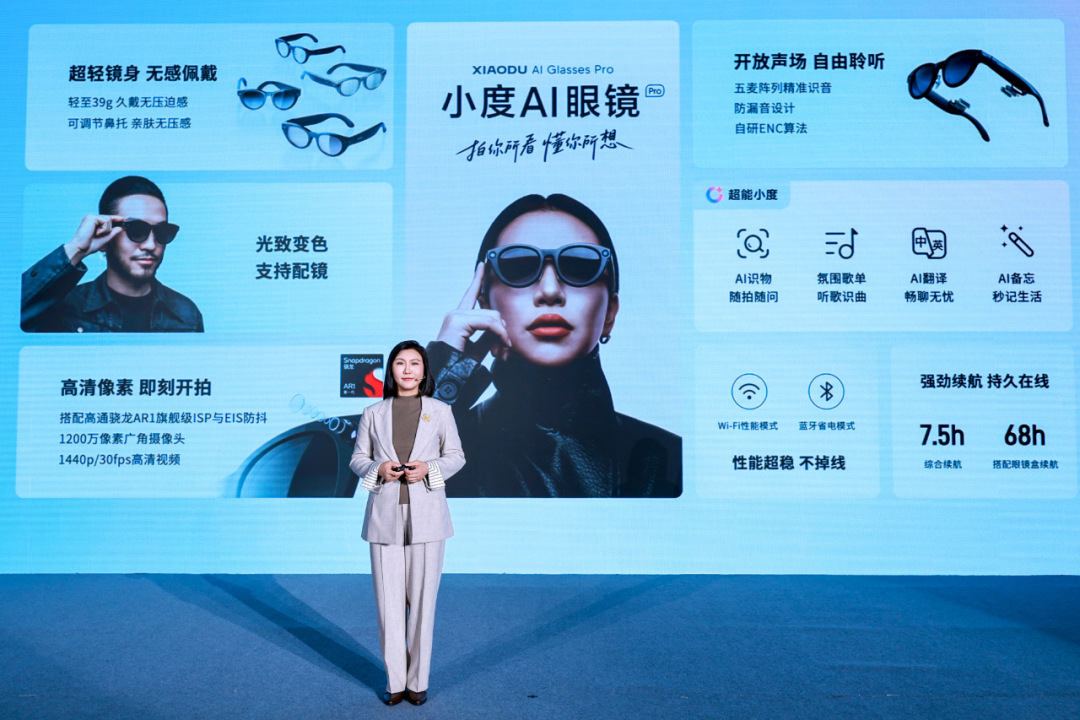
Additionally, in terms of appearance and wearing experience, Baidu AI Glasses Pro weigh only 39 grams. During the on-site demonstration, it was shown that besides the Boston and Cat Eye frame styles, Baidu also offers sunglasses and photochromic lenses, with adjustable soft silicone nose pads, optimizing for fashion, usage scenarios, and face shape.
Of course, the AI glasses market is fiercely competitive, relying not only on “hard skills” but also on “soft power.”
As one of the early players in this field in China, Baidu has demonstrated impressive results in the practical functionality of its AI glasses through the upgrade of multimodal intelligence, showcasing the “1+1>2” effect of combining hardware and software.
For instance, when you cannot conveniently take out your phone but need to record a parking space or a property notice, you simply tell Baidu, “Help me remember this,” and the glasses will automatically take a photo, analyze it, and generate a reminder, allowing you to ask at any time, “Where is my car parked?” or “What time will the water be cut off tomorrow?” or even call the property management directly, truly achieving “see it, remember it, ask it, get it.”
In office scenarios, the role of AI is further amplified: the glasses’ “AI Meeting Minutes” function, based on conventional recording transcription and content summarization, can not only photograph important whiteboard and PPT materials during meetings, automatically matching them to the corresponding positions in the minutes, but also support further insights into the speaker’s intentions and analysis of potential points of contention, generating various optimization suggestions such as communication strategies, follow-up guidance, and process efficiency improvements.
It is reported that this function will officially launch in December this year.
Additionally, the “Atmosphere Playlist” feature co-created by Baidu and NetEase Cloud Music allows AI to express itself more flexibly. When you say, “Play me a fitting song,” the glasses will generate a personalized BGM based on the scene in front of you—whether it’s the light and shadow of a street at dusk or the view from a mountain top, AI can capture and compose a melody of emotions.
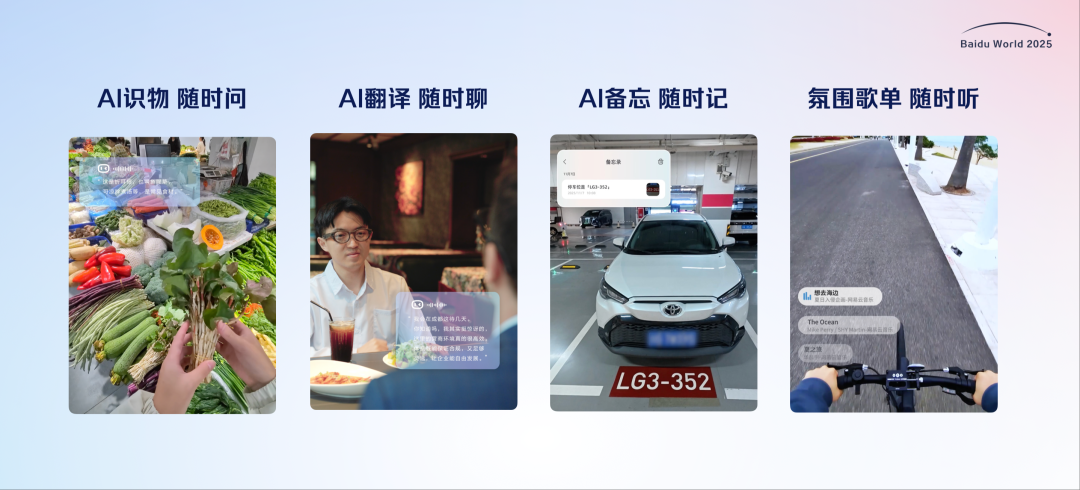
Similar scenarios abound, with Super AI integrating into every moment of our daily lives through the glasses.
Li Ying mentioned that if AI glasses serve as an extension of our senses, achieving “first-person perspective intelligence,” then smart cameras’ understanding of the surrounding environment will open up a new kind of “God’s perspective intelligence.”
The two smart cameras launched by Baidu this time:
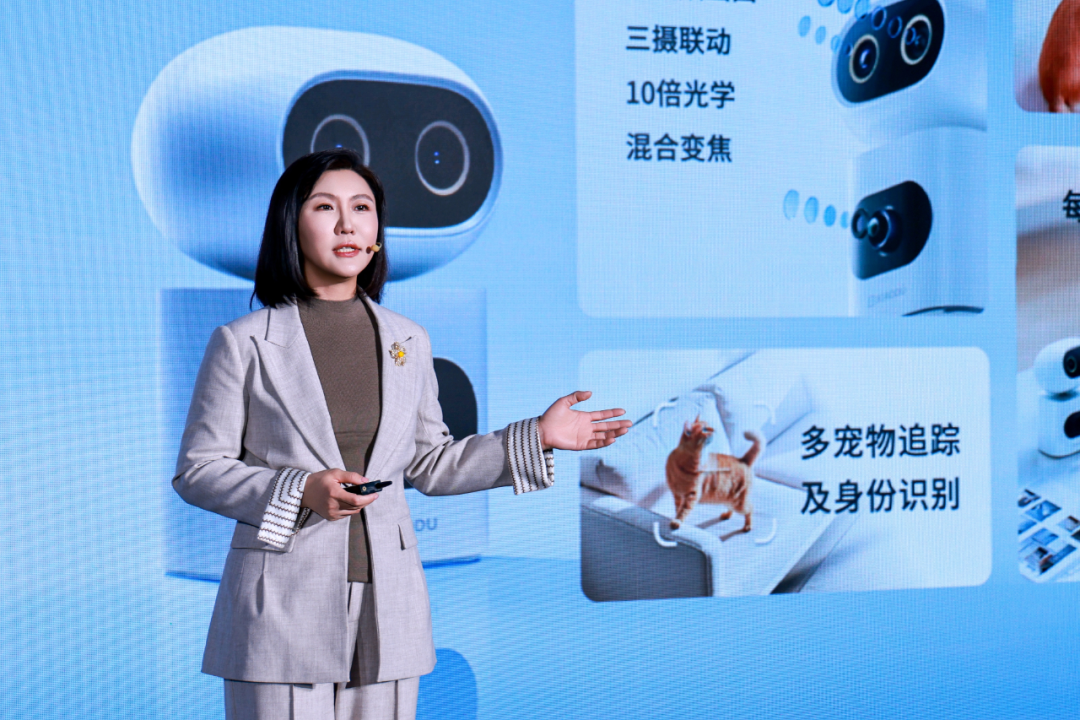
One is a video call version with a screen, aimed at families with elderly and children, supporting convenient and smooth two-way WeChat video calls; the latest release, the Baidu Smart Camera C1200, equipped with three cameras, through a combination design of a pan-tilt long and short focal lens and a fixed ultra-wide-angle lens, can not only link dual images but also better track moving targets, and the 10x optical hybrid zoom can achieve high-definition detail capture, making it more suitable for pet owners.
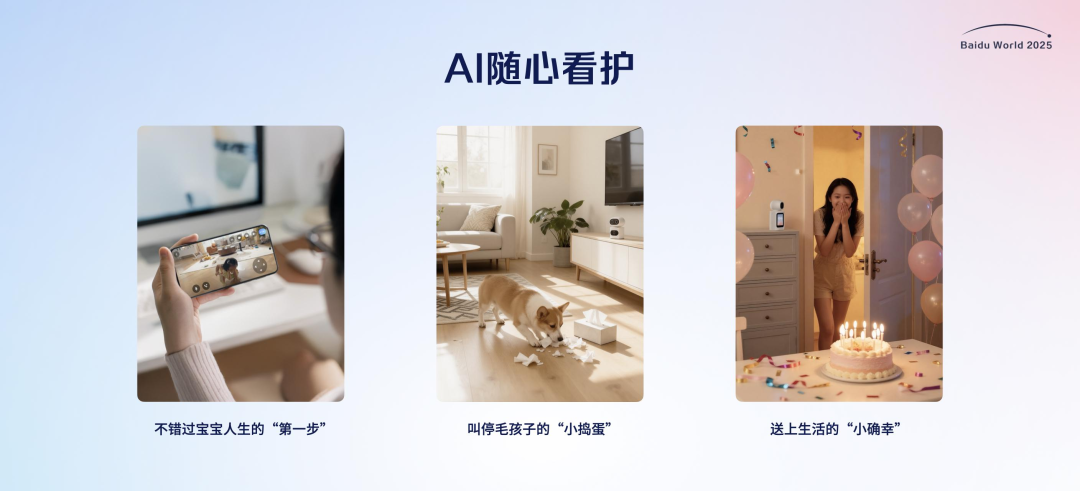
Also based on the multimodal capabilities of Super AI, the Baidu Smart Camera has developed the “AI Care at Will” feature, which can recognize specific behaviors of people and pets, actively intervening based on the understanding of the scene’s semantics—for example, reminding children of improper study postures or deploying a sweeping robot to deter pets from causing mischief.
It is evident that the traditional chatbot-style question-and-answer format can hardly satisfy people’s imagination for higher-level intelligent applications.
Bringing intangible intelligence into real life, understanding what we are currently experiencing, and proactively providing help and companionship may be the AI form that is more worth looking forward to.

Multimodal is Not the End
From Siri a decade ago to the era of smart speakers with Baidu, people have been trying to open the door to intelligence through dialogue—voice interaction has become a standard feature of all smart hardware, bringing convenience but has always struggled to become a necessity.
In the past two years, with the rapid development of multimodal technology, the focus of large model competition has also shifted rapidly: OpenAI’s GPT-4o has achieved real-time multimodal understanding and generation of text, images, audio, and video with a single model; Google’s Gemini-based Project Astra intelligent agent can observe and understand the surrounding environment through cameras and microphones, and possesses ultra-long contextual memory capabilities; Meta is also exploring the inclusion of more multimodal AI applications, including visual Q&A, in its smart glasses launched in collaboration with Ray-Ban.
Within this industry narrative, Baidu’s “Super” evolution has actually chosen a longer path that can provide users with long-term value: from voice and vision to emotion, from understanding commands to understanding people, truly redefining the “AI assistant.”
As Li Ying stated on site, “AI is the core that gives smart hardware a soul and opens up a new imaginative space”—from smart speakers, smart screens, companion machines, fitness mirrors, learning machines, to today’s AI glasses and smart cameras, every product evolution from Baidu clearly points to this same goal.
If devices are merely “left there” without being truly utilized, then the value of AI cannot be realized. Conversely, if AI can interact and accompany users through hardware, that is the starting point for the symbiosis of humans and technology.
Market trends also confirm this thinking: A report by Global Market Insights indicates that the global AI hardware market size is approximately $5.9 billion in 2024, expected to grow to $66.8 billion by 2025, and is projected to reach about $296.3 billion by 2034, with a compound annual growth rate of about 18%; the “On-Device AI” market (AI running on wearable terminal devices) is estimated to be $26.61 billion in 2025, expected to expand to $124.07 billion by 2032, with a compound annual growth rate of about 24.6% according to Coherent Market Insights report.
In response to the rapid growth of the industry, Baidu has further clarified its strategic positioning of “AI as the core, hardware as the carrier” through the launch of the new multimodal AI assistant and the inclusive upgrades of new and old devices.
According to official data, Baidu’s self-owned brand products have reached a penetration rate of 54 million households and are continuously growing. At the same time, Super AI will also be opened up as a smart engine, allowing more industry partners such as hotels and elderly care to achieve capability upgrades, becoming an AI capability base that various manufacturers can call upon. “We hope everyone can work together to create a smarter, more convenient, and more humanized experience for users,” said Li Ying.
Looking back from the 2025 node, the evolution of Super AI, from the well-known voice assistants to today’s multimodal AI assistants, is not just a technological iteration but is reshaping the connection between people, machines, and the world.
When the barriers of language, images, and sounds are finally broken—machines transform from passive tools into digital partners that can hear, see, speak, and think, this revolution concerning the future form of human-computer interaction has just begun.