Imagine massive ores rushing past on a conveyor belt, tons of chemical materials precisely mixed, and fully loaded trucks roaring out of factories… Behind these grand scenes lies a quietly crucial “industrial heart” – **weighing sensors**. Though inconspicuous, they are the foundation of precision, efficiency, and safety in modern industry! Today, let us unveil the mysterious veil of this “invisible contributor”.

1. What is it? It’s more than just a “scale”!
Don’t be limited by the term “weighing”! Industrial weighing sensors are far more complex than your kitchen electronic scale.
-
**Core Definition**: It is a precision device that accurately converts the force exerted on the measured object (usually gravity) into measurable **electrical signals** (such as voltage, current, or digital signals).
-
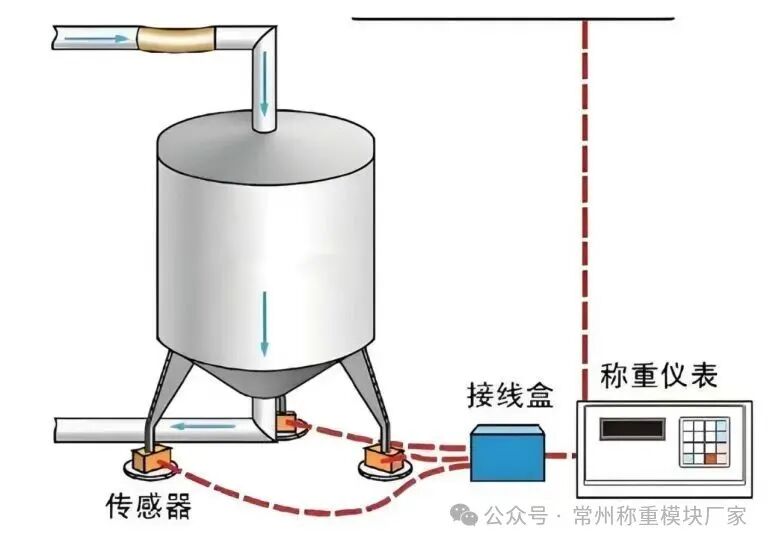
**Core Mission**: Sense weight and transmit data!** It serves as the “sensory nerve endings” of automated control systems, providing critical weight information to the brain (PLC, computer).
-
**Ubiquitous**: From milligram precision balances in laboratories to hundreds of tons of truck scales at ports; from bottling lines in food and beverage to raw material mixing in steel mills… Wherever precise weight measurement is needed, you can almost always find it.
2. How does it “sense” weight? The magical “transformation”!
Imagine pressing down on a spring; it shortens, and when you let go, it bounces back. The core principle of industrial weighing sensors is similar, but more precise and stable!
1. “Sensitive Skeleton” – Elastic Body: This is the core structural component of the sensor, usually made of high-strength alloy steel or stainless steel. When the measured weight is applied, it undergoes an extremely small elastic deformation. This deformation must be perfectly controllable, ensuring it fully returns to its original state after the external force is removed.
2. “Nerve Endings” – Strain Gauge: A **miniature resistance wire** attached to critical parts of the elastic body. When the elastic body deforms under force, these resistance wires are “stretched” or “compressed” slightly, causing their **resistance value to change slightly**. This is a key step in converting “deformation” into “electrical change”!
3. “Signal Translator” – Wheatstone Bridge: Typically composed of four strain gauges forming a delicate circuit (bridge). The minute resistance changes are “amplified” in this circuit and converted into **changes in voltage signals**. The magnitude of the voltage change precisely corresponds to the magnitude of the applied force.
4. “Amplification and Output”: This weak voltage signal is amplified by an amplifier and ultimately output as a standard signal (such as 4-20mA current, 0-10V voltage, or direct digital signals like RS485/CAN), transmitted to subsequent display instruments or control systems.
Metaphorically, you can think of the sensor as an extremely sensitive “metal spring scale”, but instead of relying on a pointer, it uses the “resistance wire skin” attached to it to sense deformation and translates that deformation into electrical signal “language” through the “bridge circuit brain” to inform the outside world.
3. How important is it? The “stabilizing force” in the industrial world!
Don’t underestimate this small “weighing heart”; it plays an irreplaceable role in modern industry:
1. Precision Control, Ensuring Quality:
-
Ingredient Mixing: In the chemical, food, and pharmaceutical industries, a slight deviation in raw material ratios can lead to significant quality issues. Sensors ensure that every gram of raw material is precisely in place.
-
Bottling and Packaging: Beverage bottles, oil drums, laundry liquids… On high-speed production lines, sensors ensure that each bottle/drum has consistent weight, avoiding waste caused by underfilling or overfilling.
-
Process Monitoring: Real-time monitoring of material weight in reaction vessels and storage tanks ensures that the process remains in optimal condition.
2. Efficient Production, Reducing Costs:
-
Automated Production Lines: Robots for picking, assembling, and sorting need to know the weight of objects to adjust force and actions. Sensors are a key component for smooth automation.
-
Inventory Management: Real-time weighing of material levels in large silos and bins eliminates manual estimation, achieving precise inventory and optimizing procurement and production plans.
-
Logistics and Trade Settlement: Weighing on truck scales is the foundation for fair logistics transport and trade settlement, ensuring measurement accuracy and fairness.
3. Safety Assurance, Preventing Issues:
-
Overload Protection: Sensors on cranes, elevators, and pressure vessels monitor loads in real-time, immediately alarming or cutting off power when limits are exceeded, preventing catastrophic accidents.
-
Structural Health Monitoring: Sensors installed at critical points of bridges and large buildings monitor stress changes over time, providing early warnings of potential risks.
-
Safety Testing: High-precision force measurements are required for automotive crash tests, material strength tests, etc.
4. What to look for when choosing it? Core indicators to consider!
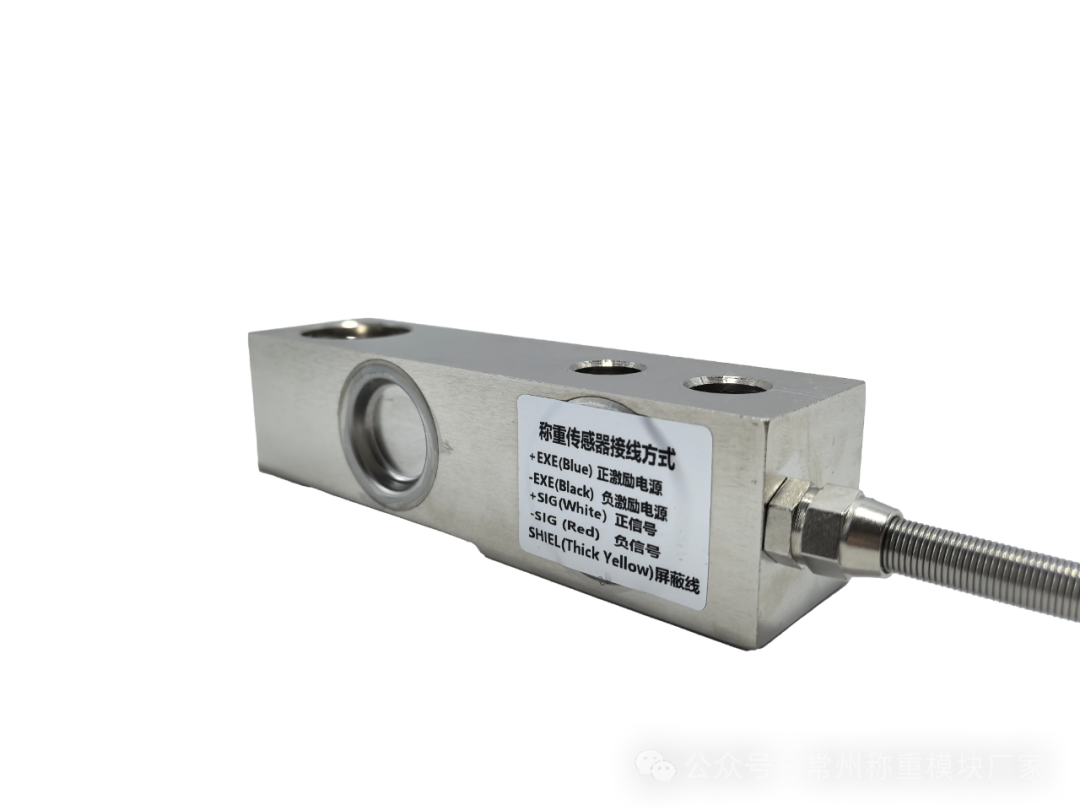
When faced with a plethora of sensors, what core indicators will engineers focus on?
1. Measurement Range: What is the maximum weight it can measure? (Ranges from a few grams to hundreds of tons)
2. Accuracy: How accurate are the measurement results? Usually expressed as a percentage of full scale (e.g., ±0.03%FS). The smaller the number, the more precise.
3. Sensitivity: The change in output signal per unit weight (e.g., 2mV/V). This determines the system’s resolution capability.
4. Non-linearity and Hysteresis: The degree of deviation of the sensor output from the ideal straight line (non-linearity) and the difference in output during loading and unloading processes (hysteresis). The smaller, the better.
5. Long-term Stability/Creep: The degree of output drift over time under constant load. A good sensor should withstand the test of time.
6. Environmental Adaptability: Protection level (IP67/IP68 for dust and water), temperature compensation range (to adapt to extreme heat and cold), resistance to electromagnetic interference, material (corrosion resistance), etc., determine its reliability in harsh industrial environments.
7. Output Signal Type: Is it analog (mV/V, 4-20mA, 0-10V) or digital (RS485, CANbus)? It needs to match the backend system.
5. Conclusion: The Invisible “Weighing Heart”, Visible Value!
Industrial weighing sensors are like countless silent “precision craftsmen” in factories. They operate quietly, sensing tons of weight with millimeter-level deformations and driving large production systems with millivolt-level signals. They are the foundation of precision, drivers of efficiency, and guardians of safety.
Next time you see a production line running smoothly, purchase a product with the right weight, or safely cross a bridge, think about the possibility that one or more of these “industrial weighing hearts” are precisely beating behind the scenes, safeguarding the order and prosperity of modern industry!
Follow us to learn more about the “invisible heroes” in the field of industrial automation!