“Embodied Intelligence” has become a hot topic in the technology sector this year. Cities like Beijing, Shanghai, and Guangdong have introduced policies to layout the embodied intelligent robot industry. The Ministry of Industry and Information Technology has also clarified that during the 14th Five-Year Plan period, a new track for humanoid robots will be opened, and a leading area for future industries will be created. As a major province in advanced manufacturing, what is the development trend of embodied intelligent robots in Guangdong? A research report released by the Guangdong Provincial Research Center on September 25 shows that the large-scale industrial application of embodied robots is currently facing a triangular dilemma of “technology-cost-scenario,” which urgently needs to be broken through.
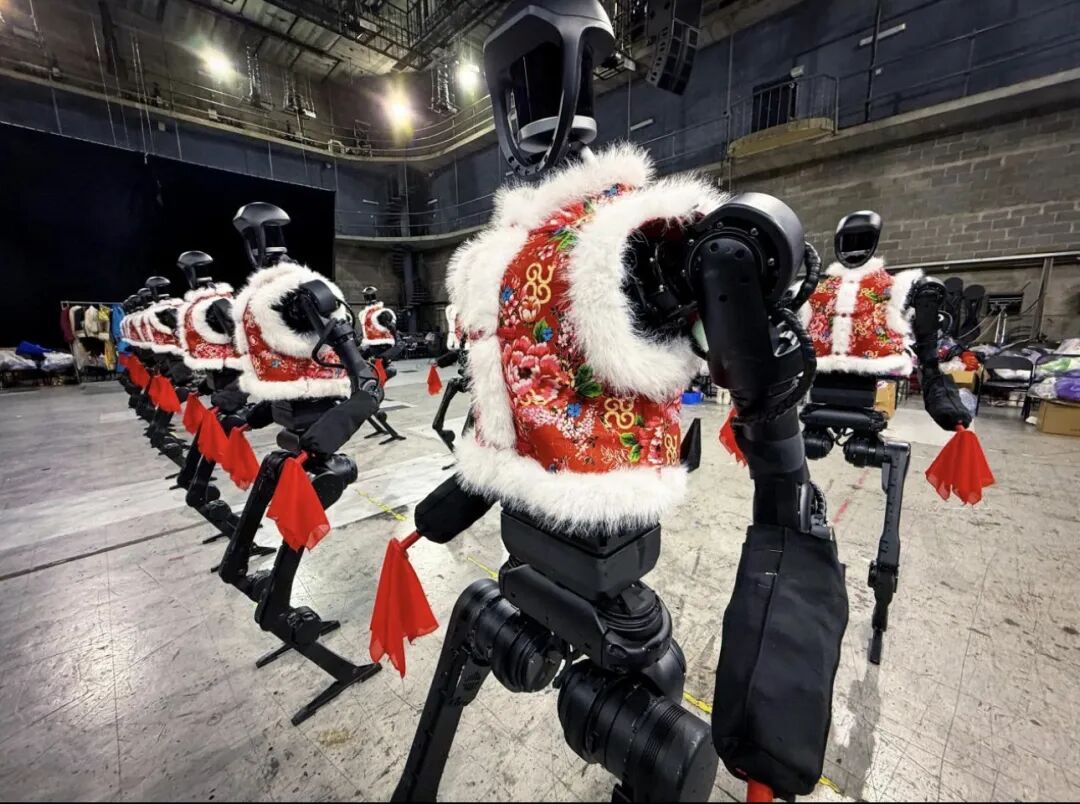
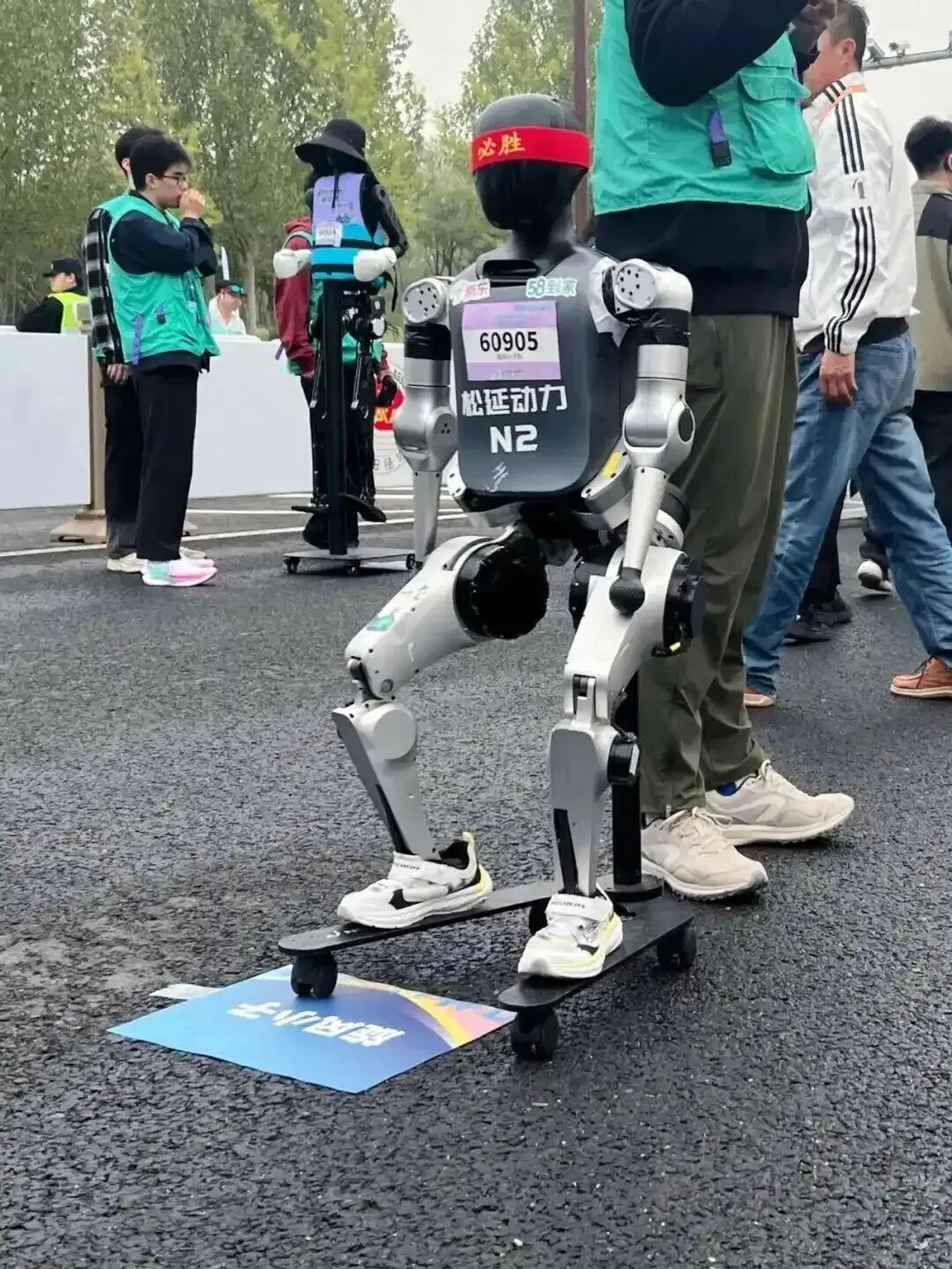
By 2025, embodied intelligent robots, represented by humanoid robots, are transitioning from “showcasing technology” to “practical application”: at the Spring Festival Gala, dancing robots, robot marathons, and the 2025 World Robot Conference, over 30 Guangdong companies, including UBTECH, Leju Robotics, and Ligong Industry, showcased scenarios of embodied intelligent robots entering production lines. Previous reports have indicated that some robots from Guangdong have already entered manufacturing workshops of FAW, BAIC, and Dongfeng Liuzhou Automobile to undertake production tasks.
To understand the current state of the embodied intelligent robot industry in Guangdong, from June to August 2025, the Guangdong Provincial Research Center, in collaboration with Southern Daily and Times Finance, formed a research group. Based on literature research and big data analysis, they reviewed over 100 industrial application cases and interviewed companies such as GAC Research Institute, Orbbec, and Zhongqing Robotics. They found that Guangdong has a solid industrial foundation and rich application scenarios in this field, with a number of industrial application cases emerging in pillar industries such as automotive, electronic information, and home appliances. The vision of mutual advancement between the prospects of embodied intelligent applications and the foundation of Guangdong’s manufacturing industry is gradually being realized. However, the current industrial application of embodied intelligence in Guangdong is still trapped in the triangular game of “technology-cost-scenario,” requiring government guidance to engage market forces and promote the industry from “usable” to “user-friendly” and from “trial use” to “large-scale use.”
The number of enterprises and upstream supply capacity rank among the top in the country
In recent years, Guangdong has continuously explored the adaptation of embodied intelligence to scenarios, forming a nationally leading industrial cluster centered around Guangzhou, Shenzhen, and Dongguan, particularly adept at combining the upgrading needs of pillar industries with embodied intelligence, transforming dense industrial verification scenarios into driving forces for technological upgrades.
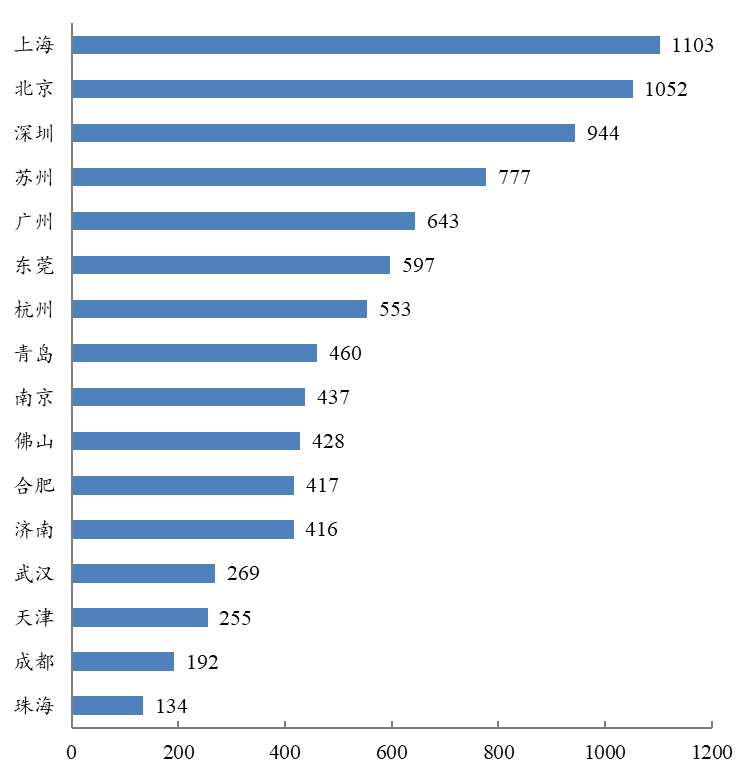
As of June 2025, the number of embodied intelligent robot enterprises in Guangdong reached 2,746 (in the five cities of Guangzhou, Shenzhen, Dongguan, Foshan, and Zhuhai), far exceeding Shanghai (1,103) and Beijing (1,052). In the city rankings, Shenzhen (944), Guangzhou (643), Dongguan (597), Foshan (428), and Zhuhai (134) are among the top sixteen in the country.
Upstream supply capacity is also outstanding. The research group calculated the ratio of the number of parts enterprises to the number of embodied intelligent robot enterprises in 15 major cities in China, with Shenzhen ranking first at 68.60%, followed by Guangzhou (59.89%) and Dongguan (53.21%), all above the national average (49.61%). For example, by 2025, the supply chain of Digital Huaxia was mainly concentrated in the Yangtze River Delta, but now 70% of the components have found qualified suppliers in the Pearl River Delta.
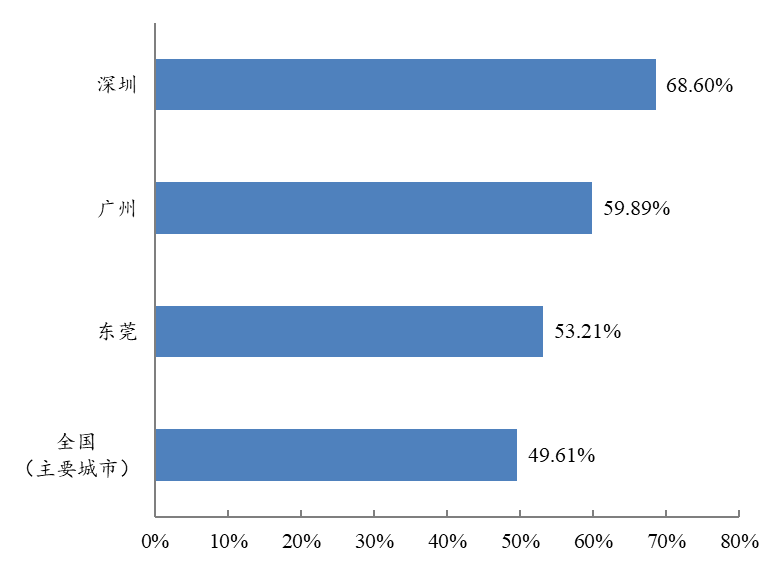
In the core components field, Shenzhen has significant advantages, cultivating representative enterprises such as Huacheng Industrial Control (robot control systems, servo systems) and Orbbec (machine vision) in areas like semiconductors, servo motors, and sensors. Among them, Orbbec, with its self-developed chips and full-stack technology, has its 3D vision sensors and AI vision solutions widely applied in the field of embodied intelligence, holding over 70% of the market share in China’s service robot market.
What can embodied intelligent robots do in Guangdong factories?
The research group selected industrial scenarios for in-depth study (manufacturing cost pressures are high, and scenario structures are easy to integrate) and identified three major characteristics after reviewing 103 industrial application cases of embodied intelligent robots in Guangdong:
Diverse product forms: covering humanoid robots (bipedal, wheeled), robotic arms, AGVs, and quadrupedal robots, adaptable to different scenario needs;
Development stage is still early: currently mainly in small batch trials, most have not achieved formal order delivery and are in the “training” stage;
Application fields are concentrated: focusing on industries with labor shortages or high costs, such as automotive, electronic information, and home appliances, undertaking tasks in assembly and logistics such as loading and unloading, sorting, handling, and quality inspection.
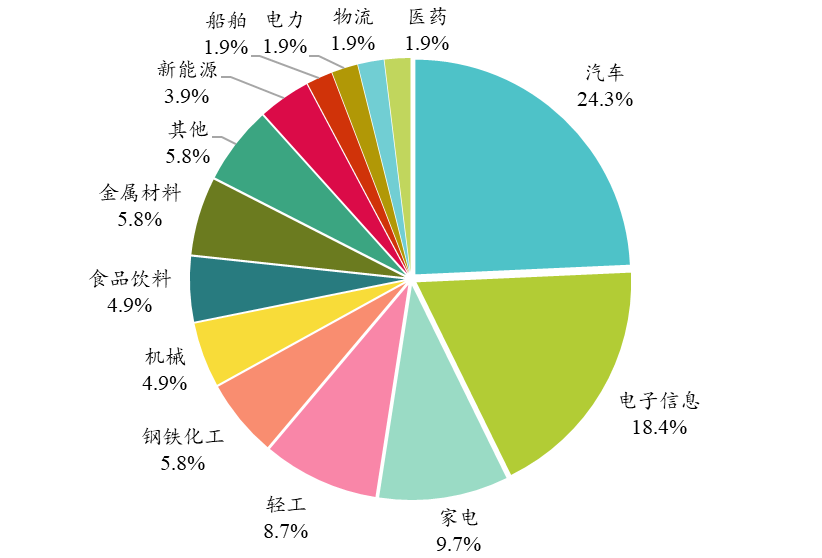
Data shows that the top five application industries for embodied intelligent robots in Guangdong are automotive (24.3%), electronic information (18.4%), home appliances (9.7%), light industry (8.7%), and steel and chemical (5.8%); from the perspective of processes, production operations (40.8%) and logistics distribution (48.5%) account for the highest proportions, promoting high precision in production and intelligent logistics, while safety management (6.8%), quality management (2.9%), and production line optimization (1.0%) applications are still relatively few.
Main obstacles faced by embodied intelligent robots entering factories
Although industrial scenarios are seen as the first area for embodied intelligent robots to land, some startups and R&D teams in new energy vehicle companies are not strongly willing to invest in industrial scenarios, with the core issue being the triangular game of “technology-cost-scenario.”
On one hand, the stringent requirements of industrial scenarios for precision, stability, and endurance expose current hardware shortcomings: sensors (LiDAR, vision, etc.) have limitations in multi-modal fusion, strong light interference, and real-time performance, making it difficult for robots to quickly understand complex dynamic environments like humans, especially in recognizing partially occluded objects and transparent surfaces; on the other hand, there is a significant gap in training data for embodied intelligent industrial scenarios, with the largest open-source dataset in the country only reaching millions of entries, far below the scale of over 100 million entries per day in autonomous driving. Currently, Guangdong company Pasini has built the world’s largest embodied intelligent data factory in Tianjin, attempting to solve the data problem.
Firstly, the production cost of high-precision components is high; for example, servo joint modules involve high-precision reducers, controllers, etc., requiring specialized equipment costing tens of millions; secondly, industry standards are not unified, with significant differences in component requirements among different robot manufacturers, leading to long development times and small scales for custom development, resulting in high product pricing or suppliers “losing money to run”; thirdly, there is insufficient supply chain collaboration, with leading enterprises not playing their guiding role, and component enterprises not forming a clustering effect, increasing manufacturing costs and delivery cycles due to a dispersed supply chain.
On one hand, the value of flexible production in embodied intelligence has not been fully developed; the scale of flexible production in China is small, and the maturity of related technologies needs verification, while traditional industrial robot companies entered the field of embodied intelligence relatively late, focusing more on technological reserves and flexible process exploration; on the other hand, the reliability of embodied intelligent robots is far inferior to that of traditional industrial robots—traditional industrial robots have an average mean time between failures (MTBF) of 80,000 hours, while products from Guangdong companies like UBTECH humanoid robots in the Dongfeng factory project aim for only 1,000 hours of continuous operation without major failures, and the Cloud Deep Shadow X30 quadrupedal robot in Zhejiang’s converter station inspection has also only verified over 1,000 hours without failure.
Currently, many regions across the country are intensifying their efforts in the embodied intelligence industry. Beijing has built the country’s first one-stop public service platform for embodied intelligence. With its vast advanced manufacturing base and cost advantages in technology, Guangdong has the potential to promote faster development of the embodied intelligent robot industry if it can break through the “technology-cost-scenario” dilemma.
Editor | Su Yunjia, Southern Metropolis DailyProofreader | Zheng Shuifeng, Southern Metropolis DailyExecutive Editor | Gao Chao, Publicity DepartmentContent Source | People’s Daily
Recommended Reading

Xi Jinping: The development prospects of the private economy are broad and promising, and it is the right time for private enterprises and entrepreneurs to shine.

Leading the development of new quality productivity and building a modern industrial system—The Guangdong Provincial Conference on Promoting the Construction of a Modern Industrial System for Private Enterprises was held in Dongguan.

Gathering industry technological wisdom to create a highland of industrial innovation—the first member meeting and founding conference of the Guangdong Artificial Intelligence and Robotics Industry Alliance was held in Guangzhou.