
Introduction
Latest from JCI: Supplementing with ‘antioxidant’ vitamins C and E may increase tumor progression and metastasis…
In recent years, the trend of ‘antioxidants’ has gained significant momentum. Antioxidant serums, superfoods, and lifestyles have emerged, capturing a large consumer base.
This popular ‘antioxidant’ term actually refers to the resistance against free radicals. Free radicals are atoms or groups formed when molecules lose a certain amount of electrons. The human body continuously produces new free radicals through ongoing exposure to the external environment, including respiration (oxidative reactions), pollution, radiation, etc.
Excessive production of free radicals can lead to aging and various diseases, even being referred to as the ‘source of all diseases’. As the saying goes, ‘My life is determined by me, not by heaven.’ Knowing that free radicals are hidden health killers within the body, it is natural to seek ways to combat the damage caused by free radicals.
At this point, the role of antioxidants becomes prominent—antioxidants are essential substances that resist the action of free radicals and eliminate them, neutralizing harmful free radicals in the body, thereby inhibiting oxidative stress and inflammation. Consequently, people have turned their attention to various ‘antioxidant’ foods and even supplements, such as vitamin C tablets, vitamin E tablets, and N-acetylcysteine.
However, this matter is not so simple; antioxidants are not always beneficial and may even have ‘counterproductive’ effects! Recently, a research team from Karolinska discovered that supplementing with antioxidants like vitamins C and E may stimulate the generation of blood vessels within lung cancer tumors, providing nutrients to the tumor and even promoting metastasis. This study was published in the Journal of Clinical Investigation.
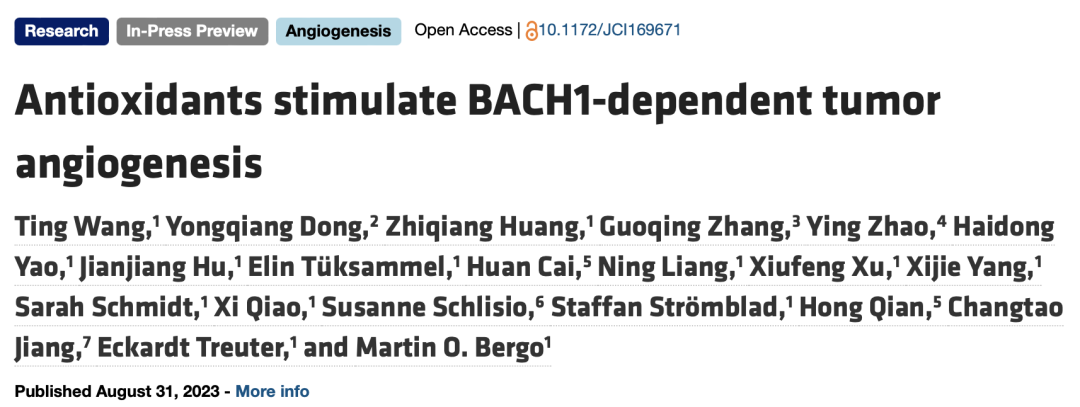
https://doi.org/10.1172/JCI169671.
As early as 2019, Professor Bergo and his research team published a study in the prestigious journal Cell that had already lowered the temperature on antioxidants. At that time, researchers observed a shocking phenomenon after feeding mice with vitamin E or N-acetylcysteine for a week—lung cancer mice exhibited 6-7 times the lymphatic metastasis compared to the control group, and the invasiveness of cancer cells was stronger.
The researchers found that the ‘culprit’ behind this was a transcription factor named ‘BTB and CNC homology 1 (BACH1)’. When the level of reactive oxygen species in the body decreases, the degradation of BACH1 is inhibited, and the increase in this transcription factor activates the transcription of pro-metastatic genes (such as HK2 and GAPDH), thereby promoting the spread and metastasis of lung cancer cells.
However, the significance of BACH1 may extend beyond this. Since BACH1 controls the transcription of a wide range of angiogenesis genes, will BACH1 stimulate the generation of blood vessels under the influence of antioxidants or hypoxia, providing oxygen and nutrients to tumors, thus promoting tumor growth and even metastasis?
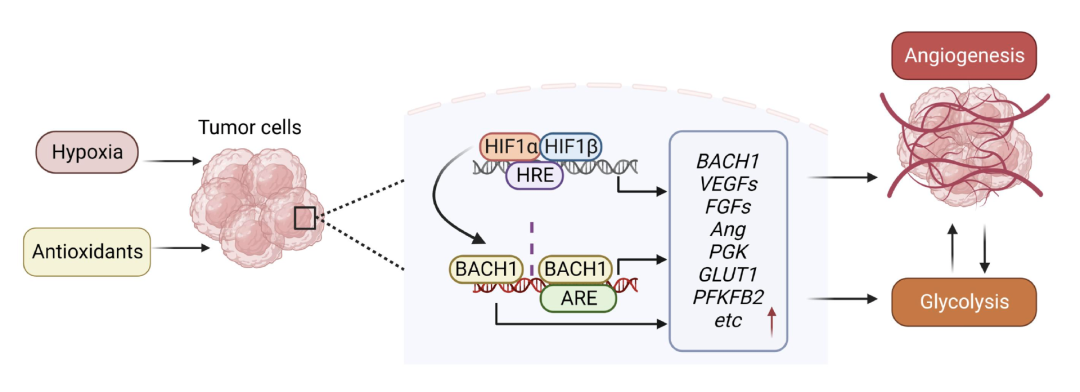
Experimental Summary
Curious about the above questions, the researchers fed lung cancer mice and mice implanted with human cancer cells with antioxidants such as vitamins C, E, and N-acetylcysteine, observing how BACH1 promoted cancer throughout the process.
Consistent with previous studies, under the influence of antioxidants vitamins C, N-acetylcysteine, and vitamin E, the level of hydrogen peroxide in lung cancer mice decreased, while the ratio of glutathione (GSH) to glutathione disulfide (GSSG) increased, indicating that the ‘antioxidant’ effect of these substances was indeed significant.
Meanwhile, the levels of BACH1 protein and BACH1 mRNA in the mice significantly increased. Interestingly, the researchers also observed that the use of antioxidants greatly increased the expression of angiogenesis genes, including vascular endothelial growth factors (VEGFs), VEGF receptors, and neuropilin-1 (NRP1).
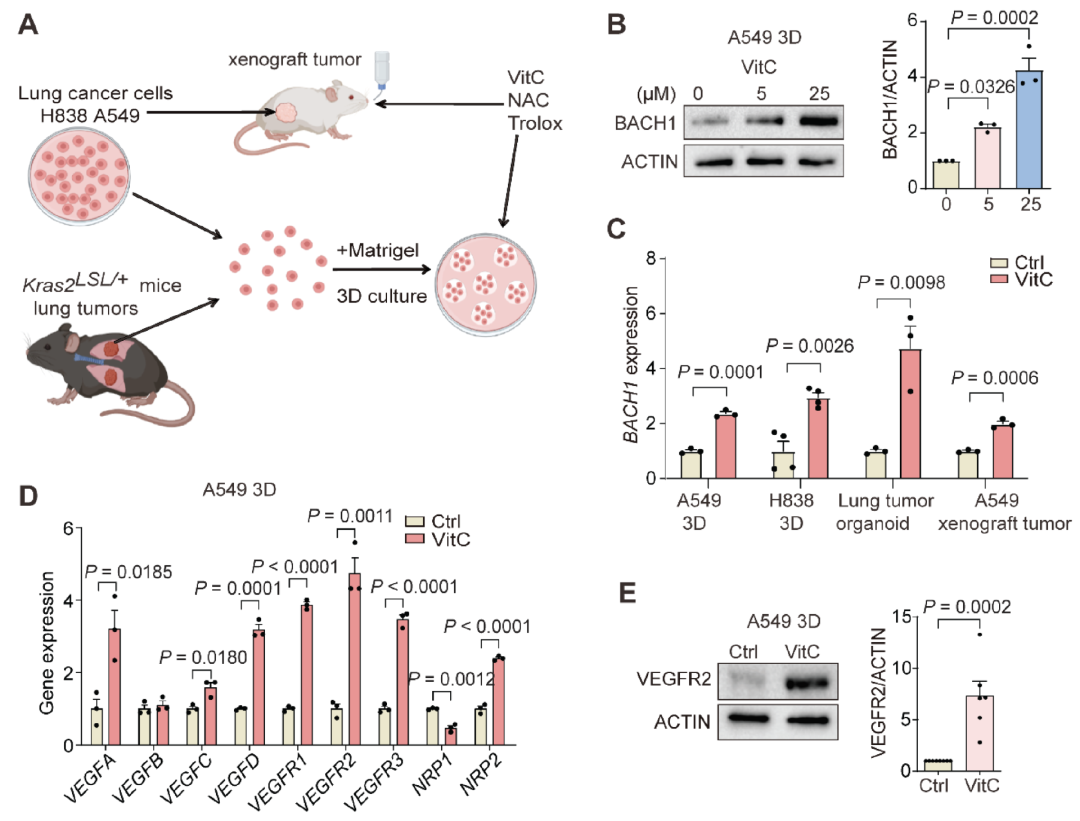
Antioxidants stabilize BACH1 and upregulate BACH1 expression,
thereby inducing the expression of angiogenesis genes in non-small cell lung cancer organs and tumors.
So, is there a direct correlation between BACH1 and angiogenesis?
After using CRISPR/CAS9 gene editing technology to control the expression of endogenous BACH1, researchers found that in cells overexpressing BACH1, the expression of angiogenesis genes also increased correspondingly, while the levels of VEGFR2 and NRP2 proteins increased. Conversely, in cells with low expression of BACH1, the expression of angiogenesis genes and proteins showed a downward trend.
However, when antioxidants were administered to these two types of cells, the increase in angiogenesis gene expression and VEGFR2 protein levels was significantly higher in BACH1 overexpressing cells. In other words, BACH1 is involved in the angiogenesis mediated by antioxidants.
Further research found that when BACH1 was knocked out, the levels of histone H3K27ac at the promoters and enhancers of the genome, as well as angiogenesis and glycolysis genes, significantly decreased.
Therefore, it can be accurately stated that BACH1 acts as a transcriptional activator in the regulation of angiogenesis and glycolysis.
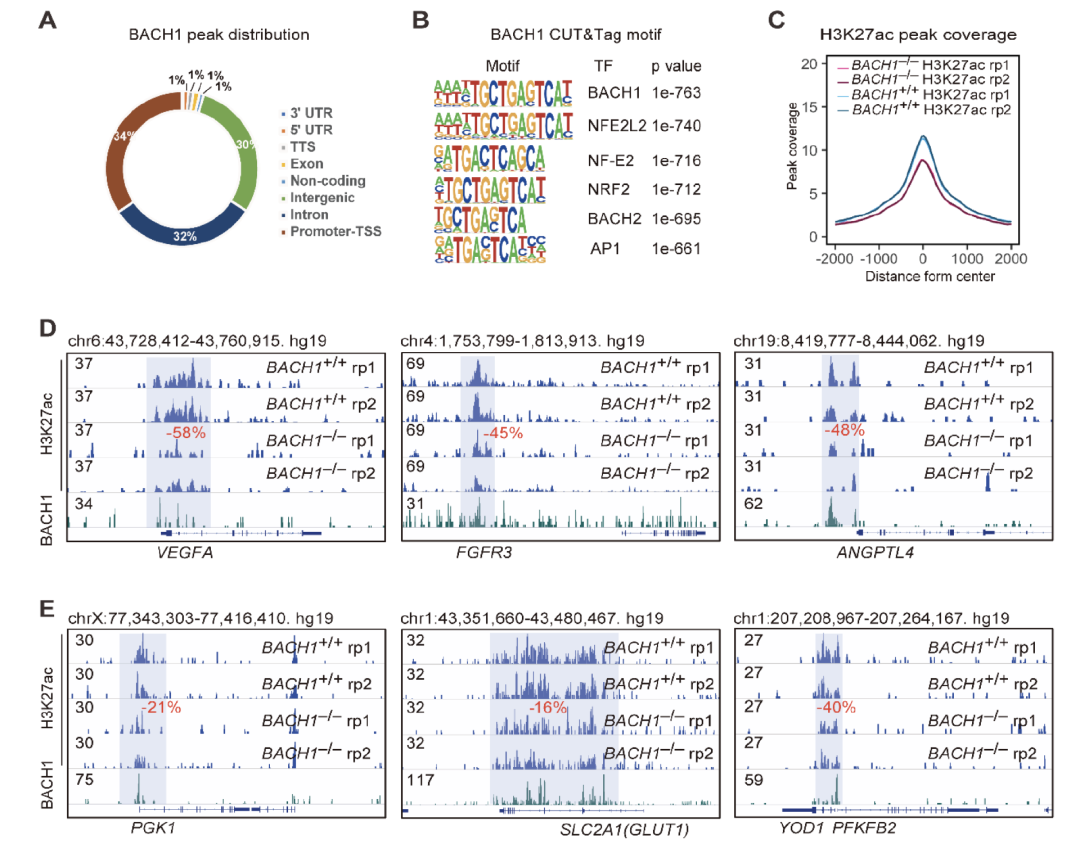
BACH1 mediates the expression of angiogenesis and glycolysis genes.
As the research progressed, the researchers recalled another transcription factor with a function very similar to BACH1—hypoxia-inducible factor (HIF1α). Under tumor hypoxic conditions, the stabilization of HIF1α stimulates the expression of angiogenesis and glycolysis genes, thereby promoting the generation of blood vessels in tumors.
What is the relationship between BACH1 and HIF1α? What kind of influence chain exists between the two?
In fact, HIF1α and BACH1 are more synergistic. Under normoxic conditions, HIF1α can maintain the basal level of BACH1, mediating the increase in BACH1 levels induced by antioxidants; however, under hypoxic conditions, the expression of BACH1 gene and protein levels will increase in a HIF1α-dependent manner.
Interestingly, in the absence of HIF1α, BACH1 can still function independently. In cells where HIF1α was knocked out, researchers observed that BACH1 overexpression still increased the expression of various angiogenesis and glycolysis genes.
Summarized in six words: ‘Dependable, yet independent.’ BACH1 is a transcriptional target of HIF1α, capable of increasing angiogenesis in a HIF1α-dependent manner; yet, BACH1 can also regulate the expression of glycolysis and angiogenesis-related genes independently of HIF1α.
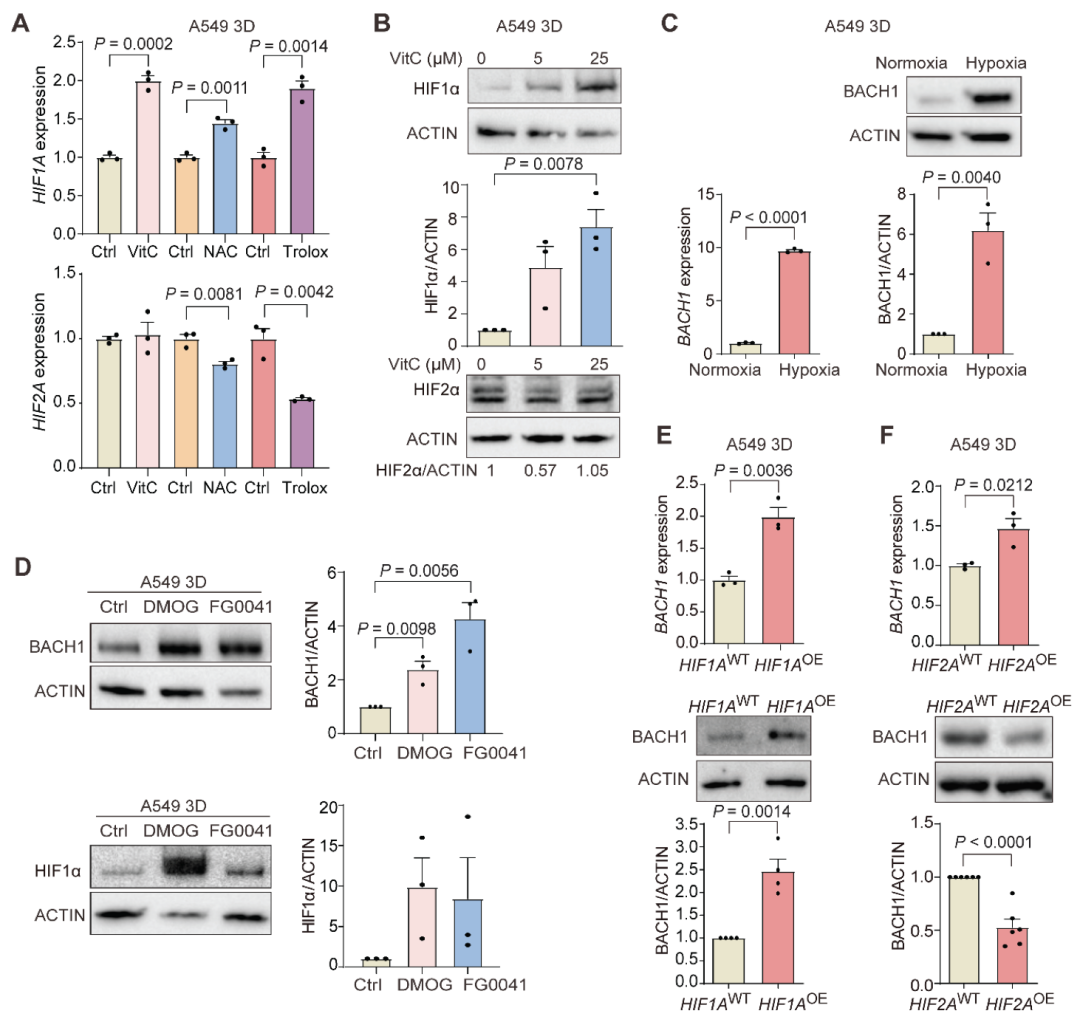
HIF1α-dependent mechanism of BACH1 action.
The aforementioned research focused more on the mechanism of action of BACH1. In the final step, the researchers confirmed the impact of this transcription factor on tumor angiogenesis.
The results were clear: under the use of antioxidants vitamins C and N-acetylcysteine, the number of blood vessels within tumors in mouse models significantly increased. Knocking out BACH1 eliminated this effect.
Analysis of The Cancer Genome Atlas (TCGA) data showed that a similar phenomenon also exists in human cohorts, where the expression of BACH1 in lung cancer is associated with the expression of various angiogenesis and glycolysis genes, and similar results were observed in breast cancer and kidney cancer cohorts.
This indicates that antioxidants elevate the levels of BACH1 in the human body, and BACH1 promotes angiogenesis in tumors, which is also present in human cancer patients. Therefore, antioxidants such as vitamins C and E indeed have the effect of promoting angiogenesis within tumors, potentially paving the way for tumor growth and metastasis.
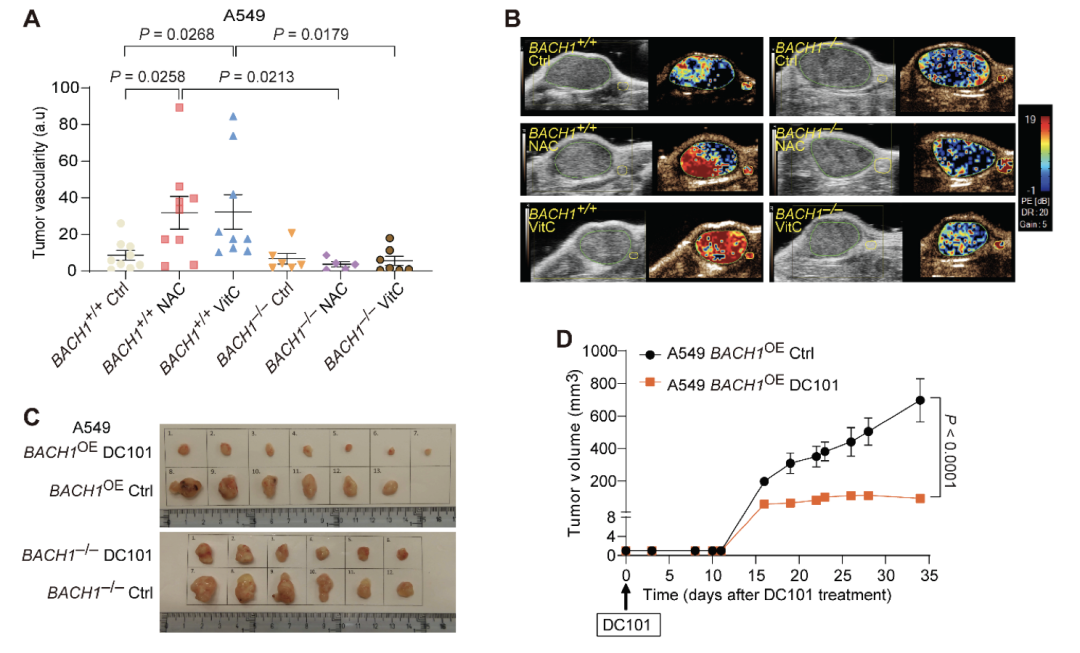
BACH1 increases angiogenesis in tumors.
In summary, BACH1 is a transcription factor sensitive to redox reactions, capable of controlling tumor angiogenesis and leading to metastasis. Taking antioxidant vitamins C or E stabilizes BACH1 levels in the body, thereby accelerating the progression and metastasis of lung tumors.
As the researchers emphasized, most people do not need to supplement with antioxidants; excessive supplementation may be harmful to cancer patients and high-risk groups. ‘However, there is no need to worry about antioxidant components in food; maintaining a healthy diet is sufficient.’
The editor reminds everyone: In daily life, the best way to supplement ‘antioxidants’ is through a healthy diet, such as eating more fresh fruits and vegetables. However, antioxidants are not beneficial in excess; arbitrarily supplementing with vitamins C or E without medical advice may be ‘overdoing it.’
References:
[1] Wang T, Dong Y, Huang Z, Zhang G, Zhao Y, Yao H, Hu J, Tüksammel E, Cai H, Liang N, Xu X, Yang X, Schmidt S, Qiao X, Schlisio S, Strömblad S, Qian H, Jiang C, Treuter E, Bergo MO. Antioxidants stimulate BACH1-dependent tumor angiogenesis. J Clin Invest. 2023 Aug 31:e169671. doi: 10.1172/JCI169671. Epub ahead of print. PMID: 37651203.[2] https://news.ki.se/antioxidants-stimulate-blood-flow-in-tumours
Source / Meis Medical
Recent WeChat Update
Many readers often miss notifications
Star 🌟 ‘Hua Yi Net’
To receive every freshly released article in a timely manner
One issue per month! For learning traditional Chinese medicine techniques, choose ‘Traditional Chinese Medicine Preventive Health Care and Conditioning Technology Training’, with online live teaching. After training, you can obtain a dual-stamped certificate from the Chinese Folk Medicine Research Association and the National Health Commission Talent Exchange Service Center! Click the image below or read the original text to consult immediately~

Click ‘Read the original text’ to sign up now!