
In computer networks,the comparison between symmetric and asymmetric encryption covers core principles, performance parameters, selection and applications.

1. Core Differences Comparison Table
|
Feature |
Symmetric Encryption |
Asymmetric Encryption |
|
Key Mechanism |
Uses thesame key for encryption and decryption |
Public key encryption + private key decryption |
|
Algorithm Examples |
AES-256, DES, 3DES |
RSA, ECC, DSA |
|
Speed Comparison |
Very fast (hardware acceleration up to10Gbps) |
Slow (RSA-2048 only ~6MB/s) |
|
Security Dependency |
Key confidentiality |
Mathematical problems (e.g., large number factorization/elliptic curves) |
|
Key Length |
128/256 bits |
RSA-2048 bits ≈ 112 bits symmetric strength |
2. Detailed Advantages and Disadvantages
1. Symmetric Encryption
Advantages:✅Fast processing speed: AES-256-GCM throughput can reach 1.5GB/s (CPU 2.5GHz)✅Low resource consumption: Memory usage in embedded devices <10KB
Disadvantages:❌Key distribution risk: Requires secure channel for key transmission (e.g., quantum channel)❌Complex key management:

2. Asymmetric Encryption
Advantages:✅Secure key exchange: No need for pre-shared keys (e.g.,Diffie-Hellman)✅Supports digital signatures: Private key signing + public key verification (e.g.,SSL certificates)
Disadvantages:❌High computational resources: RSA-2048 single operation takes 15ms (compared toAES only0.01ms)❌Ciphertext expansion: Original text length limit (RSA-2048 maximum encryption245 bytes)
3. Classic Application Scenarios
Scenario1:HTTPS secure transmission (hybrid encryption)
1.Negotiate session key
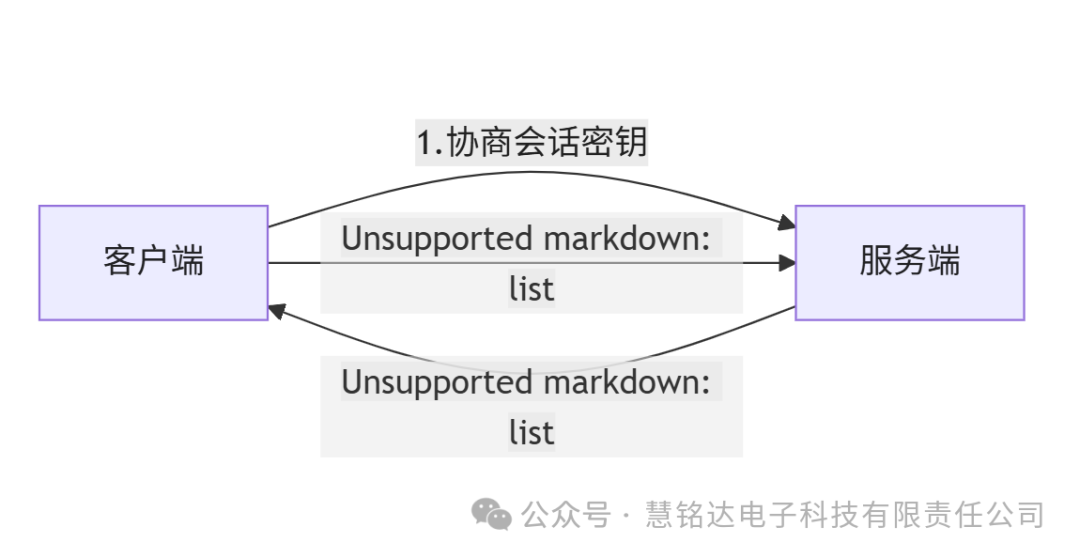
Parameters:
TLS handshake:RSA-2048 key exchange
Data transmission:AES-256-GCM (symmetric encryption, with authentication)
Performance Optimization: ECC-256 replacesRSA (key exchange is 3 times faster)
Scenario2:SSH passwordless login (asymmetric authentication)
Operation Flow:
1.Client generates key pair:ssh-keygen -t ed25519
2.Upload public key to server:~/.ssh/authorized_keys
3.Login using private key to sign challenge code
Security Parameters: Ed25519 signature size 64 bytes, verification speed 0.2ms
Scenario3:Bank payment sensitive data (symmetric encryption)
Operation Flow:
1.POS machine pre-set master key (HSM protected)
2.Generate temporary key for each transaction to encryptPIN code
3.Protect key with hardware encryption module
Standards: Comply with PCI-DSS requirements4 (strong encryption storage)
4. Performance Parameters Measurement
|
Algorithm |
Intel i7-12700K encryption speed |
ARM Cortex-M7 resource usage |
|
AES-256-GCM |
1.78 GB/s |
4KB RAM,50MHz clock |
|
RSA-2048 |
350 signatures/s |
12KB memory, takes200ms |
|
ECDSA-secp256k1 |
8000 signatures/s |
6KB memory, takes30ms |
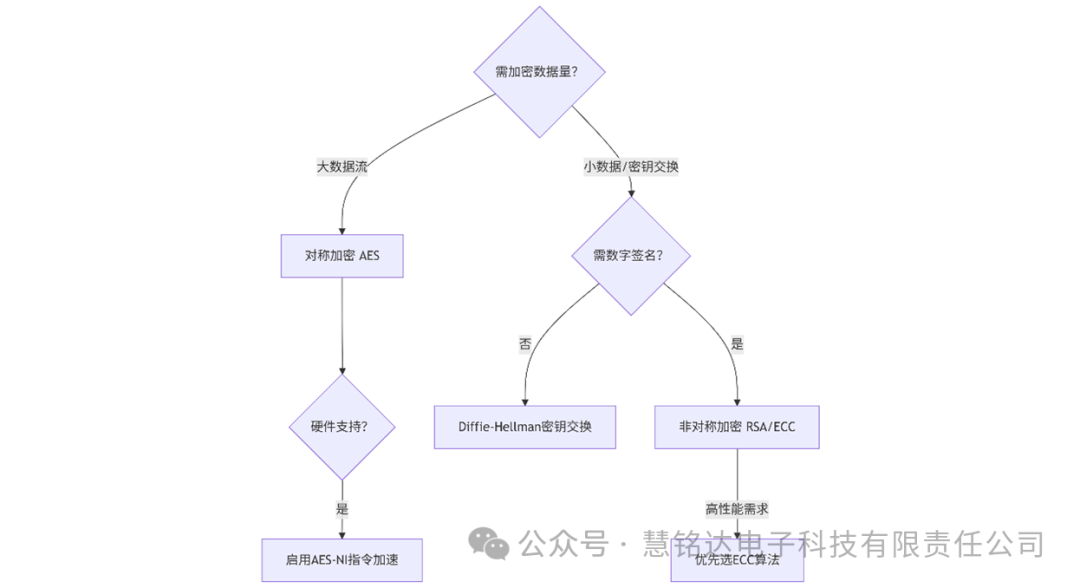
5. Application Selection Decision
6. Evolution Against Quantum Computing
1. Symmetric encryption upgrade
Strategy: Extend key length to AES-512 (to resistGrover algorithm)
Parameters: Quantum attacks halve bit strength (AES-256 → 128 bits resistance)
2. Asymmetric alternatives
Algorithms:▸ CRYSTALS-Kyber:Lattice encryption, key1.6KB▸ SPHINCS+:Hash signature, signature49KB
Performance: Kyber decryption is faster thanRSA by100 times
7. Golden Rule
“Use AES for high traffic, asymmetric for key exchange; Digital signatures for identity, hybrid systems are classic; Choose slow RSA or fast ECC, new algorithms for quantum threats!”

The core working principles of symmetrical encryption and asymmetrical encryption are explained in conjunction with mathematical logic, communication processes, and parameters.
1. Symmetric Encryption: Single Key Encryption and Decryption
1. Core Principle
Uses the same key (Secret Key) for encryption and decryption, the algorithm is public and relies on key security. Mathematical expression:

C: Ciphertext
P: Plaintext
K: Key
E/D: Encryption/decryption algorithm (e.g.,AES)
2. AES Algorithm Workflow (takingAES-256 as an example)
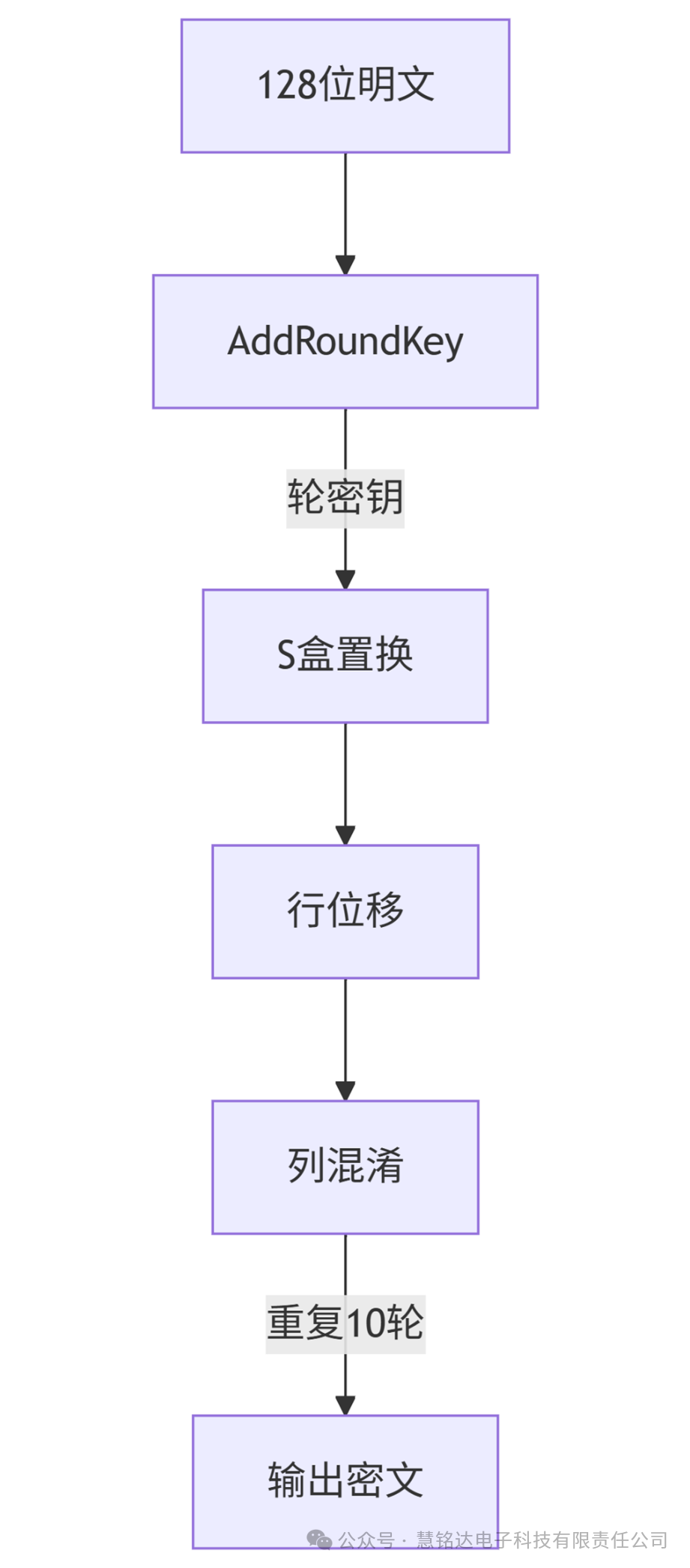
Key Parameters:
Key Length:256 bits
Block Size:128 bits
Rounds:14 rounds (AES-256)
Performance:x86 platform throughput >1 GB/s
Example: Encrypt data with keyK=2B7E151628AED2A6ABF7158809CF4F3C and plaintextP=3243F6A8885A308D → CiphertextC=3925841D02DC09FBDC118597196A0B32
2. Asymmetric Encryption: Public and Private Key Bidirectional Security
1. Core Principle
Based ontrapdoor one-way functions (Trapdoor Function), public key is used for encryption, private key is kept secret for decryption:

Mathematical Basis:
RSA: Relies on the difficulty of large number factorization
ECC: Relies on the elliptic curve discrete logarithm problem
2. RSA Encryption Process
Key Generation:
1.Select large prime numbers p=61, q=53 (actual use2048 bits)
2.Calculate modulus n=p×q=3233
3.Euler’s function φ(n)=(p−1)(q−1)=3120
4.Select public key exponent e=17 (coprime with φ(n))
5.Calculate private key d=e⁻¹ mod φ(n)=2753 (extended Euclidean algorithm)
Encrypt Data: Plaintext P=65 (mustP<n)

Decryption Process:

3. ECC (Elliptic Curve) Encryption
 Encryption Steps (Diffie-Hellman key exchange):
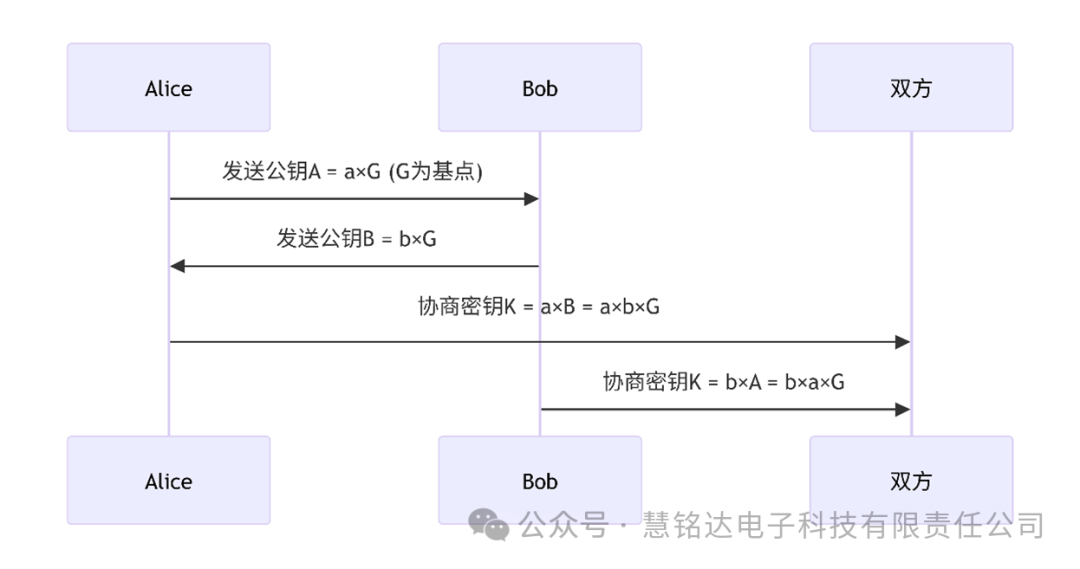
Parameter Example (secp256k1): Bit strength 256 bits ≈ RSA 3072 bits security Public and private key lengths:64 bytes (compressed)/ 65 bytes (uncompressed)
3. Hybrid Encryption Practice (TLS 1.3)
Communication Flow
Key Parameters:
Symmetric encryption:AES-256-GCM,IV length 96 bits
Key exchange:ECC X25519 (speed is 4 times faster than RSA)
Signature algorithm:ECDSA secp256r1
4. Mathematical Security Challenges
|
Algorithm |
Quantum Threat |
Classical Attack Defense |
|
AES-256 |
Grover algorithm requires √2²⁵⁶ steps ≈ lifespan of the universe |
Differential analysis ineffective (S box design) |
|
RSA-2048 |
Shor algorithm can quickly factor large numbers |
Side-channel attack prevention (masking techniques) |
|
ECC-256 |
Quantum computing acceleration is not significant |
Timing attack protection (constant-time algorithms) |
Core Differences Summary:Symmetric Encryption: Key is the only secret → Relies on high-speed computation to protect large dataAsymmetric Encryption: Private key is the only secret → Relies on mathematical problems to achieve key transfer and signing
Note:
Sensitive systems (e.g., finance) must comply withFIPS 140-3 certification
IoT devices preferChaCha20-Poly1305 (no hardware acceleration required)


Original Statement: This article is for learning and communication purposes only and may not be used for commercial purposes without the author’s written permission. Chaoyang Huimingda Electronic Technology Co., Ltd.