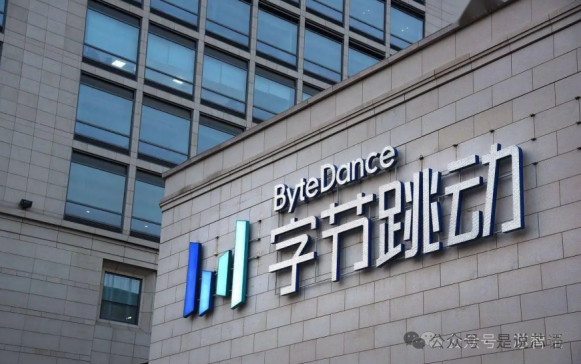
Recently, there have been rumors that ByteDance will cut its chip team and operate independently under a new entity, which also involves a restructuring of its AI chip business.
In response to these rumors, a relevant person from ByteDance stated on September 4 that the related information is all false. ByteDance emphasized that the main body of its chip business has not changed at any time, and this incident only involves a switch of the Feishu tenant, with various exaggerated interpretations from the outside regarding layoffs, independence, and changes in the main body being untrue. However, ByteDance did not disclose the reasons for the adjustments in the employee structure on Feishu.
However, the South China Morning Post reported on the afternoon of September 5, citing ByteDance and its internal employees, that ByteDance has transferred its chip R&D team, consisting of 1,000 employees, to its existing Singapore subsidiary, Picoheart (SG).
A source who was briefed on the matter stated that the Beijing-based company informed the affected employees of this change last week and transferred their internal accounts on the corporate collaboration software Feishu (known internationally as Lark) to a separate entity this week.
The affected employees were told that their contracts, work locations, benefits, performance evaluations, and attendance management policies would remain unchanged.
This move comes as ByteDance, along with other Chinese tech giants, accelerates its internal chip development in response to the increasingly strict export restrictions imposed by the United States on advanced semiconductor technology.
According to local business directory site SGPBusiness.com, ByteDance’s Singapore chip subsidiary, Picoheart, was established at the end of 2023.
In 2024, Picoheart also acquired a 9.5% stake in InnoStar Semiconductor, a Shanghai-based resistive random-access memory chip manufacturer, whose chips are designed to store data more efficiently while consuming less power than traditional NAND flash memory.
A representative from ByteDance stated at the time that the purpose of this investment is to use InnoStar’s storage chips in its Pico-branded virtual reality headsets. According to data from the Chinese enterprise data platform Tianyancha, Picoheart holds more than 13% of InnoStar in conjunction with another ByteDance subsidiary, Beijing Future Imprint Technology Co., Ltd.
ByteDance has also invested in several other Chinese chip design companies, including Silicon Integrated and Moore Threads.
ByteDance’s recruitment website currently lists over 400 job vacancies in cities such as Shanghai, Beijing, Shenzhen, and Hangzhou in fields like artificial intelligence processors, data processing units, and RISC-V architecture.
The employment contracts for ByteDance’s chip team are managed by entities in multiple cities controlled by Picoheart.
Tianyancha data shows that in Beijing, contracts are handled by Beijing Future Imprint Technology Co., Ltd., which is also responsible for subsidiaries in Xi’an and Shenzhen. In Shanghai, contracts are managed by Shanghai Frost Feather Guard Technology Co., Ltd. and its Hangzhou branch. Picoheart took control of Beijing Future Imprint Technology Co., Ltd. last year and took control of Shanghai Frost Feather Guard Technology Co., Ltd. in August of this year.
The restructuring of ByteDance’s chip R&D team comes as the company increases its investment in artificial intelligence technology, including its Doubao application and large AI models. In 2023, it established a dedicated Seed team for AI research and expanded its cloud computing department, Volcano Engine.
These projects require substantial computing power. According to a report by the Financial Times in January, the company plans to invest over $12 billion in AI this year, most of which will go towards the procurement of AI chips.
Reports indicate that to enhance the loyalty of employees involved in AI R&D and boost the team’s innovative drive, ByteDance has offered generous stock option allowances. For example, for the Seed department, ByteDance provides substantial stock option allowances, with employees receiving options worth 90,000, 110,000, or even 135,000 yuan per month, depending on their level and overall performance, with options vesting monthly and the first allowance being distributed over 18 months.