The flexible electronic sensor industry is currently undergoing a period of rapid development and transformation. With its unique flexibility, extensibility, and good environmental adaptability, it is reshaping interaction methods across various fields. Below, we will analyze the development prospects of this industry and introduce some advanced companies both domestically and internationally.
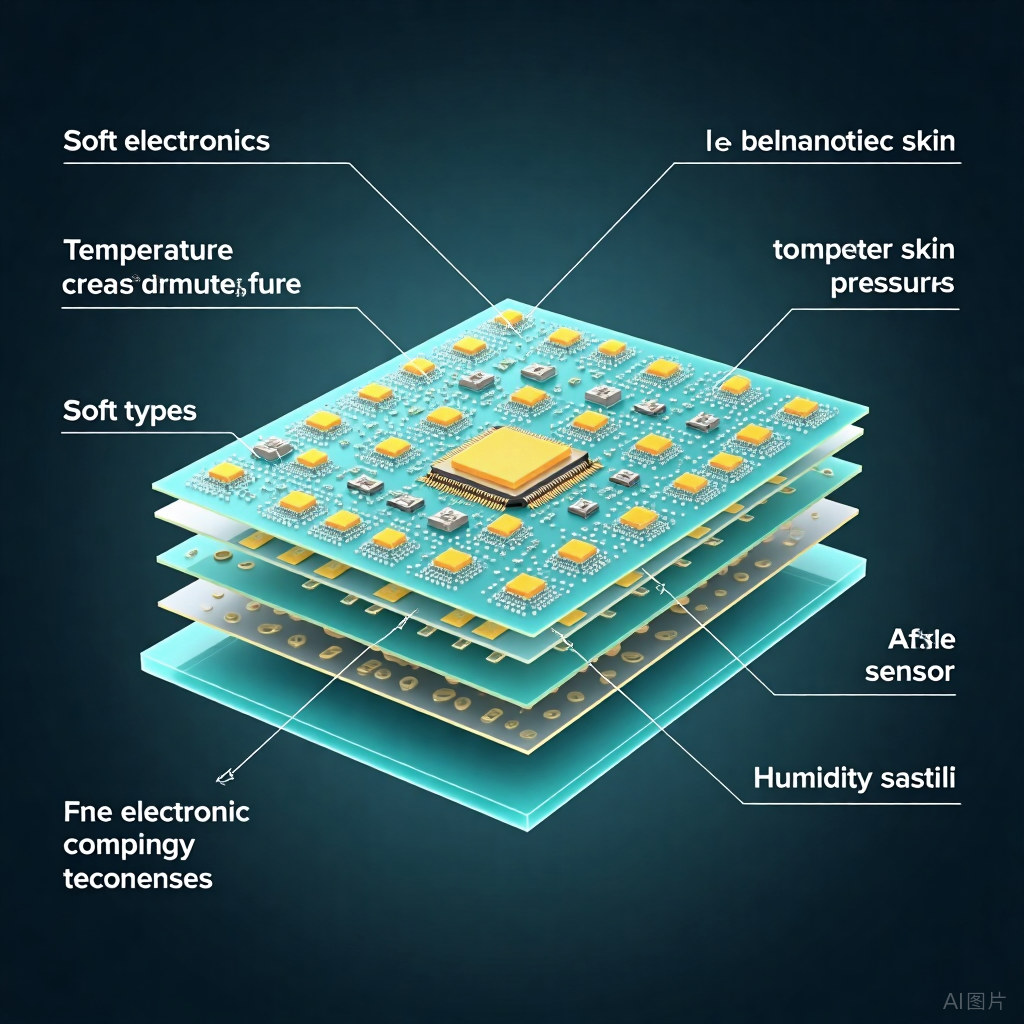
1. Industry Development Prospects
The flexible electronic sensor industry has broad prospects, driven by a dual engine of material innovation, process upgrades, and market demand.
-
Rapid Market Growth: The market size of flexible sensors in China reached approximately 2.356 billion yuan in 2023, with a production volume of about 18.41 million units and a demand of around 54.037 million units. Other data indicates that the market size of flexible sensors in China has surpassed 8 billion yuan in 2023, with an average annual compound growth rate exceeding 30%. This indicates that the market is in a high-speed growth channel.
-
Wide Application Scenarios: The applications of flexible sensors have expanded from early wearable devices to:
-
Medical Health: Continuous blood pressure monitoring patches, smart bandages, ECG sensing garments, non-invasive blood glucose monitoring, epidermal heart rate detection, etc., provide support for chronic disease management and telemedicine.
-
Consumer Electronics: Foldable screen smartphones (hinge stress detection), TWS earbud touch control, smart watch heart rate monitoring, curved TVs, etc.
-
Robotics and Artificial Intelligence: Electronic skin (E-skin) endows robots with tactile perception capabilities, which is core to humanoid robots achieving fine manipulation and environmental interaction.
-
Industrial IoT and Automotive Electronics: Used for bridge structural health monitoring, pipeline pressure detection, high-speed rail track deformation monitoring, and fatigue driving warnings for smart car seats.
-
Environmental Monitoring: Can be used to monitor typhoon and heavy rain levels, etc.
-
Continuous Technological Innovation: The development of the industry relies on new materials and new processes.
-
Materials: New materials such as graphene, carbon nanotubes, and liquid metals are widely used due to their high conductivity and flexibility. Common flexible substrate materials include polyimide (PI), polyethylene terephthalate (PET), and polyethylene naphthalate (PEN).
-
Processes: Printed electronics technologies (such as screen printing and inkjet printing) are cost-effective and suitable for large-scale production; micro-nano processing and MEMS processes offer high precision and stable performance; flexible hybrid electronics (FHE) combine the advantages of rigid IC chips and flexible circuits. Technologies such as roll-to-roll (R2R) printing, laser etching, and 3D printing are also driving improvements in manufacturing efficiency and cost reduction.
-
Strong Policy Support: China has listed flexible electronics as a strategic emerging industry in the 14th Five-Year Plan. Many regions provide policy support for flexible electronics companies, including talent introduction and tax incentives. In 2024, “embodied intelligence” was mentioned for the first time in the Chinese government work report, included in the national strategic future industries, which is a significant benefit for the application of flexible sensors in the robotics field.
-
Future Trends: Flexible sensors will develop towards intelligence (with built-in edge computing chips), integration (deep integration with AIoT platforms to provide full-stack solutions), and greenness (biodegradable flexible substrates and low-energy manufacturing processes).
2. Introduction to Advanced Companies at Home and Abroad
A. Domestic Companies:
-
Hanwei Technology (Suzhou Nengsida):
-
A well-known domestic sensor company, its subsidiary Suzhou Nengsida is one of the earliest entities engaged in exploring the concept of electronic skin. It masters four core technologies: flexible piezoresistive, flexible piezoelectric, flexible capacitive, and flexible sweat sensors. Its flexible sensors are less than 0.3 mm thick, can bend over 1 million times, and have a response time of less than 1 millisecond. It is the sole supplier of electronic skin for Huawei’s humanoid robots and has established partnerships with Xiaomi, Reiser Intelligent, and Zhiyuan Robotics.
GoerTek:
-
An acoustic and optical giant, the revenue from its sensor business accounts for 15% of the company’s total revenue. It is making smooth progress in the development of carbon nanotube electronic skin and has supplied samples to leading industry clients. It collaborates closely with domestic and international research institutions and has a competitive edge in the electronic skin sector due to its strong R&D investment and system integration capabilities.
Fule New Materials:
-
Deeply engaged in coating multifunctional composite materials. Its second-generation flexible tactile sensor achieves full-surface coverage and three-dimensional force vector perception (capable of sensing both vertical and shear forces), breaking through the previous limitation of only detecting vertical forces. It has co-established an intelligent sensing joint laboratory with the Zhejiang Tsinghua Flexible Electronics Technology Research Institute.
Jinghua New Materials (Jingzhi Sensing):
-
Its subsidiary, Beijing Jingzhi Sensing New Materials Co., Ltd., focuses on flexible multimodal sensors and electronic skin technology. At the 2025 World Robot Conference, it launched a full-palm tactile electronic skin for robotic dexterous hands, using a piezoresistive scheme, with a sensing core material only 0.038 mm thick and possessing 1397 tactile points.
TaiShen Technology:
-
Focuses on flexible capacitive tactile sensing technology (TacTip series), concentrating on biomimetic flexible tactile sensing. It has reached cooperation with companies like UBTECH and DJI in the field of tactile modules for robotic arms.
KeLi Sensing:
-
Has made layouts in the field of six-dimensional force sensors (used for precise measurement of force and torque), focusing on high overload protection products, integrating temperature compensation algorithms, and specializing in precision assembly scenarios for industrial robots.
Zhejiang Heqing Flexible Electronics Technology Co., Ltd.:
-
Founded in 2018 and located in Hangzhou, Zhejiang Province, it is a company primarily engaged in professional technical services. The registered capital of the company is 10.03 million yuan, with 282 trademark registrations, 146 patent registrations, and 10 copyright registrations in terms of intellectual property.
B. International Companies:
-
ATI Industrial Automation (USA):
-
A global leader in the field of six-dimensional force/torque sensors, with a global market share exceeding 60%. Its products are known for high precision and reliability, and it is a supplier for Tesla Optimus and Boston Dynamics Atlas.
Tekscan (USA):
-
Experts in flexible thin-film pressure sensors, their products are ultra-thin (thickness < 0.1mm) with high spatial resolution, widely used in the medical field (such as pressure monitoring for surgical instruments) and robotic fingertip tactile feedback.
Pressure Profile Systems (USA):
-
Provides high-density tactile array sensors and tactile gloves, supporting high-speed sampling, suitable for human-machine collaborative tactile teaching and virtual reality interaction.
SynTouch (USA):
-
Its biomimetic tactile system BioTac® is very famous, capable of simulating human skin with integrated temperature, vibration, and shear force multimodal perception, used by many research institutions and universities for robotic dexterous operation research.
Wacoh Tech (Japan):
-
Known for its extremely compact design of six-dimensional force sensors, suitable for humanoid robot finger joints and other force control scenarios with high spatial requirements.
Korean Companies (such as Samsung, LG):
-
With an absolute advantage in flexible display technology (flexible OLED panels), they dominate the global foldable smartphone market, driving the rapid popularization and upgrade of flexible electronics in the consumer sector.
3. Summary and Outlook
Overall, the flexible electronic sensor industry is experiencing rapid technological iteration, with application scenarios continuously expanding and enormous market potential. The current development pattern shows that overseas companies still have strong advantages in high-end materials, core components (such as six-dimensional force sensors), and some process equipment, while domestic companies are striving to catch up in the fields of electronic skin and consumer electronics applications through independent R&D, differentiated competition, and rapid iteration, and have emerged a number of internationally competitive enterprises.
Future competition will not only be a competition of single technologies but also a competition of cross-technology integration, industry chain collaboration, and scenario definition capabilities. With the deep integration of artificial intelligence, the Internet of Things, and robotics technology, flexible electronic sensors, as the core link connecting the physical world and the digital world, will become increasingly important.