
“Technology Entrepreneurship, Ecological Stewardship。“
Written by|Yutou & Editor|Little Min Ge
A seemingly ordinary machine hums in the corner, and hours later, a stunning multi-colored model is born—this is not a traditional factory production line, but a common scene in countless startup offices.
In 2022, a Chinese company named Bambu Lab launched its first product, the BambuLabX1, which was named “Invention of the Year” by Time magazine. This 3D printer, with industrial-grade performance at a consumer-level price, doubles the printing speed of traditional devices and addresses the pain point of only being able to output in a single color.
In just three years, this company, founded by former core members of DJI, has rapidly captured nearly 30% of the global consumer 3D printing market, becoming a “hidden giant” valued at over 30 billion yuan.
Part01
The Rise and Disruption of Bambu Lab
In November 2020, Tao Ye and several colleagues from DJI founded Bambu Lab. This physicist, who previously led DJI’s consumer drone division, was determined to make a significant impact in the 3D printing industry.
At that time, it seemed like a market with a stable structure. Companies like Creality and ZOTAC had been established for years, but Tao Ye’s team found a breakthrough in a saturated market: the high coupling of machines, models, and materials, all of which are indispensable.
Bambu’s founding team is fully equipped—hardware, supply chain management, motion control, software design, AI algorithms, almost perfectly replicating DJI’s technical genes. Each member is a top performer in their field and a deep user of 3D printing, with backgrounds from prestigious overseas universities, resembling the composition of foreign brand teams. Although the team members are all Chinese, they are essentially no different from the founding teams of American tech brands, and perhaps even better.
With China’s supply chain advantages, their own top-notch technical level, and years of connections and endorsements overseas, this team has aimed to create globally renowned quality products since day one.
The CTO, Gao Xiufeng, revealed in a public speech that the team improved device perception through over 40 iterations using AR computing and multi-sensor collaboration, significantly reducing the parameters and steps users need to adjust.
Unlike common practices in the industry, Bambu insists that the device is “perfect” upon launch. To ensure technological leadership, they even abandoned the commonly used TMC chips for 3D printer manufacturers and instead used self-developed driver chips. This extreme pursuit of product strength has allowed Bambu to achieve a dimensionality reduction attack on traditional manufacturers.
The performance of the product post-launch also confirms this point. The X1 generated nearly 50 million yuan in revenue within just one month of launching on the crowdfunding platform Kickstarter. A deep review video of Bambu’s X1 released by the YouTube channel “MakersMuse” garnered over 5 million views.
Part02
Infrastructure: Penetrating the Capillaries of Global Manufacturing
In just a few years, Bambu’s products have penetrated the capillaries of global manufacturing. According to Bambu’s estimates, over 70% of global 3D printing farms are equipped with the P1 series printers.
“Farmers”—those who operate multiple 3D printers—were once the dominant force in the 3D printing market. Now, they are choosing Bambu as their standard equipment, which proves its comprehensive advantages in stability, efficiency, and cost control.
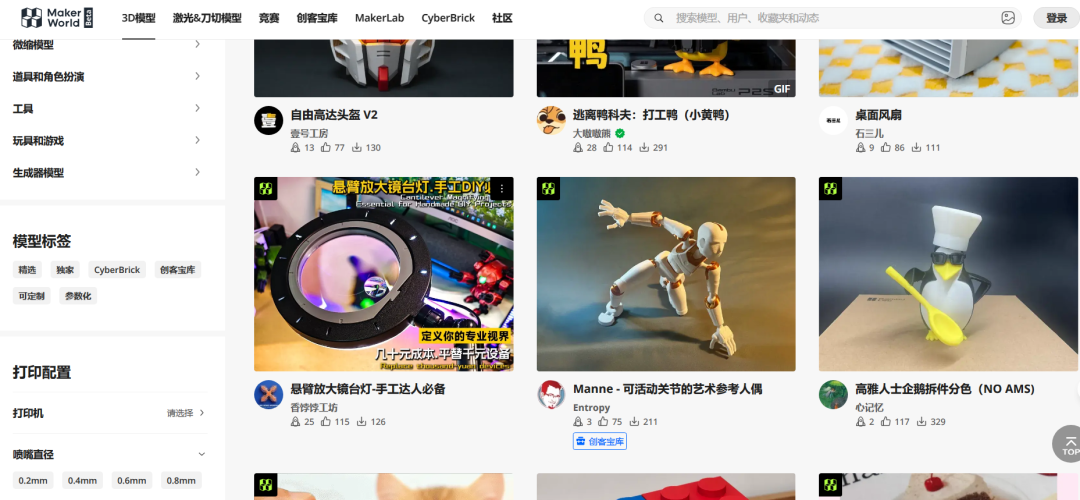
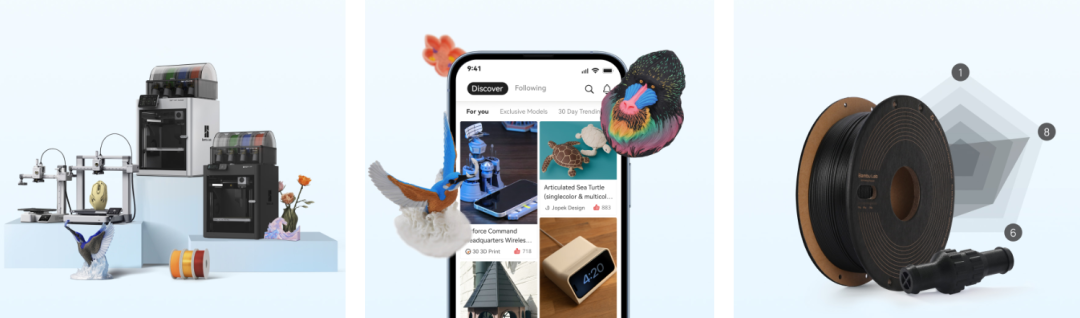
Bambu’s success lies in the fact that it is not just selling a printer, but building a complete creative ecosystem. Users can find a wealth of high-quality models on Bambu’s independent model content platform, MakerWorld, which come with customized configuration files specific to certain printers or materials, allowing users to start printing with just one click without complicated parameter settings.
This ecosystem greatly lowers the threshold for using 3D printing. Previously, Tao Ye mentioned in an overseas podcast that previous 3D printer manufacturers often allowed defects in new machines and left the resolution of subsequent issues to the open-source community.
In contrast, Bambu strives for the equipment to be in perfect condition when it leaves the factory.
Bambu’s recruitment strategy also supports its technological leadership. The salary range for various engineers and product managers is generally between 25k and 50k, requiring “high education, hard work, and high salary.” A recent graduate who wanted to apply to Bambu stated: “Their screening is very strict; even graduates from top universities with rich internship experience may not necessarily receive an offer.”
Part03
LEGO: The Glory and Weakness of the Brick Empire
As a leader in the global toy industry, LEGO has established an almost unshakeable brick empire. According to a research report by Zhongyou Securities, LEGO Group’s revenue compound annual growth rate from 2020 to 2024 is as high as 14.22%, with a historical high expected in 2024.
Its gross profit margin remains an astonishing 70% level, and strong brand power ensures a high premium space.
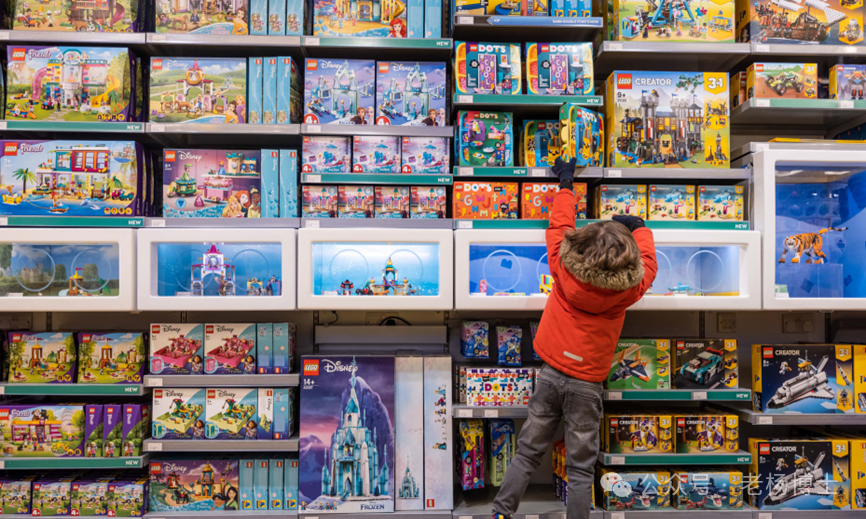
LEGO’s success largely stems from its ingenious IP strategy. Since its collaboration with Star Wars in 1999, LEGO has entered a golden age of IP collaborations. Today, LEGO has 22 licensed IPs and 19 proprietary theme series, with the five best-selling series in 2024 reflecting a complementary pattern between licensed IPs and proprietary classic themes.
Another clever aspect of LEGO is its successful expansion into the “adult player” market. In 2020, LEGO officially launched the “18+” series exclusively for adults, cleverly addressing the potential awkwardness of adults purchasing toys, allowing the repurchase demographic to extend beyond children.
These adult players are willing to invest high budgets, purchasing items such as the $850 Star Wars Millennium Falcon or the $680 Titanic replica.
According to data from Circana, the contribution of the “Kidult” demographic, aged 12 and above, to the toy market rose from 23.4% in 2019 to 28% in 2022. Adults have become an indispensable growth engine for the toy industry.
However, the LEGO empire also has its weaknesses. Despite LEGO’s continuous launch of new series, its standard particle-based brick system is essentially still a standardized product.
Meanwhile, the complete customization possibilities offered by 3D printing are quietly eroding LEGO’s most valuable asset—the creative class that seeks personalized expression.
Part04
Alternatives: The Paradigm Shift from Standardization to Customization
Buying Bambu is about playing with 3D printing, while buying from others is about using 3D printers.” This popular saying in the 3D printing community highlights the essential difference between Bambu and other products. The social media reviews indirectly confirm the reliability and low learning threshold of Bambu’s devices.
3D printing is reshaping consumers’ perceptions of creativity and manufacturing.
In communities like MakerWorld, THANGS, and Thingiverse, users can find LABUBU models of various sizes and clothing accessories, and even “Doraemon” models, which can be printed directly after selection, achieving “LABUBU freedom.” Other popular IP figurines, such as Ao Bing’s dragon ice hammer and Sakura Kinomoto’s wand, are also common.
For the vast fandom community, 3D printing has become a tool for replicating and creating derivative products. Searching for “3D printing” on Xiaohongshu reveals a plethora of meticulously crafted derivative works.
The model of the Sky Blade from Genshin Impact can be printed out and used for cosplay, with the ultra-fine nozzle and Bambu’s innovative color printing achieving high detail restoration, allowing enthusiasts to download the model from the internet and print it on their own printer with just one click.
3D printing not only lowers the manufacturing threshold but also gives rise to revolutionary creative production tools. Current AI modeling tools like TripoAI and Hunyuan 3D can generate printable 3D model files from a single image.
A fan without an art background stated that she imported a photo, made simple parameter adjustments, and was able to generate a translucent relief card directly.
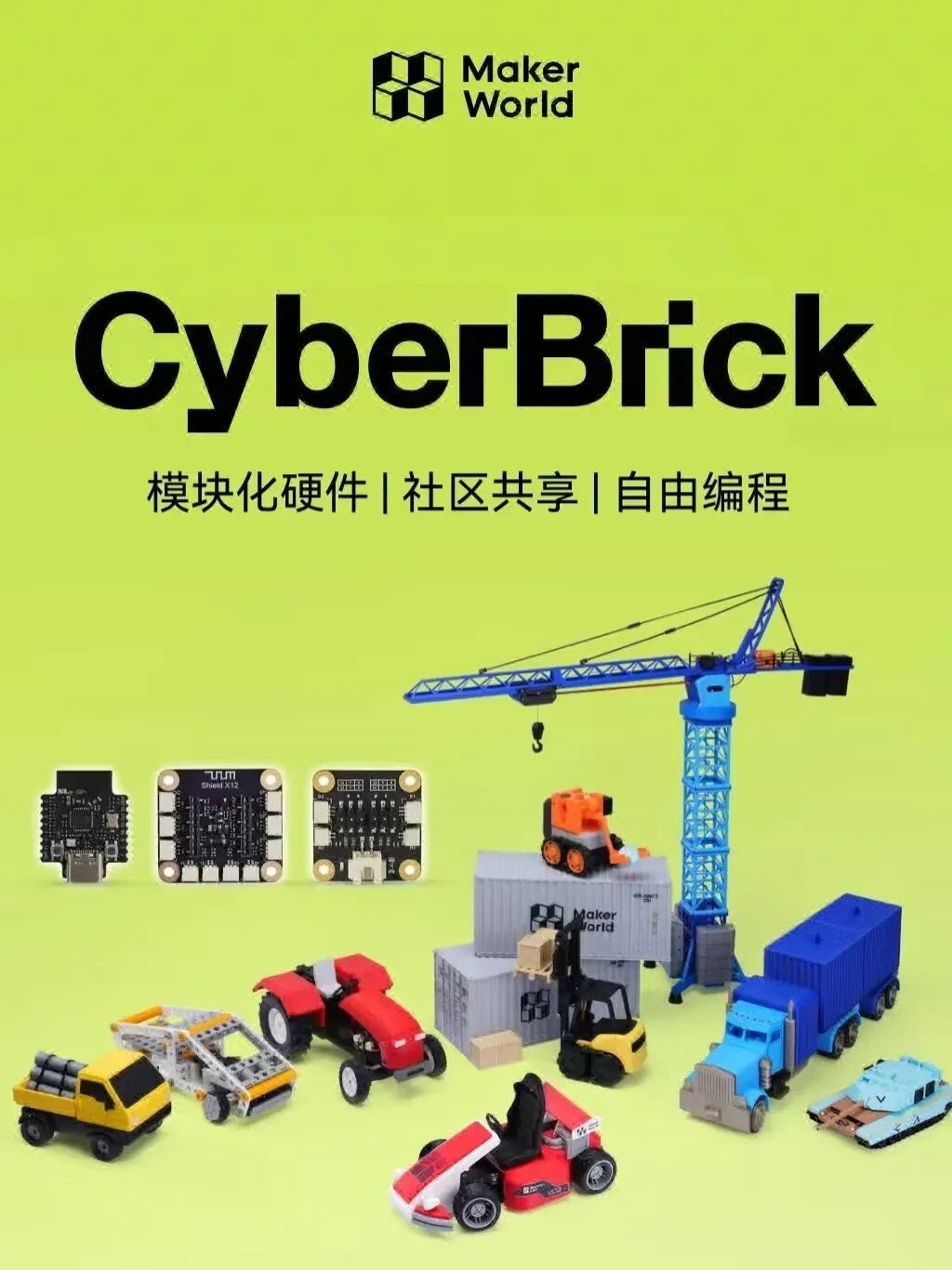
Bambu’s CyberBrick series aims to disrupt the LEGO and robotics programming education market through Arduino + 3D printed bricks + open-source community.
For less than 200 yuan, you can buy an official hardware kit and a 3D printer to create your own DIY toy factory at home. The main control board has programmable interfaces, requires no soldering, and can be paired with motors, servos, and sensors, allowing you to assemble whatever your imagination can conceive. With models from designers around the world on Makerworld, you can even DIY a mini construction site.
What’s truly explosive is its distributed manufacturing concept; you don’t need to buy a bunch of finished parts, just spend a little on printing materials, generate parts locally, and recycle electronic modules, making it both environmentally friendly and cost-effective. It also includes full-chain support for programming education, supporting Scratch and MicroPython, allowing you to control motors, adjust speeds, and angles, and even support Bluetooth remote control and real-time video capture.
This hardware one-time purchase + continuous co-creation of content + distributed manufacturing logic effectively meets the pain points of a new generation of family education users. It’s not just play; it’s teaching, learning, and creating. The rapid crowdfunding success of CyberBrick, raising 3 million, is no coincidence; it represents a new ecosystem driven by content and hardware reuse.
While LEGO has attempted to merge the physical and digital through experiences like LegoFortnite, its physical form is still limited by standardized particles. In contrast, 3D printing unlocks infinite form possibilities at the molecular level. This paradigm shift from standardization to customization may be the true technological foundation for Bambu to become a LEGO alternative.
Part05
Industrial Transformation: 3D Printing Reshaping the Manufacturing Landscape
The transformation brought by 3D printing goes far beyond the consumer level. According to market research, the global 3D printing market is expected to grow from 16.16 billion USD in 2025 to 35.79 billion USD in 2030, with a compound annual growth rate of 17.2%.
This growth is driven by personalized demand, material innovation, and the expansion of application fields.
On the technical side, selective laser sintering (SLS) and other 3D printing technologies are rapidly growing. SLS excels at producing complex functional parts, such as joints, snap fits, and living hinges, without the need for support structures.
It can handle high-performance materials like nylon 12, nylon 11, and glass-filled nylon, making it particularly suitable for applications requiring strength, flexibility, and heat resistance. Metal and ceramic materials can also now be used in 3D printing.
The automotive industry is one of the fastest-growing verticals for 3D printing. This industry is shifting from rapid prototyping to full production of final parts. Additive manufacturing significantly shortens product development cycles through rapid prototyping, enabling faster testing and improvements.
At the same time, 3D printing enables complex geometries that are difficult to achieve with traditional methods, supporting performance optimization and lightweight design—especially important for electric vehicles and sustainability.
The medical industry is also benefiting immensely from 3D printing. This technology is used to produce customized prosthetics, implants, and surgical guides, providing better treatment outcomes for patients. With the development of biocompatible materials, the application of 3D printing in the medical field will further expand.
3D printing has also facilitated the development of distributed manufacturing. Since designs can be digitally transmitted and produced locally at demand locations, it reduces the need for long-distance transportation, speeding up production and lowering carbon footprints.
This shift in manufacturing models may ultimately challenge the advantages of traditional large-scale centralized production.
Part06
Future Challenges: From Technology Popularization to Ecosystem Building
Despite the bright prospects, Bambu and the 3D printing industry still face many challenges. Although Bambu has lowered the usage threshold through technological breakthroughs and community building, the professionalism of 3D printing means that this product still has a high “newbie wall” in the process of transitioning from tech geeks to the general public.
Some users with no background may often encounter issues like “filament tangling” (where the filament gets tangled and ends up as waste) when entering the world of 3D printing.
As sales scale increases, Bambu is also facing more after-sales service pressure. A former employee from the customer service department stated that the majority of daily feedback regarding clogs, tangling, and breakage are due to improper use or unreasonable placement by consumers.
How to further lower the usage threshold remains a problem Bambu needs to solve.
Additionally, the content ecosystem of 3D printing is still in its early stages. Although Bambu’s MakerWorld community has a large number of models, it still appears immature compared to LEGO’s decades of accumulated IP ecosystem. LEGO has 22 licensed IPs and 19 proprietary theme series, while the 3D printing community mainly relies on user-generated sharing, with varying quality.
Intellectual property is another thorny issue. 3D printing makes it easier to replicate copyrighted designs, which may lead to infringement issues. How to balance encouraging creativity and protecting intellectual property will be an important factor for the healthy development of the industry.
Nevertheless, Bambu continues to innovate. In October 2025, Bambu will release the next generation of 3D printers, the P2S, which integrates leading second-generation technologies: the Lingji extruder and adaptive air circulation system.
The P2S will also introduce advanced AI computer vision technology that can actively monitor common printing issues.
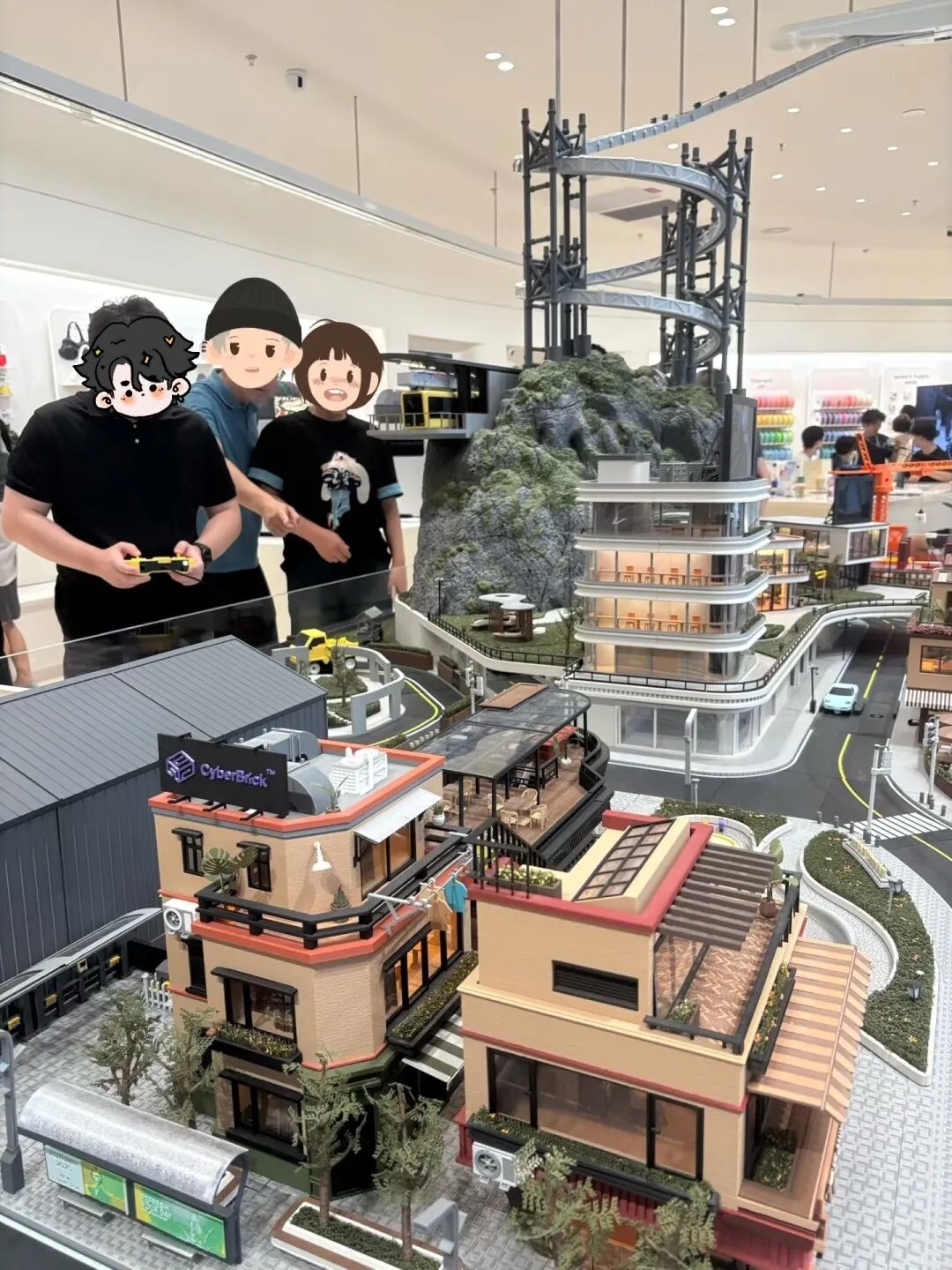
At the same time, Bambu is expanding into broader markets. On September 30, 2025, the first Bambu offline flagship store opened in Shenzhen’s MixC, showcasing multiple models of printers and various 3D printed shoes, toys, and crafts. Even on weekdays, a considerable number of parents and children gather here, indicating that 3D printing has fully entered the consumer market.
END
In the Bao’an District of Shenzhen, Bambu’s factory is producing 3D printers day and night. Meanwhile, engineers at Bambu’s headquarters in Nanshan District are continuously iterating on technology and software.
Nearby, consumer electronics giants like DJI, Yingshi, and Anker stand side by side, forming a super collaborative network within a 50-kilometer radius of Shenzhen. Tao Ye once said, “The efficiency of the supply chain determines the life and death of innovation.” Today, Bambu not only benefits from this supply chain but has also become a part of the supply chain for countless innovators—from smart hardware teams’ product prototypes to designers’ creative realizations, and to personalized manufacturing for family users.
3D printing is not about completely replacing traditional manufacturing but providing a new possibility—finding a balance between standardization and personalization, between mass production and distributed manufacturing.
This revolution is not about who can “kill” whom, but about how to redefine the way we create the world.
Image Source|Self-shot, Bambu, Xiaohongshu

A I Hardware Industry Entry