 【Scan the QR code in the image or click the mini program below to join the community and access all materials】
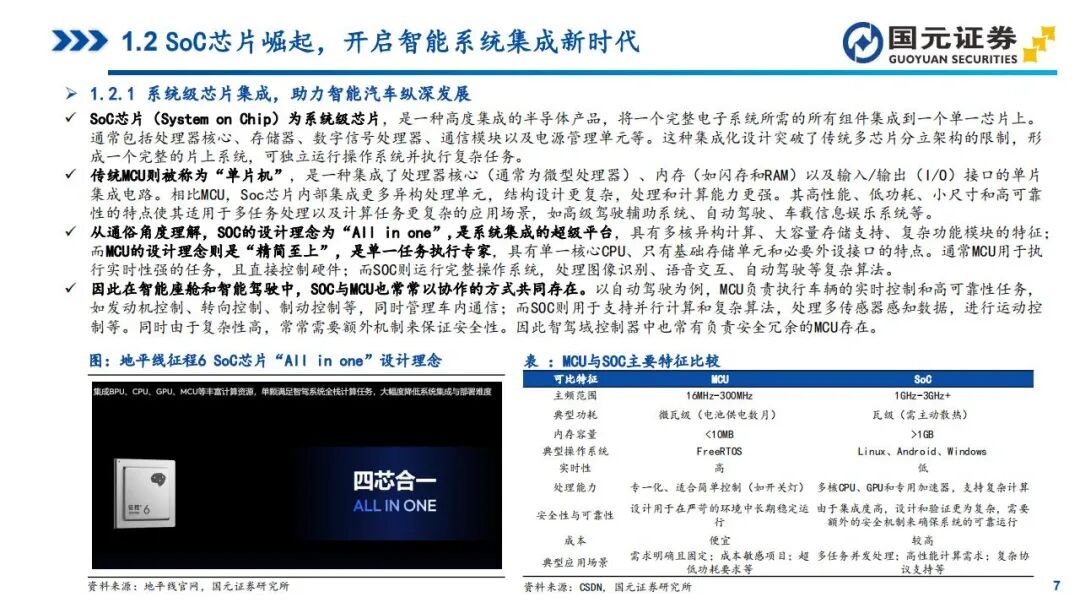
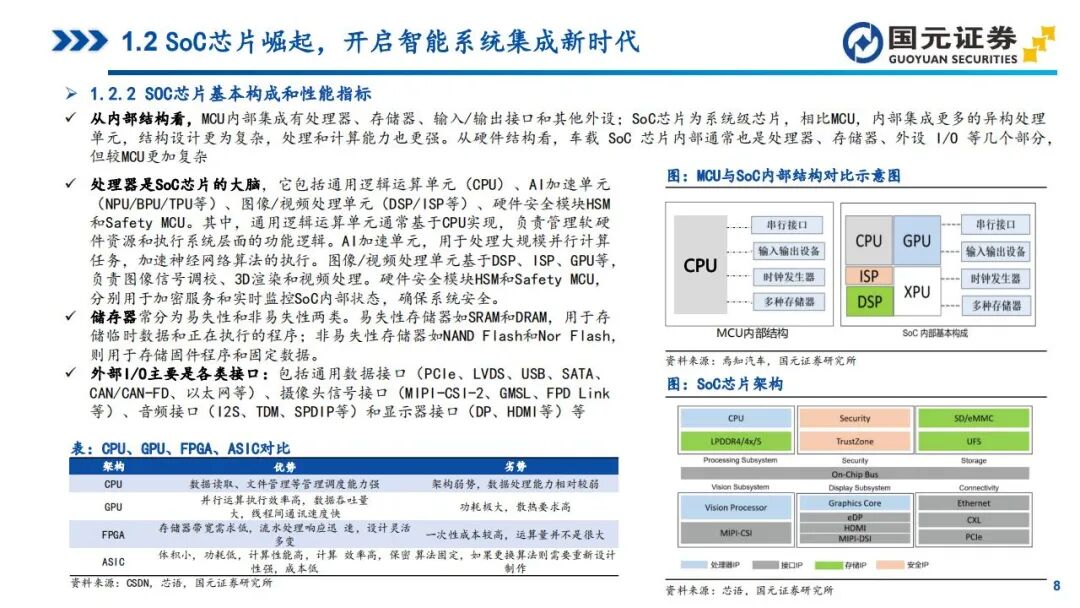
The evolution of smart vehicles has rapidly shaped the automotive SoC chip industry, with automakers and component manufacturers gradually shifting their focus to the implementation capabilities of “smart cockpit + autonomous driving.” SoC chips have become a standard configuration for mainstream new energy vehicles. Companies like Zeekr, Li Auto, and Tesla are developing their own chip solutions, leading to significant adjustments in the industry landscape.
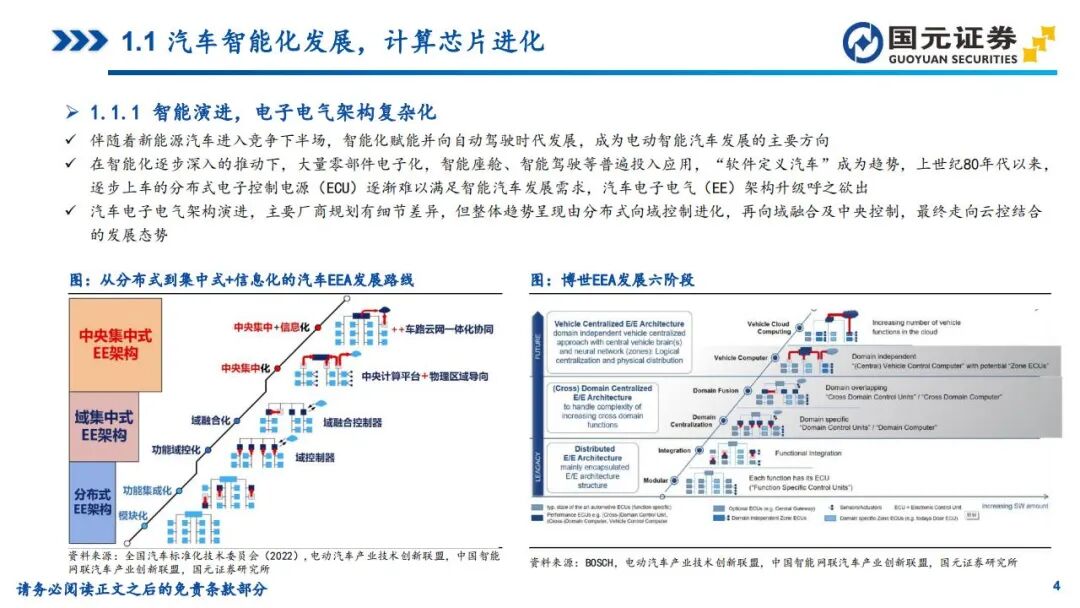
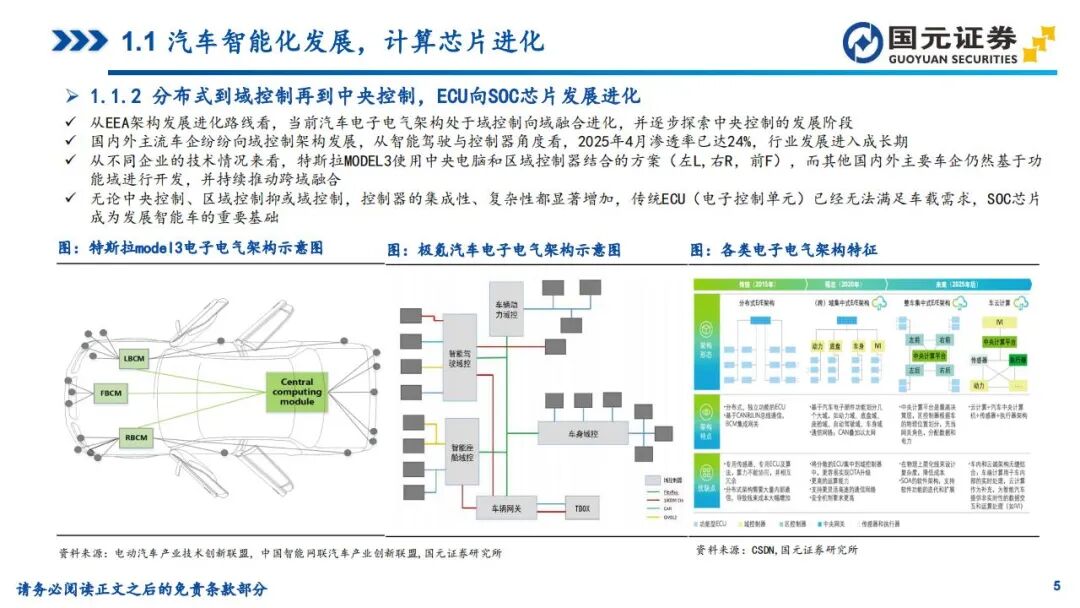
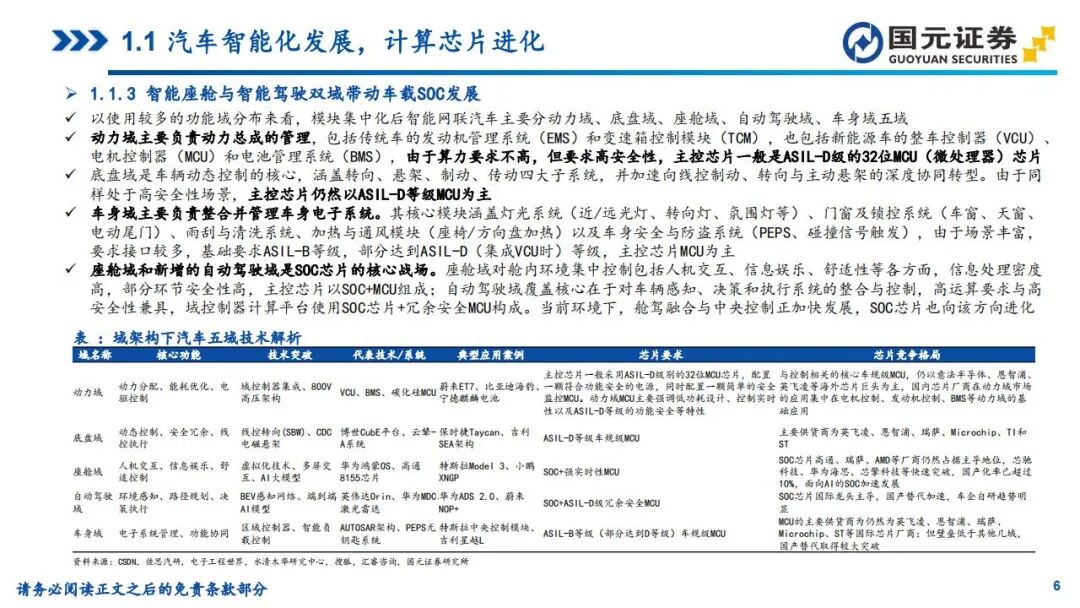
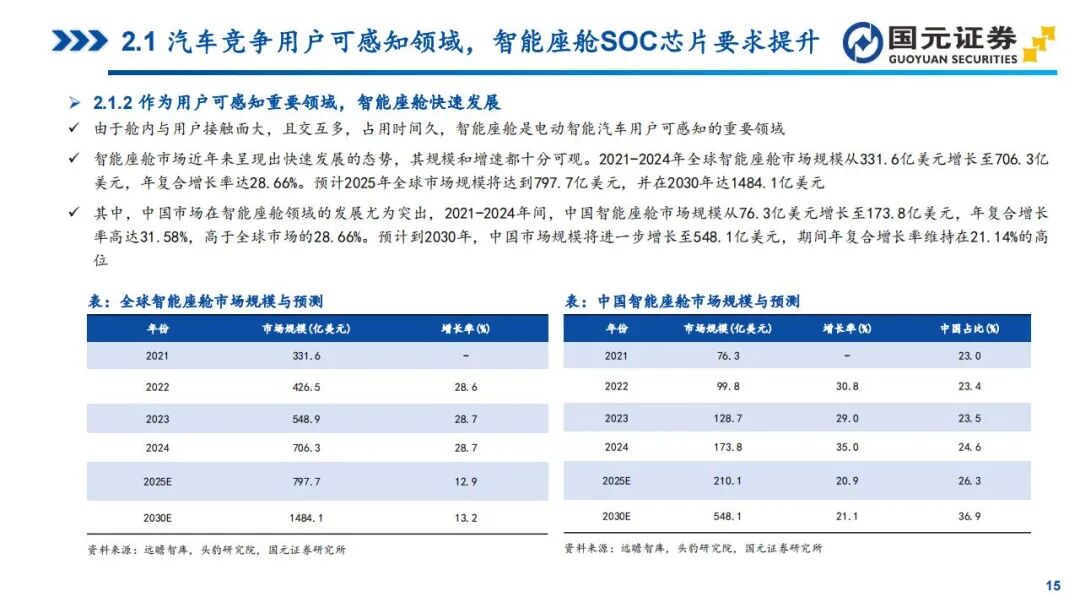
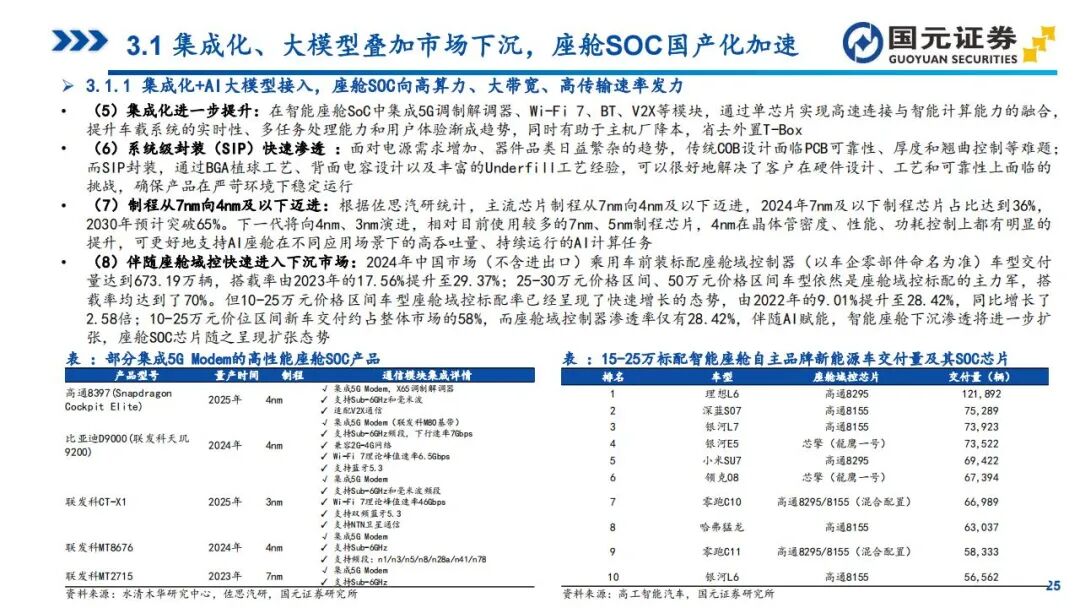
This report focuses on the upgrade paths of automotive electronic architectures, distribution of the industry chain, market size, technological dynamics of leading companies, and the pace of domestic substitution, providing detailed data for both global and Chinese markets. In the smart cockpit sector, the global market is expected to reach $70.6 billion by 2024 and approach $150 billion by 2030, with China’s share rapidly increasing. The delivery volume of passenger vehicles equipped with cockpit domain controllers in China has exceeded 6.7 million units, with a penetration rate of nearly 30%.
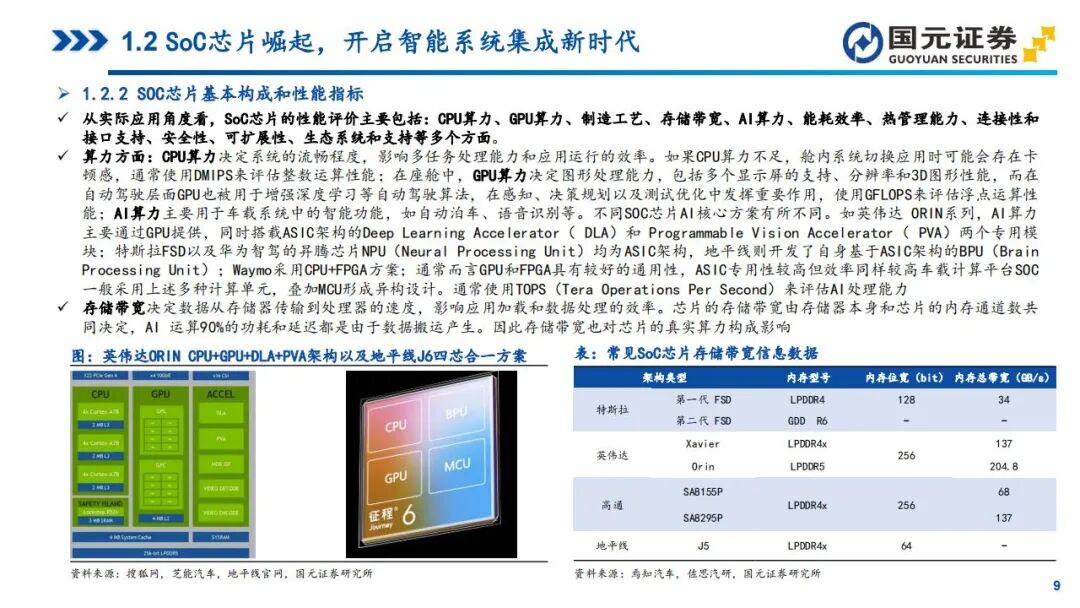
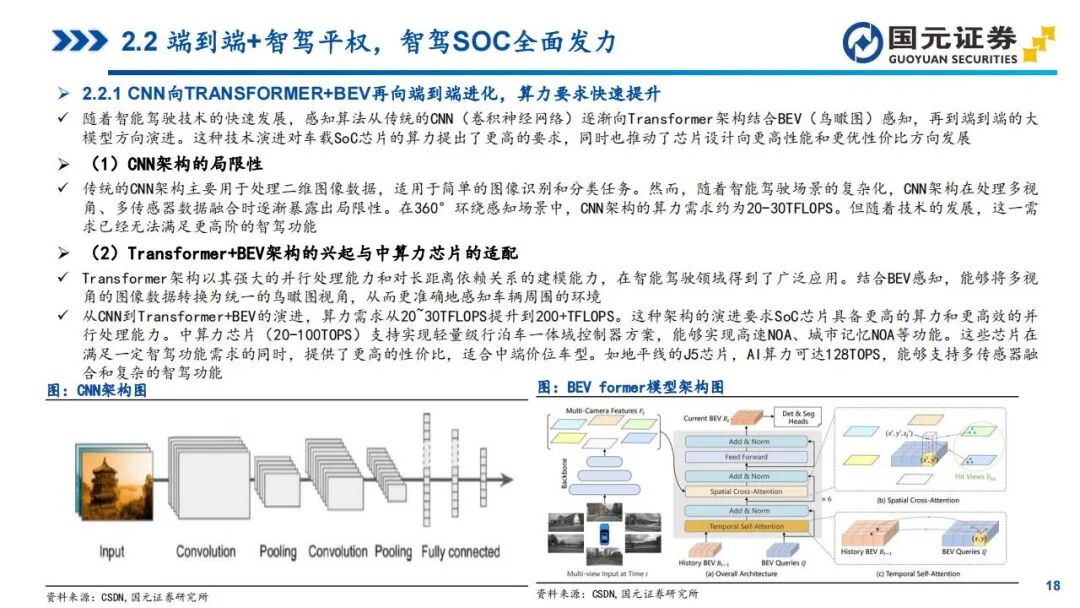
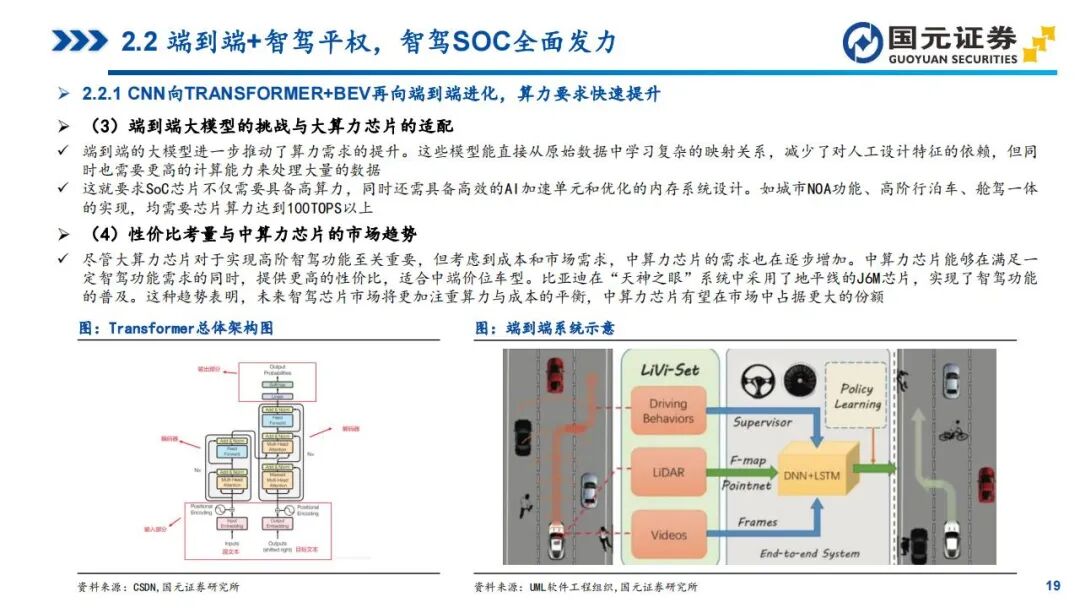
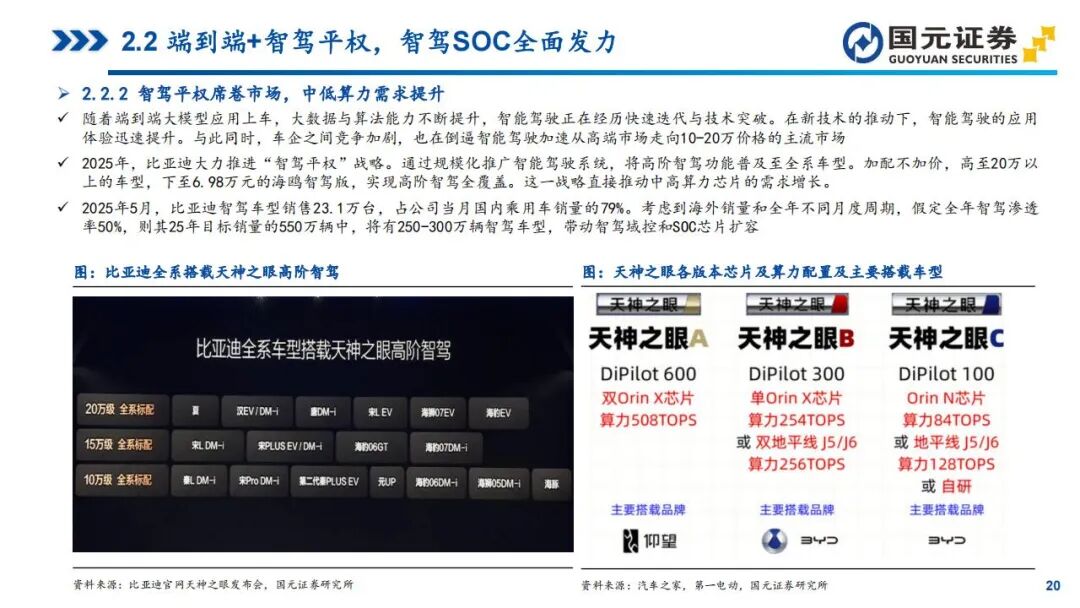
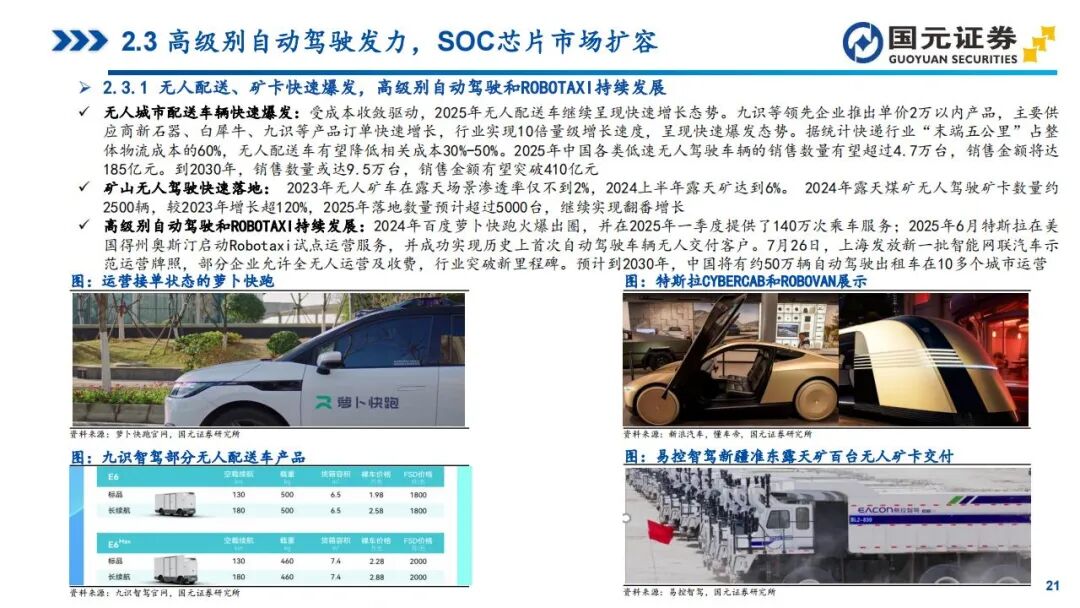
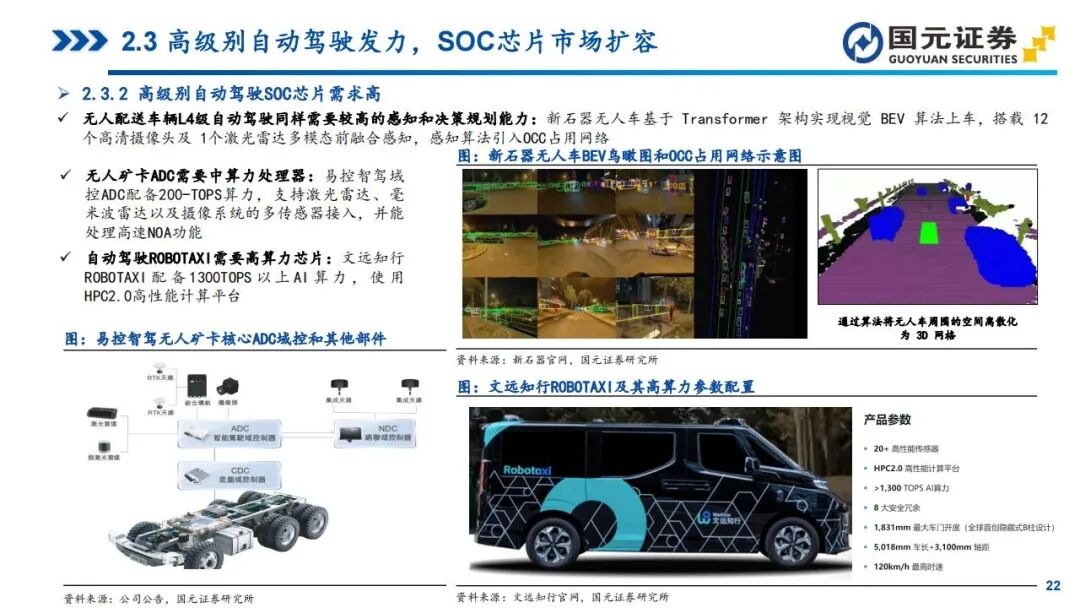
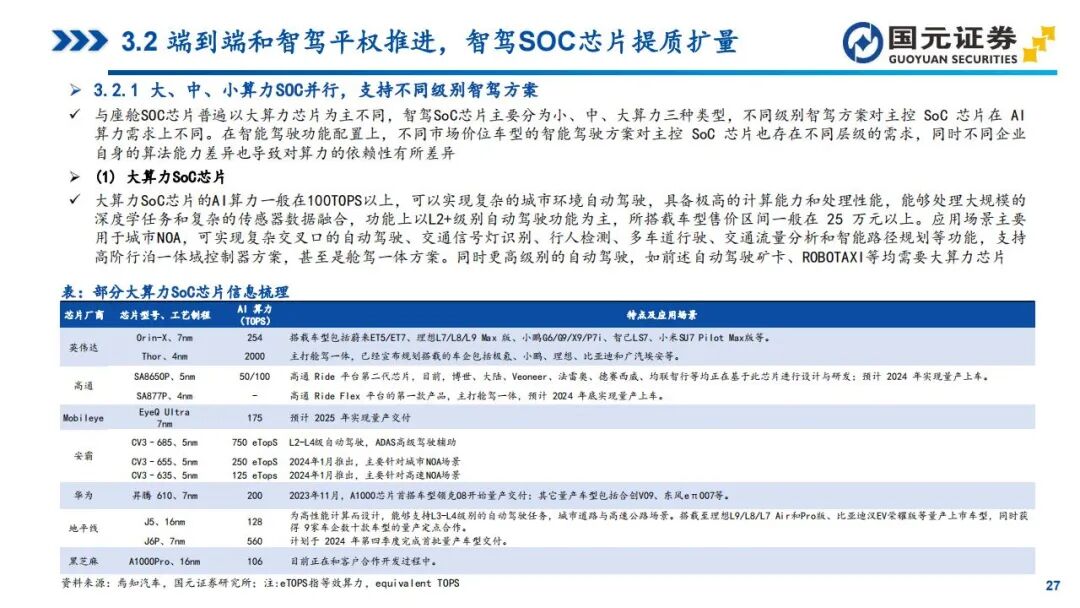
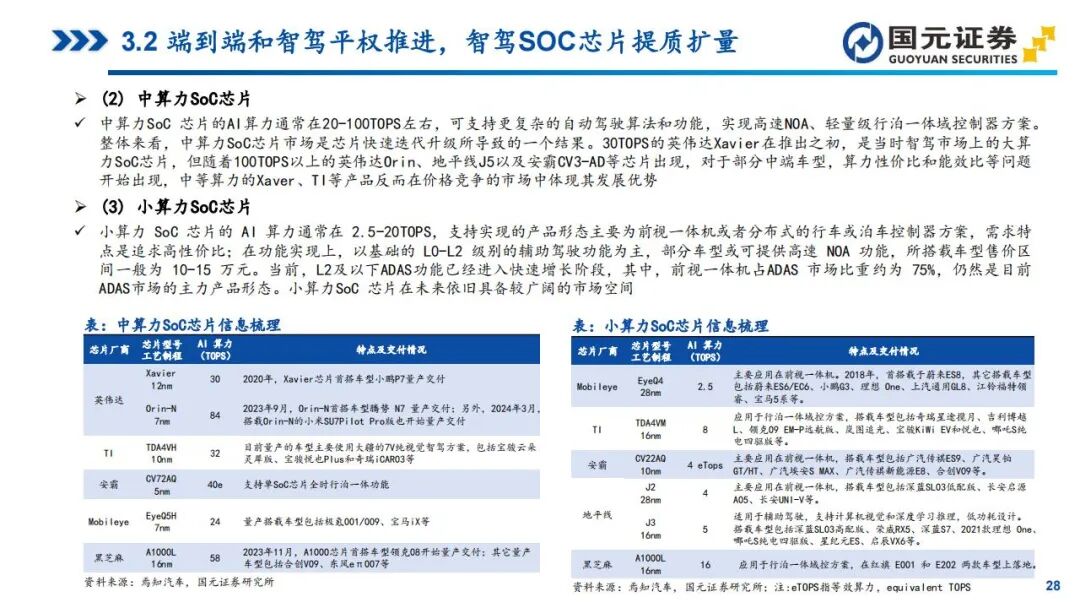
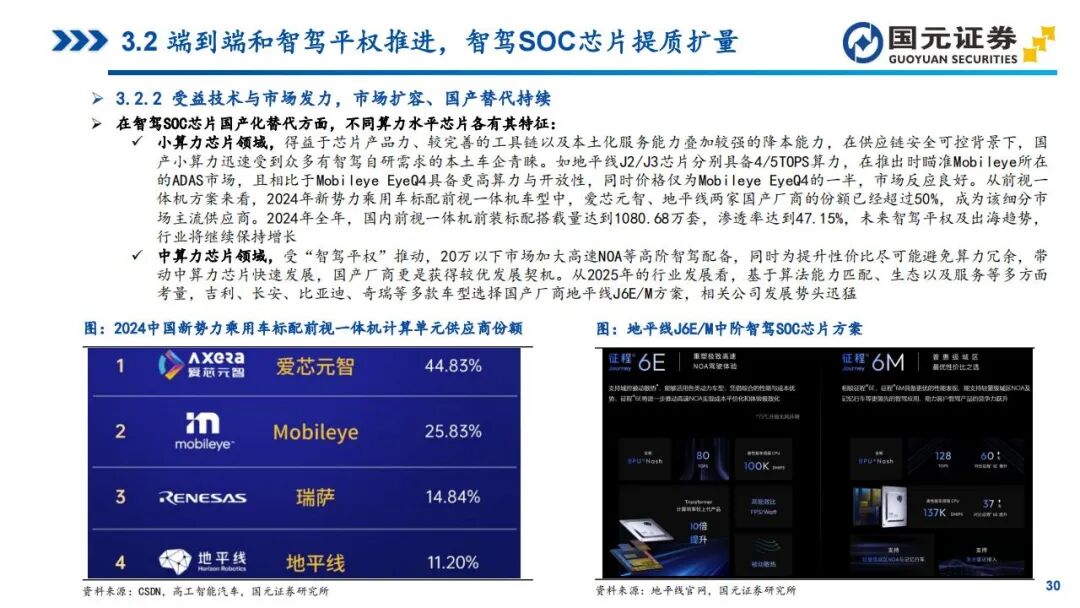
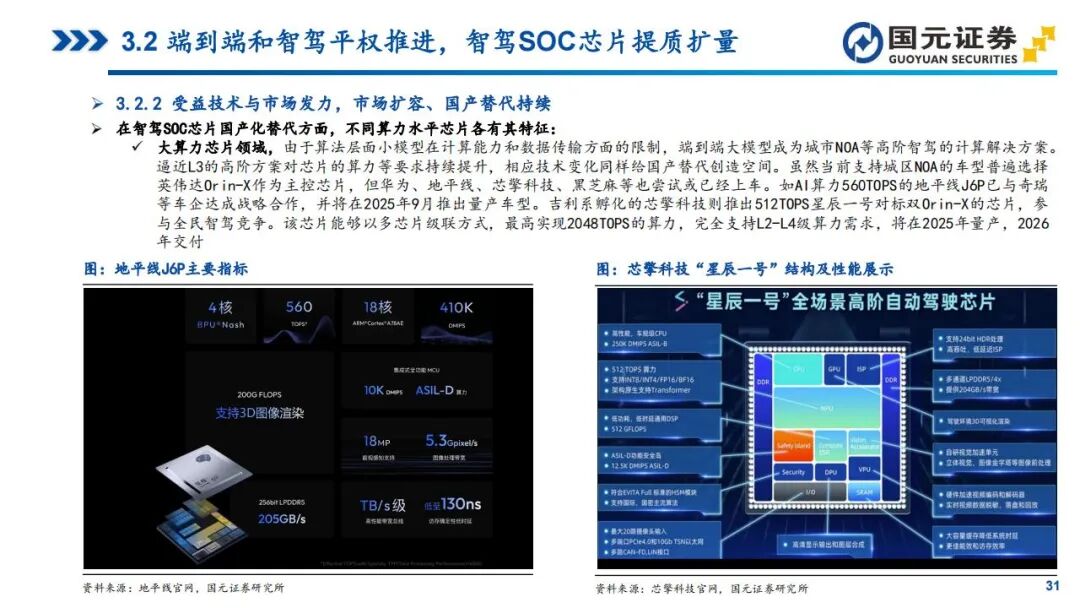
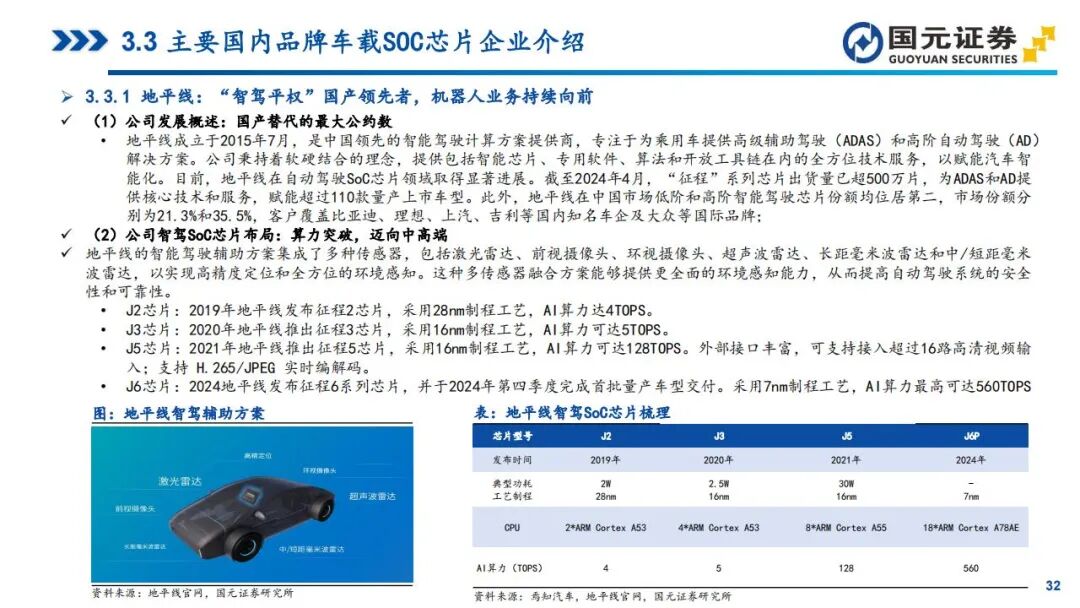
The technology iteration of autonomous driving SoC chips is accelerating, categorized into three levels of computing power: high, medium, and low. Advanced NOA (Navigation On Autopilot), integrated driving and parking, and L2+ intelligent assistance have become standard features in new models. The Horizon J6M chip used by BYD achieves 128 TOPS, targeting urban NOA applications. Low-speed autonomous driving scenarios such as unmanned delivery and Robotaxi are generating a new wave of chip demand. By 2025, domestic sales of autonomous vehicles are expected to reach 47,000 units, with a related market size of 18.5 billion yuan.
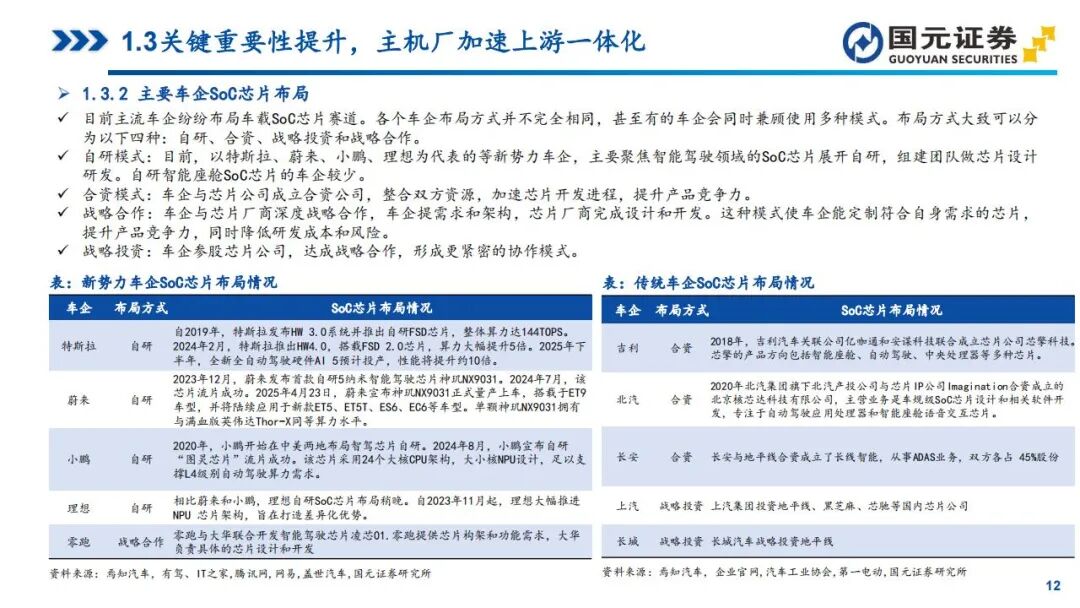
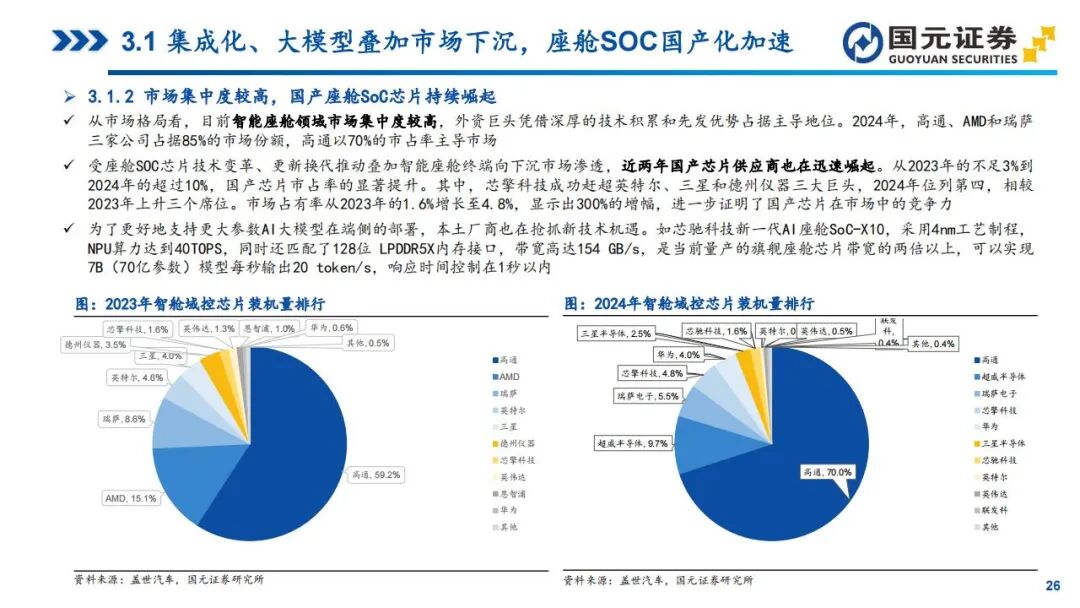
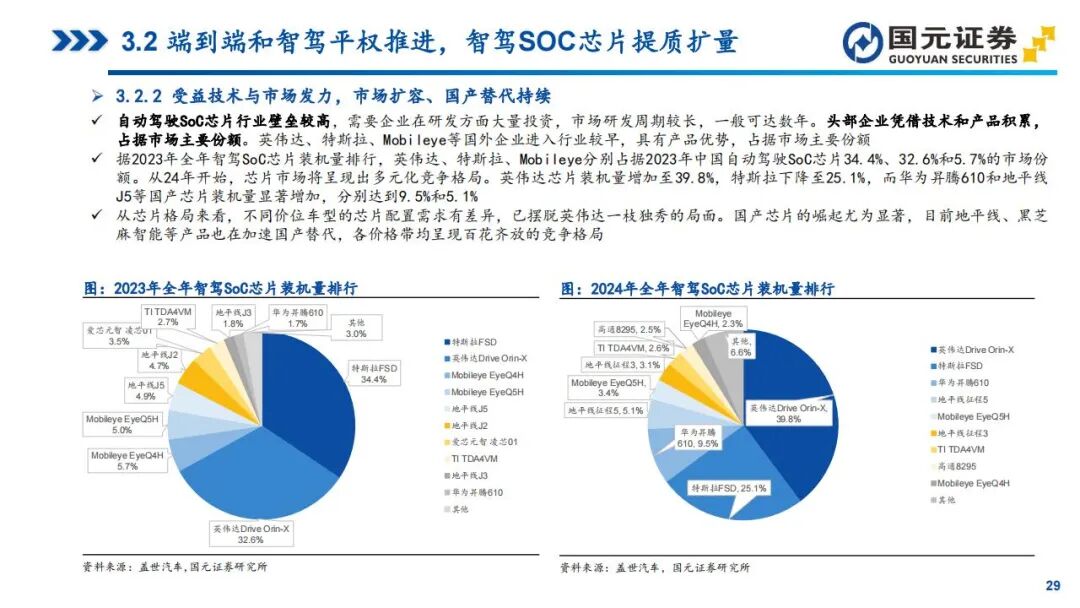
The localization of chips is significantly accelerating. By 2024, the market share of Chipone is projected to be 4.8%, ranking fifth globally. Chipsea has released a new cockpit SoC with a 4nm process, achieving an NPU computing power of 40 TOPS, capable of real-time response for large models with 7 billion parameters. Domestic chips have entered the supply chains of leading automotive manufacturers, with OEMs deeply engaging in the core of the industry through self-research, investment, and joint ventures. Tesla’s HW4.0, NIO’s Shenji, and Xpeng’s Turing chips have all achieved mass production applications.
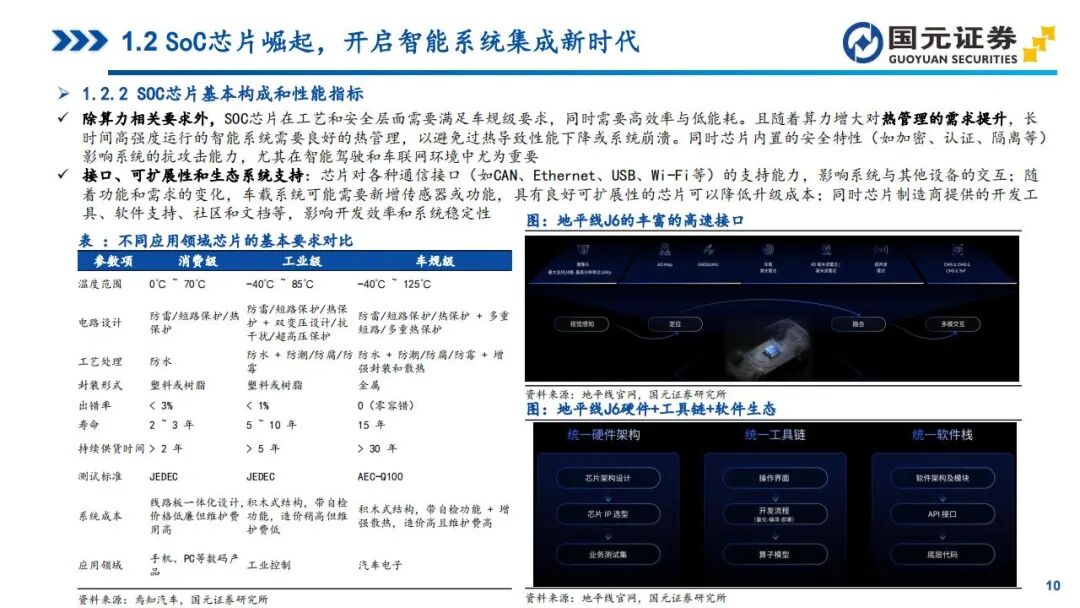
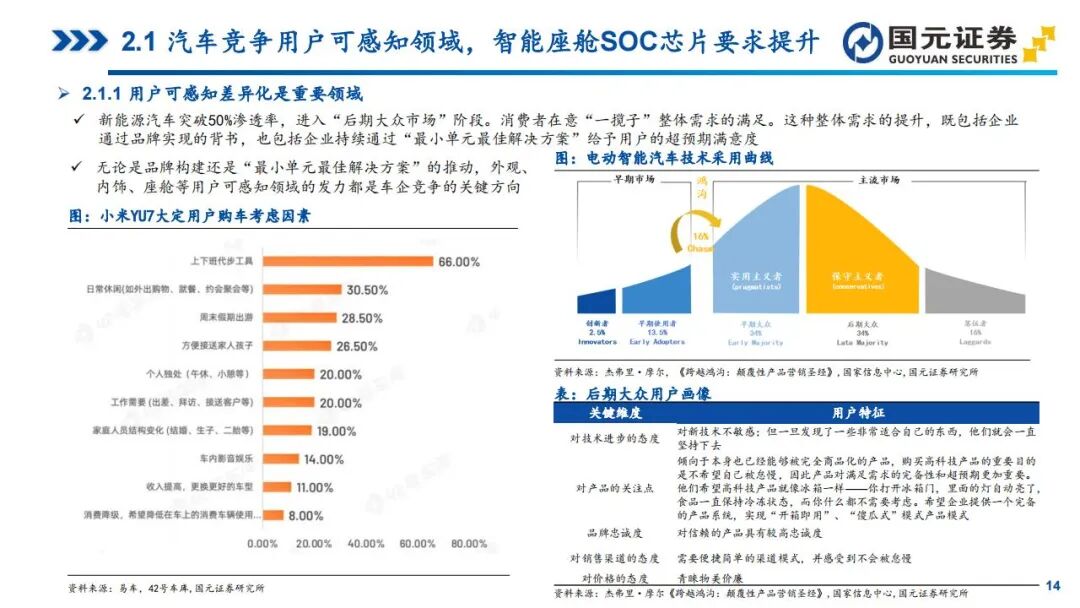
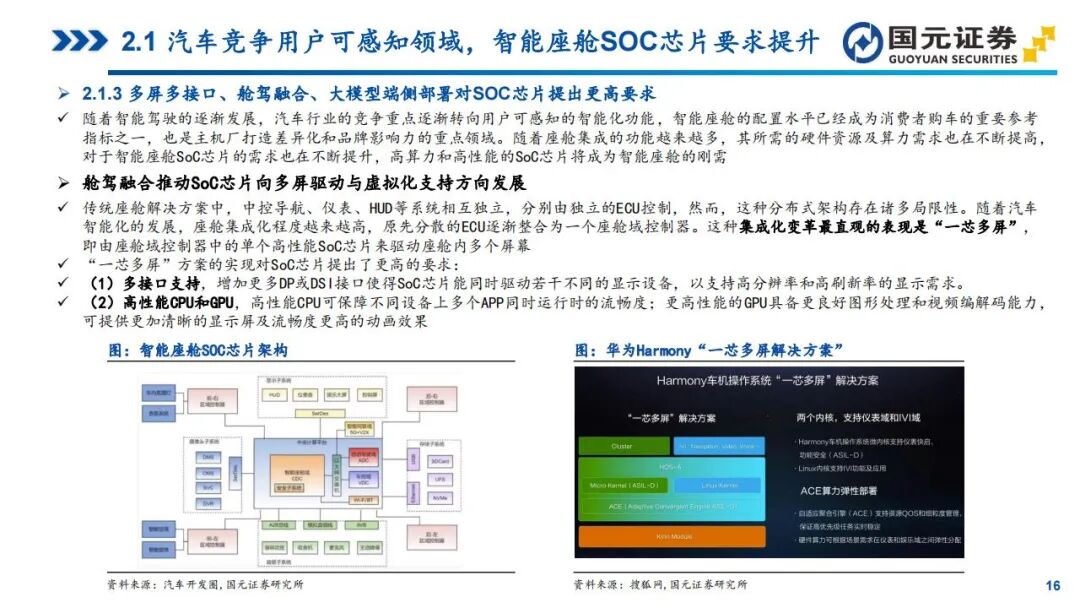
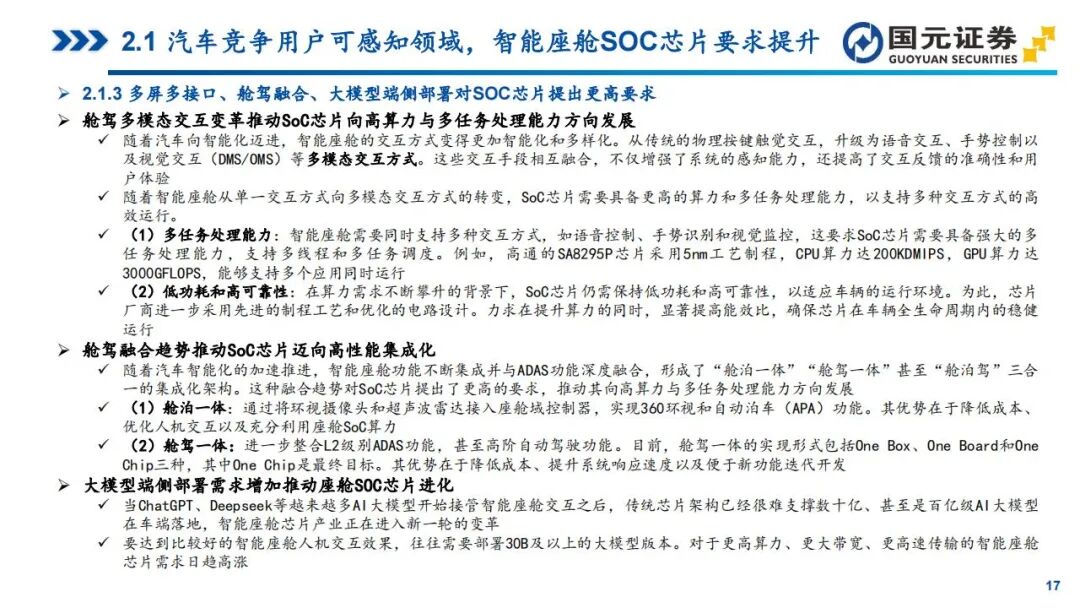
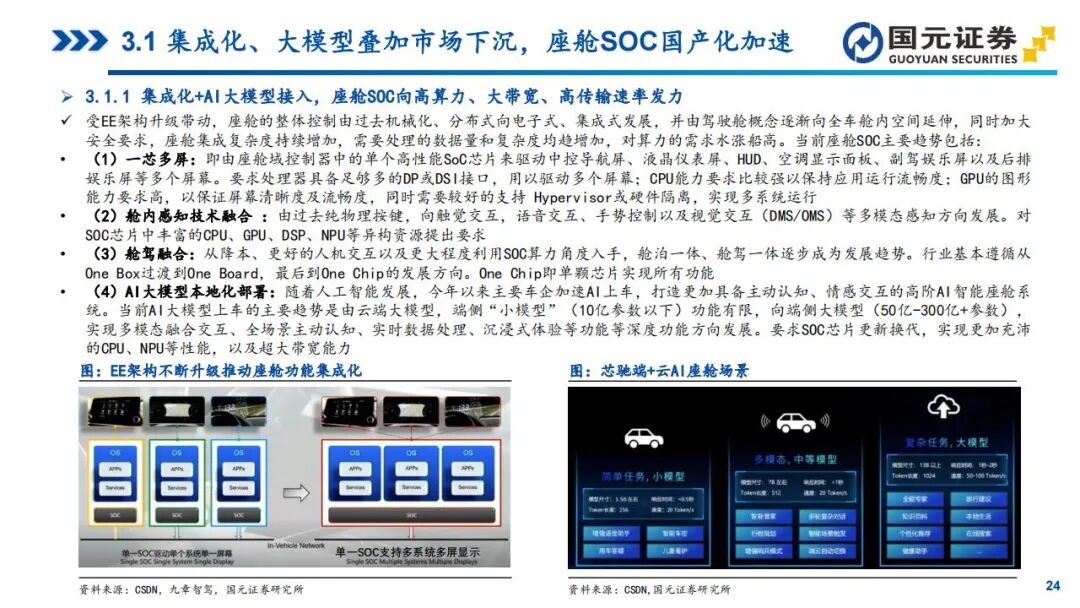
The integration of functions in cockpit SoC chips is increasing, with 5G, WiFi 7, and V2X communication capabilities gradually embedded. The proportion of chips with a process of 7nm or below continues to rise, expected to exceed 60% by 2030. The penetration rate of smart cockpits in mainstream models reached 28% in 2024, concentrated in the price range of 100,000 to 250,000 yuan, driving a significant expansion in chip demand.
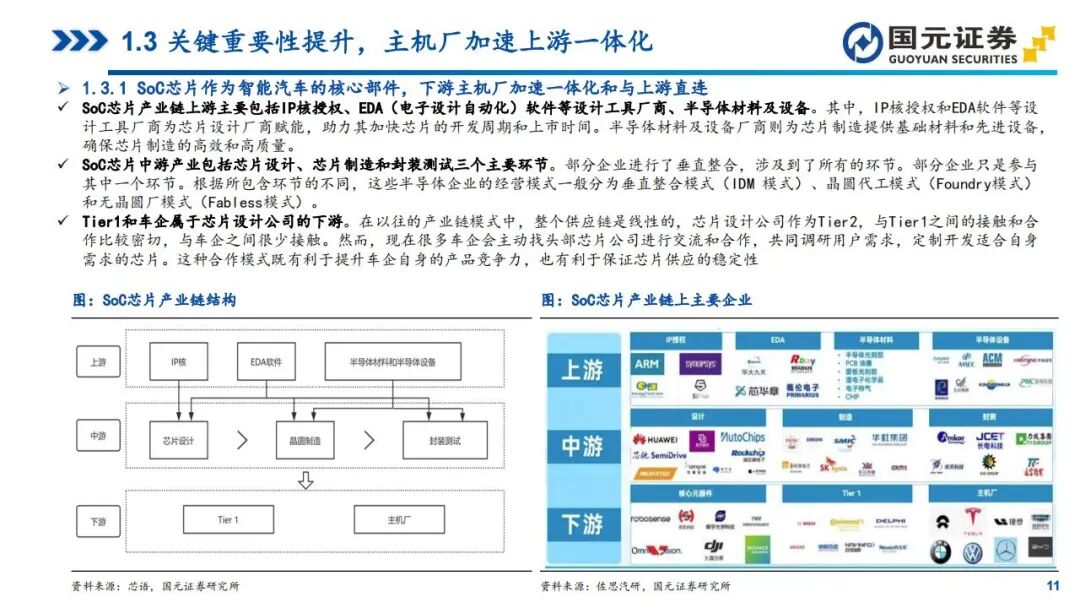
The chip industry chain encompasses upstream IP licensing, EDA tools, manufacturing, packaging, and downstream automotive manufacturers. The supply model is shifting from linear procurement to joint research and development, customization, and strategic cooperation, leading to closer industry collaboration. The technological strength of domestic chip companies continues to improve, with OEM orders increasing, driving an accelerated restructuring of the market.
Overall, the core position of automotive SoC chips has been jointly confirmed by the industry chain and capital markets. The triple drivers of technological iteration, market expansion, and localization trends are significantly enhancing the performance elasticity of leading companies. In the segments of smart cockpits and autonomous driving chips, the performance and market share of related companies are gradually becoming the focus of investor attention.
Scan the code to join the knowledge community for more industry reports

Disclaimer:The above materials are obtained through public and legal channels, and the copyright of the materials belongs to the original writing/publishing organization. This public account does not bear any legal responsibility for copyright issues; if the copyright holder believes there is an infringement issue, please notify us immediately for deletion.