







 Graphene-Powered Electronic SkinLeading a New Era of Robotic PerceptionGraphene e-skin
Introduction
The 2025 World Robot Conference (WRC) has just concluded, showcasing the latest achievements and cutting-edge trends in the field of robotics under the theme of “Making Robots Smarter and Bodies More Intelligent.” Over 100 new products were launched, covering various fields such as industrial, commercial, scientific research, and companionship, leaving attendees in awe. Behind these impressive robots lies a key technology that is quietly rising—electronic skin.
1. Electronic Skin: The Magical Garment Bestowing “Touch” to Robots

Electronic skin is a wearable, flexible biomimetic tactile sensor that can perceive external temperature, pressure, and friction, similar to human skin. By applying electronic skin to robot fingers, arms, and other parts, robots can gain the ability to sense external touch, allowing for more intelligent interaction with the environment and humans.
 Image source: Internet
Electronic skin possesses multi-dimensional tactile perception capabilities, primarily including temperature sensing, normal force sensing, and shear force sensing. Temperature sensing allows robots to detect changes in the temperature of the environment or objects, achieving hot and cold recognition and thermal safety feedback; normal force sensing helps robots determine contact, grip strength, and object hardness; shear force sensing aids robots in performing stability judgments for grasping, texture recognition, and directional judgments. These functions make robots’ applications in industrial manufacturing, logistics, medical care, and home companionship more intelligent and efficient.
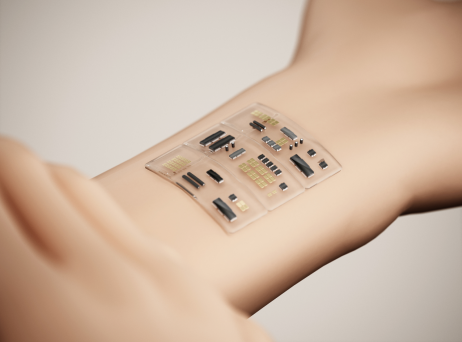
Image source: Internet
2. Graphene: The “Super Material” for Electronic Skin
The performance of electronic skin largely depends on its constituent materials. Electronic skin typically consists of electrodes, dielectric materials, active materials, and flexible substrates. Among these, active materials are the core of electronic skin, responsible for converting environmental stimuli into detectable electrical signals. Graphene, as a two-dimensional material composed of a single layer of carbon atoms, has become an ideal choice for the active material in electronic skin due to its unique electrical, mechanical, and thermal properties.1. Excellent Electrical Properties
Graphene has an extremely high electron mobility, meaning it can transmit electrical signals quickly and accurately. In electronic skin, graphene active materials can rapidly convert slight pressure or temperature changes into electrical signals, achieving high sensitivity tactile perception. Compared to traditional active materials, graphene-based electronic skin has a faster response speed, capable of capturing more subtle tactile information.
2. Outstanding Mechanical Properties
Graphene possesses extremely high strength and toughness, able to withstand significant stretching and bending without damage. This endows graphene-based electronic skin with good flexibility and durability, allowing it to adapt to various complex movements and operations of robots. Whether in high-intensity tasks in industrial environments or daily companionship in home settings, graphene electronic skin can maintain stable performance.
3. Good Thermal Properties
Graphene has excellent thermal conductivity, enabling it to quickly sense temperature changes and convert them into electrical signals. In electronic skin, graphene active materials can achieve precise sensing of environmental temperature and the temperature of contacted objects, providing robots with more comprehensive tactile information. This is significant for applications requiring precise temperature control, such as medical care and food processing.
3. Prospects for the Application of Graphene Electronic Skin Technology
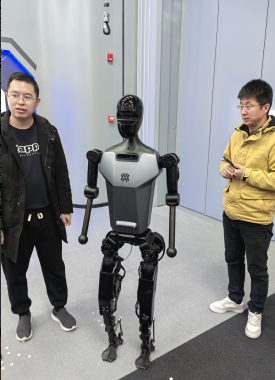
At the 2025 WRC, Hexagon unveiled the AEON humanoid robot, designed for industrial use, which boasts near-human movement flexibility and supports high-speed movement of up to 2.4m/s. It employs advanced sensor technology that may involve graphene electronic skin, enabling it to operate stably in complex industrial environments, accurately reaching all corners of workpieces for high-speed automated inspection and high-precision 3D scanning, significantly replacing manual labor and enhancing efficiency and data reliability. The bipedal humanoid robot XMAN-F1 from Qianlang Intelligent performed impressively at the WRC, capable of executing delicate tasks such as bartending with excellent interaction capabilities. If equipped with graphene electronic skin, it would be able to more sensitively perceive user touch and operational strength, providing a more natural and smooth interaction experience, such as adjusting force and speed based on touch during bartending. In the medical field, the application prospects of graphene electronic skin are vast, potentially used to develop smart prosthetics that allow amputees to regain tactile perception, feeling the contact strength and temperature changes of prosthetics with objects for better control, and also for developing medical monitoring devices that can monitor patient vital signs in real-time, providing more accurate data support for medical diagnosis and treatment.
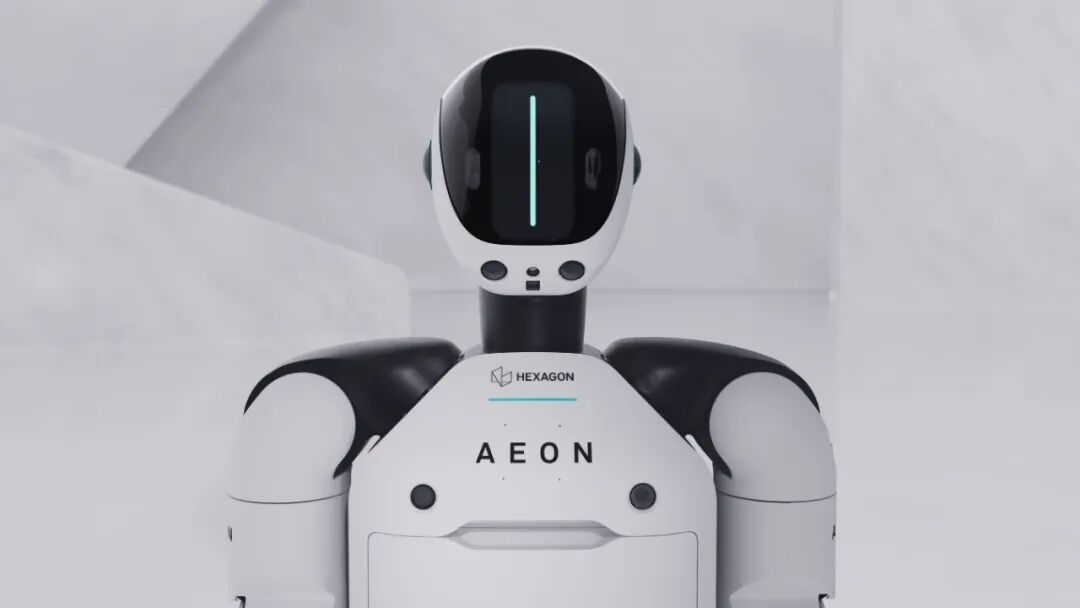
Image: Hexagon AEON Humanoid Robot Source: Hexagon
4. Technical Challenges and Future Prospects
Despite the enormous application potential of graphene electronic skin, it still faces some technical challenges. For instance, large-scale preparation and cost control of graphene, the reliability and stability of electronic skin, and integration with existing robotic systems. However, with continuous advancements in materials science, electronics technology, and algorithms, these issues are expected to be gradually resolved.
In the future, graphene electronic skin will develop towards higher sensitivity, lower power consumption, smaller size, and lower cost. At the same time, with the continuous integration of artificial intelligence and machine learning technologies, graphene electronic skin will be able to achieve more intelligent signal processing and decision-making, endowing robots with tactile perception capabilities closer to those of humans.
Shenzhen Biosen Sensor Technology Co., Ltd.
Shenzhen Biosen Sensor Technology Co., Ltd. (hereinafter referred to as Biosen Sensor) is incubated by the Beijing Graphene Technology Research Institute of China Aviation Development, with a research and development team composed of returnees from studying abroad. Biosen Sensor deeply applies artificial intelligence algorithms, based on the electromagnetic properties and high sensitivity of graphene, focusing on providing artificial intelligence perception products for humanoid robots, new energy vehicles, and smart medical applications. Biosen Sensor is the only innovative company in China with high-sensitivity graphene biosensor chips and mass production technology for graphene smart skin, with research and development bases in Shenzhen and Beijing, and some products have been applied and delivered in fields such as humanoid robots, special training monitoring, intelligent rehabilitation training, and rapid virus detection.
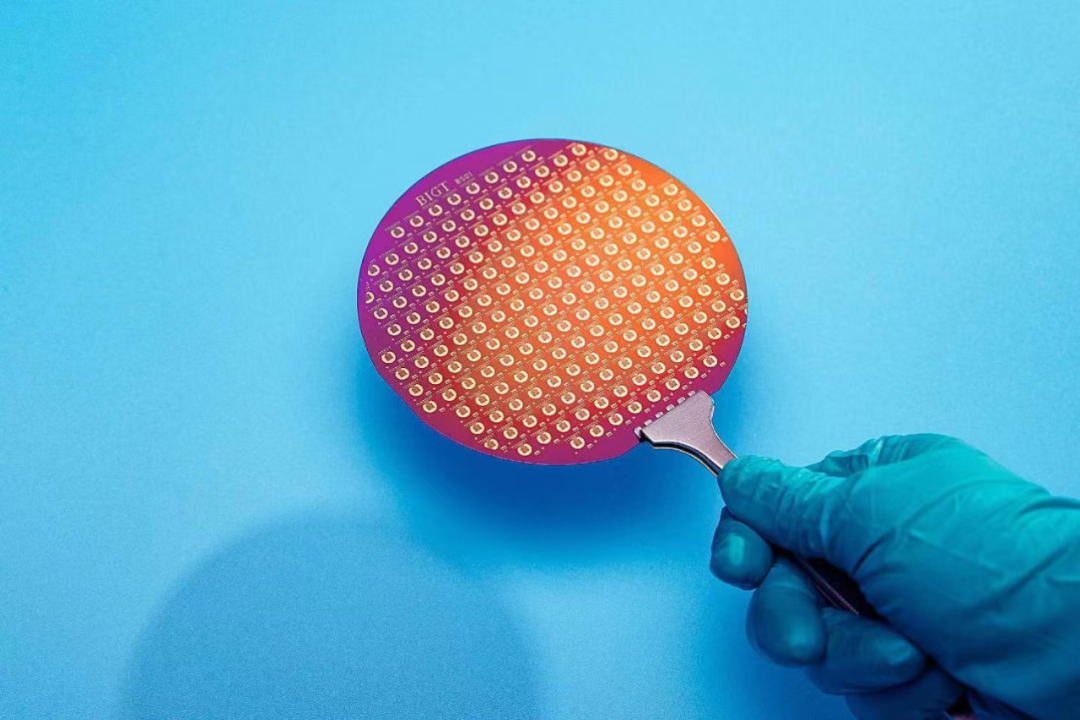
Biosen Graphene Biosensor Chip
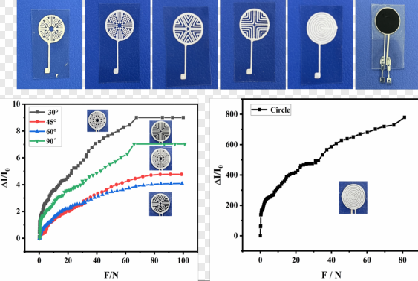
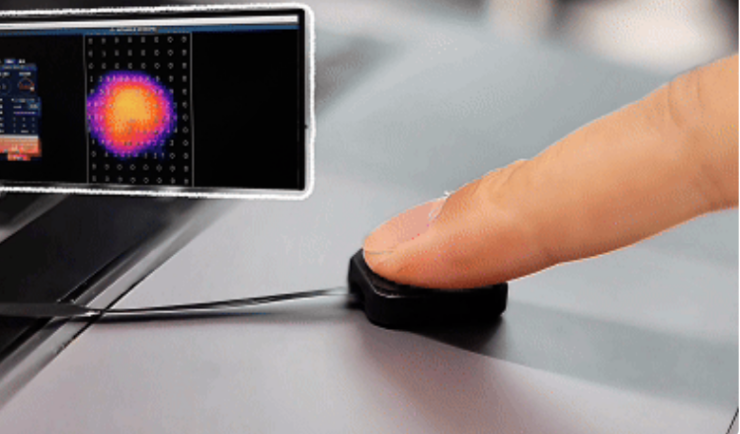
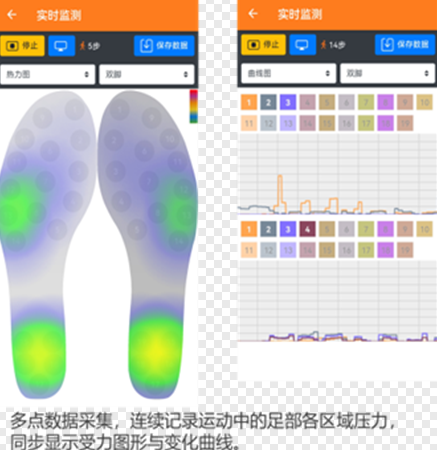
Biosen Sensor focuses on the development of graphene pressure-sensitive intelligent flexible electronic skin and the construction of embodied intelligent tactile perception big data models. The flexible electronic skin sensors developed not only possess high spatial resolution, high sensitivity, and fast response speed but also have good flexibility and extensibility, making them easy to adhere to irregular surfaces, accurately measuring tactile information at the first contact surface, and can be expanded over large areas. The sensor’s force resolution reaches 0.01N, with a pressure sensing range of 0.01 – 300N, response time of less than 5ms, and can withstand over 1 million bending cycles, while also achieving high-precision 3D force real-time perception, material recognition, and dynamic collaborative perception of multiple tactile sensing units, effectively expanding the application scenarios of humanoid robots and improving the intelligence level and service quality of human-robot interaction.
Conclusion
Electronic skin, as a key technology for robots to perceive the world, is thriving with the continuous advancements in materials science, electronics technology, and algorithms. Graphene, with its outstanding performance, shows great application potential in the field of electronic skin. At the 2025 WRC, we witnessed the debut of numerous new robotic products, and the electronic skin technology behind these robots is gradually changing our ways of life and work. We believe that in the future, with continuous breakthroughs in technology and ongoing industrial development, graphene electronic skin will empower robots with sharper perception capabilities, bringing more surprises and changes to our lives. Let us look forward to the early arrival of this technological miracle!
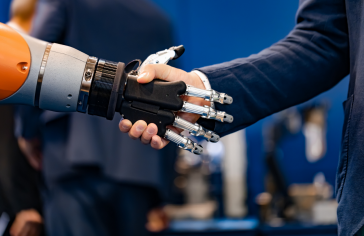
Image source: Internet
Data Sources
1. Aibot Robot WeChat Official Account – WRC 2025 | High-Energy Review of 20 Humanoid Robot (Robot Dog) New Products
2. Ce Jin Finance (Ce Jin Says) – Bestowing Robots with Perception Capabilities! In-Depth Analysis of Electronic Skin (Including Core Enterprises)
3. Baidu Encyclopedia – [Graphene] (Edited and reviewed by the School of Earth and Planetary Sciences, University of Chinese Academy of Sciences, certified by Science Popularization China – Science Encyclopedia).
4. Tsinghua University News Center – Graphene Electronic Skin Shows Bright Prospects
5. MEMS – Review: Development Trends of Graphene-Based Electronic Skin and Artificial Intelligence in Biomedical Applications
END
Material source: Official media/Internet news