


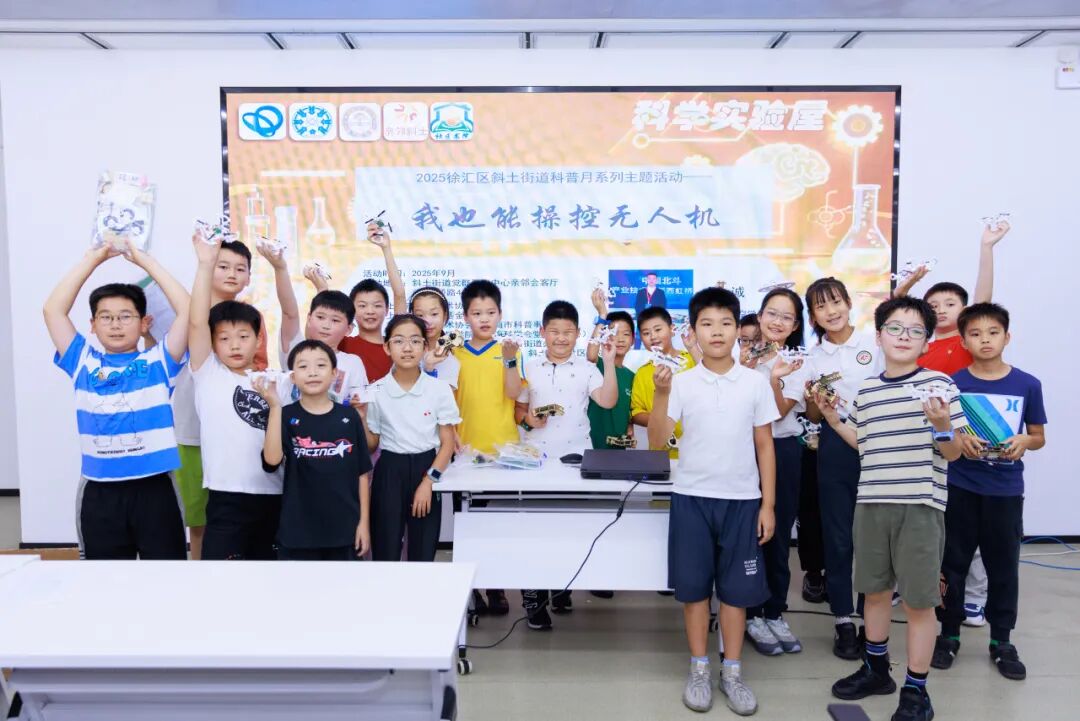
Recently, at the Xietu Street Party and Mass Service Center, a series of drones assembled and controlled by young people landed smoothly one after another. The “I Can Control a Drone” series of scientific experiment activities, which integrate technological enlightenment and innovative practice, not only ignited the children’s passion for aviation technology but also witnessed their growth leap from “cognition” to “application” and ultimately to “creation”.
As a key project for the first National Science Popularization Month in 2025, this event is held every Sunday from September 7 to 21, inviting experts in the field of aviation technology to provide on-site guidance. Through a three-stage progressive course of “disassembly-application-creation”, over 20 elementary school students in the district are led to complete technological enlightenment through hands-on practice.
Starting the Exploration Journey:
Disassembling the Technological Black Box to Assemble the Cognitive Puzzle
In the first event on September 7, students, guided by their teachers, began their exploration by “unboxing”: disassembling the remote control circuit board to understand the principle of signal transmission; personally assembling the quadcopter frame to feel the intricate relationship between aerodynamics and structural balance.
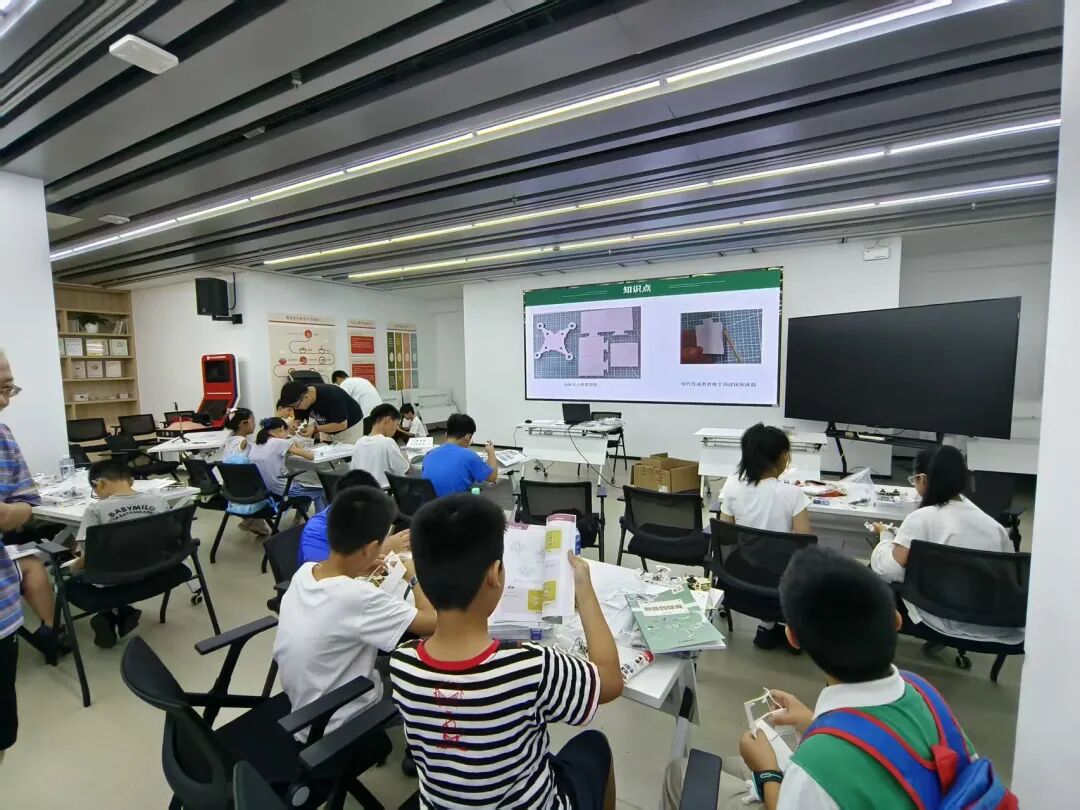
“So drones are not magic, but a conversation made up of individual parts!” the children excitedly shared. “This kind of ‘visible and tangible’ learning method is a hundred times more vivid than textbooks,” remarked a parent accompanying them. “My child actively researched and drew design diagrams after returning home, which has never happened before in their learning.”
Exploring the Advanced Path:
Reconstructing Flight Imagination to Unlock Application Scenarios
On September 14, the second lesson focused on the practical application scenarios of drones. Students simulated the logistics delivery process in the “transport type” drone assembly task, experiencing how technology enhances efficiency; in the “flying saucer” design segment, they discussed the operational possibilities of drones in special environments such as disaster rescue and high-altitude inspections.
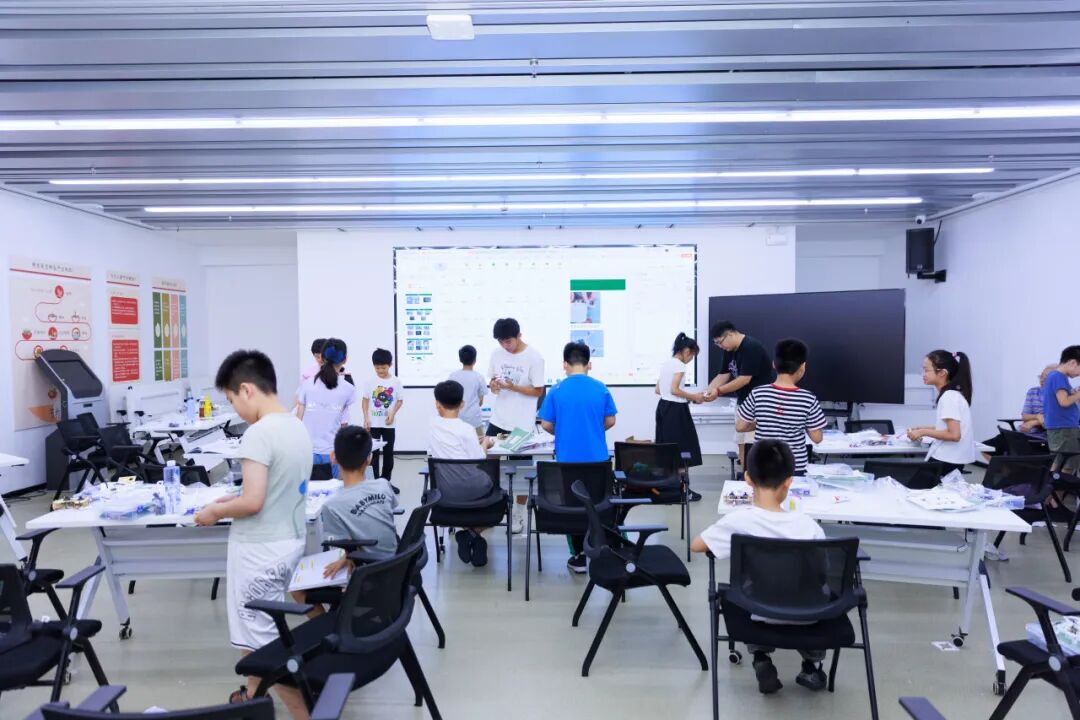
The teaching staff remarked: “When children start to think about ‘what problems this drone can solve’, it indicates that their thinking has risen from technical operation to innovative design.”
Unleashing Innovation:
Releasing the Creative Gene to Define Future Flight
On September 21, the final challenge was held—a free creation and control competition. Students broke the limitations of standard models, designing bionic structures, lightweight vehicles, and multi-rotor variants, and engaged in practical competitions such as obstacle navigation, precise hovering, and formation flying.
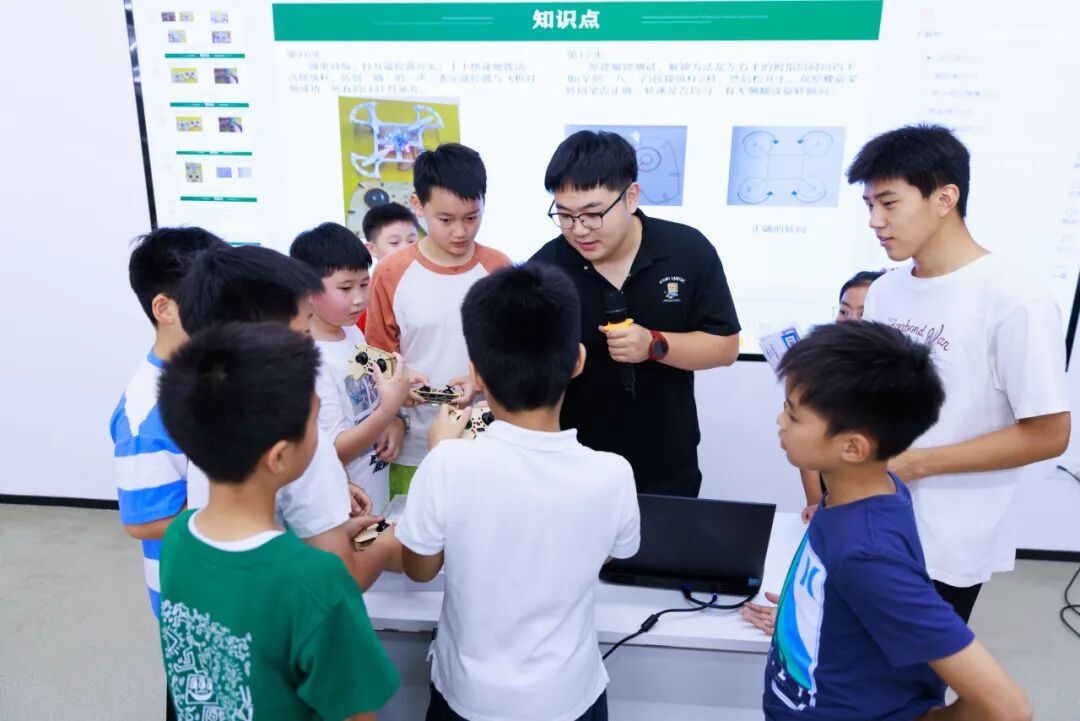
On-site, a team of three drones coordinated perfectly to complete a complex flight path, earning rounds of applause. Even more gratifying was that the children spontaneously summarized the control mantra of “two looks and three slows”: “Look at the environment, look at the signal; take off slowly, turn slowly, land slowly,” and wrote it into their team operation manual.
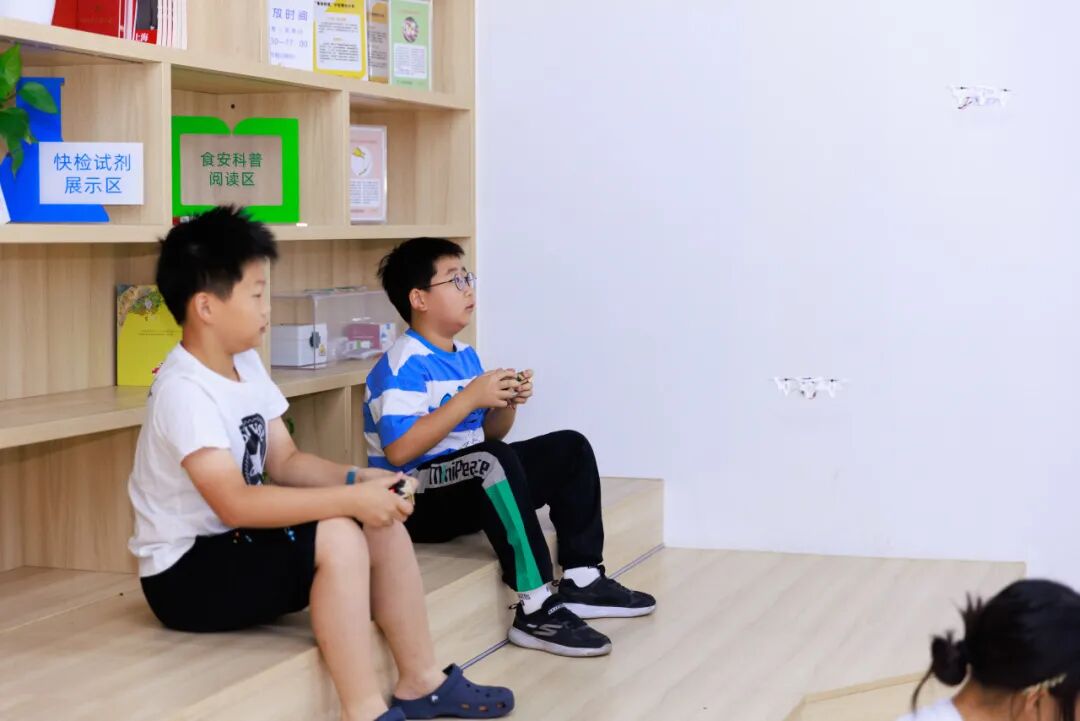
“This is my first time truly ‘building’ an aircraft of my own,” said one participating student. “Although it doesn’t fly high, I still feel like an engineer.”

From disassembling cognition to reconstructing imagination, and then to free creation—this three-week exploration journey completed the closed loop of science and technology education. A relevant person in charge of Xietu Street expressed the hope to connect resources from the Municipal Science Popularization Center, Street Science Association, Community Academy, etc., to carry out “low-threshold, high-depth” learning, allowing science and technology education to step out of textbooks and into life. Every child should have the opportunity to discover their passion and unleash their potential through practice.

Highlights Recap