
Since September, the domestic humanoid robot industry has experienced a “frenzy of orders”: on September 2, Xingchen Intelligent announced a contract with Xiangong Intelligent for a thousand industrial robots, planning to deploy them in stages over the next two years in industrial, warehousing, and logistics scenarios. This marks the first large-scale commercial order of a thousand units in the domestic humanoid robot sector.
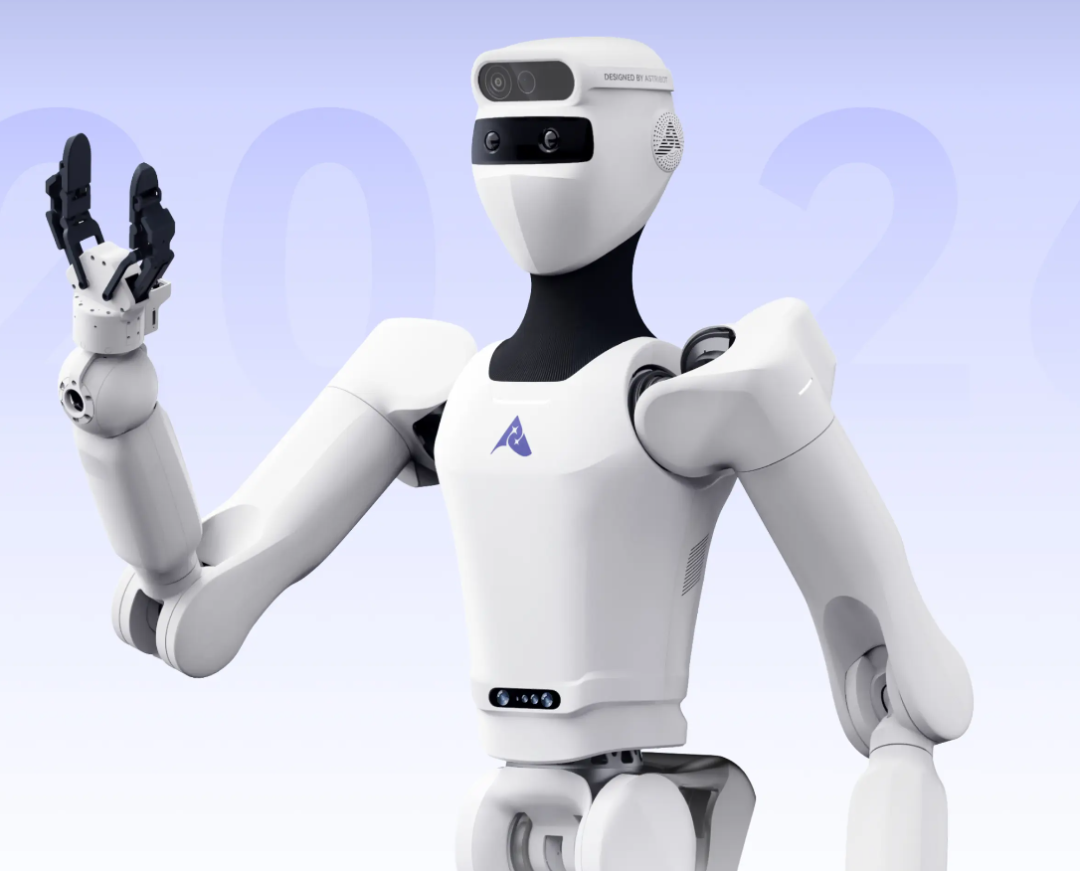
Xingchen Intelligent Robot Xingchen Intelligent Official
Just two days later, UBTECH announced another success, securing a 250 million yuan contract for humanoid robots with a leading domestic company, primarily delivering the WalkerS2 model, setting a new record for a single order in the global humanoid robot industry.
Looking back at the first half of 2025, over 83 publicly disclosed humanoid robot bidding projects in China have been reported, with a total contract value of nearly 330 million yuan. Three companies, UBTECH, Yushu Technology, and Zhiyuan Robotics, captured 60% of the market share.
However, behind the seemingly prosperous “order explosion” lies a deep-seated concern for the industry.
From the early years when new energy vehicle companies collectively defaulted on billion-yuan orders due to immature technology and unsuitable scenarios, to Tesla’s Optimus plan to produce 5,000 units by 2025 being repeatedly delayed, and the technical barriers faced by the implementation of robot world models, all indicate that the industry has not yet reached maturity.
For an industry still in the “route convergence” phase, such “star events” are essential. They help the industry complete public education, attract talent, funding, and policy attention to the same track, and provide a narrative entry point for “patient capital” to enter, encouraging long-term investment.
Amidst the frenzy, a calm reflection is needed. Eyeballs and orders are the indispensable “fuel” for the early industry; what truly needs caution is mistaking the spotlight for the finish line and treating stories as financial reports.
01. Resources are seeds, not firewood
In the embodied intelligence industry, there is still significant debate over the technical routes.
For example, in the field of embodied synthetic data, there is currently intense debate between two main technical routes: “video synthesis + 3D reconstruction” and “end-to-end 3D generation.” The former generates video or images first, then reconstructs them into 3D data, ultimately converting them into structured semantic models, as seen in projects like Fei-Fei Li’s “World Model,” Qunkong Technology’s SpatialLM, and SpatialVerse. The latter, “end-to-end 3D generation,” uses graph neural networks and diffusion models to directly synthesize structured spatial data, represented by models like ATISS and LEGO-Net.
Currently, the technical routes in the robotics field are still in a divergent phase. Whether it is the overall structure, driving methods, control algorithms, or how large models are coupled, it is far from a point of certainty. Until clear signals of route convergence emerge, resources should not be overly invested in a single technical route.
Amidst various contradictory factors, the more capital is enthusiastic, the more it must restrain the impulse to “gamble all in”; this consensus is becoming increasingly clear in the industry.
For this reason, mainstream institutions have quietly drawn two red lines: first, the number of people in a single team cannot exceed 100; second, if the amount of financing in a single round does not match the current stage of the team, they will not co-invest. The purpose of this is simple: to divide limited trial-and-error resources into more “small samples,” allowing different technical routes to advance in parallel, rather than stuffing all the firewood into one stove and burning the “water” dry too early.
02. Orders are litmus tests, not medals
The humanoid robot industry in 2025 is being propelled forward by two major indicators: order amounts and the number of contracts signed, with both leading enterprises and mid-tier players joining this “order grabbing war”.
In the leading camp, UBTECH and its humanoid robots for industrial scenarios can be considered “order harvesters.” On July 18, they won a bid for a robot equipment procurement project from Miyi Automotive for 90.5115 million yuan, setting a record for the highest single bid for humanoid robots at that time; just over a month later, another 250 million yuan order was secured, estimating around 800 robots involved at a market price of approximately 300,000 yuan per WalkerS series robot, although not reaching the “thousand-unit” scale of Xingchen Intelligent, the amount again set a new industry peak.
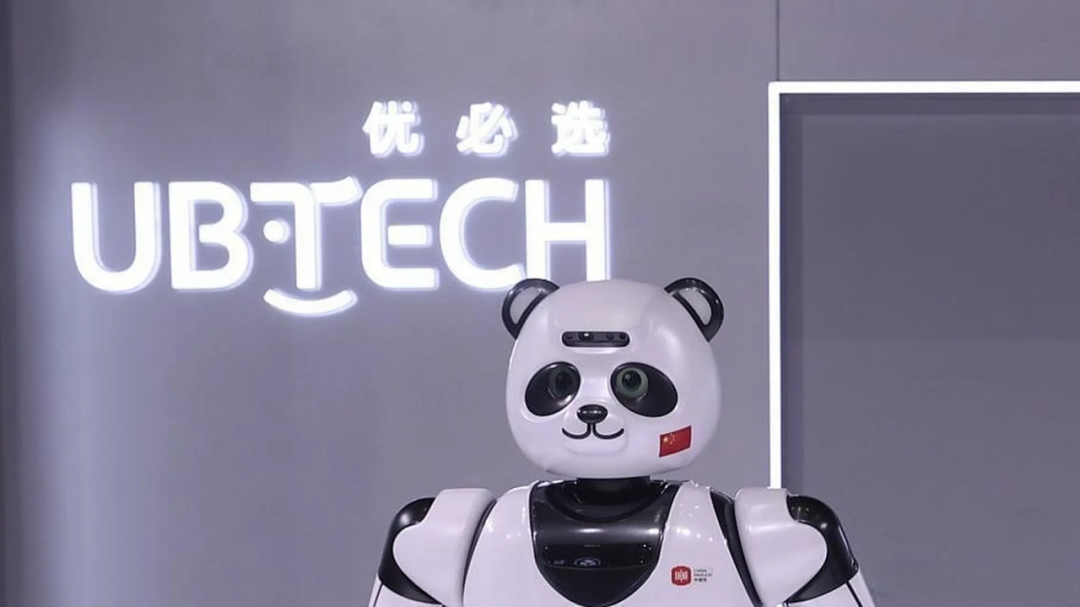
UBTECH Robot
Xingchen Intelligent has broken the industry order scale record with its “thousand-unit” scale. This collaboration with Xiangong Intelligent focuses on core scenarios such as industry, manufacturing, warehousing, and logistics, planning to deploy over a thousand AI robots in stages.
Specifically, Xiangong Intelligent previously focused on the development of wheeled logistics robots, which primarily rely on navigation lines for operation. In practical applications, they have a significant “last mile” shortcoming: they cannot complete sorting tasks for random objects and can only transport uniformly sized large boxes, limiting their flexibility and adaptability to various scenarios.
The humanoid robots provided by Xingchen Intelligent need to specifically address challenges such as “non-standard scene transportation” and “random object grasping,” which wheeled robots cannot handle.
The demo showcased by Xingchen Intelligent at WRC displayed objects for grasping that were all rubber toys; although they claimed to be able to grasp random items, this capability has not yet been validated through long-term, large-scale practical testing in industrial scenarios.
Additionally, Zhiyuan Robotics and Yushu Technology have solidified their market positions through multiple bids.
In June, the two companies jointly secured a humanoid biped robot OEM service project from China Mobile (Hangzhou) Information Technology Co., Ltd. for 124 million yuan—Zhiyuan won the bid for the full-size humanoid biped robot procurement package, budgeted at 78 million yuan; Yushu Technology secured the small-size humanoid biped robot, computing backpack, and dexterous hand procurement package, budgeted at 46.05 million yuan, with related orders aimed at “diverse application scenarios.”
On September 2, Zhiyuan Robotics was again listed as a potential bidder for a 31.02 million yuan project at the Hubei Humanoid Robot Innovation Center. Yushu Technology leads the industry in “number of bids,” directly winning 7 bids in the first half of the year, and its robots have been included as standard equipment in multiple integrator bidding projects, applicable to general and industrial scenarios.
To support order fulfillment, Zhiyuan Robotics has established a full industry chain cooperation network: partnering with listed companies like Fulian Precision, China Mobile Information, and Lens Technology to jointly build factories, and has acquired Weifeng New Materials, packaging materials, manufacturing, and application stages to attempt to resolve mass production bottlenecks; Yushu Technology has chosen to bind with capital giants, accelerating capacity and technology implementation through capital operations.
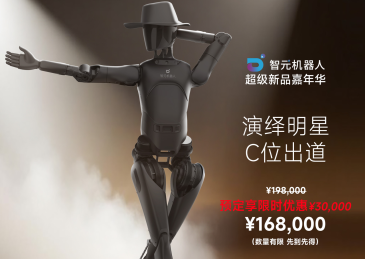
Zhiyuan Robotics Promotional Image
From the perspective of order amounts, in the 330 million yuan order cake of the first half of 2025, UBTECH, Yushu Technology, and Zhiyuan Robotics captured 60%, forming a “tripod” structure. The influx of capital has further amplified this order competition.
Despite the recent record highs in order amounts in the robot industry, the delivery pace of most contracts reflects caution—almost all start with the delivery of 50 to 100 units, and after running through processes and verifying effects in real scenarios, the delivery scale is gradually expanded.
This delivery model conceals concerns from both parties: for the purchaser, starting with small batch orders allows for a more prudent assessment of the input-output ratio, avoiding the risks of blind large-scale procurement; for robot companies, leveraging real-world operational testing of equipment helps identify technical shortcomings and further optimize hardware reliability and software adaptability.
If the industry only focuses on the frenzy of order numbers, it can easily fall into a competition of “scale versus amount,” neglecting the core value of implementation; only by treating each order as a “litmus test” for scenario validation and technical iteration can development return to the rhythm of technology upgrades driven by scene demands, allowing technology to mature and adapt to real-world applications.
03. Treat “mass production” as a system battle, not a single machine
From an industry-wide perspective, Liu Stan, head of deep learning software at Volvo Cars, and a well-known online commentator, stated to Observer Network that two major factors determine the landing of robots: “sufficient intelligence” and “long-term reliability.”
The first factor focuses on the level of intelligence at the software level; the robot’s intelligence must be sufficiently high to truly complete tasks in real scenarios, rather than just achieving demo performance. If the intelligence level does not meet actual needs, robots cannot be deployed in logistics, industrial, and other real scenarios, which is the primary prerequisite for their landing—if intelligence is substandard, all subsequent hardware adaptation and scenario integration discussions are moot.
Software adaptation must also closely align with specific scenarios. Once robots are deployed, they often need to collect exclusive data for the scenario and even train vertical domain models specifically for that scenario.
The second factor is the long-term reliable operational capability of the hardware. Liu Stan stated that since robots ultimately need to replace humans in logistics and other scenarios for tasks like picking and transporting, they must operate continuously for long periods, thus hardware reliability must meet extremely high standards, akin to how humans can generally remain on duty unless ill; robots also need to approach this state as closely as possible.
For example, a cooking robot in a restaurant must comply with food safety standards, and since it replaces a skilled worker like a chef, any issues that cause it to malfunction can significantly impact restaurant operations, leading to substantial losses.
For instance, the Kepler robot can currently work continuously for 8 hours a day like a human. In heavy industrial scenarios like shipyards, robots frequently handle heavy materials like steel bars, testing hardware durability far beyond ordinary scenarios.
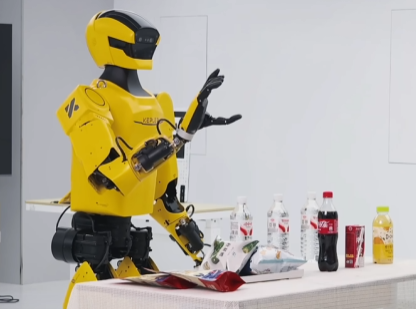
Kepler’s Robots
In logistics scenarios, the focus is often on evaluating intelligence levels first; if intelligence is substandard, robots cannot meet even basic usage needs. Furthermore, hardware durability cannot be judged solely by preliminary tests; it must be validated through long-term service after deployment.
Drawing a parallel to human bodily wear patterns, long-distance running can lead to knee joint wear; similarly, robots that frequently handle heavy objects may experience wear in their joints, such as hands and wrists, and the durability of grippers will also face continuous testing.
“Only after operating in specific application scenarios for a period can the advantages and disadvantages of the robot become apparent, allowing for clear directions for subsequent hardware iteration and optimization,” Liu Stan concluded.
Considering these requirements, it is evident that the capacity ramp-up in the robot industry is far from as simple as adding a few production lines; it requires overcoming a series of practical challenges: first, ensuring uniform specifications for components while promoting the maturity and stability of each link in the supply chain to avoid quality issues due to component differences; second, achieving synchronized systemic improvements in production processes, product quality, and yield rates; any disconnection in any link will slow overall progress; additionally, establishing on-site operation response mechanisms and after-sales data feedback loops to ensure stable operation after equipment delivery.
If any link falters, what originally symbolized performance growth—orders—could turn into a “liability” for the company—either facing the risk of breach of contract due to delivery delays or increasing after-sales costs due to frequent equipment failures, ultimately affecting the company’s reputation and long-term development.
Capital attempts to drive rapid expansion in the industry through “money-driven order grabbing” and “flooding investments”; while this approach is indeed a necessary path for emerging industries to attract social resources, if too much social capital is invested too quickly without sufficient understanding, leading to a burst of bubbles, it is clearly detrimental to maintaining a stable development rhythm in the industry.
04. Capital is a pacer, not an accelerator
Whether from delivery capabilities to the certainty of technical routes, or from historical lessons to current dilemmas, all remind the market: the recent order explosion in the robot industry does not equate to “maturity.”
There are also counterexamples in the industry.
As one of the earliest robot companies in China, Dalu Technology was once favored by the capital market, winning a 270 million yuan 5G cloud robot project from China Mobile, but starting in early 2024, Dalu Robotics began to experience salary arrears and layoffs.
By March 2025, hundreds of employees at its Shanghai headquarters and branches in Beijing and Shenzhen were embroiled in a year-long wage dispute, and the company was listed as a defendant, with total amounts exceeding 25 million yuan, and its branches were closed with no one present, and utilities had been cut off for several days; in April, reports indicated that Dalu Technology’s robot projects had effectively stalled, and the core R&D team had disbanded. Naturally, large orders followed suit and became “unfinished business.”
The enthusiasm of capital comes quickly and leaves just as fast.
“Starting in 2024, our financing has become particularly difficult,” said Huang Xiaoqing, founder and CEO of Dalu, previously stating that one reason is that last year, humanoid robots flooded into many startups, giving investors more choices to invest in early-stage rounds at lower valuations, while high-valued unicorns like Dalu, which are later in financing, have become less sought after.
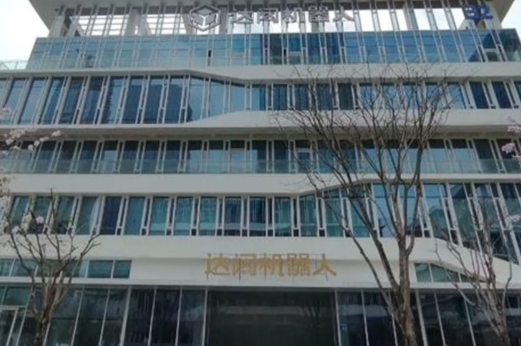
“Closed” Dalu’s founder
Additionally, as a star project in the humanoid robot sector, Songyan Power completed four rounds of Series A financing in 2024, but after its valuation soared from 200 million to 1.2 billion yuan, it faced withdrawal from GSR Ventures due to slow commercialization progress. The core issue lies in the team’s excessive reliance on financing, failing to achieve positive cash flow despite a unit price of 39,900 yuan per robot, ultimately falling into a vicious cycle of “financing—burning money—refinancing.”
The fate shifts of Dalu and Songyan Power expose the core issue of past interactions between the robot industry and capital—the mismatch between capital’s “quick in and out” and the industry’s slow cycle.
The early capital frenzy allowed companies to secure large orders and expand teams based on capital push without solidifying the foundation for technological commercialization or establishing sustainable cash flow models; when capital winds shift from “chasing mature unicorns” to “laying out early undervalued projects,” companies lacking self-sustaining capabilities instantly lose support, leading to project stalls and unfinished orders.
If current robot companies do not want to repeat past mistakes, they must let capital “slow down and accompany the run.”
05. Slow cooking is better than quick frying
The “order explosion” in the humanoid robot industry in 2025 is undoubtedly a signal of industry development, but it is by no means a sign of maturity.
The core of the robot industry has never been how many orders are signed, but how many problems can be solved in real scenarios. Without real-world integration, even the largest orders are just “castles in the air,” but without orders providing scenarios, real integration cannot be realized.
Moreover, the ultimate goal of embodied intelligence is likely not to compete over who raises the most funds, but rather who survives the longest.
Therefore, instead of “quick frying” and obsessing over large orders, it is better to adopt a “slow cooking” approach—allowing robots to operate in specific scenarios, exposing problems, and iterating technology gradually according to demand, so that the industry can transition from “virtual heat” to “real heat,” blending technology, scenarios, and capital into a truly replicable business broth.