
Imagine a batch of goods loaded onto a truck, embarking on a journey across continents or even oceans. During transportation, it is equipped with GPS and cellular network tracking, but once it enters a warehouse, that visibility disappears.GPS cannot penetrate walls, and cellular signals, especially in dense or signal-blocking environments like warehouses or hospitals, suffer from reduced location accuracy. Our goods are still there, but in the digital world, they have become “invisible“.
At this point, Wi-Fi comes into play, but in a way that is different from what we are used to. It does not connect to a network or transmit data; instead, it senses presence, passively observing signals in the environment and converting that information into location intelligence.
No handshakes, no connections, just intelligent scanning. Silicon Labs has developed a hardware solution applicable to Wi-Fi asset tracking, making this model not only possible but also practical.
What is Wi-Fi asset tracking, and how does it work?
Rather than relying on extensive infrastructure or solely on GPS, Wi-Fi positioning estimates location by scanning nearby SSID and determining signal strength. This means your device does not need to connect to a network; it only needs to recognize that it is near a certain network.
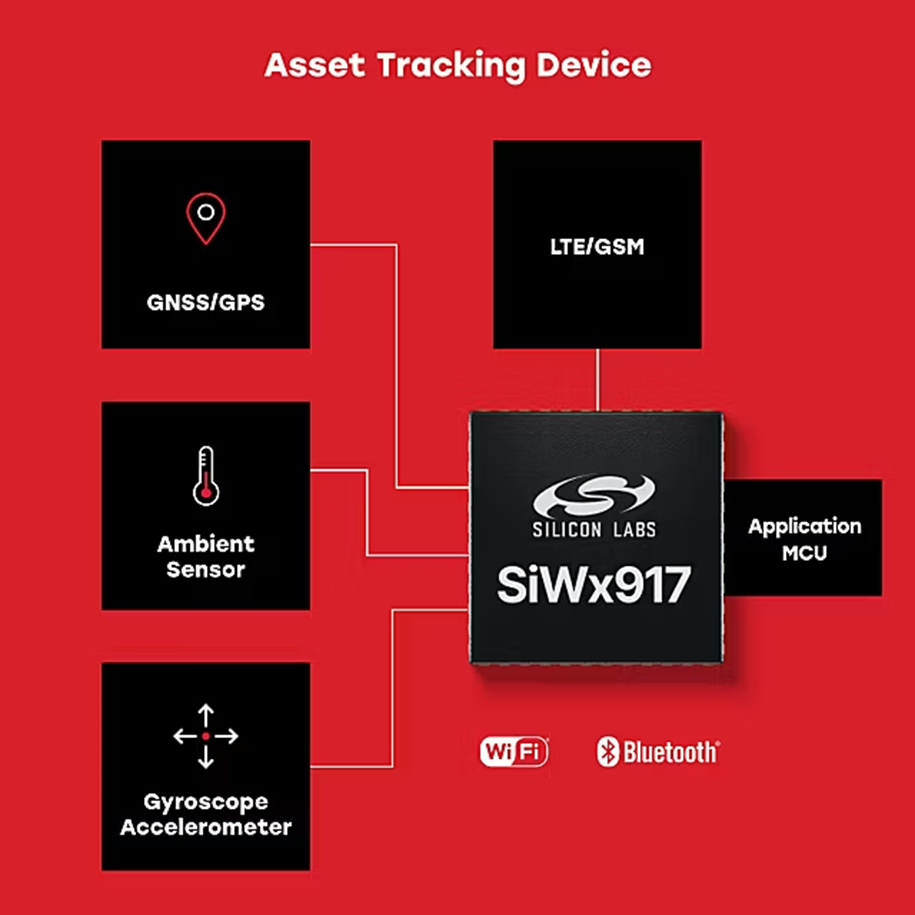
Diagram of asset tracking device
Our SiWx917 Wi-Fi 6 ultra-low power wireless SoC can complete SSID scanning across all channels in about 5 seconds after a cold start, while consuming less than 50mA. The result is rapid location updates without draining the battery. Imagine long-life sensors that wake only when needed. But sensing alone is not enough.
The cloud leads our Wi-Fi asset tracking solution
This is where the backend comes into play. Once the SiWx917 identifies nearby SSID, this data is pushed to the cloud via MQTT or other protocols. Next, the cloud mapping and database begin to work, matching known SSID with real-world coordinates, providing users with near real-time asset visibility, even indoors.
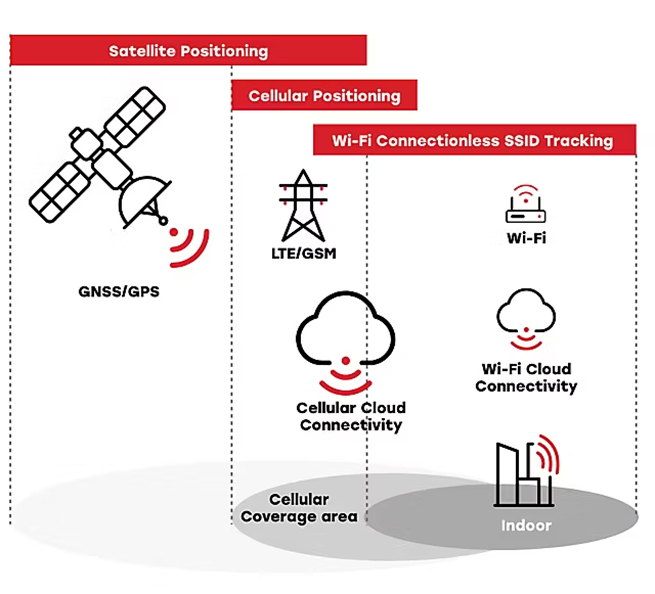
This backend “magic” means that facilities do not need to install any new equipment. Your warehouse, hospital, or factory already has Wi-Fi, and this existing infrastructure can serve as your positioning system. No dedicated readers are needed; just leverage the deployed network.
This is the charm of the solution: it is collaborative. We provide the chip and low-power intelligence, while users choose the cloud platform, dashboard, and data insights. The combination creates a more powerful whole— a fully covered, multi-technology, completely visible platform that truly optimizes the return on investment for wireless tracking solutions.
You can track a container from the factory to the forklift; track a medical cart from ICU to the storage room; monitor the movement of inventory through buildings and blind spots. All of this requires just one ultra-low power chip that is easy to integrate into existing designs.
If you are already using GPS and cellular networks? Great. Wi-Fi is not a replacement for them but a complement. You can turn off high-power RF circuits when not needed and switch to Wi-Fi sniffing when required. This flexibility is key to optimizing coverage and device lifespan.
Designing Wi-Fi asset trackers: from concept to deployment
Silicon Labs has advanced this concept to the reference design stage. SiWx917 serves as the controller, working in conjunction with GNSS, IMU sensors, and pushing data to the cloud via MQTT . In one of our hybrid solutions, a smart pallet equipped with Wi-Fi SoC enables transport tracking on ships, trucks, and in warehouses without joining any network. Just sensing, just sending, just operating.
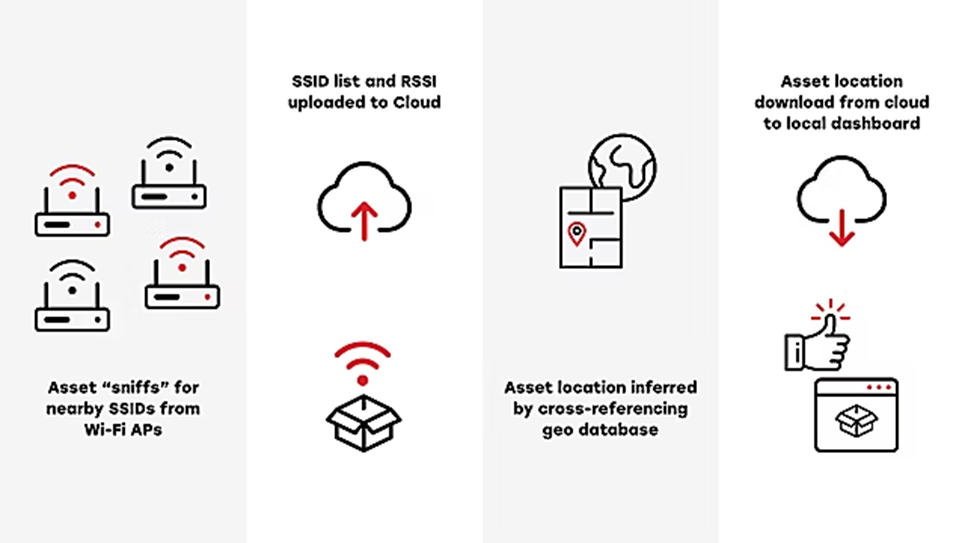
Logistics companies implementing this deployment can simultaneously add low-power Bluetooth and Wi-Fi through a single chip, extending battery life and ultimately achieving visibility within their facilities.
Why choose SiWx917 to develop Wi-Fi asset trackers?
In addition to the aforementioned features and advantages, the SiWx917 Wi-Fi 6 ultra-low power SoC is a fully integrated wireless solution that provides the functionalities and interfaces required for Wi-Fi tracking devices. Its advantages include:
- Integrated network protocol stack (TCP/IP, TLS, MQTT, etc.).
- Simplified integration with cloud and positioning databases, rich peripherals and GPIO for connecting GNSS/GPS, LTE/GSM, gyroscopes/accelerometers, and environmental sensors.
- Large SRAM, PSRAM, and flash memory to accommodate firmware, applications, and positioning data, supporting OTA updates.
- Dedicated application MCU (up to 180MHz) and AI/ML accelerator, eliminating the need for an additional standalone MCU, reducing BOM costs, power consumption, and board size.
- Wireless and network protocol stacks run on a separate processor, increasing MCU sleep time and reducing power consumption.
- The SiWx917 module comes with an antenna and certification, simplifying RF design and certification work, reducing development costs and time.
Building Wi-Fi asset tracking devices together
If you are developing asset visualization, indoor positioning, or real-time logistics, this will be a game changer. When you already have a Wi-Fi network, let’s make better use of it. This is the combination of smart hardware and smarter networks. To learn more, please download our white paper: Wi-Fi Power Optimization Examples: Six IoT Devices, where wireless experts from Silicon Labs and Sigma Connectivity share the best Wi-Fi power optimization guidelines for six IoT devices (including unconnected Wi-Fi asset trackers).White paper download link:https://www.silabs.com/wireless/wi-fi/wi-fi-power-optimization-examples-for-six-iot-devices
Scan the QR code below to follow Silicon Labs on social media platforms