
Source / Shangguan News
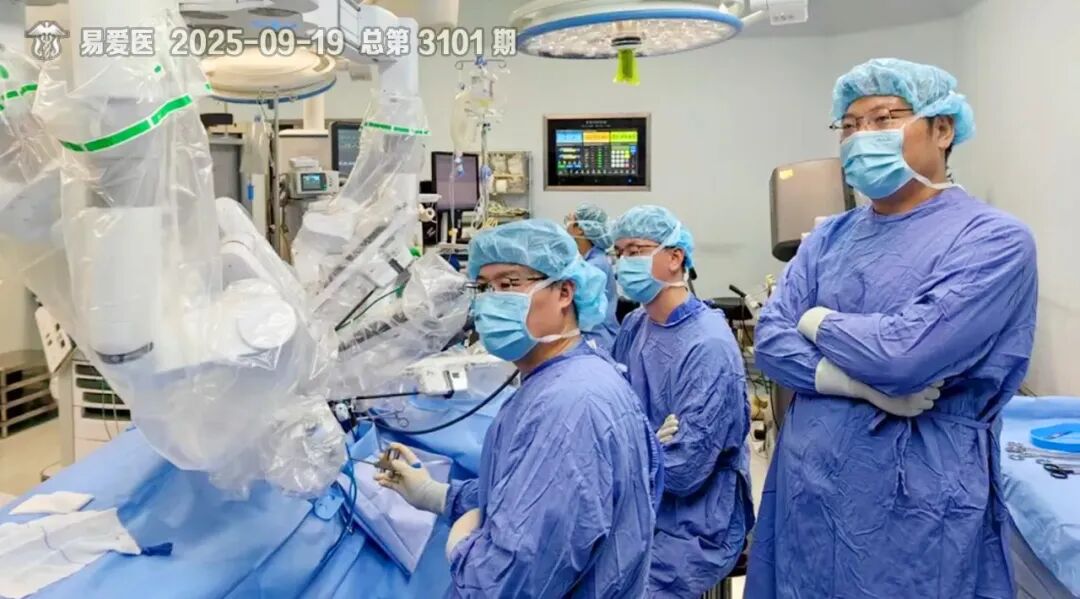
When a transplanted kidney encounters a tumor, should it be removed or preserved? This once unsolvable life dilemma now has a satisfactory answer. Recently, the Urology Department of Renji Hospital, affiliated with Shanghai Jiao Tong University School of Medicine, successfully completed the first robotic-assisted partial nephrectomy for a renal tumor in a transplanted kidney in China, precisely “defusing” the malignant tumor while preserving the precious transplanted kidney.
“Can my kidney be saved?”
“Doctor, this is the kidney I waited so long for; I really don’t want to go back to dialysis…” Mr. Li (pseudonym), a 56-year-old from Henan, underwent a kidney transplant five years ago due to renal failure and regained his health. After the surgery, Mr. Li’s transplanted kidney function remained stable, with creatinine levels consistently around 100μmol/L.
However, recent examination results left him in shock: a tumor had developed inside the transplanted kidney. The worse news was that this situation is extremely rare, and due to high adhesion in the surgical area, vascular anatomical variations, and immunosuppression risks, there was still no expert consensus on treatment plans. Many in the industry recommended traditional radical nephrectomy. If the entire transplanted kidney were removed, it would mean he would lose kidney function again and rely on dialysis for life.
With his last hope, Mr. Li sought treatment at the Urology Department of Renji Hospital. He choked up, saying, “Not just for myself, but also for the person who donated the kidney, I want to do everything I can to save it.”
“Robotic” Precision Defusing
Faced with this extremely challenging case, Dr. Pan Jiahua, head of the Urology Department at Renji Hospital, quickly assembled a multidisciplinary team (MDT) of authoritative experts in urological oncology, including Professor Huang Yiran, Chief Physician Xue Wei, and Chief Physician Huang Jiwei, to comprehensively assess the condition and repeatedly simulate the surgical path. Ultimately, the team developed a precise surgical plan for “robotic-assisted partial nephrectomy for renal tumor in a transplanted kidney” and meticulously prepared a backup plan for open surgery, deciding to preserve this precious kidney for Mr. Li.
The surgery was led by Huang Jiwei, using the Da Vinci robot to remove the tumor from Mr. Li. The Da Vinci robotic system showcased its capabilities: its 3D high-definition vision magnified the surgical area over ten times, and the 540-degree flexible robotic arms precisely separated and completely removed the tumor in a confined space. The team effectively controlled bleeding by precisely blocking the iliac vessels in just 15 minutes, maximizing the preservation of normal kidney tissue while ensuring the blood supply to the transplanted kidney was unaffected. The entire surgery was akin to a high-precision “defusing” operation, with each step executed with utmost precision.
A New Breakthrough in Treating Tumors in Transplanted Kidneys
Post-surgery, Mr. Li recovered smoothly, with creatinine levels stable around 100μmol/L, and kidney function unaffected. The pathology confirmed it as renal clear cell carcinoma. Mr. Li has now recovered and been discharged, expressing his gratitude, “Thank you, Renji Hospital, for giving me a third life!”
Huang Jiwei noted that cases of renal tumors occurring in transplanted kidneys are rarely reported. According to foreign data, the incidence of tumors in transplanted kidneys is only 0.2% to 0.4%, and minimally invasive surgical treatment for such patients still faces many challenges. Therefore, the success of this high-difficulty surgery fully demonstrates the advantages of the multidisciplinary collaboration (MDT) model, especially the close cooperation of the urology transplant team. In the future, Renji Hospital will continue to advance minimally invasive treatment techniques for kidney tumors, providing more patients with precise, safe, and efficient diagnostic and therapeutic services.
It is reported that the Urology Department of Renji Hospital has long maintained a leading position in the field of kidney tumor surgeries, with the highest annual surgical volume in Shanghai, particularly excelling in complex kidney tumor preservation surgeries and robotic minimally invasive surgeries. The successful completion of the first robotic-assisted partial nephrectomy for renal tumor in a transplanted kidney in China marks a new milestone in the technical level of Renji Hospital in the field of kidney surgery, providing new ideas and technical support for the subsequent treatment of transplanted kidney patients.