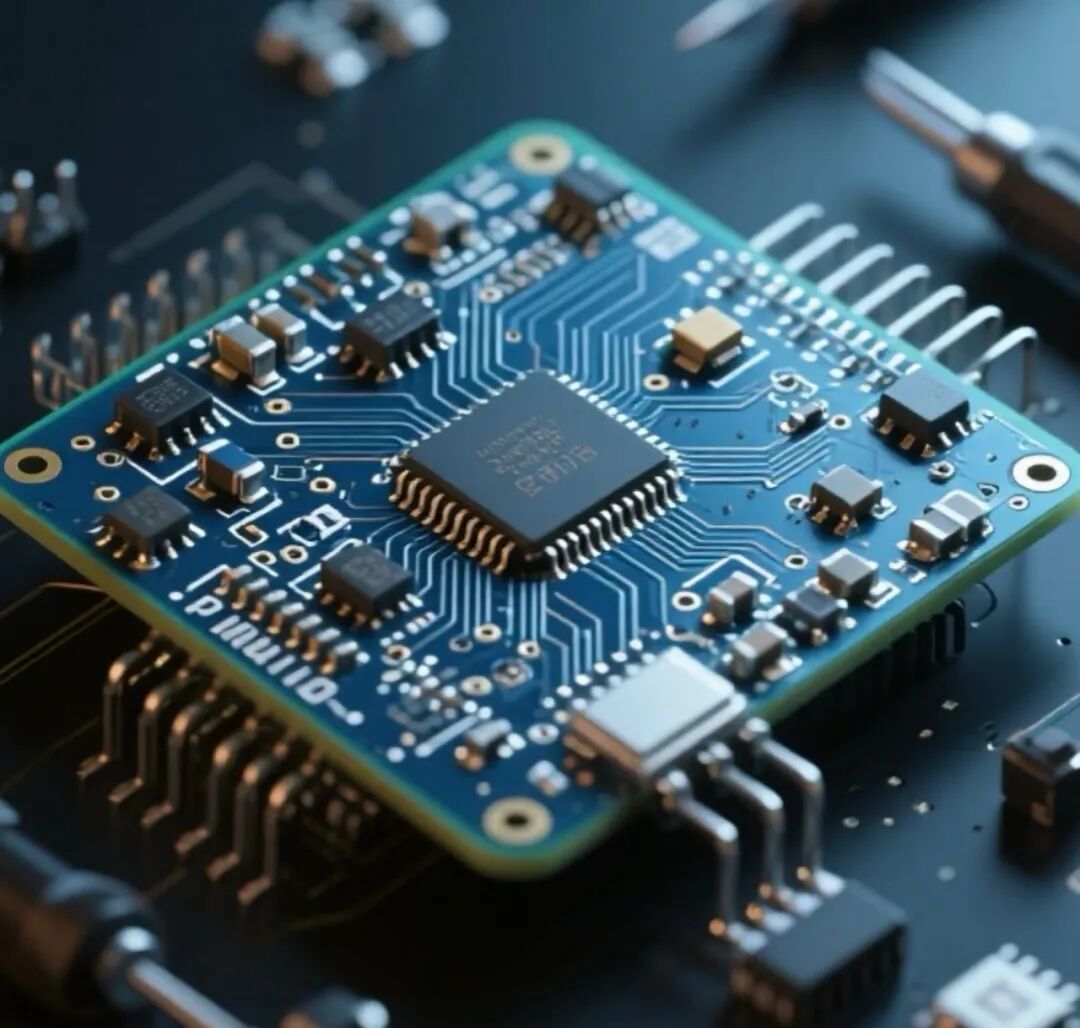
With the explosive growth in fields such as 5G, new energy vehicles, and AI servers, the circuit board industry, as the “cornerstone of the electronics industry,” is ushering in a new round of development opportunities. Recently, data released by the Ministry of Industry and Information Technology’s Electronic Information Department shows that the domestic circuit board market size will exceed 280 billion yuan in the first half of 2025, a year-on-year increase of 12.3%. Among them, the localization rate of high-end products has increased by 8 percentage points compared to last year, and the penetration rate of green production technology has surpassed 60%, indicating a dual-driven trend of “technological upgrade + environmental transformation” in the industry.
Technological Breakthrough: Domestic High-End Circuit Boards Break Overseas Monopoly
In a dust-free workshop of an electronic technology company in Shenzhen, a high-density interconnect (HDI) board with a thickness of only 0.8 mm is being tested by automated inspection equipment. “This board can achieve 10 layers of circuit interconnection, with line width precision controlled within 30 microns, which is about 1/3 the diameter of a human hair, and previously could only rely on imports,” said Wang, the R&D director of the company. After two years of research, the team has overcome core technologies such as “ultra-fine line etching” and “high-frequency signal impedance matching,” increasing the usage rate of domestic HDI boards in 5G base stations and high-end medical equipment from 35% to 62%.
At the same time, flexible circuit board (FPC) technology has also made new breakthroughs. A company in Suzhou has launched an “ultra-thin flexible substrate” with a thickness of only 0.02 mm, capable of bending 180 degrees more than 100,000 times, and reducing signal transmission loss by 15%. It has been mass-produced for foldable smartphones and wearable devices, breaking the monopoly of South Korean companies in the high-end FPC field.
Green Transformation: From “High Consumption and High Emission” to “Circular Production”
The production of circuit boards has been labeled as “highly polluting” due to issues such as “electroplating wastewater” and “etching waste liquid.” However, the industry is achieving green transformation through technological innovation. In a circuit board factory in Guangdong, the reporter observed that production wastewater is treated through “membrane separation + ion exchange,” achieving a reuse rate of 92%. The remaining 8% of concentrated wastewater is converted into industrial salt through evaporation crystallization technology, achieving “zero wastewater discharge”; the recovery rate of copper ions in etching waste liquid has increased to 99.5%, reducing hazardous waste generation by 200 tons annually.
“We have also introduced a ‘photovoltaic + energy storage’ power supply system, achieving a self-sufficiency rate of 40% for factory electricity, reducing carbon emissions by 1,800 tons annually,” said the factory manager. Through green production transformation, the company has not only obtained “national-level green factory” certification but also increased product gross profit margins by 5 percentage points, achieving a “win-win” situation for environmental protection and profitability. According to industry association statistics, currently, 38% of domestic circuit board companies meet the “green factory” standard, an increase of 17 percentage points compared to 2023.
Scenario Expansion: From “Consumer Electronics” to “Internet of Everything”
In addition to the traditional consumer electronics field, circuit boards are accelerating their penetration into new energy and industrial interconnection scenarios. In the new energy vehicle sector, a smart cockpit circuit board can integrate more than 20 functions such as navigation, entertainment, and driving assistance, reducing wiring space by 60% compared to traditional decentralized designs; in the industrial internet scenario, high-temperature resistant and anti-interference industrial-grade circuit boards have been applied to smart machine tools and smart grids, reducing equipment failure rates by 30%.
“In the future, with the development of technologies such as 6G and quantum computing, circuit boards will move towards ‘higher density, better performance, and lower carbon emissions,'” industry experts predict. By 2026, the domestic high-end circuit board market size is expected to exceed 150 billion yuan, and green production technology will cover more than 80% of enterprises, making the circuit board industry a core force in promoting the high-quality development of the electronic information industry.
(Feel free to leave a comment sharing your views on the development of circuit board technology!)