Hello everyone, today I would like to introduce an article published in JACS titled Photoaffinity Labeling Reveals a Role for the Unusual Triply Acylated Phospholipid N-Acylphosphatidylethanolamine in Lactate Homeostasis. The corresponding author is Jeremy M. Baskin from Cornell University, whose research group focuses on lipid and membrane-related chemical biology.

N-Acylphosphatidylethanolamine (NAPE) is an important glycerolipid that constitutes the membranes of eukaryotic cells. It accumulates during myocardial infarction and ischemia in mammals, and the primary research on it has focused on understanding its role in the generation of N-Acylethanolamine (NAE). However, its potential physiological functions have largely been overlooked. Therefore, in this article, the authors aim to clarify its potential function as a protein ligand using photoaffinity labeling techniques.
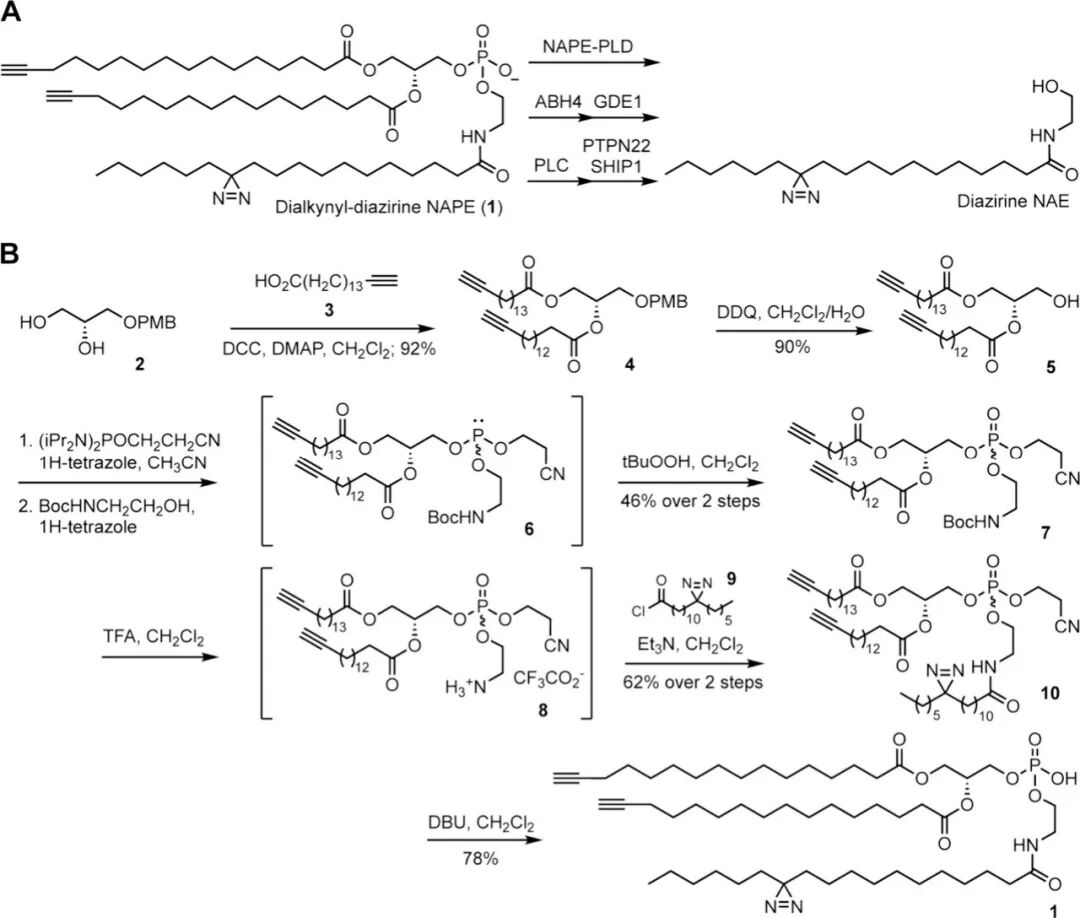
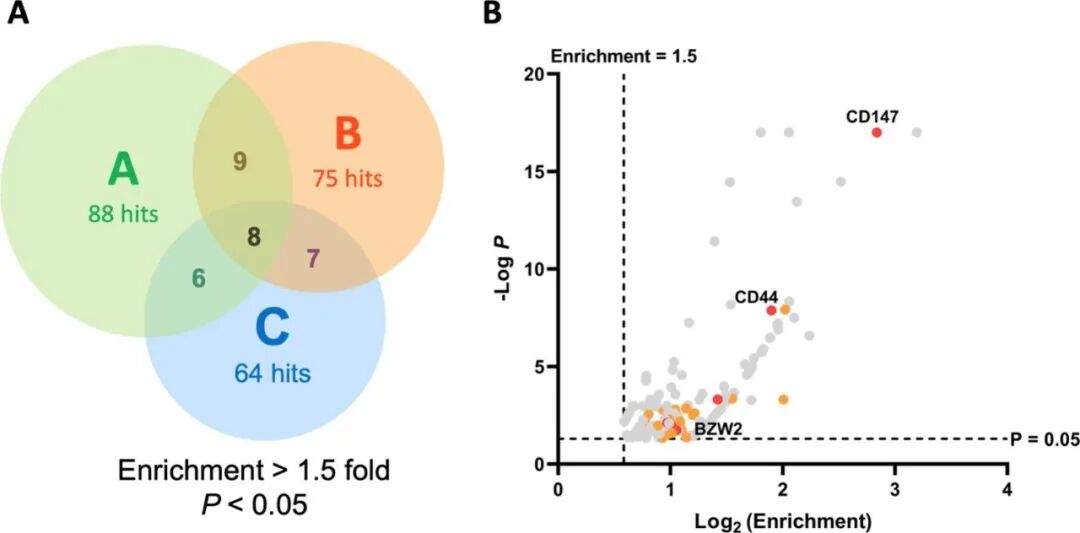
Due to the presence of three acyl groups in NAPE, which can decompose into NAE under endogenous conditions, the authors aimed to place the bioorthogonal groups and photo-activated probes used for enrichment on different acyl groups to avoid identifying proteins that interact with NAE. They then tested the enriched proteins in HeLa cells and identified 30 proteins that could be detected in at least two of three replicates. The authors noted two cell surface proteins, CD147 and CD44, which both showed reduced labeling signals from the photoaffinity probe when the NAPE synthase was highly expressed (DOX was used to induce expression) and NAPE metabolism was inhibited (LEI-401 was used to inhibit NAPE-PLD degradation), indicating that natural NAPE can bind to these two proteins.
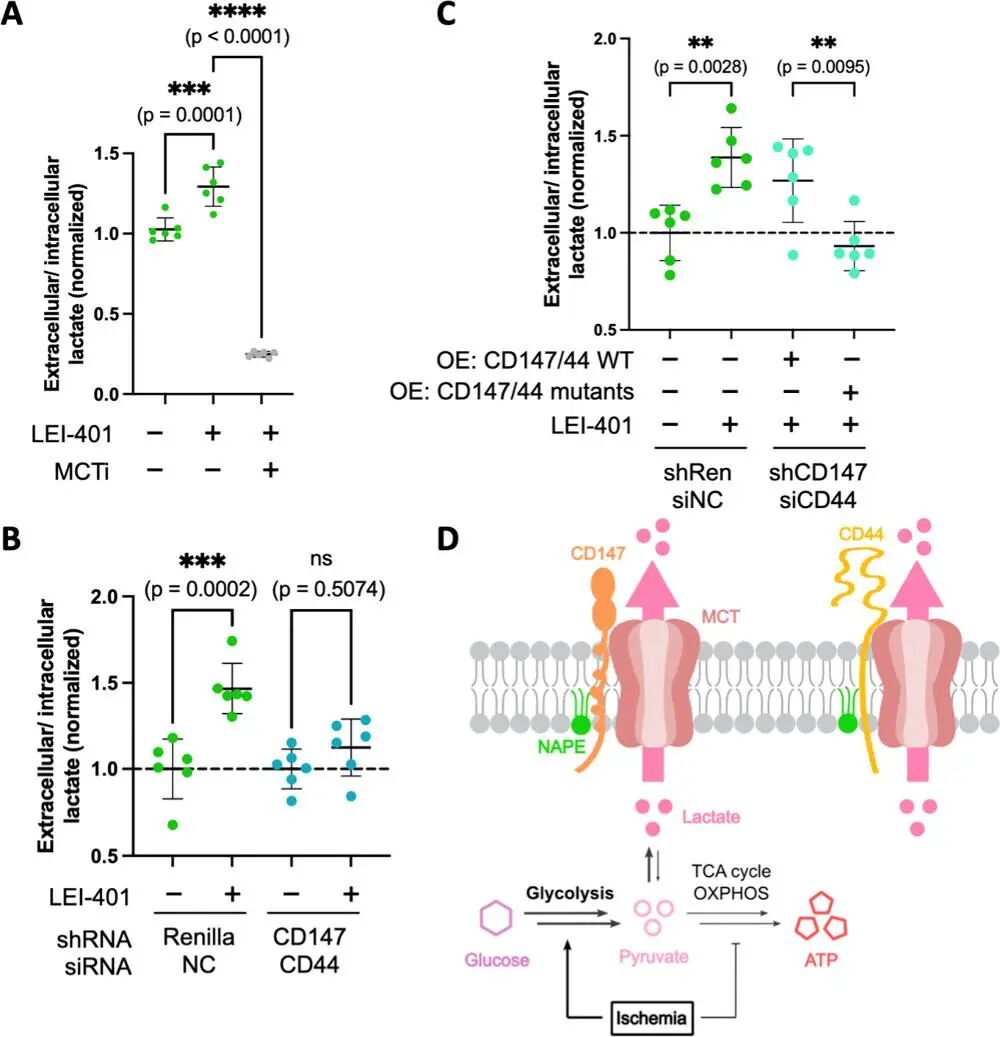
CD147 is a chaperone protein that facilitates the transport and activation of monocarboxylate transporters (particularly MCT1 and MCT4) on the plasma membrane. Additionally, CD44 acts as an auxiliary chaperone for MCTs. Therefore, the authors speculate that the binding of NAPE to these two proteins may mediate lactate transport. They collected culture media and cell lysates from control cells and cells with sharply elevated NAPE levels, and the results indicated that the increase in NAPE raised the extracellular lactate/intracellular lactate ratio by 29%, suggesting that NAPE accelerates lactate output. Furthermore, no similar phenotype was observed in cell lines with combined knockdown of CD147 and CD44, thus proving the role of NAPE in regulating lactate efflux. Given the phenomenon of elevated lactate levels during ischemia, this may reveal the molecular mechanism by which hypoxic cells rapidly expel lactate and restore metabolic homeostasis.
In conclusion, the authors of this article utilized photoaffinity labeling technology to study the physiological function of a trace cellular metabolite, NAPE, and revealed the underlying molecular biological mechanisms.
Author: LYC
Editor: MB
DOI: 10.1021/jacs.5c03851
Original link: https://doi.org/10.1021/jacs.5c03851