The stage of the 2021 Spring Festival Gala was filled with stars, but the one taking the C position was a “national treasure” that has traveled through a thousand years.
On the evening of February 11, the Lunar New Year’s Eve, the main Buddha head from the north wall of Cave 8 of the Tianlongshan Grottoes, which had been lost overseas for nearly a century, made its appearance at the Central Radio and Television Station’s Spring Festival Gala as the 100th cultural relic to return to the motherland in 2020, welcoming the New Year and celebrating reunion with the people of the nation.
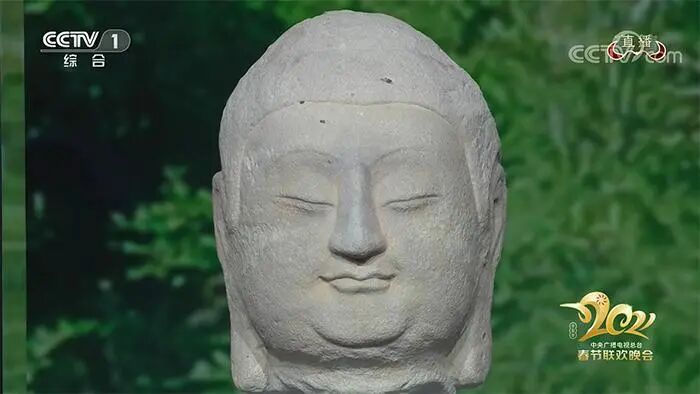
Screenshot from CCTV Spring Festival Gala
The Tianlongshan Grottoes were excavated during the late Northern Dynasties to the Sui and Tang Dynasties. The Buddha statues within are characterized by their elegant expressions, full bodies, and graceful postures, and are considered typical works from the period of transition from foreign art to Chinese grotto art.
Unfortunately, after the prosperity of the Sui and Tang Dynasties, the Tianlongshan Grottoes gradually declined during the Song and Yuan Dynasties. In the early 20th century, the grottoes were rediscovered and began to attract the attention of foreign scholars, sparking a collection craze.
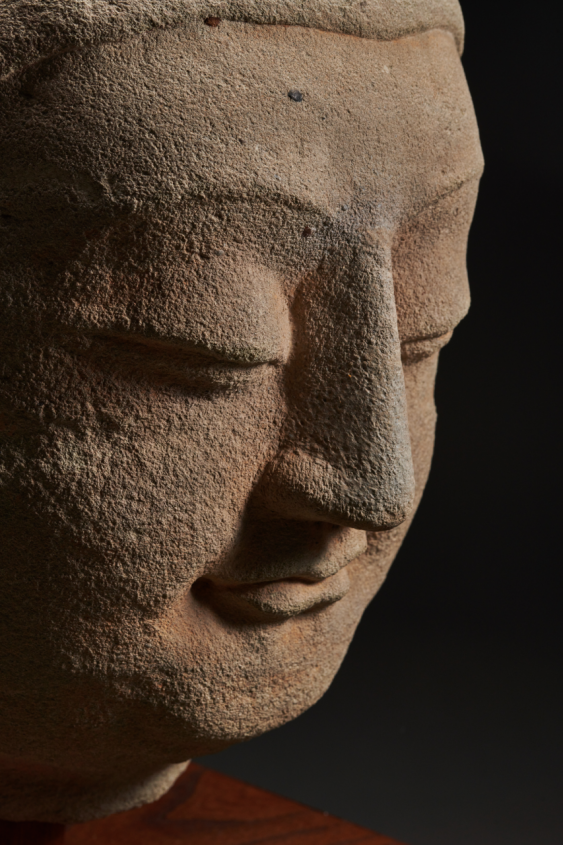
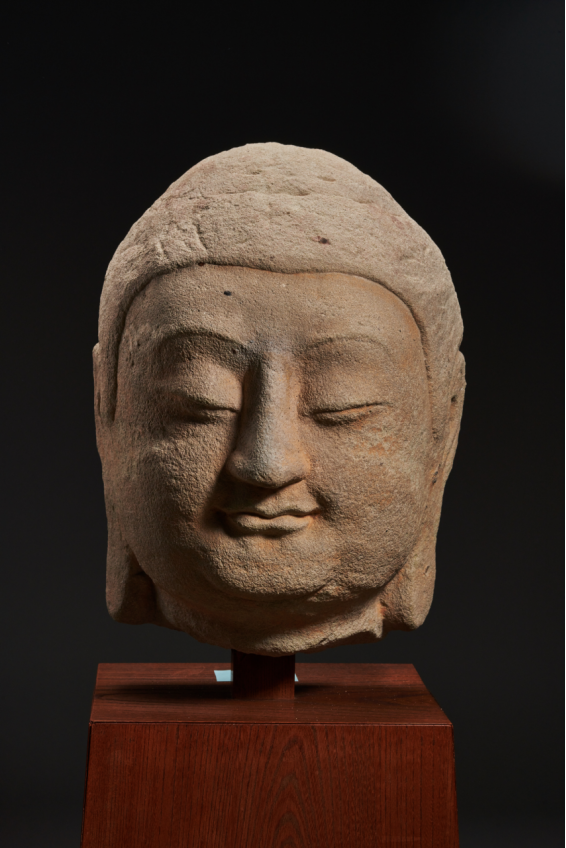
Main Buddha head from the north wall of Cave 8 of the Tianlongshan Grottoes. Photo provided by the State Administration of Cultural Heritage, Luo Zheng/camera
Against this backdrop, the remaining Buddha statues in the grottoes suffered further damage. In the 1920s, driven by foreign antique dealers, the Tianlongshan Grottoes were subjected to large-scale looting, with over 240 statues stolen, nearly all of the statue heads, and even entire statues smuggled abroad, resulting in the most severe destruction among Chinese grotto temples.
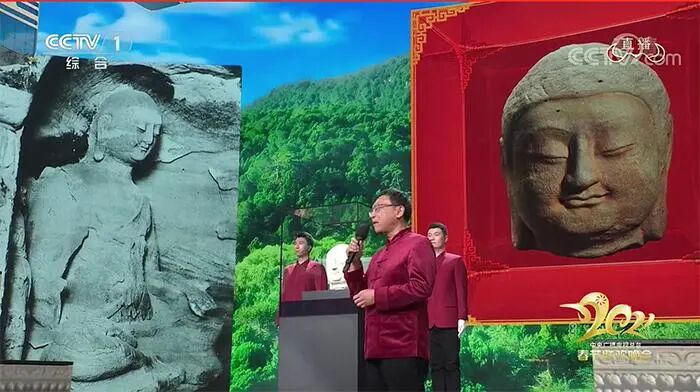
Screenshot from CCTV Spring Festival Gala
The Return of the Buddha Head to the Motherland Was a Twisted Journey
The return of the Buddha head from the Tianlongshan Grottoes to the motherland went through a convoluted yet uplifting process.
● On September 14, 2020, the State Administration of Cultural Heritage discovered that the Higashi Nippon International Auction Co., Ltd. (hereinafter referred to as the auction house) planned to auction a “Tang Dynasty Tianlongshan Stone Carved Buddha Head” in Tokyo, suspected to be a cultural relic lost from the Tianlongshan Grottoes in Shanxi Province. After organizing identification and research, it was determined that it belonged to the stolen Buddha head from the main Buddha statue in the north wall of Cave 8 (Sui Dynasty), which was illegally excavated and smuggled out of the country around 1924.
● The State Administration of Cultural Heritage initiated a recovery mechanism, setting the work goal of “stopping the auction and striving for return,” and on October 15, sent a letter to the auction house requesting the termination of the auction and promotional activities related to the Buddha head.
● On October 16, the auction house cooperated actively, making the decision to withdraw the auction and terminate related promotions. The State Administration of Cultural Heritage contacted the auction house’s chairman, Zhang Rong (a Chinese expatriate in Japan from Hangzhou, Zhejiang), encouraging him to facilitate the return of the cultural relic.
● On October 31, Zhang Rong completed negotiations with the Japanese relic holder for the purchase, and after thorough communication with the State Administration of Cultural Heritage, it was decided to donate the Buddha head to the Chinese government.
● On November 17, our embassy in Japan held a cultural relic handover ceremony, where Mr. Zhang Rong donated the Tianlongshan Grottoes Buddha head to the State Administration of Cultural Heritage, which was then kept by the embassy.
● The State Administration of Cultural Heritage organized the China Cultural Relics Exchange Center, Beijing Lu Xun Museum, and other relevant units, with full support from our embassy in Japan and Beijing Customs, to obtain permission from the Japanese Cultural Agency for the relic’s exit. On December 12 at 12:00, the Buddha head was safely transported to Beijing, and on the same day, it was officially stored, returning to the embrace of the motherland.
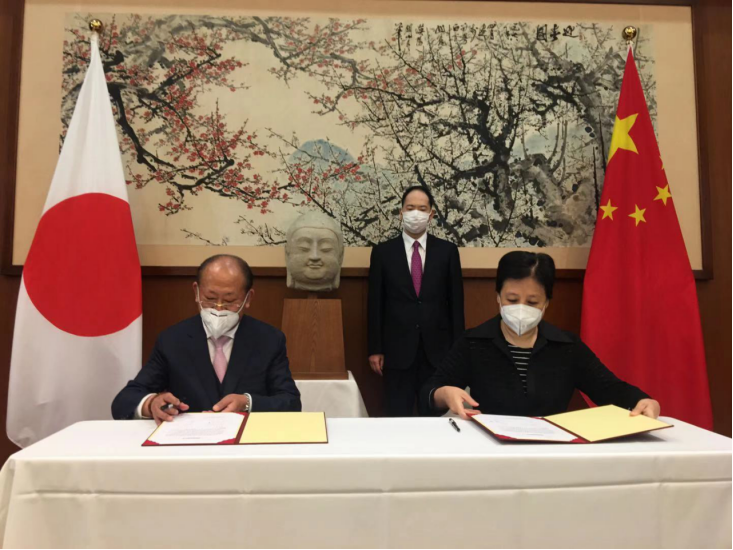
On November 17, our embassy in Japan held a cultural relic handover ceremony, where Mr. Zhang Rong (left) donated the Tianlongshan Grottoes Buddha head to the State Administration of Cultural Heritage, which was then kept by the embassy. Pictured is the embassy’s minister-counselor Yang Yu (center) witnessing, with counselor Shi Yongjing (right) signing the donation document with Zhang Rong. Photo provided by the State Administration of Cultural Heritage
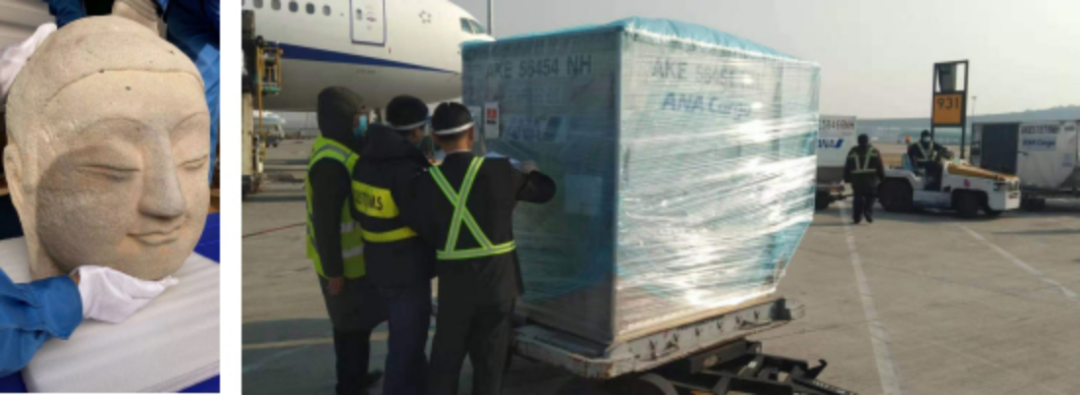
The return of the Buddha head. Photo provided by the State Administration of Cultural Heritage, Wang Zhuoran, Ma Xiaocheng/camera
The Return of Cultural Relics Is Becoming a Major Trend
This is just a microcosm of the recent return of cultural relics.
Since modern times, a large number of precious cultural relics have been lost overseas due to wars and turmoil.
From 1949 to the present, relevant departments have successfully facilitated the return of over 300 batches and more than 150,000 cultural relics lost overseas through law enforcement cooperation, judicial litigation, negotiation for donations, and rescue collection. Among them are precious relics such as the Boyuan Tie, Wuniu Tu, the bronze tiger head from the Old Summer Palace, the bronze animal heads from the Old Summer Palace, and the bronze ritual vessels of Zeng Bo Ke Fu.
During the Republic of China, the “Mid-Autumn Tie” and “Boyuan Tie” were taken out of the Forbidden City by the last emperor Puyi, and after several hands, they ended up in Hong Kong.
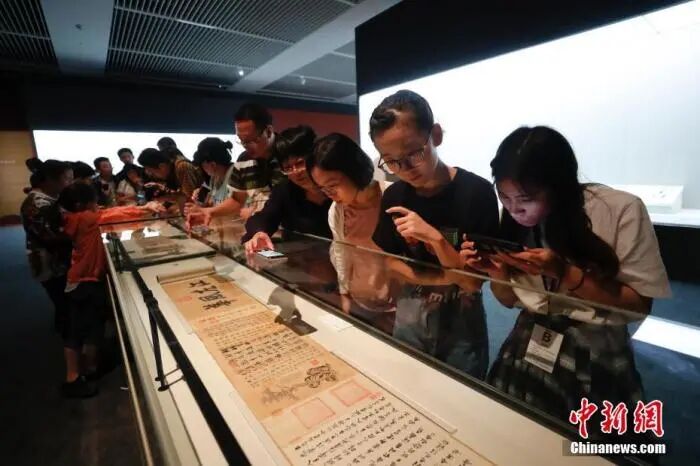
Data image: In 2019, visitors viewed the “Boyuan Tie” (Wang Xun’s “Boyuan Tie” scroll, Jin Dynasty, collected by the Palace Museum). Photo by China News Service, Du Yang
In October 1951, news spread in the cultural relics circle that two ties were about to be sold for inquiry. At the end of that year, Wang Yaqiu, then deputy director of the Cultural Relics Bureau of the Ministry of Culture, was ordered to rush south with the director of the Palace Museum, Ma Heng, and others to negotiate, ultimately successfully repurchasing the national treasure, which was then stored in the Palace Museum.
In fact, after the founding of the People’s Republic of China, to prevent the country from permanently losing its treasures, under the personal concern of Premier Zhou Enlai, the Ministry of Culture’s Cultural Relics Bureau established a “Secret Acquisition Group for Cultural Relics in Hong Kong” to “chase” treasures for the Chinese people. The secret group also successfully collected many treasures, including Zhao Ji’s “Xianglong Stone Map” from the Song Dynasty.
Entering the new era, the return of cultural relics is becoming a major trend. A series of precious cultural relics, such as the bronze heads of the Old Summer Palace, Zeng Bo Ke Fu’s bronze ritual vessels, have gradually returned to the motherland. In 2020, despite the impact of the COVID-19 pandemic, we still welcomed back many cultural relics.
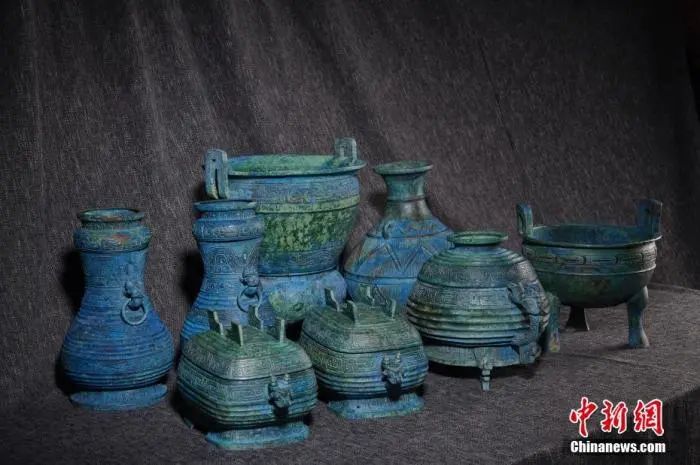
Data image: In 2019, the “Zeng Bo Ke Fu” bronze ritual vessels that had been lost in Japan were successfully reclaimed and returned to the motherland. It is understood that the “Zeng Bo Ke Fu” bronze ritual vessels consist of 8 pieces, including 1 ding, 1 gui, 1 yan, 1 ling, 2 jue, and 2 hu, with a rich variety and complete preservation, reflecting the typical style of early Spring and Autumn bronze wares in terms of shape, inscriptions, patterns, and casting, showcasing the superb bronze casting craftsmanship of ancient China. Photo provided by the State Administration of Cultural Heritage
The “Zeng Bo Ke Fu” bronze ritual vessels returned in 2019 are among the highest value cultural relics returned in recent years, successfully stopping illegal transactions in the international cultural relic market and implementing cross-border recovery.
On December 1, 2020, the “Bronze Horse Head from the Old Summer Palace Handover Ceremony” was held at the Zhengjue Temple in the Old Summer Palace. The State Administration of Cultural Heritage officially allocated the bronze horse head from the Old Summer Palace to the management office of the Old Summer Palace in Haidian District, Beijing, becoming the first important cultural relic to return to the Old Summer Palace after being lost overseas.
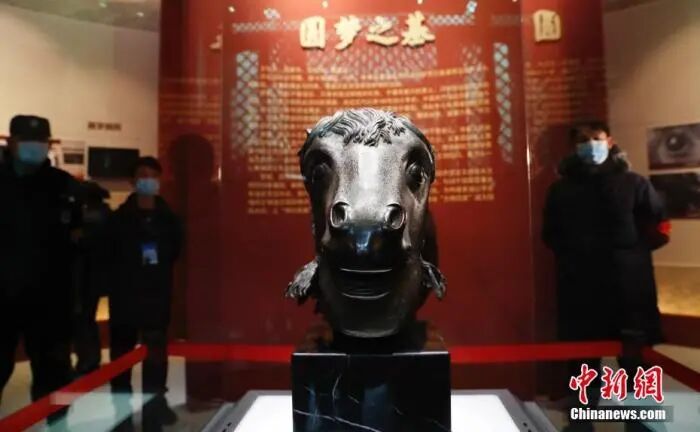
Data image: On December 1, 2020, the “Bronze Horse Head from the Old Summer Palace Handover Ceremony” was held at the Zhengjue Temple in the Old Summer Palace. The State Administration of Cultural Heritage officially allocated the bronze horse head from the Old Summer Palace to the management office of the Old Summer Palace in Haidian District, Beijing, becoming the first important cultural relic to return to the Old Summer Palace after being lost overseas. Photo by China News Service, Du Yang
From the national enterprise bidding for the ox head, tiger head, and monkey head, to the donation of the horse head and pig head by Chinese merchants, and the return of the rat head and rabbit head by foreign friends, the bronze animal heads from the Old Summer Palace have gone from being scattered to being reunited, marking the journey of the return of lost Chinese cultural relics.
Director Liu Yuzhu of the State Administration of Cultural Heritage once said, “Cultural relics lost overseas are an inseparable part of China’s cultural heritage, and the gathering and returning of cultural relics are closely related to the rise and fall of the nation.”
“Cultural prosperity leads to national prosperity, and a strong culture leads to a strong nation.” At the Spring Festival Gala, Zhang Guoli stated, “I hope each of us can cherish and protect our cultural heritage so that the common wealth of human civilization can be passed down from generation to generation.”
Source: China News Service, State Administration of Cultural Heritage website
Understand the values of the Global Times
Please long press the QR code below to follow us or return to the top of the article and click on Global Times (WeChat public account ID: hqsbwx)
