When you scan the code to open a vending cabinet in the lobby of an office building and take out a bottle of chilled cola, the system automatically completes the payment as soon as you close the door; when the shelves of a community unmanned supermarket are out of stock, the backend automatically triggers a restocking reminder; when an unmanned vending machine in a remote mining area detects a weak network signal, it automatically switches to offline transaction mode — these convenient retail scenarios rely on the support of IoT communication technology. Today, unmanned vending has transformed from a science fiction concept into a part of daily life, and the IoT cards from Henan Huayangnian Communication Technology Co., Ltd. are paving a stable “information highway” for this retail revolution.
The IoT Establishes a Solid Technical Foundation for Unmanned Vending
Omni-Scenario Perception: Making Vending Devices “Think”
The core of unmanned vending is to enable devices to have environmental perception and autonomous decision-making capabilities. IoT technology builds a “perception neural network” through multidimensional sensors deployed inside the devices: infrared sensors accurately identify the action of taking products with an accuracy rate of 99.7%; weight sensors monitor the remaining stock of products on the shelves in real-time, with an error control within 5 grams; temperature and humidity sensors ensure that the temperature inside the cold chain cabinet remains stable between 2-8°C, with fluctuations not exceeding ±0.5°C; cameras combined with AI vision algorithms can distinguish product types and packaging differences, and even recognize the gender and age group of users.
The real-time processing of this perception data relies on the built-in edge computing module of the device. When a user takes a product, the local system can complete product identification and amount calculation within 300 milliseconds, avoiding delays caused by reliance on cloud computing. The low-power design of the sensors allows the device to operate continuously for 6-12 months on a single charge, significantly reducing maintenance costs.
Stable Communication: The “Lifeline” of Data Flow
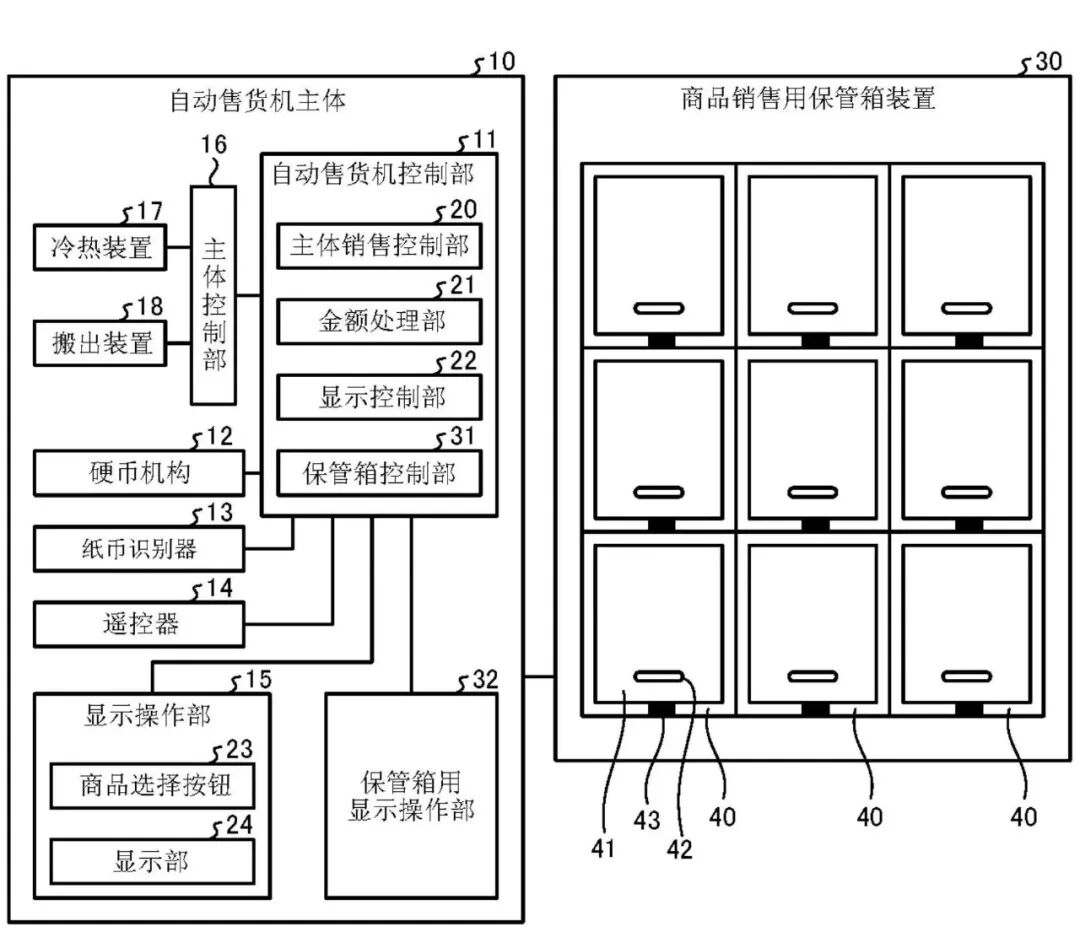
The normal operation of unmanned vending devices relies on continuous and stable network connections. The industrial-grade IoT cards from Henan Huayangnian Communication Technology Co., Ltd. demonstrate three core advantages: first, the “three-network redundancy” capability allows devices to automatically switch between mobile, Unicom, and telecom networks, ensuring smooth communication in weak signal areas such as underground shopping malls and remote factories, with network downtime not exceeding 5 minutes per month; second, “intelligent traffic control” supports bandwidth allocation by time period, automatically prioritizing data transmission during peak hours and entering energy-saving mode during non-peak hours, reducing the average monthly traffic cost per device by 25%; third, “secure encrypted transmission” encrypts transaction data end-to-end to prevent payment information leakage.
For different application scenarios, their IoT cards provide flexible adaptation solutions: the “campus private network” card equipped for campus unmanned vending machines can restrict devices to communicate only within the campus IP range to prevent malicious attacks; the industrial-grade “extreme environment resistant” card designed for outdoor vending cabinets can operate stably at temperatures ranging from -30°C to 70°C and is IP65 waterproof certified to adapt to rain, snow, and dust storms.
Intelligent Operation and Maintenance: Making Device Management “Zero Running”
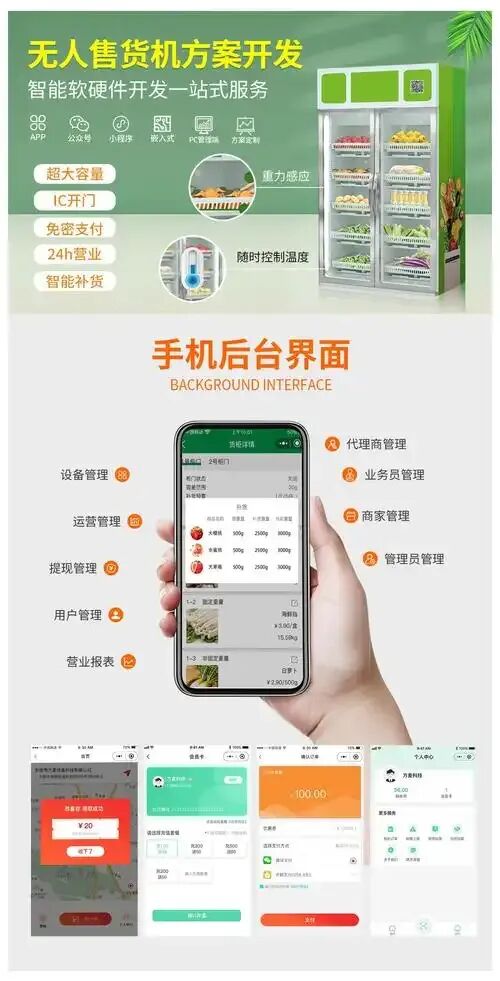
IoT technology has completely changed the operation and maintenance model of unmanned vending machines. Through the device cloud platform, operators can monitor the operational status of thousands of devices nationwide in real-time: viewing the inventory list of a particular machine, automatically generating a restocking order when only 3 bottles of cola remain; monitoring abnormal pressure in the refrigeration system of a device and immediately dispatching a work order to nearby maintenance personnel; analyzing sales data from different regions to dynamically adjust product categories and pricing strategies.
The response speed of this intelligent operation and maintenance system is astonishing: when a device experiences paper jams or runs out of paper, the system can issue a warning within 5 minutes; restocking personnel receive a navigation-guided restocking route through the APP, and upon arrival, they can scan the device’s QR code to view the detailed restocking list; maintenance personnel can resolve 80% of software faults through remote diagnosis without needing to be on-site.
IoT Application Cases in the Unmanned Vending Field
Community Smart Cabinets: Completing Fresh Produce Purchases in 30 Seconds
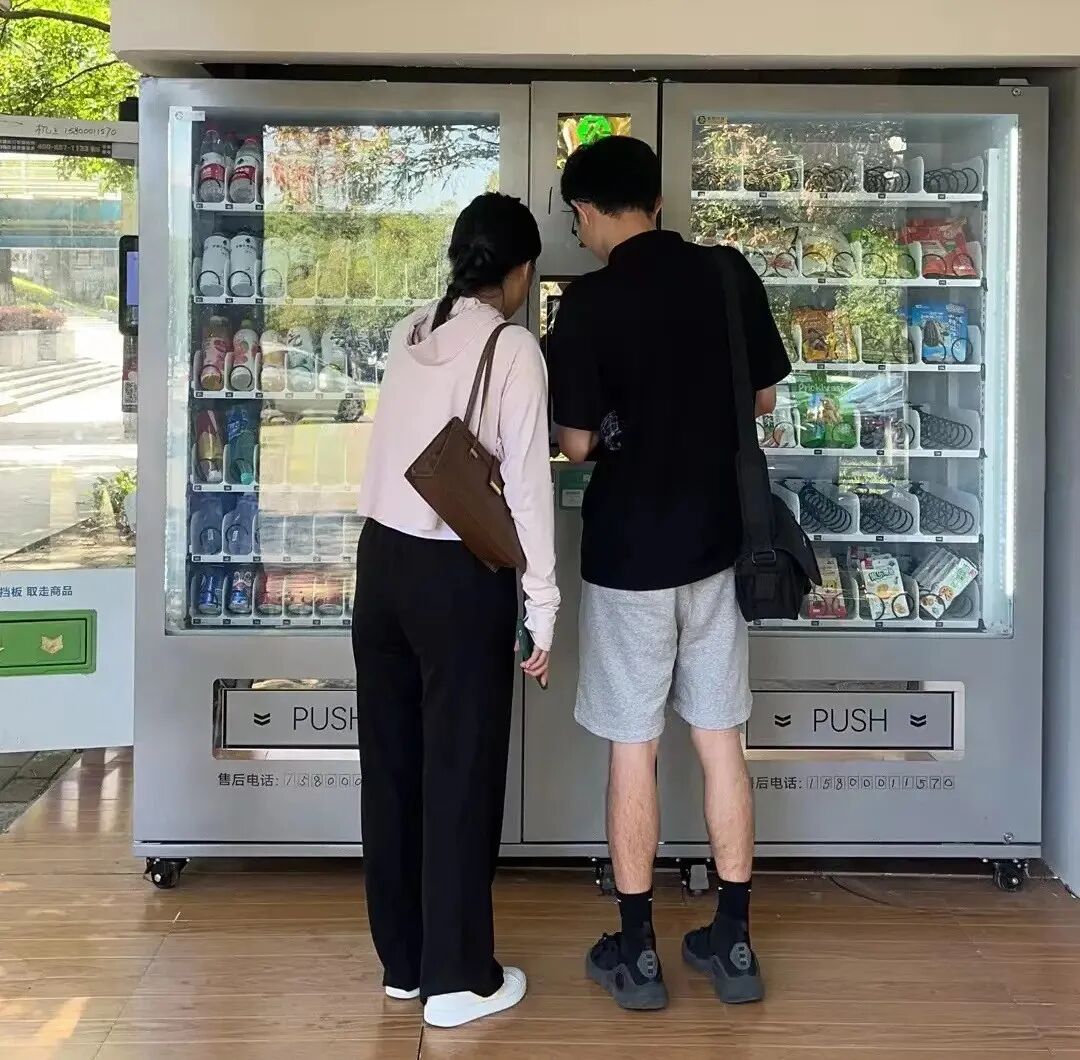
In a high-end community in Shanghai, the IoT-enabled smart fresh produce cabinet has become a “midnight canteen” for residents’ daily purchases. This device uses a dual confirmation mechanism of “visual recognition + gravity sensing”; after residents scan the code to open the door, they can freely select vegetables and meat, and after closing the door, the system automatically identifies the products and deducts the payment, with no manual intervention required throughout the process. The device uses a dedicated industrial-grade IoT card, transmitting 3 types of key data to the cloud daily: sales lists for dynamic adjustment of stock levels, reducing the fresh produce waste rate from 20% to 8%; user behavior data guiding product display, with sales of bestsellers increasing by 37% when placed at eye level; and device status data ensuring the refrigeration system operates normally 24 hours a day, automatically starting the backup power supply during power outages to ensure ingredient freshness.
The operator stated: “The stable communication of the IoT card is the core guarantee of this system; even during community network fluctuations, the transaction success rate can still be maintained at 99.9%, and user complaints have decreased by 90%.”
Unmanned Supermarket in Mining Areas: A “Supply Station” 200 Kilometers Away
In a coal mining area in Shanxi, IoT technology allows workers in remote areas to enjoy convenient shopping. The explosion-proof unmanned vending machine deployed 500 meters underground uses dual-link communication via fiber optics and IoT cards to achieve real-time data interaction with the surface system. The built-in gas sensor and explosion-proof camera ensure compliance with safety regulations while monitoring the surrounding environment. Workers can open the door to shop using facial recognition or a miner’s lamp ID card, with product prices consistent with those in surface supermarkets, solving the problem of high costs and limited choices for supplies in the mining area.
This project uses a professional “low-rate long connection” IoT card, optimizing the communication protocol to maintain stable connections even in weak signals underground, with monthly data consumption controlled within 100MB, significantly reducing operating costs. After one year of operation, the device failure rate is below 2%, providing 24-hour shopping service for over 3,000 miners.
Policy Incentives Catalyze Upgrades in Unmanned Vending
National policies continue to inject development momentum into the unmanned vending industry. The “14th Five-Year Plan for the Development of the Commercial Circulation Industry” clearly states the need to “develop new business formats such as unmanned retail and instant retail, promoting the deep integration of IoT, artificial intelligence, and retail scenarios.” The Ministry of Commerce and 13 other departments jointly issued the “Guiding Opinions on Promoting Green Consumption,” encouraging the layout of smart vending devices in communities, subways, and other locations, and promoting energy-saving and environmentally friendly cold chain technology.
Local government support policies are more targeted: Shenzhen City provides a one-time subsidy of 2,000 yuan for each new unmanned vending outlet, focusing on supporting unmanned vending projects for fresh produce and pharmaceuticals; Hangzhou City has designated “unmanned retail demonstration areas” in public spaces such as subways and parks, simplifying approval processes and providing rent reductions.
Future Outlook: The “Internet of Everything” Landscape of Unmanned Vending
With the iteration of IoT technology, unmanned vending will present three major development trends: first, “ubiquitous layout,” where vending devices will be embedded in more life scenarios, such as smart refrigerators that can automatically detect milk levels and place orders for restocking, desk drawer vending boxes that support instant purchases of stationery, and even shared bicycles that can carry micro vending compartments; second, “omni-channel integration,” achieving seamless connections between online malls and offline device data, enabling “online ordering – offline pickup” and “offline experience – online repurchase”; third, “personalized services,” where AI recommendation systems based on user shopping data can customize product combinations for different demographics, such as prioritizing high-protein foods for fitness enthusiasts and highlighting baby products for mothers.
As unmanned vending devices become intelligent nodes of the IoT, and every transaction generates consumer insights, the retail industry is moving towards an era of precise services tailored to individuals. Henan Huayangnian Communication Technology Co., Ltd. is playing the role of an “infrastructure builder” in this retail transformation with its stable and reliable IoT communication solutions, making unmanned vending not only “unmanned” but also “understanding people,” bringing consumers convenient access to services.