Recently, pmd technologies, a provider of high-performance Time-of-Flight (ToF) depth sensing solutions, showcased its latest 3D image sensor IRS238XC for the first time globally at CES 2018. They also presented the world’s smallest 3D camera module based on this sensor, measuring only 12 mm x 8 mm, which will make ToF depth sensing 3D cameras easier to integrate.
Today, pmd announced a partnership with Ningbo Sunny Optical Technology Group Co., Ltd.’s subsidiary, Ningbo Sunny Optoelectronics Information Co., Ltd., to deepen their existing collaboration. Together, they will develop and commercialize 3D sensing camera solutions for mobile device OEMs in China and globally.

According to reports, in this collaboration, pmd will provide the 3D image sensor (primarily the IRS238XC) and proprietary technology for cost optimization, robust and high-performance 3D camera design, including calibration and software expertise. Sunny will contribute its proprietary technology for large-scale production of 3D camera modules, enabling more economical, faster, and stable product manufacturing.
Previous information indicates that the IRS238XC supports a first-level safety laser for 3D depth sensing camera modules through integrated functional design, significantly improving the layout and integration of the 3D camera module. The integration of MIPI interfaces and digital logic circuits allows for more convenient operation of the 3D camera module. Each pixel of the IRS238XC features a background illumination suppression (SBI) circuit, enabling reliable depth sensing even in bright outdoor conditions. Additionally, the IRS238XC’s 38,000 pixels provide higher resolution compared to all current 3D sensing chips, and the modulation at 940nm wavelength operates normally, further enhancing outdoor 3D depth sensing performance.
Moreover, the reference design size of the IRS238XC camera module is only 12mm x 8mm, which includes the image sensor, lens, infrared emitter, and all related circuits, making it the smallest 3D camera module in the world.
Previously, pmd’s 3D depth sensing technology has been successfully applied in several commercial products, such as smartphones (the world’s first smartphone equipped with a 3D camera, Lenovo Phab 2 Pro), AR headsets, smart home products, and robots. Sunny Optical is currently a major supplier of camera modules for several domestic and international smartphone manufacturers, including Huawei, OPPO, and VIVO. This collaboration may accelerate the application of ToF technology-based 3D cameras in the smartphone market.
Additionally, it is noteworthy that last November, Sunny also partnered with ams, one of the suppliers of 3D sensors for the iPhone X (primarily providing structured light depth sensing solutions), to jointly develop and commercialize 3D sensing camera solutions for mobile devices and automotive applications, leveraging their respective technological advantages in optical sensing and imaging.
Clearly, through collaborations with ams and pmd, Sunny will have the supply capability for 3D camera modules using both ToF and structured light technologies.
However, currently, the 3D camera solutions for front-facing smartphone cameras based on structured light remain mainstream. The 3D depth camera featured in Apple’s iPhone X, released last year, is based on structured light technology.
At the end of last year, domestic company Orbbec also launched a front-facing 3D camera module Astra P based on structured light for the smartphone market. Reports indicate that its IR size is 7.4*7.4*4.8mm, LDM size is 5.1*5.1*4.55mm, depth range: 0.25—1.2m, and power consumption is less than 0.5w. Orbbec stated that they will begin mass production of their self-developed front-facing structured light 3D camera Astra P for smartphones this year.
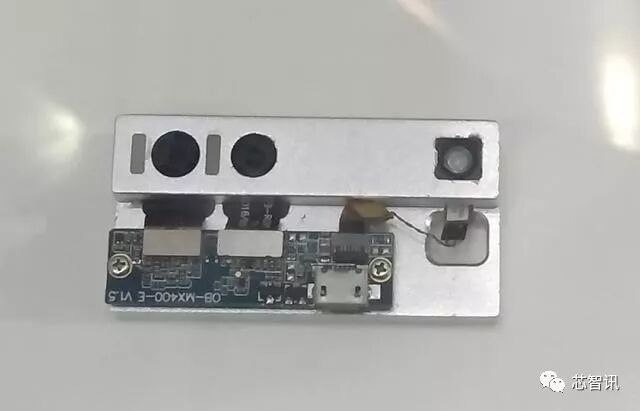
Additionally, last year Qualcomm also announced a partnership with Himax Technologies to launch a 3D camera module solution for the smartphone market. It is reported that the module developed through this collaboration will soon begin mass production.
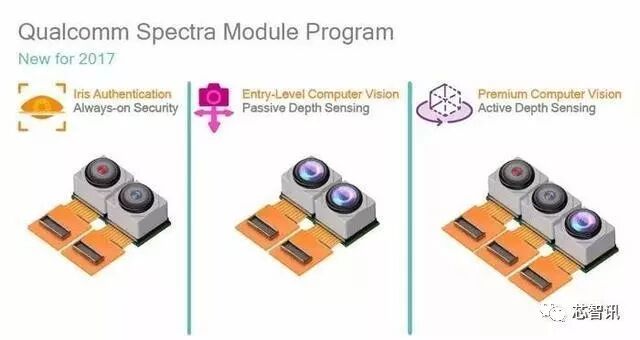
In summary, the 3D camera market will see fierce competition this year. However, due to the relatively high cost of modules, it is likely that they will only be adopted by some high-end flagship smartphones in the short term. Additionally, with under-display fingerprint technology also beginning to commercialize, I believe that the demand for 3D cameras in the smartphone market will still be relatively limited this year. However, thanks to Qualcomm’s influence in the mid-to-high-end smartphone market, its collaboration with Himax will likely capture some of the high-end Android smartphone market more easily. Meanwhile, Spreadtrum, benefiting from its influence in the mid-to-low-end smartphone market, could have significant market potential if it can control costs effectively with its 3D camera solution in collaboration with OmniVision.
Author: Lin Zi, Chip Intelligence