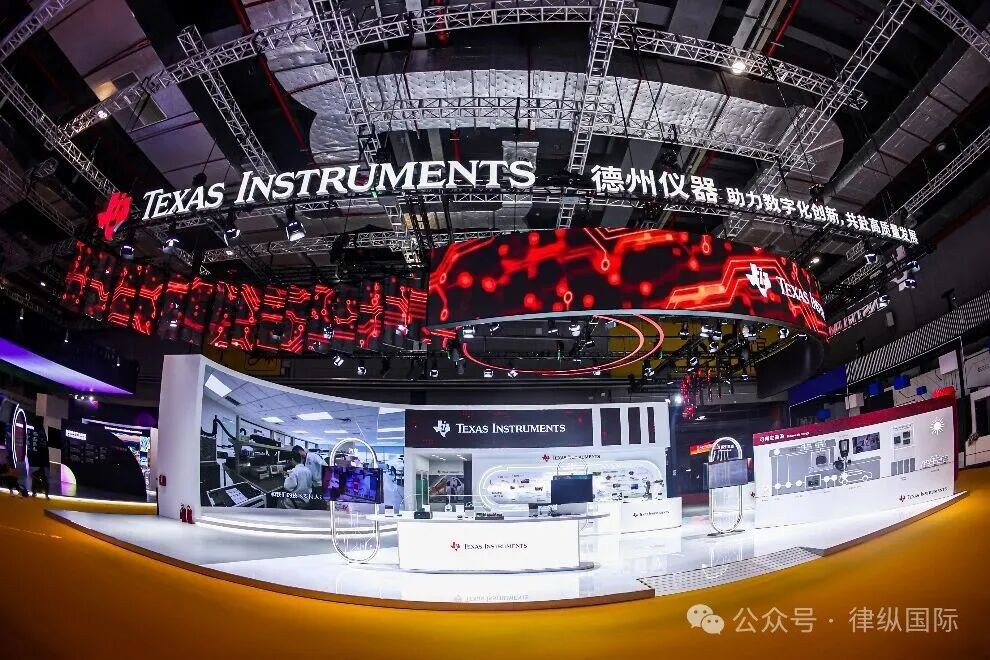
 From geological exploration to a global semiconductor powerhouse, Texas Instruments has written a history of technological innovation over nearly a century.Texas Instruments (TI) is a multinational technology company headquartered in Dallas, Texas, USA, known for developing, manufacturing, and selling semiconductor and calculator technologies.The company primarily engages in research, manufacturing, and sales in the fields of digital signal processing and analog circuits, with operations in 25 countries.01 Company Origins and Historical DevelopmentThe history of Texas Instruments dates back to the establishment of Geophysical Service Incorporated (GSI) in 1930, which initially provided geological exploration services to the oil industry.In 1951, GSI was reorganized and renamed Texas Instruments, officially beginning its legendary journey in the technology field. In 1947, Cecil Howard Green, J. Eric Johnson, Eugene McDermott, and Patrick E. Haggerty officially founded Texas Instruments.
 02 Technological Innovations and MilestonesTexas Instruments has achieved several historic breakthroughs in the semiconductor field. In 1954, TI developed the world’s first commercial silicon transistor.In 1958, engineer Jack Kilby invented the integrated circuit, which fundamentally changed the trajectory of the electronics industry, earning him the Nobel Prize in Physics in 2000.In 1967, TI invented the world’s first portable calculator. These innovations established TI’s leading position in the semiconductor industry.03 Business Structure and Profit ModelTexas Instruments’ business is primarily divided into two branches: Semiconductors (SC) and Educational Technology (ET), with the semiconductor business generating approximately 96% of the company’s revenue.Semiconductor products mainly include: analog circuits (accounting for 71% of 2019 revenue), embedded processors (20% of 2019 revenue), and other products (9% of 2019 revenue).Analog ICs can be further divided into power products (48% of analog IC revenue), signal chain products (38%), and high-volume products (14%). These products are widely used in industrial, automotive, and consumer electronics sectors, providing comprehensive solutions for customers.04 Financial Performance and Market PositionAccording to IC Insights statistics for 2021, Texas Instruments is the ninth largest semiconductor manufacturer in the world.In the second quarter of 2025, TI reported robust financial results: revenue of $4.448 billion, a year-on-year increase of 16%; operating profit of $1.563 billion, up 25% year-on-year; and net profit of $1.295 billion, a 15% increase year-on-year.TI’s gross margin remains at a high level of 58%, reflecting the company’s strong product pricing power and manufacturing efficiency. Over the past 12 months, total operating cash flow reached $6.44 billion, with free cash flow of $1.763 billion, an 18% year-on-year increase.05 Industry Layout and Manufacturing CapabilityTexas Instruments has a global production layout, with 10 wafer fabs worldwide, including 6 in the United States, 2 in Japan, 1 in Germany, and 1 in China.Among them, there are 2 12-inch fabs, 7 8-inch fabs, and 1 6-inch fab, with the most advanced process being 45nm.In June 2025, TI announced plans to invest over $60 billion in the United States to build seven semiconductor wafer fabs, located in three major manufacturing bases in Texas and Utah.This investment represents the largest semiconductor manufacturing investment in U.S. history and is expected to create over 60,000 new jobs in the country.06 Partnerships and Customer RelationshipsTexas Instruments has established extensive partnerships with companies across various industries. In June 2024, TI announced a collaboration with Delta Electronics to advance electric vehicle onboard charging technology.The two companies will utilize TI’s new C2000™ real-time microcontroller and proprietary active electromagnetic interference filtering products to develop lighter and more cost-effective onboard chargers.At the 2021 China International Import Expo, TI reached a series of cooperation agreements with multiple clients in industries such as new infrastructure, automotive, smart home, and healthcare.This includes collaborations with Guangzhou CNC Equipment Co., Ltd. in mid-to-high-end CNC systems and industrial robots; and with Sungrow Power Supply Co., Ltd. to develop products for the Chinese photovoltaic market.TI offers over 7,000 automotive-grade products, providing comprehensive technical support to automotive manufacturers. Leading U.S. companies such as Apple, Ford, Medtronic, NVIDIA, and SpaceX rely on TI’s world-class technology and manufacturing expertise.
 07 Competitive Landscape and Market PositioningTexas Instruments is the largest supplier of analog chips globally, with a market share of 19% in the analog IC market (2019).In the embedded processor market, TI’s market share is approximately 16% (2019). TI was once the second-largest chip supplier for mobile phones, second only to Qualcomm.TI’s competitive strategy focuses on the fields of analog and embedded processing chips, avoiding direct competition with TSMC, Samsung, and others in advanced processes, instead consolidating its market position through economies of scale and cost control.08 China Market StrategyThe Chinese market holds significant strategic importance for Texas Instruments, with Chinese customers accounting for about 20% of TI’s total revenue.In the second quarter of 2025, TI performed particularly well in the Chinese market, with revenue growth of approximately 19% quarter-on-quarter and about 32% year-on-year. All end markets in China, except for the automotive market, achieved growth, with the industrial market leading the growth trend.TI has established a new highly automated product distribution center in Shenzhen, supporting order picking, packaging, and delivery within one hour. Customers in Shenzhen and Hong Kong can receive their orders on the same day; other regions in China can receive orders as quickly as the next day.09 Future Plans and Development ProspectsTexas Instruments’ future plans focus on three areas: manufacturing expansion, technological innovation, and market focus.In terms of manufacturing expansion, TI is advancing its $60 billion wafer fab construction plan, which is expected to produce hundreds of millions of U.S.-made chips daily once completed.In terms of technological innovation, TI continues to invest in R&D, with R&D expenditures reaching $527 million in the second quarter of 2025, a 6% year-on-year increase. The company is focusing on developing Gallium Nitride (GaN) technology, automotive power solutions, and 300mm manufacturing processes.In terms of market focus, TI is strategically reducing resource investments in the smartphone and PC markets, shifting towards more structurally growing segments such as industrial and automotive, which have longer life cycles and more stable customer structures.TI President and CEO Haviv Ilan stated, “Texas Instruments is building reliable, low-cost large-scale 300mm wafer capacity to provide analog and embedded processing chips that are critical to nearly all electronic systems.”The first new wafer fab in Sherman, Texas, is expected to begin initial production in 2025, just three years after breaking ground.The external structure of the second new wafer fab SM2 in Sherman has also been completed. The phased investment plan also includes two additional wafer fabs SM3 and SM4 to support future demand.As the high-intensity manufacturing investment cycle from 2023 to 2025 approaches its end, TI’s capacity utilization is expected to rise, and marginal investment returns are anticipated to gradually be released.This semiconductor giant is steadily moving towards the future, continuing to write its innovative legend in the chip field.Disclaimer: The articles and images published, excerpted, or reproduced by the Lvzong International platform are sourced from the internet, and the content is for reference and communication purposes only. If there are any copyright issues, please contact us promptly for modification or immediate deletion. Tel: 18923785286