Researchers at Texas A&M University, led by Dr. Mansoor Khan, are advancing the application of 3D printing technology to produce medications specifically designed for children, addressing long-standing challenges in pediatric medication. By manufacturing dosage-flexible tablets, his approach ensures that children receive precise dosages that correspond to their age and weight, thus avoiding the need for pharmacists to manipulate adult tablets, which can lead to inaccurate dosing.
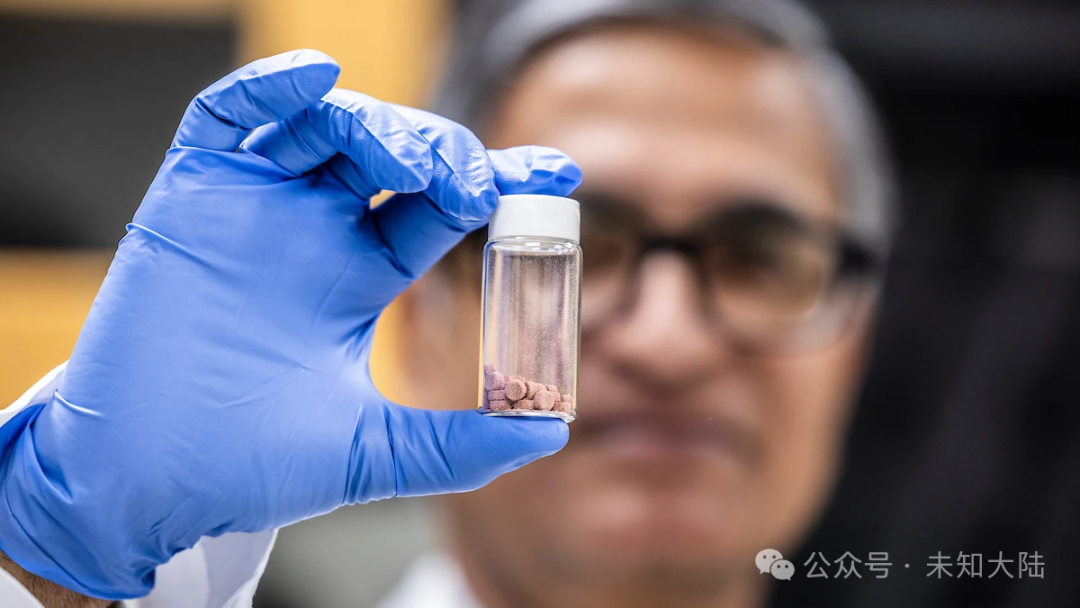
Dr. Mansoor Khan showcases a newly 3D printed pill. Image courtesy of Texas A&M University.
Layered 3D Printing for Pediatric Precision Dosing
Children often cannot obtain the appropriate dosage of medications, forcing pharmacists to compound adult tablets into smaller doses, a method that can affect the quality of the medication. “The way we administer medications to children today is very inefficient,” Khan stated. “Liquid dosages can be more easily reduced, but not all medications are available in liquid form, and creating liquid formulations is not straightforward. Temporarily converting solid medications into liquid forms without compromising quality is even more challenging.”
Khan and his team utilize a 3D printing technology known as “layered” printing to produce dosage-flexible tablets that can be customized in shape and flavor, making them easier for children to take. “We use 3D printing technology, which allows for flexible dosage forms, so we can create dosage-flexible medications for pediatric patients at any time, adjusting the dosages for children. With this innovation, we can easily provide precise dosages and formulations for pediatric patients,” he explained. This method also enables hospitals to offer antiviral medications and other therapeutic products in formulations optimized for children.
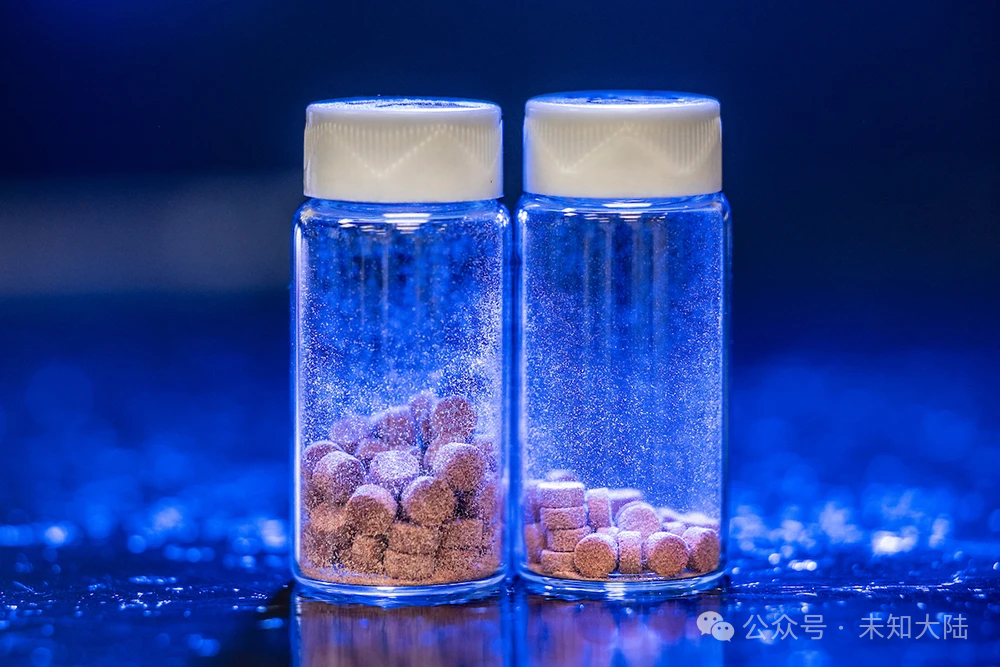
3D printed pills. Image courtesy of Texas A&M University.
Application of 3D Printing Technology in Pharmaceutical Production
In addition to Texas A&M University, other companies have also made progress in the field of 3D printed drug delivery. Last year, the Chinese company Triastek collaborated with Eli Lilly to develop 3D printed oral medications for the gastrointestinal tract. This project utilized Triastek’s MED technology to create drug release profiles targeted at specific areas of the digestive system.
Furthermore, researchers from the MERLN Institute, University of Santiago de Compostela, University College London (UCL), and UCL spin-off FabRx developed a method to 3D print tablets in just 7 seconds. Unlike traditional layer-by-layer photopolymerization techniques, the team employed volumetric 3D printing technology, which can cure an entire vat of resin at once, thereby accelerating the production speed of customized medications.
Additionally, teams from the Max Planck Institute for Informatics in Saarbrücken, Germany, and the University of California, Davis, developed 3D printed pills capable of releasing drugs at a controlled rate. The team demonstrated how the shape of the printed pills can control their dissolution rate in the body, providing new possibilities for drug delivery.