Learning Method
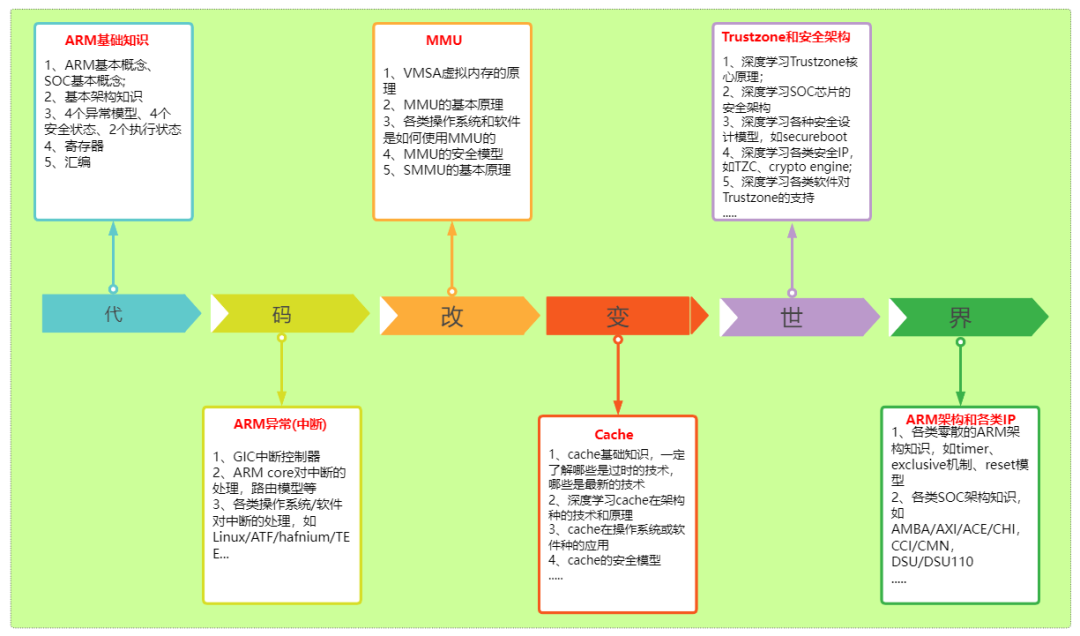
Learning the Arm architecture versions v8 and v9 requires a deep understanding of several key concepts and mechanisms, including GIC (Interrupt Controller), exception handling, MMU (Memory Management Unit), memory management, caching, TrustZone security architecture, security features, and the exclusive mechanism. Below is an efficient learning method that covers these important topics:
-
Establish a Learning Path: Start by formulating a learning path to ensure you thoroughly understand each topic. Begin with foundational knowledge and then gradually delve into advanced topics.
-
Official Documentation: Read the official Arm documentation, especially the reference manuals and technical guides regarding the Arm architecture. These documents provide detailed technical information.
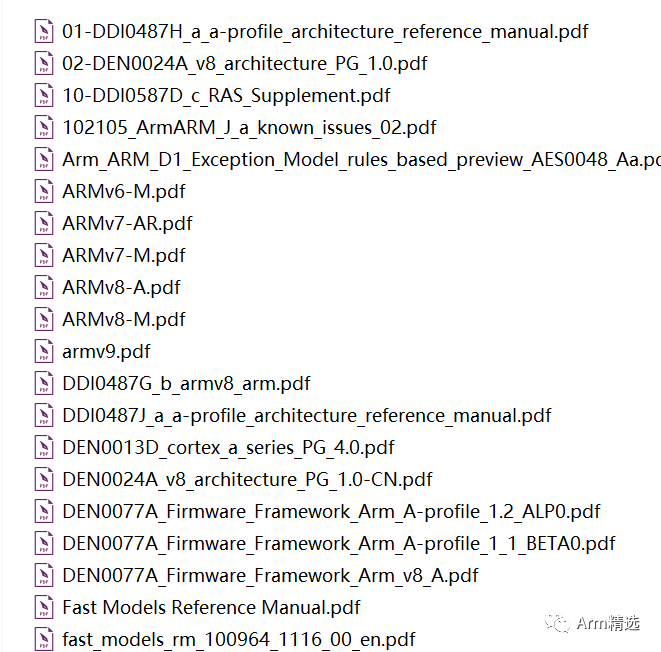
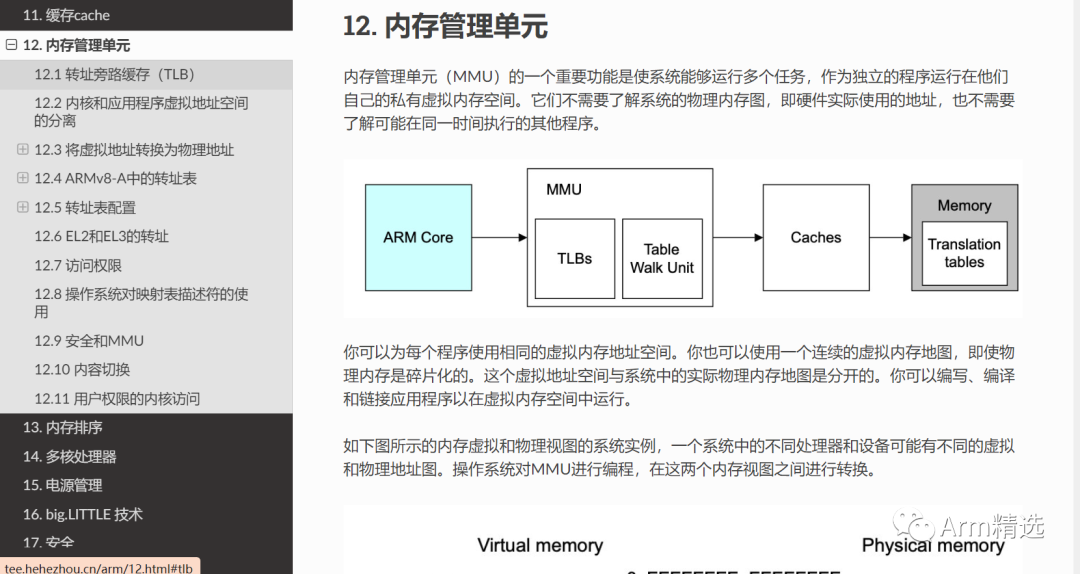 (http://tee.hehezhou.cn/arm/)
 -
GIC (Interrupt Controller): Learn the basic concepts of GIC, including interrupt sources, interrupt control, and interrupt processing. Practical operation: configure and use GIC, simulate interrupts, and understand interrupt priority and the execution of interrupt handlers.
-
Exception Handling: Learn the concepts of exception handling, including types of exceptions, exception vector tables, and exception handling modes. Practical operation: write and run programs that trigger exceptions to understand the exception handling process.
-
MMU (Memory Management Unit) and Memory Management: Deeply study the functions of the MMU, including virtual memory, page tables, address translation, and memory protection. Practical operation: configure and use the MMU to understand how the virtual memory system works.
-
Caching: Understand the role and types of caches, including instruction caches and data caches. Practical operation: master how to configure and manage caches, and understand consistency models and cache coherence.
-
TrustZone Security Architecture: Learn the basic principles of TrustZone, including the concepts of Secure World and Non-Secure World. Practical operation: configure and run a TrustZone secure environment, and understand how to implement secure boot and secure communication.
-
Security: Learn about the security features in the Arm architecture, such as hardware encryption and key management. Practical operation: understand how to use hardware security features to enhance system security.
-
Exclusive Mechanism: Understand the concept of the exclusive mechanism and how to use it to achieve atomic operations. Practical operation: write code to demonstrate the application of the exclusive mechanism.
Course Recommendations
[Training Camp Outline]
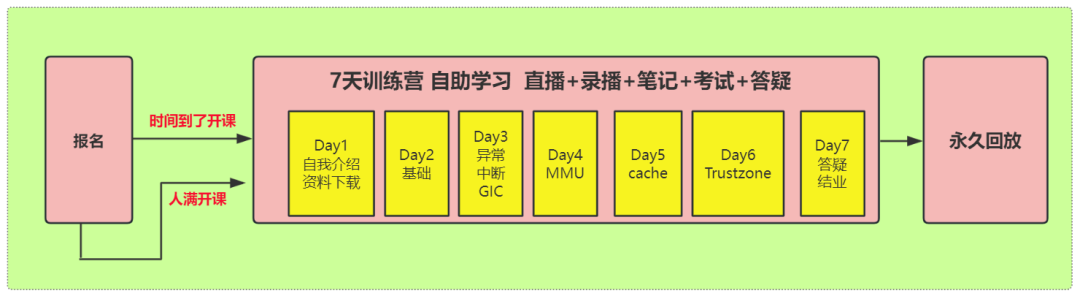
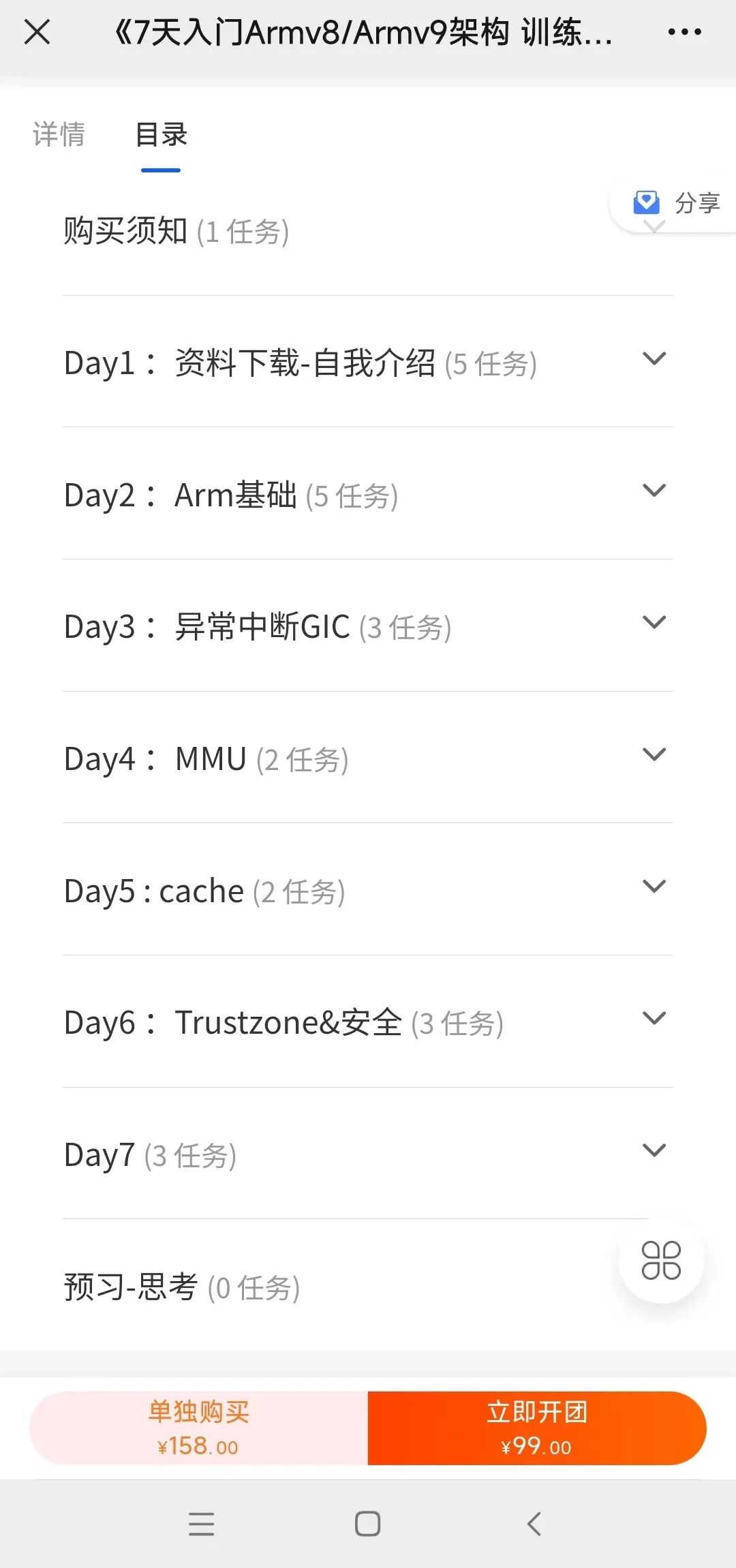
[Learning Difficulty] Basic entry, beginner-friendly, zero foundation entry.
[Target Audience]
1. Students: Those majoring in electronics/computer, graduate/undergraduate… 2. Engineers: Junior engineers with 1-3 years of work experience, intermediate engineers.
[Note]
1. The Arm discussed in this class is based on the A-serial in the Armv8/Armv9 architecture, specifically the aarch64 part. Those who wish to study non-Cortex-A series or the Cortex-A series but want to study the aarch32 part should refrain. 2. Please carefully check the class start time; classes can only be taken once the start time arrives, or when the small class is full. 3. Course content is still being updated and will be completed before the class starts.
[Description]
This form of course is an experiment; if the results are good, we will continue to offer the second, third, and fourth sessions. If the results are poor, this will be the last session.