Introduction to ARMV8/ARMV9 Security Architecture
Introduction to ARMV8/ARMV9 Security Architecture

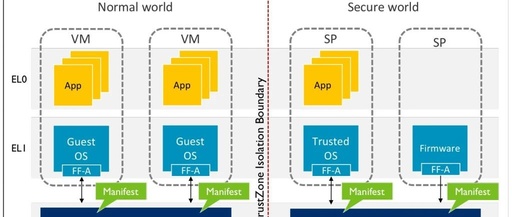
1. Terminology Realm Management Monitor (RMM) Realm Management Interface (RMI) Realm Services Interface (RSI) Realm Management Extension (RME) Granule Protection Check (GPC) Kernel-based Virtual Machine (KVM) Virtual Machines (VMs) Realm Descriptor (RD) Realm Execution Context (REC) Virtual CPU (VCPU) Realm Translation Table (RTT) Secure Monitor Call (SMC) High Level Operating System (HLOS) Physical Address Spaces … Read more

Integrating FreeRTOS on ARMv8-M Architecture Processors

Integrating FreeRTOS on ARMv8-M Architecture Processors

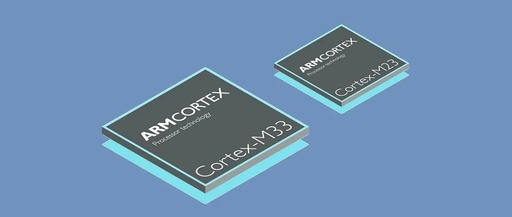
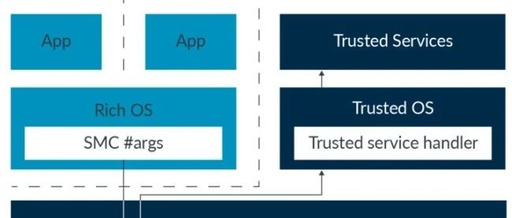
1 The Cortex-M series microcontrollers based on the ARMv8-M architecture (Cortex-M33 and Cortex-M23) introduce TrustZone technology. TrustZone enables two security domains within a single processor, partitioning the execution space into secure and non-secure areas. This enhances security by achieving complete isolation between trusted software running on the secure side and untrusted software running on the … Read more

Understanding Armv8/Armv9 TrustZone Technology

Understanding Armv8/Armv9 TrustZone Technology

Click the blue "Arm Selected" at the top left and select "Set as Star" 1. Background With the development of the times and the advancement of technology, the trend for security needs has become increasingly evident. ARM has been continuously adjusting and updating its new architectures, many of which are related to security. Below are … Read more

Using embOS on ARMv8-M

Using embOS on ARMv8-M

With the TrustZone technology supported by the ARMv8-M architecture, critical security firmware and private programs (such as secure boot, firmware updates, and keys) can be isolated from the rest of the applications, significantly reducing the chances of being attacked and increasing the security of embedded systems. SEGGER’s embOS currently supports ARMv8-M TrustZone, making embOS a … Read more

Efficient Learning Methods for Armv8/Armv9 Architecture

Efficient Learning Methods for Armv8/Armv9 Architecture

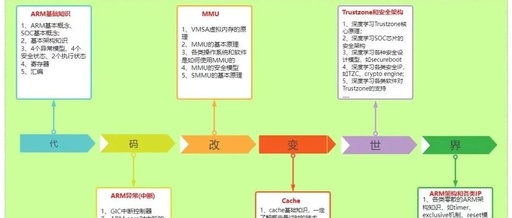
Learning Methods Scan to FollowLearn Embedded Together, learn and grow together Learning the Arm architecture versions v8 and v9 requires a deep understanding of several key concepts and mechanisms, including GIC (interrupt controller), exception handling, MMU (memory management unit), memory management, cache, TrustZone security architecture, security, and exclusive mechanisms. Here is an efficient learning method … Read more

How TrustZone Protects Code Security in ARMV8-M

How TrustZone Protects Code Security in ARMV8-M

Source | STM32 The STM32L5 is based on the Cortex-M33 core, which is built on the ARMV8-M architecture and features TrustZone security technology, effectively isolating the secure and non-secure areas from the core to the entire chip system. In terms of debugging port protection, the combination of TrustZone and RDP (Read Protection) can also achieve … Read more

Systematic Mastery of Armv8/Armv9 Architecture

Systematic Mastery of Armv8/Armv9 Architecture

Learning Method Learning the Arm architecture versions v8 and v9 requires a deep understanding of several key concepts and mechanisms, including GIC (Interrupt Controller), exception handling, MMU (Memory Management Unit), memory management, caching, TrustZone security architecture, security features, and the exclusive mechanism. Below is an efficient learning method that covers these important topics: Establish a … Read more

ARMv8-M TrustZone: Processor Design Overview

ARMv8-M TrustZone: Processor Design Overview

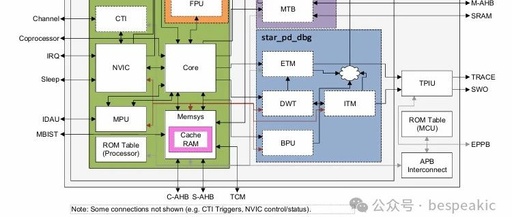
The ARM Cortex-M series is a low-power, high-efficiency processor architecture launched by ARM, mainly used in embedded systems, especially in Internet of Things (IoT) devices, smart homes, sensors, wearables, and more. The design goal of the Cortex-M series processors is to provide low power consumption and a simple architecture to support real-time operations while maintaining … Read more

Overview of ARMv8 System Security

Overview of ARMv8 System Security

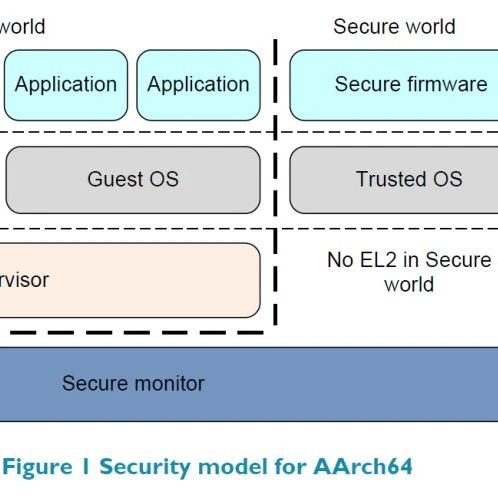
Security in ARMv8-A Systems A secure or trusted operating system protects sensitive information within the system, such as passwords and credit card authentication information stored by users, from attacks. Security is defined by the following principles: Confidentiality: Protects sensitive information on the device from unauthorized access. This can be achieved through various methods, such as … Read more

Advantages of ARMv8-M Over ARMv7-M Architecture

Advantages of ARMv8-M Over ARMv7-M Architecture

Python Practical Community Java Practical Community Long press to recognize the QR code below,add as needed Scan to follow and add customer service Join Python Community▲ Scan to follow and add customer service Join Java Community▲ Source material丨Arm Edited and organized丨strongerHuang All processors we use have a set architecture, for example, the STM32F0 has a … Read more