Core Technology Guide for PCB Prepreg Materials: Parameter Characteristics, Material Classification, and Selection Methods
Core Technology Guide for PCB Prepreg Materials: Parameter Characteristics, Material Classification, and Selection Methods

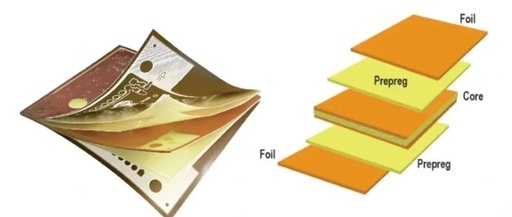
PCB prepreg, short for “pre-impregnated,” is a dielectric material composed of glass fiber and resin, providing the necessary insulation properties and serving as a bonding material. It is an essential material in PCB manufacturing, typically sandwiched between two core materials or between a core material and copper foil. This article will delve into the characteristics, … Read more

DERCOLYTE A115: A Versatile Terpene Resin from France

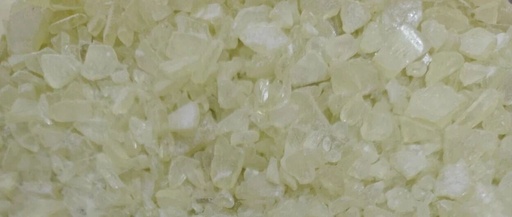
DERCOLYTE A 115 is a flakeαterpene resin, which is non-toxic, odorless, resistant to dilute acids and bases, has strong compatibility, and good solubility. It is particularly recommended for improving the adhesion performance of hot melt formulations or solvent-based adhesives (bonding, adhesion, heat resistance). Applications: 1.Used in pressure-sensitive adhesive tapes and hot melt adhesives; 2.Hot meltPSA … Read more

DRT Terpene Phenolic Resin T135

DRT Terpene Phenolic Resin T135

T135 is a medium-polarity, high softening point terpene phenolic resin. It is recommended for improving the adhesion properties and thermal stability of certain materials. It is commonly used in hot melt and solvent-based adhesives. Typical Values: Softening Point ℃ 135 Glass Transition Temperature (TG) ℃ 85 Hydroxyl Value 50 Acid Value mgKOH/g <1 Color (Gardner) … Read more

Assistance with 1.4nm Chip Flexible Substrate Technology

Assistance with 1.4nm Chip Flexible Substrate Technology

1.4nm ChipFlexible Substrate 1. SiO₂ nanoparticle doping rate (5-20wt%) 2. Nanocellulose diameter (10-15nm) 3. Metal oxide layer thickness (0.5-2nm) 4. Organic-inorganic hybrid interface density (10³/cm²) Micro composition (10 items) 5. Ultra-thin silicon layer lattice defect density (<10⁵/cm²) 6. Flexible polymer chain orientation (>80%) 7. Nanowire conductive network porosity (5-30%) 8. Stress buffer layer Young’s modulus … Read more

Types of Common Flame Retardants for PC and Their Mechanisms of Action

Types of Common Flame Retardants for PC and Their Mechanisms of Action

Click the blue text Follow us FOLLOW US Polycarbonate (PC), as one of the five major engineering plastics, is widely used in fields such as electronics, lighting, building materials, automotive parts, food packaging, and medical devices due to its advantages of high strength, high transparency, high impact resistance, and heat resistance. It is expected that … Read more

Development of High-Temperature Resistant Membranes Using Ion Track Technology

Development of High-Temperature Resistant Membranes Using Ion Track Technology

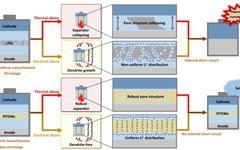
【Research Background】 Currently, the energy density of commercial lithium-ion batteries can reach 300 Wh kg−1, with the potential for further improvement. However, while pursuing high energy density, the safety issues of the batteries cannot be ignored. The separator, as one of the key components of lithium-ion batteries, functions to isolate the positive and negative electrodes … Read more