In the field of metal processing, whether it is steel pipes, steel plates, or profiles, defects such as bending and distortion may occur during production due to rolling, cooling, or transportation. At this point, a ‘plastic surgeon’—the straightening machine—is needed to ‘realign’ the metal materials. The precise control of modern straightening machines relies on a behind-the-scenes hero—the displacement sensor. Today, we will discuss the working principle of straightening machines and how displacement sensors assist in achieving high-precision straightening.
A straightening machine is a specialized device used to correct linearity defects in metal profiles, bars, pipes, and wires. Its core principle is to apply reverse bending or tensile forces to induce plastic deformation in the metal material, thereby eliminating existing bends or distortions.
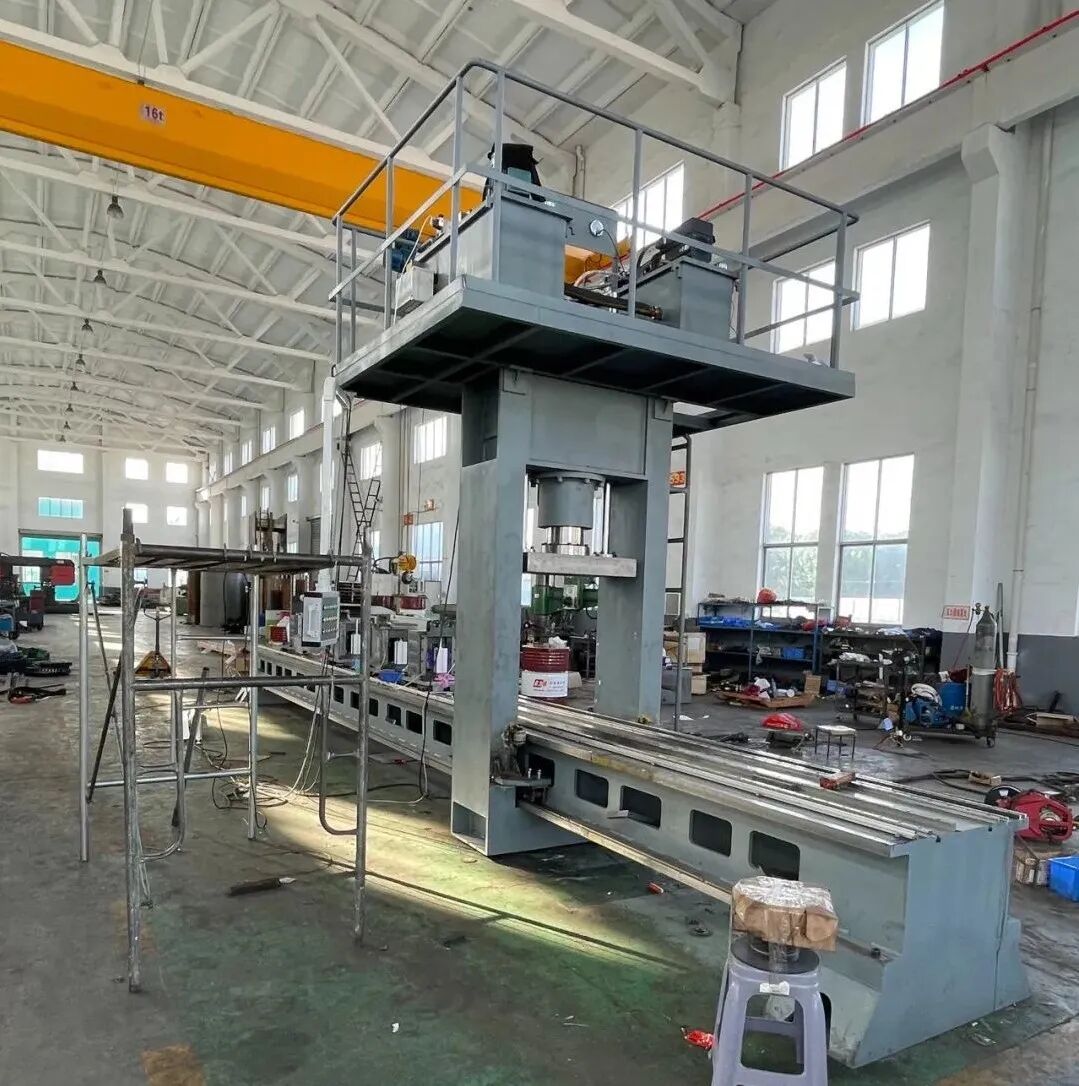 Straightening Machine
According to the different straightening methods, straightening machines can be mainly divided into three types.
The pressure straightening machine applies a one-time reverse bending force to the metal through a pressing head, suitable for supplementary straightening of large profiles. The roller straightening machine uses two rows of staggered straightening rollers to bend the metal material multiple times, gradually eliminating uneven curvature. The tensile straightening machine applies tensile forces exceeding the material’s yield limit, causing the metal to undergo plastic elongation, suitable for straightening thin plates. The tensile bending straightening machine combines the characteristics of tensile and roller straightening, suitable for high-precision strip straightening. Among these, roller straightening machines and tensile bending straightening machines are widely used in modern production lines due to their continuous operation and high efficiency.
TEC Magnetostrictive Displacement Sensors: The Core of Precision Control in Straightening Machines
Traditional straightening machines rely on manual experience to adjust roller gaps or pressures, making precision difficult to guarantee. Modern automated straightening machines use displacement sensors to monitor key parameters in real-time, achieving closed-loop control and significantly improving straightening precision and efficiency.
In terms of roller gap adjustment, the gap of the straightening rollers directly affects the straightening effect. Displacement sensors are installed on the roller adjustment mechanism to provide real-time feedback on roller gap data, ensuring that the straightening force is precisely controllable. For position detection of plates or profiles, displacement sensors can monitor the real-time position of the strip, preventing deviation or excessive stretching, ensuring uniform straightening. In hydraulic system-driven straightening machines, displacement sensors can accurately measure the position of hydraulic cylinder pistons, achieving high-precision control of straightening forces. Additionally, displacement sensors are used for safety protection and fault warning, monitoring the limit positions of key components, and immediately shutting down if the safety range is exceeded to prevent equipment damage.

Analysis of Typical Application Cases
Modern fully automaticStraightening machines use high-precision displacement sensors to collect roller adjustment data in real-time, combined with PLC control systems to achieve dynamic compensation, with straightening precision reaching ±0.1mm/m. In copper strip straightening production lines, displacement sensors work with advanced control systems to achieve precise positioning of servo motors, significantly reducing flatness errors of the plates. The inclined roller straightening machine monitors the radial runout of pipes during rotation through displacement sensors, automatically adjusting the roller gap angle to ensure roundness standards are met.
The Future Trend of Intelligent Straightening
With the development of Industry 4.0, the application of displacement sensors in straightening machines is moving towards a new stage of intelligence. Adaptive adjustment technology can automatically match the best straightening parameters based on material characteristics, significantly improving production efficiency. Predictive maintenance systems can analyze sensor data to provide early warnings of bearing wear or roller system deviations, reducing unplanned downtime. The application of digital twin technology can construct virtual straightening models through real-time data, providing strong support for process optimization.
As a key device in metal processing, the precision of straightening machines directly affects product quality. The application of displacement sensors has transformed the straightening process from experience-based operations to digital control, significantly enhancing straightening efficiency and consistency. With the continuous advancement of sensor technology, straightening machines will become smarter and more efficient, providing stronger support for the high-quality development of the manufacturing industry.
For more information on industrial sensor application cases, please continue to follow us!
For more information, you can email [email protected]