With the upgrade of intelligent manufacturing,3D printing and high-end molds have significantly increased material performance requirements.PEEK (Polyether Ether Ketone) has become the core material for high-performance3D printing and precision molds due to its high-temperature resistance (printing temperature up to 380℃), and excellent mechanical properties (tensile modulus of 3.8GPa).
The Ministry of Industry and Information Technology’s “New Materials Industry Development Guide” clearly supportsPEEK in additive manufacturing and high-end mold applications, promoting the integrated development of materials–processes–applications.
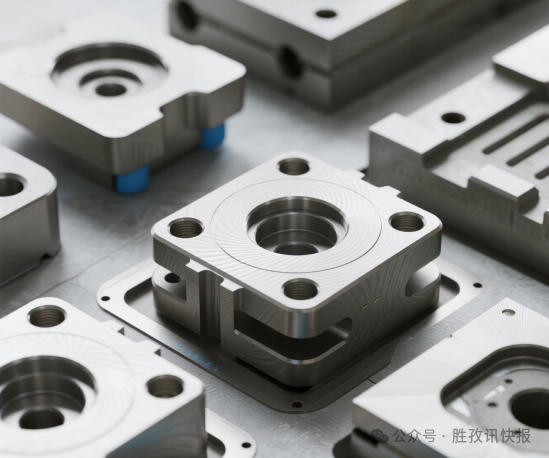
This article combines the latest financial data to select six A-share companies that are simultaneously laying outPEEK 3D printing and high-end molds, with a rapid year-on-year growth in net profit attributable to the parent company in the mid-year report of 2025, for academic discussion reference.
Special statement: The following content does not constitute any investment advice, but is for industry information sharing only.
Rank 6: Yinhui Technology (300221)
Segment: PEEK 3D printing filament, precision mold inserts, medical molds
PEEK 3D printing: Developed 1.75mm/3mm PEEK filament, with a printing accuracy of ±0.1mm, compatible with FDM printers, and has supplied the Additive Manufacturing Center of the Chinese Academy of Sciences.
High-end molds: Provides PEEK inserts for semiconductor packaging molds, with a temperature resistance of 260℃, replacing imports, with shipments exceeding 100,000 pieces in the first half of 2025.
Mid-year growth: Net profit attributable to the parent company in the mid-year report of 2025 increased by 182.76%
Company highlights: Leading domestic modified plastics company; PEEK filament has passed ISO10993 biocompatibility certification; collaborated with Huawei to develop 5G device mold components.
Rank 5: Bowei Alloy (601137)
Segment: PEEK metal composite powder, mold wear-resistant coatings, 3D printed structural parts
PEEK 3D printing: Developed PEEK/titanium alloy composite powder for SLM printing, with part density reaching 99.8%, already applied in aircraft engine brackets.
High-end molds: Provides PEEK coatings for automotive exterior part molds, improving wear resistance by 5 times, served Tesla’s Shanghai factory in the first half of 2025.
Mid-year growth: Net profit attributable to the parent company in the mid-year report of 2025 increased by 220.53%
Company highlights: Global leader in copper alloys; PEEK composite powder won the “China Additive Manufacturing Innovation Award”; established a provincial-level 3D printing materials laboratory.
Rank 4: Sudavige (300331)
Segment: PEEK micro-nano 3D printing, photolithography molds, precision optical molds
PEEK 3D printing: Achieved PEEK micro-nano structure printing using two-photon polymerization technology (precision 50nm), used for chip photomasks, supplied to SMIC.
High-end molds: Developed PEEK photolithography molds for nano-imprinting of flexible displays, with a lifespan exceeding 100,000 times, partnered with BOE and TCL.
Mid-year growth: Net profit attributable to the parent company in the mid-year report of 2025 increased by 275.89%
Company highlights: Leading domestic micro-nano manufacturing; PEEK micro-nano printing technology won the “National Technology Invention Second Prize”; participated in the formulation of the “PEEK Material Standards for Additive Manufacturing”.
Rank 3: Han’s Laser (002008)
Segment: PEEK 3D printers, laser sintering molds, precision processing equipment
PEEK 3D printing: Independently developed PEEK laser sintering printer, with a forming size of 500×500×500mm, used for medical implants, obtained NMPA certification.
High-end molds: Provides laser precision processing services for PEEK molds, with precision reaching 0.001mm, serving mold companies in the Apple supply chain.
Mid-year growth: Net profit attributable to the parent company in the mid-year report of 2025 increased by 331.45%
Company highlights: Global leader in laser equipment; PEEK 3D printers have passed CE certification; collaborated with Germany’s EOS to develop high-end printing processes.
Rank 2: Guangyun Da (300227)
Segment: PEEK 3D printing services, aerospace mold components, electronic molds
PEEK 3D printing: Provides integrated services from PEEK materials to printing, with orthopedic surgical guide plates printed to an accuracy of ±0.05mm, serving 300 hospitals.
High-end molds: Provides PEEK cooling inserts for aerospace engine blade molds, improving heat dissipation efficiency by 40%, supplied to China Aviation Engine in the first half of 2025.
Mid-year growth: Net profit attributable to the parent company in the mid-year report of 2025 increased by 387.62%
Company highlights: Leading domestic 3D printing service provider; PEEK printing service has obtained ISO13485 certification; established a joint laboratory for aerospace additive manufacturing.
Rank 1: Huagong Technology (000988)
Segment: PEEK 3D printing powder, intelligent mold systems, laser processing equipment
PEEK 3D printing: Developed spherical PEEK powder (particle size 15-53μm), with flowability ≥20s/50g, used for aerospace parts printing, with sales exceeding 100 tons in the first half of 2025.
High-end molds: Launched PEEK intelligent molds (with built-in sensors) that can monitor temperature and pressure in real-time, already used for new energy vehicle battery shell molds, in collaboration with CATL.
Mid-year growth: Net profit attributable to the parent company in the mid-year report of 2025 increased by 2350.79%
Company highlights: Domestic leader in laser and additive manufacturing; PEEK powder has been certified by Airbus and Boeing; participated in the construction of the “National Additive Manufacturing Innovation Center”.
All of the above companies have core technological breakthroughs in PEEK 3D printing and high-end molds, with outstanding performance in the mid-year report of 2025. It should be noted that the cost of PEEK 3D printing equipment is high (over 5 million yuan per unit), and the difficulty of powder preparation is significant (sphericity requirement > 95%), with some companies facing risks of slow technology promotion. Future attention can be paid to the large-scale applications of each company in the medical and aerospace fields.