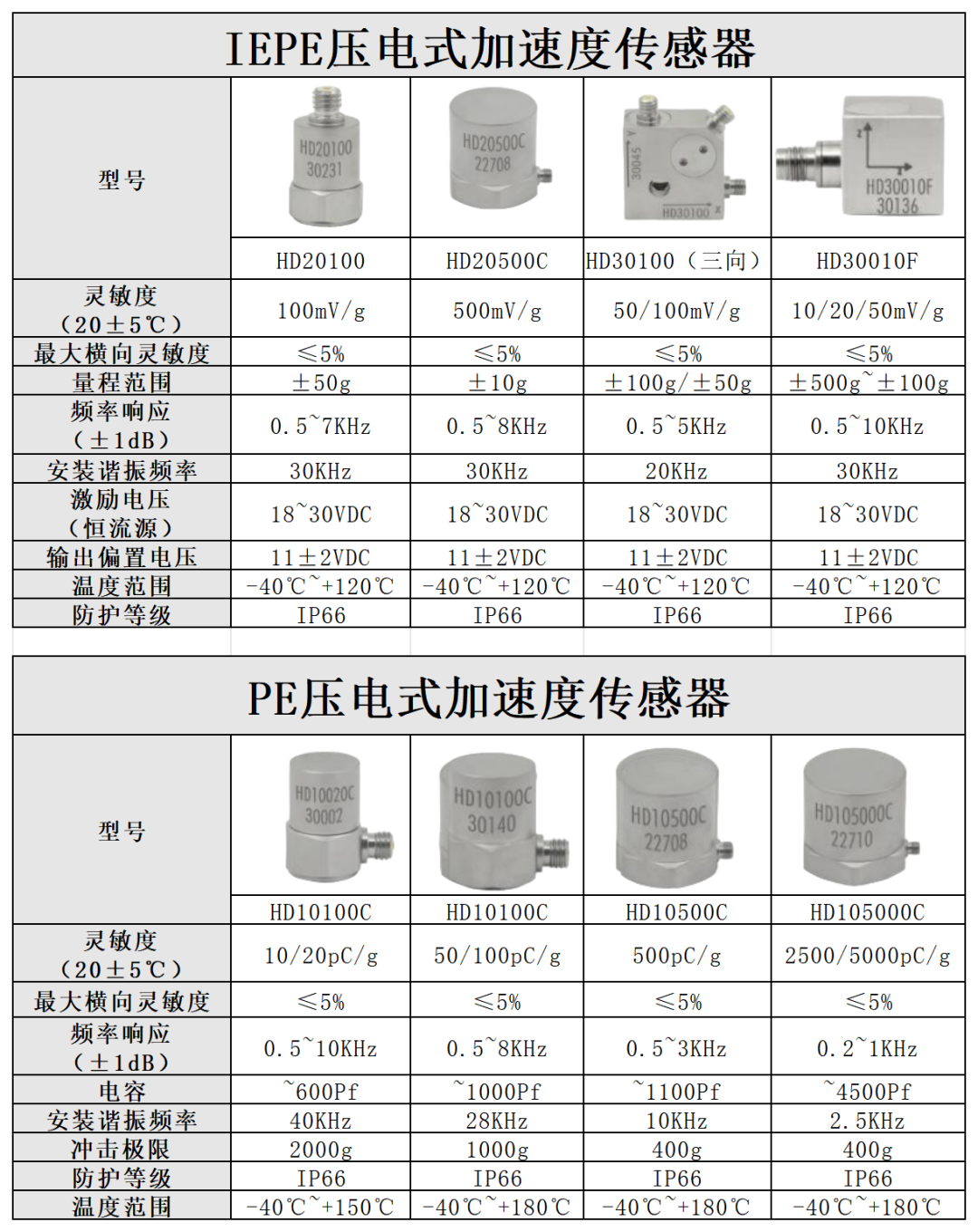
Piezoelectric accelerometers operate based on the piezoelectric effect, generating charge signals through the inertial force acting on the piezoelectric element from a mass block, achieving electromechanical conversion of acceleration.
1、Working Principle and Core Mechanism
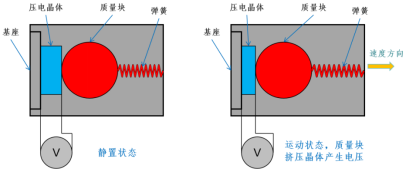
The core principle of piezoelectric accelerometers is to utilize piezoelectric materials to convert mechanical vibrations into electrical signals. The specific process can be divided into three key stages:
Inertial Force Transmission: When the sensor base vibrates synchronously with the measured object, the internal mass block generates an inertial force proportional to the acceleration due to inertiaF=m×a
Piezoelectric Conversion: This inertial force is transmitted to the piezoelectric element (such as quartz or piezoelectric ceramics) through a pre-compressed spring, causing mechanical deformation. According to the direct piezoelectric effect, a charge amount is generated on the surface of the piezoelectric elementQ=dij×F
Signal Output: The generated charge is converted into a voltage signal by a high input impedance preamplifier, ultimately outputting an electrical signal proportional to the acceleration.
2、Piezoelectric Effect
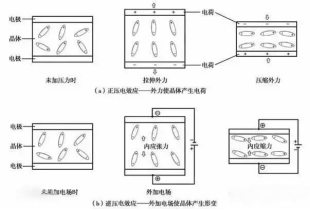
Certain crystals exhibit polarization when deformed in a specific direction under force, generating opposite charges on its two surfaces. When the external force is removed, it returns to a non-charged state; this phenomenon is known as“the piezoelectric effect.”
3、Mounting Methods
The installation method of the sensor directly affects its measurement accuracy and dynamic response characteristics. Different mounting methods are suitable for different measurement scenarios. Common mounting methods include threaded mounting, adhesive mounting, magnetic mounting, and handheld probe mounting.
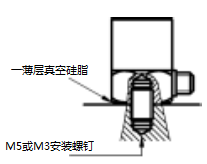
Threaded Mounting: Threaded mounting is a relatively firm and reliable installation method that ensures good coupling between the sensor and the measured object, reducing the impact of installation gaps on measurement results.
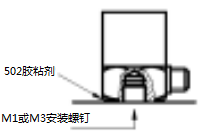
Adhesive Mounting: Adhesive mounting fixes the sensor to the surface of the measured object using a special adhesive. This method is simple, quick, and does not damage the measured object, making it suitable for situations where drilling or limited installation space is not allowed.
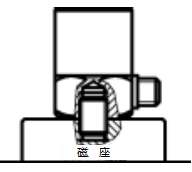
Magnetic Mounting: Magnetic mounting uses the attraction of magnets to fix the sensor to the surface of the measured object. This method is convenient for installation and removal, suitable for situations where measurement positions need to be frequently changed or the measured object is made of magnetic material. However, the stability and coupling of magnetic mounting are relatively poor, and under strong vibrations or high-speed movements, the sensor may shift or fall off, making it typically suitable for temporary measurements or debugging where measurement accuracy is not critical.
Handheld Probe Mounting: Handheld probe mounting involves manually holding a probe to make contact with the surface of the measured object for measurement. This method offers high flexibility and is suitable for situations where fixed installation is difficult or where multiple measurement points need to be quickly checked.
4、Output MethodsThe output methods of piezoelectric accelerometers mainly include charge output type and voltage output type. When selecting, it is necessary to choose the appropriate output method based on the type and requirements of subsequent measuring devices.
Charge Output Type: The output signal of charge output type sensors is the amount of charge, which has a higher output impedance and usually needs to be used with a charge amplifier to convert the charge signal into a voltage signal for further processing. Charge output type sensors have advantages such as a wide measurement range, good frequency response, and minimal influence from cable length, making them suitable for situations requiring high measurement accuracy and frequency range.
Voltage Output Type: Voltage output type sensors integrate charge amplifiers or voltage amplifiers internally, allowing them to directly output voltage signals. Their output impedance is lower, enabling direct connection to common measuring devices such as data acquisition cards, oscilloscopes, and recorders without the need for additional amplifiers.