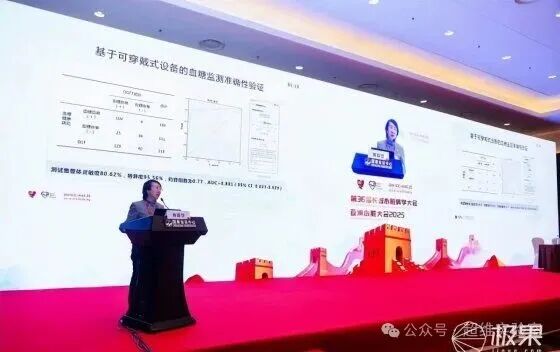
Recently, I attended the 36th Great Wall Cardiology Conference in Beijing, where I witnessed Huawei’s latest health features for smartwatches. I must say, I was truly amazed! From being a simple “step counter” to now becoming a “doctor on your wrist,” smartwatches have undergone a qualitative leap.
The health guardian on your wrist: no longer just recording, but intervening
Do you remember a few years ago when we wore smartwatches mainly to check our step count and heart rate, and maybe measure blood oxygen levels?
But what about now?
Huawei’s WATCH D2 and GT6 have directly brought hospital-grade equipment to your wrist!
Especially the dynamic blood pressure monitoring feature, which is essentially a “dynamic blood pressure monitor on your wrist,” providing 24-hour non-intrusive monitoring with an accuracy rate of 95%, comparable to medical devices.
What’s even more impressive is that these smartwatches are no longer just “recording” your health data; they are starting to “intervene” in health issues.
Imagine when your blood pressure is abnormal, the smartwatch’s assistant will proactively inquire about your condition and even remind you to take your medication.
This is a shift from “passive recording” to “active management,” isn’t it?
This is a boon for the 400 million hypertension patients in our country!
Technological evolution: a leap from simplicity to complexity
Looking back at the development of Huawei smartwatches, it is truly astonishing how fast technology has progressed. In 2016, static heart rate monitoring was just achieved, and by 2021, wrist blood pressure measurement was a breakthrough, culminating in this year’s advanced perception system, with functionalities advancing significantly in just a few years!
The name “advanced perception system” sounds impressive, and it reportedly supports the detection of over 70 health indicators, from heart rate and blood pressure to atrial fibrillation load and fall detection, providing comprehensive health protection.
Especially for sports enthusiasts, even in complex scenarios like skiing and cycling, the accuracy of heart rate monitoring can still reach 98%, which is remarkable!
Medical-grade certification: no longer a “toy”

Many people may question, can a smartwatch be reliable?
But the Huawei WATCH D2 has already obtained medical device certification in seven countries or regions worldwide, which is not something that can be easily achieved!
Think about it, what does it mean for a consumer-grade product to obtain medical device certification?
It means it is no longer just a simple “electronic toy,” but a health tool with real medical value.
What surprised me even more is that Huawei has partnered with over 200 hospitals, including Peking Union Medical College Hospital and Ruijin Hospital, leveraging data from 14 million research users to create a virtuous cycle of “user data – clinical research – product iteration.”
This deep collaboration with the medical system has made Huawei’s competitive advantage in the health field increasingly apparent.
A new approach to chronic disease management
For patients with chronic diseases like hypertension and heart disease, the biggest challenge is maintaining monitoring and treatment.
Traditional blood pressure management relies on patients to record their data actively, with compliance rates below 30%.
However, through AI blood pressure follow-up studies using smartwatches, patient compliance has significantly improved, which is not only a technological advancement but also an innovation in chronic disease management models.
The atrial fibrillation load statistics feature has also opened my eyes, allowing for intuitive presentation of the proportion of atrial fibrillation episodes over six months and their correlation with exercise and sleep, helping doctors assess conditions more accurately and adjust treatment plans.
Future outlook: a new era of health monitoring
With the advancement of technology, I believe smartwatches will become the “guardians” of personal health.
Not just recording data, but truly capable of warning about diseases, assisting in treatment, and promoting recovery.
When technology and healthcare are deeply integrated, ordinary people can also enjoy professional health management services. Isn’t that the true meaning of technological advancement?
What changes do you think this health guardian feature on your wrist will bring to life? What breakthroughs can smartwatches achieve in the health field in the future? I look forward to hearing more voices!