Click
the
blue
words

Follow
us

Common
Data StorageMedia
· I. Overview of Storage Media ·
Currently, the common data storage media on the market include four categories: magnetic storage media, optical storage media, electronic storage media, and film storage media (abbreviated as: magnetic, optical, electronic, film). Each category of storage media also includes some subtypes, as shown in the table below.
|
Media Type |
Subtype |
Detailed Type |
|
Magnetic Storage |
Magnetic Tape |
Audio Tape, Video Tape, Data Stream Magnetic Tape |
|
Disk |
Floppy Disk, Hard Disk |
|
|
Optical Storage |
Optical Disc |
CD, DVD, BD |
|
Electronic Storage |
Solid State Drive |
Fixed Solid State Drive, Portable Solid State Drive |
|
USB Drive |
USB Drive |
|
|
Flash Card |
CF Card, SD Card, TF Card, etc. |
|
|
Film Storage |
Photosensitive Film |
Microfilm, Digital Film |
Below, we will briefly analyze the technical principles, classifications, and characteristics of each type of storage media and provide a comparison of the characteristics of typical data storage media.

· II. Magnetic Storage Media ·
······
2.1 Technical Principles
······
The working principle of magnetic storage technology is to record data on a magnetic medium by changing the polarity of magnetic particles, which is a non-volatile storage method. When reading data, the magnetic head converts the polarity of the magnetic particles on the storage medium into corresponding electrical pulse signals, which are then converted into a data format recognizable by computers; the principle for writing operations is the same.
······
2.2 Classification and Characteristics
······
Since floppy disks have exited the market, magnetic storage media mainly include magnetic tapes and disks.
1) Magnetic Tape
Magnetic tape is a strip of material with a magnetic layer used to record sound, images, digital, or other signals. Common types of magnetic tape include audio tape, video tape, and data stream magnetic tape. The magnetic tape referred to in the storage market is data stream magnetic tape. In magnetic tape storage technology, the magnetic tape medium used to record data and the tape drive used to read and write the recorded information are separable. The tape medium can be stored offline and needs to be loaded into the tape drive for read and write operations. Data is recorded on the magnetic tape surface by magnetic particles coated on it, and the data recording method is sequential recording and fast positioning reading. Magnetic tape is not easily affected by shocks, earthquakes, or vibrations, has a good encryption mechanism, and is advantageous for storing massive static archival data that needs to be preserved for a long time.
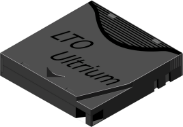
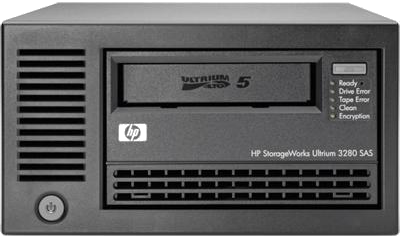
In the field of archival data storage, magnetic tapes are mainly used for offline backup of large capacity archival data. The advantages and disadvantages of magnetic tape storage are as follows:

Advantages
→
Low Cost: The purchase, maintenance, and storage costs of magnetic tape storage devices are relatively low, and the medium can be reused;
→
Low Energy Consumption: The preservation of magnetic tapes consumes little electricity; the power consumption of new “green” tape drives is about 5 watts;
→
Small Size, Easy to Carry: Magnetic tapes are highly portable and are considered removable media, being lightweight and occupying little space.
Disadvantages
→
High Preservation Environment Requirements: Temperature, humidity, magnetic fields, and dust can cause magnetic tapes to deform, degrade, stick together, mold, magnetize, and wear down the magnetic layer; they need to be rewound every 2-3 years;
→
Slow Read/Write Speed: When reading data from tape libraries, a linear addressing method is used to locate data positions, which is slow and takes minutes to measure, failing to meet the demand for rapid access to non-contiguous data;
→
Poor Compatibility: Magnetic tape formats are not compatible; LTO can only be backward compatible for two generations, meaning that if older tape devices are phased out, the data on the tapes will be unreadable.
2) Disk
A disk refers to a storage device that uses magnetic recording technology to store data. Currently, the disks in use are mainly hard disks, commonly known as hard drives or mechanical hard drives. Disks are the primary storage medium for computers, capable of storing large amounts of binary data and retaining data even after power is lost.
Disks mainly consist of disk platters for storing data information, read/write heads for reading and writing data, motors for spinning the platters, head controllers, disk controllers, data converters, interface components, data caches, and disk control software. Generally, disks contain multiple platters, and each platter can record data on both sides. The more platters a disk has, the more tracks on each platter, or the higher the density of the magnetic medium on each track, the greater the data storage capacity and the faster the data recording speed.
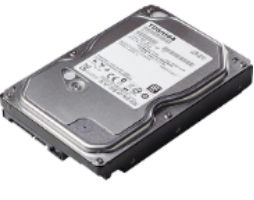
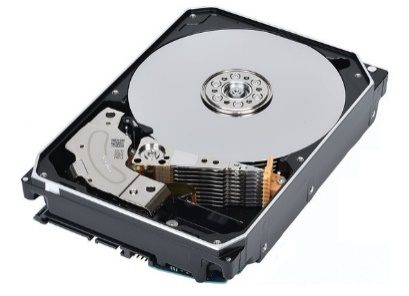
Disks can achieve fast recording and reading of archival data; therefore, in the field of archival data storage, disks are mainly used for online storage of large capacity archival data. Disk storage has the following advantages and disadvantages:
Advantages
→
Fast Read/Write Speed: Disks perform storage, access, and retrieval operations very quickly, with read/write speeds reaching up to 400MB/s;
→
Large Storage Capacity: With the continuous development of hard drives, the capacity of a single hard drive has reached 20TB.
Disadvantages
→
Short Lifespan: The lifespan of disks is generally 5-8 years, requiring continuous data migration and hard drive replacement for long-term data preservation;
→
High Environmental Requirements: Hard drives require continuous power supply during operation and need cooling systems to lower the temperature, leading to high energy consumption;
→
Lower Security: Archival data must maintain its originality, but hard drive records can be altered, facing risks of hacking or human modification.
· III. Optical Storage Media ·
······
3.1 Technical Principles
······
Optical storage technology uses lasers to illuminate the medium, causing physical and chemical changes in the medium through the interaction with the laser, thus storing information. Optical storage technology stores information in binary data format, defining that the small pits created by the laser represent binary “1,” while the blank areas represent binary “0.”
The main components of an optical drive are the laser generator and optical sensor. The laser generator on the optical drive is actually a laser diode that can produce a laser beam of corresponding wavelength, which is then processed and directed onto the optical disc. The optical sensor captures the reflected signal to identify the actual data. If the optical disc does not reflect the laser, it indicates the presence of a pit, thus identifying binary “1”; if the laser is reflected back, it identifies binary “0.” The optical disc spins rapidly in the drive, while the laser head moves back and forth under motor control, continuously reading the data stored on the disc.
······
3.2 Classification and Characteristics
······
Optical discs include CD, DVD, and BD (Blu-ray) types. Although these types differ structurally, their main principles are consistent. CD discs are no longer produced but have a large historical reserve; DVD discs are still in production but are used less frequently; BD discs are in the promotional application phase and are increasingly used in archival data storage. Below, we mainly introduce BD discs.
BD Blu-ray discs can be used for high-quality audio-visual storage and high-capacity data storage. The naming of Blu-ray discs comes from their use of a blue-violet laser beam with a wavelength of 405 nanometers for reading and writing operations (traditional DVD uses a red laser with a wavelength of 650 nanometers, while CD uses a wavelength of 780 nanometers). Blu-ray greatly increases the storage capacity of optical discs, with a single disc capacity exceeding 100GB; the maximum single-disc BD capacity currently promoted in the market is 200GB (8 layers, meaning 4 layers on each side). For optical storage products, Blu-ray provides an opportunity for leapfrog development.

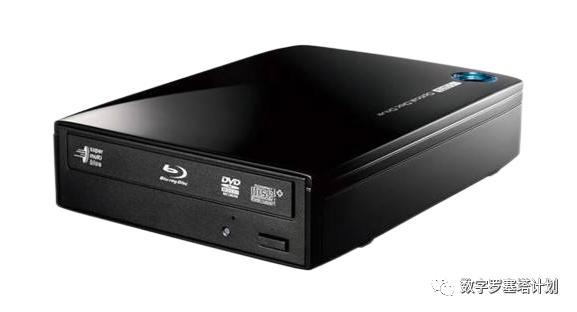
In the field of archival data storage, Blu-ray discs are mainly used for near-line storage and offline backup of archival data. Blu-ray storage has the following advantages and disadvantages:
Advantages
→
Long Lifespan: Blu-ray storage media are reliable and have a long lifespan; high-quality optical storage media can last at least 30 years;
→
Low Cost: Compared to electronic storage, hard drives, and film, optical discs have a significant advantage in terms of cost per unit storage capacity. Optical storage can significantly increase storage density to the TB level through multi-layer, multi-stage, multi-dimensional, and nano-super-resolution technologies, with the unit storage capacity cost expected to decrease further;
→
Low Environmental Requirements: Blu-ray storage consumes almost no energy when preserving information, only consuming energy during reading and writing, and does not require air conditioning for cooling. The energy consumption of optical storage during long-term preservation is only 1/500 of that of hard disk storage;
→
High Security: Blu-ray storage is a typical WORM (Write Once Read Many) storage, with advantages in resisting natural disasters, magnetic storms, and human data deletion.
Disadvantages
→
Slower Access Speed: The reading of optical discs is slower than that of hard drives due to the need to load the disc into the optical drive;
→
Non-Reusable Medium: Blu-ray discs used for archival data storage adopt a write-once, non-rewritable recording method, making the medium non-reusable.

· IV. Electronic Storage Media ·
······
4.1 Technical Principles
······
Electronic storage media mainly refer to solid-state electronic devices made by semiconductor integrated circuit technology for storing data information, abbreviated as semiconductor memory. It consists of many identical storage units and input/output circuits. Each storage unit has two distinct states, “0” and “1,” used to store different information.
Compared to magnetic storage, semiconductor memory has advantages such as fast access speed, large storage capacity, and small size, and the storage unit array and main peripheral logic circuits are compatible, allowing them to be made on the same chip, greatly simplifying input/output interfaces. Therefore, in the field of high-speed computer storage, magnetic storage has gradually been replaced by semiconductor storage.
······
4.2 Classification and Characteristics
······
There are many products in electronic storage media, commonly seen in the market include solid-state drives, flash memory, USB drives, CF cards, SD cards, MMC cards, SM cards, memory sticks, xD cards, etc. Solid-state drives based on non-volatile flash memory chips are the main category of semiconductor storage, whose internal structure is relatively simple; the main body of a solid-state drive is actually a PCB board, and the basic components on this PCB board are the control chip, cache chip (some low-end drives lack a cache chip), flash memory chips for data storage, and interface circuits.
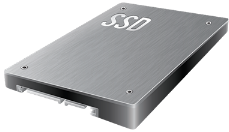
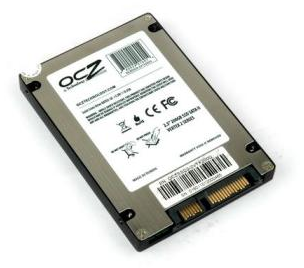
The advantages and disadvantages of solid-state drives are as follows:
Advantages
→
Fast Read/Write Speed: Using flash memory as the storage medium, the reading speed is faster than that of mechanical hard drives, with sustained read/write speeds exceeding 500MB/s. Related to this are extremely low access times; the most common 7200 RPM mechanical hard drives have a seek time of about 12-14 milliseconds, while solid-state drives can easily achieve 0.1 milliseconds or even lower;
→
Shock Resistant: Solid-state drives are made using flash memory particles, so there are no mechanical components inside, allowing normal use even during high-speed movement or tilting, and minimizing the possibility of data loss during collisions and shocks;
→
Low Power Consumption: Solid-state drives consume less power than traditional hard drives.
Disadvantages
→
Limited Lifespan: The flash memory chips used in solid-state drives have a limit on the number of write/erase cycles; although each sector can be rewritten 100,000 times, the actual lifespan of solid-state drives under repeated read/write conditions for a specific sector is still untested;
→
High Cost: The price per unit capacity is 5-10 times that of traditional hard drives (based on flash memory) and even 200-300 times that of DRAM-based drives.
It should be noted that due to the main advantages of solid-state drives (fast processing speed) being of little significance for the long-term preservation of archival data, and their high price compared to equivalent capacity hard drives, solid-state drives currently have little application in the field of long-term archival data preservation. However, as the cost of solid-state drives continues to decrease and cost-effectiveness improves, solid-state drives are expected to gradually replace hard disks and become an important medium for archival data storage.
· V. Film Storage Media ·
······
5.1 Technical Principles
······
In conventional data storage, film is generally not considered a medium; however, in the field of archival data storage, film is an important medium for long-term preservation and heterogeneous backup. The film used for archival data storage is mainly silver halide photosensitive film, which actually refers to a photosensitive layer coated on a film base using gelatin-type silver halide emulsion, consisting of light-sensitive silver halide particles suspended in gelatin. When light hits the emulsion layer of the film and reaches the silver halide crystals, these crystals undergo structural changes and coalesce with adjacent silver halide crystals also exposed to light. The more light the emulsion layer receives, the more crystals coalesce; the less light, the fewer changes and coalescing of crystals; and no light leads to no changes or coalescing of crystals. After the film is photosensitive, it is developed (developing, fixing, washing, drying) to complete the information recording process.
······
5.2 Classification and Characteristics
······
The application of photosensitive film in archival data storage mainly includes two ways: one is “digital to film” (microfilm), and the other is “digital to film to digital” (digital film).
Microfilm adopts the “digital to film” method to store archival image data, characterized by the Computer Output Microform (COM) technology, directly outputting computer files as readable microfilm images recorded on film, generally dealing with image files scanned from paper archives. This method has a relatively high degree of automation and efficiency but can lead to data loss and damage the originality of the files; many file formats (such as database files, 3D CAD files, audio and video files, etc.) cannot be preserved at all.
Digital film adopts a new mode of film application, “digital to film to digital“, encoding the archival digital resources (data packets) to generate high-density QR code images printed on film, which can be read by optical instruments in the future to decode the images and restore the original data, thus allowing any format of digital information to be directly preserved on film, ensuring the authenticity and integrity of archival data, breaking through the technical limitations of traditional film, and fully leveraging the unique value of film as a long-term preservation medium and heterogeneous backup medium.
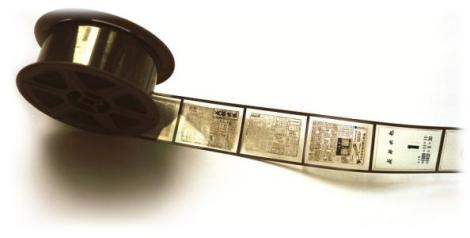
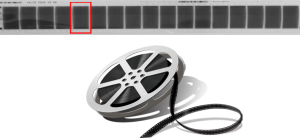
The advantages and disadvantages of film media are as follows:
Advantages
→
Archival Film Has Legal Evidence Role: The “Implementation Measures for the Archives Law” stipulates the legal status of archival microforms, stating that “archival microforms, bearing the signature or seal of the legal representative of the archival collection unit, have the same effect as the original archival documents.”;
→
Meets Heterogeneous Backup Requirements: The term heterogeneous refers to the differences in the forms of archival resource storage information (see our public account article “Does Heterogeneous Backup Refer to ‘Media’?”); therefore, only information conversion between digital and analog forms, such as “digital to film“, meets the requirements for heterogeneous backup;
→
Long Preservation Time: Under certain storage conditions, film can be preserved for hundreds of years, with a preservation time unmatched by other storage media. The first series of moving images, “The horse in motion,” shot in 1878, can still be developed today, having exceeded 140 years.
Disadvantages
→
High Production Cost: The costs of archival film media, developing solutions, and other consumables are high, and the production and processing costs are also considerable, requiring relatively high storage environment conditions, generally suitable only for the long-term preservation and heterogeneous backup of valuable and important archival digital resources;
→
Slow Reading Speed: Like magnetic tapes, the reading of film is also done using linear addressing to locate data positions, and since film is usually rolled and stored in boxes, the reading speed is slow.
· VI. Comparison of Typical Archival Storage Media Characteristics ·
From the previous introductions and analyses, it can be seen that the storage media currently used in the field of archival data storage (especially for long-term preservation of archival digital resources) mainly include magnetic tapes, hard drives, Blu-ray discs, and archival film (microfilm and digital film). Below is a comparative analysis of the characteristics of these four types of storage media, as shown in the table below:
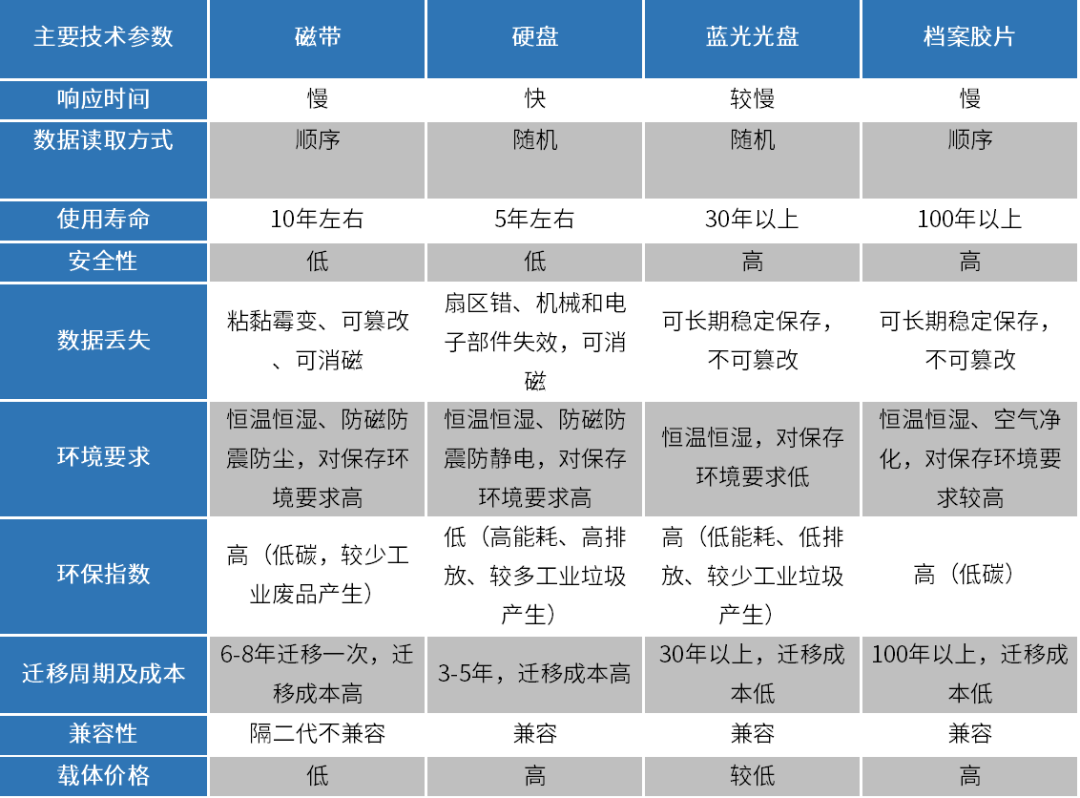
(Click to view the full image)
From the above table, it can be seen that each type of storage medium has its own advantages and disadvantages, and a single medium cannot effectively solve the problem of long-term safe preservation of archival data. In practical applications, the advantages of various storage media should be fully utilized for combined applications, along with a comprehensive management strategy to meet the requirements for the long-term safe preservation of archival digital resources.
The Digital Rosetta Project public account aims to objectively express its views and opinions on the field of archival informationization as a neutral third party. The more the truth is debated, the clearer it becomes, and we sincerely welcome more people to engage in research in the field of archival digital resource management and preservation, sharing insights and striving together for the inheritance of human civilization!
Recommended Hot Articles

What Do You Think About Long-Term Preservation of Electronic Archives, ChatGPT?
Digital Exhibition Technology Brings Precious Archival Resources Out of the Shadows
[Courseware Collection] Digital Rosetta Project Product Matrix Breaks the Barrier “Out of Circle”
The New Product Debut is Worth Watching, Come See the Digital Film
[Live Replay] Video Collection, Five Major Series Product Descriptions


Archival Informationization
Just Look at Rosetta

The High-End Group Chat Has Opened 2 Groups
Add Xiao Luo, and He Will Pull You into the Group
 Like us and click “Like” and “View” to share with your friends~
Archival Informationization, Just Look at Rosetta!