In the digital age, robot elderly care services are receiving increasing attention, with the aim of using robots as a service platform to provide elder-centered services and maintain the dignity of the elderly. Building a higher-level, more comprehensive, and standardized robot elderly care service system will help promote the high-quality development of our country’s aging industry.
The Advantages of Robot Elderly Care Services Are Obvious
With the rapid development of cutting-edge technologies such as artificial intelligence, cloud computing, and big data, intertwined with the global aging process, the elderly care service sector is ushering in new development opportunities. Care robots are the intelligent culmination of the deep integration of artificial intelligence and elderly care services. They can be software applications like intelligent voice assistants or hardware devices that provide care services, offering diverse elderly care services such as companionship, mobility assistance, basic medical treatment, and emotional support.
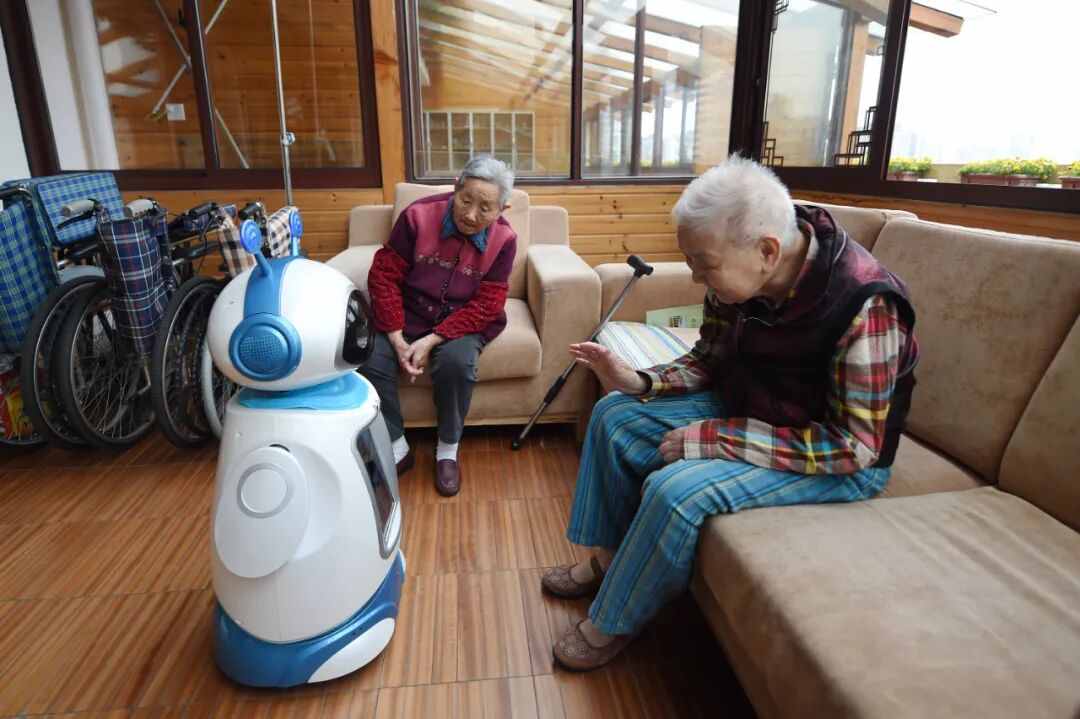
An elderly person experiences video calling with family members through the intelligent elderly care robot “A Tie”. Photo by Xinhua News Agency reporter Huang Zongzhi.
Compared to human caregivers, care robots are not affected by negative emotions and do not experience fatigue that could lead to care accidents, demonstrating clear advantages in areas such as round-the-clock service and precision service. However, anxiety regarding the deviation of robot services has also increased with the comprehensive arrival of the digital age. Many believe that while advanced care robots are expected to respond more accurately and effectively to the service needs of the elderly, they may also violate the wishes of the elderly by unilaterally providing what they deem to be the most appropriate services.
When discussing the responsibilities of robots towards humans, it often refers to the classic Three Laws of Robotics: first, a robot may not injure a human being or, through inaction, allow a human being to come to harm; second, a robot must obey the orders given it by human beings, except where such orders would conflict with the First Law; third, a robot must protect its own existence as long as such protection does not conflict with the First or Second Law. Upholding the principles of doing good, not doing harm, and ensuring justice in the elderly care environment is the baseline for promoting robots to fully enter the elderly care service field.
Attention to Maintaining the Dignity and Autonomy of the Elderly
The historical accumulation of robot research and application requires robots to always fulfill their role as service providers. Robots providing health support, psychological comfort, and other elderly care services must adhere to preset service norms, with the care logic and strategies based on algorithms deeply influencing the entire process of robot services.
Currently, the controversy surrounding the underlying design mainly focuses on training samples. Due to the difficulty in comprehensively considering complex factors such as regional differences, living habits, advanced age, and disabilities, it may lead to robots making unethical decisions. For example, a robot might restrict an elderly person or a disabled person from getting out of bed due to a slippery floor. In fact, determining whether an elderly person’s behavior is safe is a technical challenge, and biased service principles can easily lead to service content and quality being contrary to the fundamental requirement of being elder-centered.
Moreover, from the perspective of robot form, although care robots do not necessarily have a human-like appearance, their actions and feedback during service are increasingly similar to those of humans. This characteristic often makes it difficult for some elderly individuals, such as those with Alzheimer’s disease, to distinguish whether they are communicating with a real person; excessive reliance on robots may also lead to misunderstandings regarding the identity and function of the robot. For instance, an elderly person may view the robot as a family member, unconditionally trust the robot when it provides services, and feel sad when parting from the robot.
As the elderly age and their health deteriorates, maintaining their dignity will become increasingly challenging, a process that robots often struggle to manage. Current robot elderly care services cannot fully meet the elderly’s needs for a sense of fulfillment and respect in care, but the long-standing shortage of long-term care in Europe and the United States still provides a realistic demand for the development of care robots. Particularly since the outbreak of the COVID-19 pandemic, some elderly care institutions have tended to delegate care work to robots to reduce the risk of virus transmission.
The involvement of robots in care work objectively reduces interpersonal communication, which can lead to feelings of abandonment among the elderly, posing a severe challenge to maintaining their dignity. The widespread application of robot elderly care services will redefine the concept of functional health for the elderly. When physical and mental health is no longer the primary basis for achieving healthy aging, but rather focuses on the elderly’s adaptability to and ability to use robot elderly care services, it may constitute discrimination against the “digitally disabled” elderly who are unwilling to accept robot services or unable to use smart elderly care technology.
Therefore, robot elderly care services must recognize that “achieving care objectives does not prove the rationality of care methods” and should be judged from the perspective of morality and responsibility. The elderly should benefit from robot elderly care services, and their autonomy, self-determination, and self-care abilities should be guaranteed or enhanced through these services, without any form of infringement on their rights due to the acceptance of robot services.
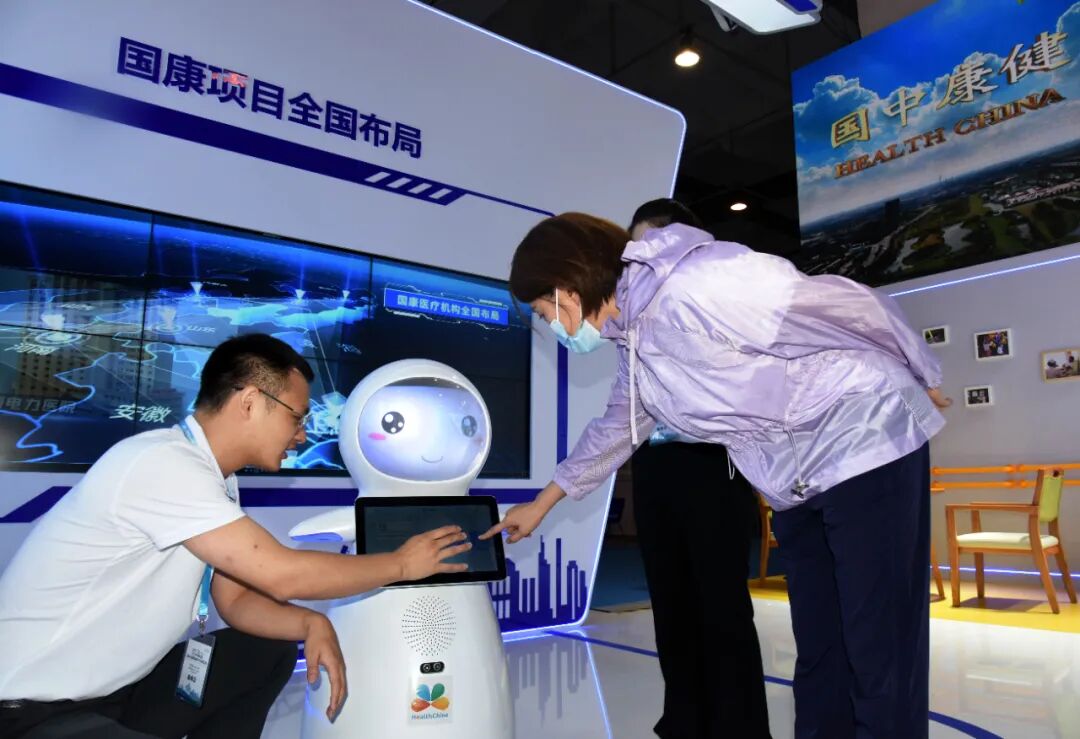
Visitors learn about a “24-hour intelligent elderly companion robot” at an exhibition. Photo by Xinhua News Agency reporter Li Ziheng.
Robot Elderly Care Services Aim to ‘Benefit’ the Elderly
The “White Paper on the Smart Elderly Care Industry (2019)” points out that the limitations of services, lack of humanized elderly assistance measures and emotional care, and neglect of the elderly’s needs for emotional communication and entertainment are prominent issues faced by smart elderly care services. The cultural connotation of care robots is lacking, and there is insufficient emphasis on the ethics of respecting and caring for the elderly. Deficiencies in demand-based services and human-centered approaches are significant factors restricting the development of robot elderly care services.China has over 40 million disabled elderly individuals, who represent a dual vulnerability of both disabled populations and the elderly. The vigorous development of robot elderly care services provides valuable opportunities and technical support for empowering and enhancing the capabilities of disabled elderly individuals. Focusing on the care and support of disabled elderly individuals as a key task for research and application, seamlessly integrating innovative devices into the daily lives of disabled elderly individuals, effectively improving the quality of elderly care for disabled individuals, responding effectively to their care demands, and establishing an accessible service system to solidify the elderly care security for disabled individuals—robot-provided elderly care services can enable disabled elderly individuals to share in the achievements of digital social construction, making the social environment more age-friendly and livable.All smart elderly assistance services, including robot elderly care services, should embark on a path of age-friendly development. The State Council’s General Office issued the “Implementation Plan for Effectively Solving the Difficulties Faced by the Elderly in Using Smart Technology,” which requires that intelligent innovations closely align with the characteristics of elderly needs and effectively address the difficulties faced by the elderly in using smart technology. Smart elderly care terminal products, represented by care robots, should be friendly to the elderly, genuinely meet their needs, be convenient for all elderly individuals to use, and effectively adapt to help the elderly out of difficulties. The age-friendly adaptation of robot elderly care services reflects the trend of development from intelligence to wisdom, ensuring that elderly individuals can use, know how to use, dare to use, and want to use these services based on their needs.
Source: “Half-Month Talk Internal Edition” 2022, Issue 8
Author: Chen Xu (Affiliation: School of Sociology, Wuhan University) | Editor: Zheng Xuejing
Editor: Qin Daixin
Proofread by: Guo Yanhui and Meng Yafei (Intern)