👆If you wish to meet often, feel free to star 🌟 and bookmark it~
RISC-V has gradually gained global recognition from customers in recent years due to its advantages of being open-source and customizable. According to data from SHD Group, the market penetration rate of chips based on this open standard has reached 25%; by 2031, the shipment of RISC-V chips is expected to exceed 21 billion units, with total revenue reaching $2 billion.
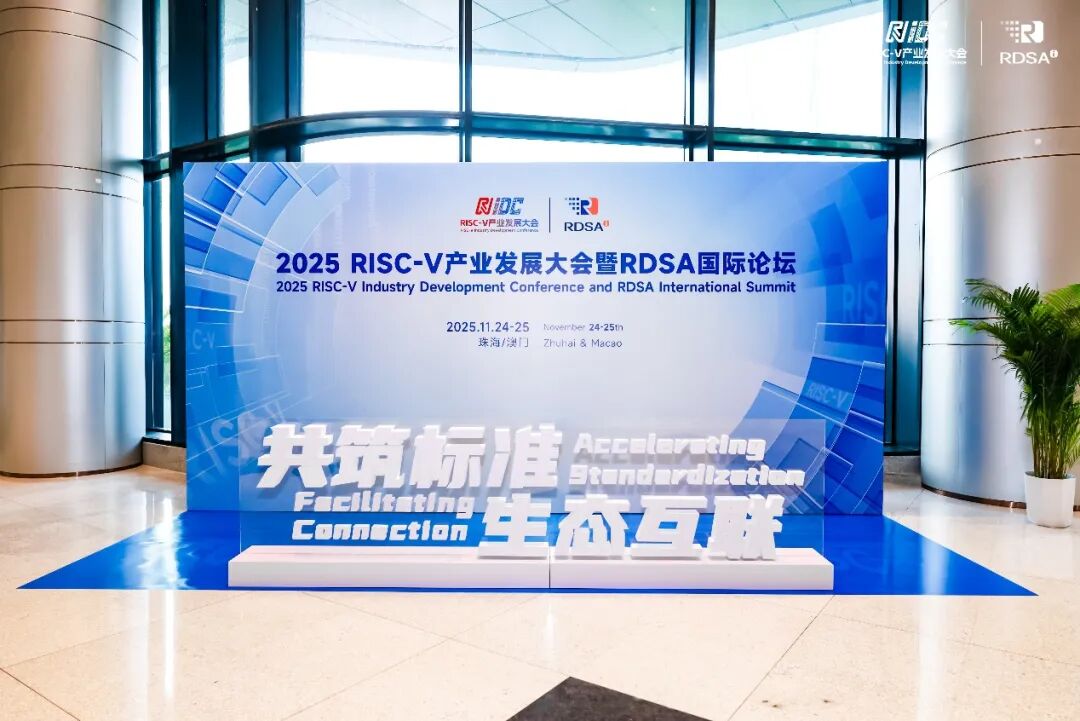
As a new engine of global technological innovation, Chinese companies have played an important role in this wave. Recently, at the 2025 RISC-V Industry Development Conference and RDSA International Forum, themed “Building Standards Together, Ecological Interconnection,” Yiswei Computing, as one of the core forces in the Chinese RISC-V field, shared insights and practices on the current status and future of RISC-V development, showcasing a wealth of products and solutions at the conference.
RISC-V is the Core Pillar of Digital Infrastructure
At the Global Cooperation Special Forum held concurrently in Macau, Wang Dongsheng, Director of the RISC-V Industrial Advisory Committee and Chairman of Yiswei Group, delivered a speech. He stated that in the AI era, RISC-V is not only a crucial technological cornerstone but also an era engine reshaping the global innovation landscape. AI is stimulating everyone’s inherent innovative potential, with personalized innovation, cross-border innovation, and integrated innovation becoming the distinct colors of this era, leading to the emergence of new scenarios, applications, and paradigms. We are in an unprecedented wave of technological transformation, and this intelligent wave is driving a comprehensive reconstruction of the underlying software and hardware systems.
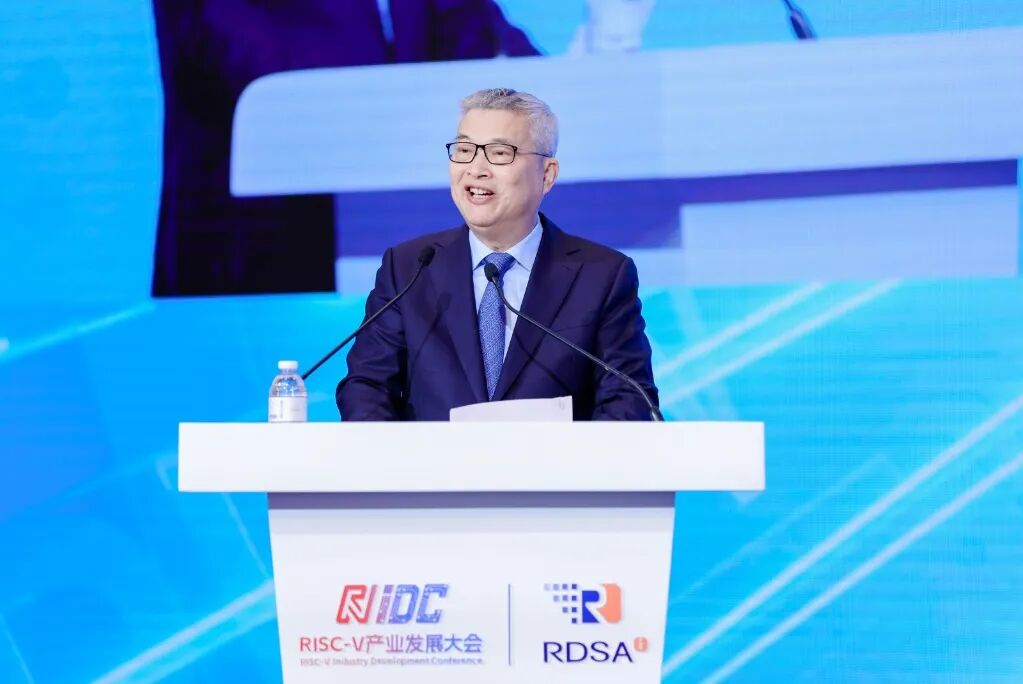
Wang Dongsheng, Director of the RISC-V Industrial Advisory Committee and Chairman of Yiswei Group
“On the hardware level, RISC-V, with its open, efficient, flexible, and customizable characteristics, is becoming the ideal architecture that spans cloud, edge, and end scenarios; on the software level, super applications represented by AI Agents will completely reshape the human-computer interaction paradigm, and the software ecosystem is facing a reshuffle, which is also a historic opportunity for RISC-V to achieve leapfrog development,” Wang Dongsheng stated in his speech.
He believes that the deep integration of RISC-V and AI is unstoppable, and RISC-V is not just a “localized” computing architecture but can become the backbone of the entire digital infrastructure. To this end, he proposed the concept of “RISC-V Digital Infrastructure” (RDI), hoping that RISC-V can take on significant responsibilities in the global wave of intelligent transformation and become the cornerstone of computing architecture in the intelligent era. He proposed three initiatives: First, adhere to the original intention of openness, deepen global cooperation, and jointly formulate and lead future-oriented global open standards; second, seize the opportunity of software and hardware ecosystem reconstruction, allowing RISC-V to deeply integrate into the intelligent wave and become the native computing foundation of the AI era; third, unite industry forces to connect the entire chain from RISC-V IP cores, chip design to systems and applications, accelerate vertical integration of technology, and form a virtuous cycle driven by demand, technology, and industry implementation, jointly forging RISC-V into the core pillar of digital infrastructure in China and even globally.
Hu Weihao, President and COO of Yiswei Computing, also believes that as the core driving force of global computing industry transformation, RISC-V is showing a development trend from edge to core, from exclusive to general. Yiswei Computing is also leveraging its technological accumulation in various scenarios such as human-computer interaction and embodied intelligence to provide competitive RISC-V chips and solutions for global partners, and through initiatives like leading the establishment of the RDI Alliance and creating the RISAA technology platform, it is accelerating the deep integration of RISC-V and AI, working with ecological partners to build an open and integrated RISC-V prosperous ecosystem.
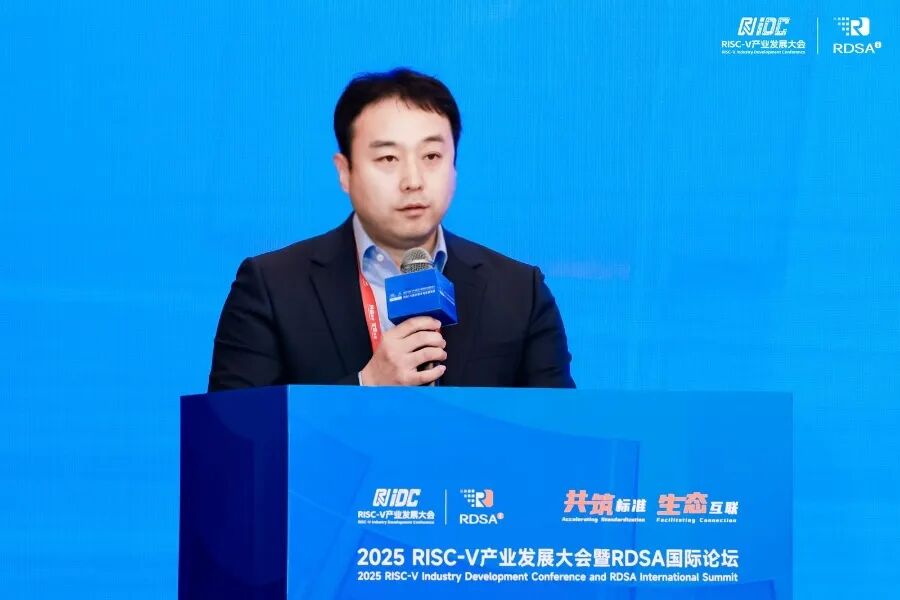
Hu Weihao, President and COO of Yiswei Computing
He Ning, Senior Vice President and CTO of Yiswei Computing, also shared in his speech titled “Innovations and Industrialization Path of RISC-V System-Level Solutions” that generative artificial intelligence (GAI) has triggered disruptive innovations, with new scenarios and applications continuously emerging; demands are becoming increasingly diverse, personalized, and fragmented. In this context, it is necessary to seize the window period for ecosystem reconstruction and accelerate the construction of the RISC-V software and hardware ecosystem.
According to He Ning, to achieve the above goals, it is necessary to avoid the “general” ecological barriers and prioritize the implementation of vertical scenarios (including vertical fields and vertical industries). Specifically, in vertical fields, the focus should be on enhancing the richness of software and hardware products, building a foundation for vertical industry applications, and integrating products with system solutions to promote systematic and large-scale implementation of applications.
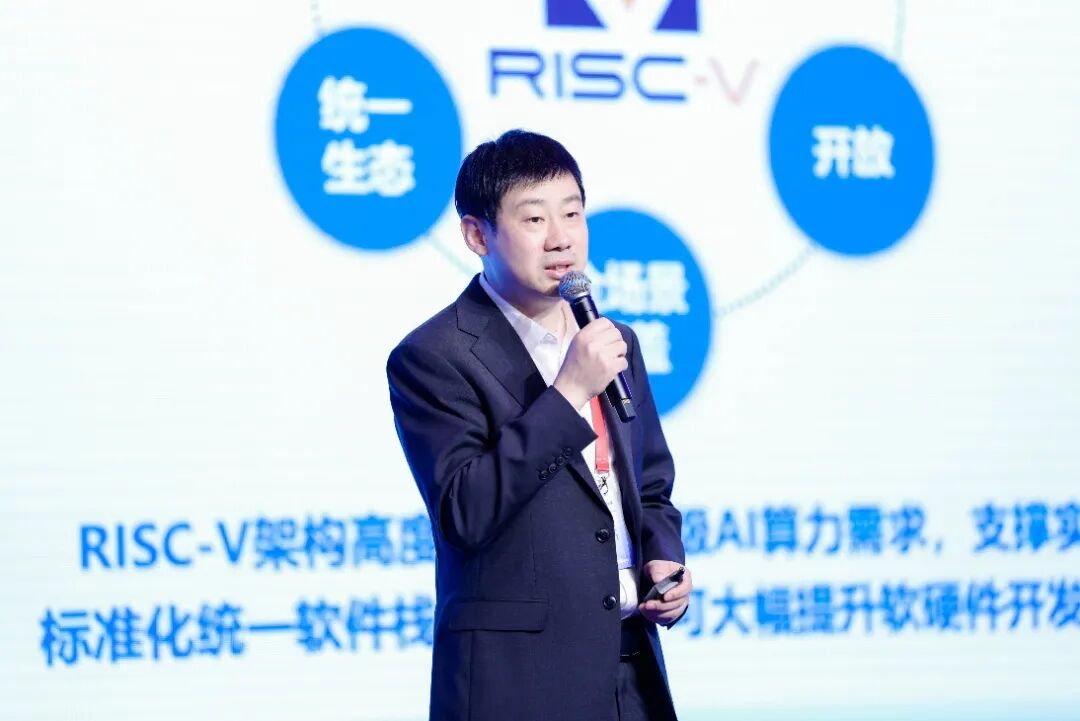
He Ning, Senior Vice President and CTO of Yiswei Computing
Launching a Product Portfolio for Multi-Point Applications
From He Ning’s introduction in the speech, we learned that Yiswei Computing is a provider of intelligent solutions in the AI era. The company is focusing on the trend of innovation focus shifting downwards, building a full-stack optimization capability from core architecture to products and solutions.
For example, in response to the trend of smart homes moving from “general intelligence” to “precise intelligence,” Yiswei Computing is actively promoting the technological path of Wi-Fi MCUs evolving from “basic connectivity” to “edge-cloud intelligent computing + multi-mode connectivity.”
In the speech titled “RISC-V Empowering AIoT: Exploring the Application of RISC-V Based Wi-Fi MCUs in Smart Home Scenarios,” Huang Rui, Marketing Director of the IoT Product Center at Yiswei Computing, introduced that for smart homes, Yiswei Computing provides control and connectivity products based on the RISC-V architecture, assisting customers in creating solutions that integrate control + connectivity + perception + lightweight AI, making home scenarios smarter.
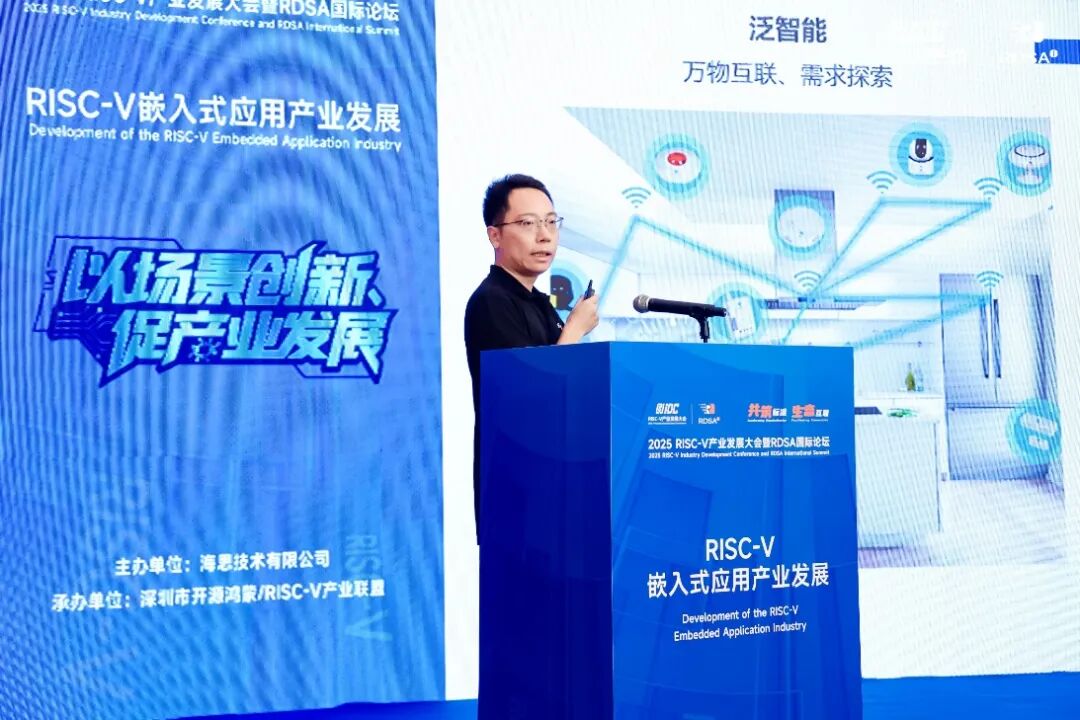
Huang Rui, Marketing Director of the IoT Product Center at Yiswei Computing
In his speech, Huang Rui emphasized the introduction of Yiswei Computing’s dual-band Wi-Fi 6 MCU, which, with its compatibility with 2.4G/5G dual bands, strong anti-interference, and low latency features, has effectively solved the connectivity pain points in scenarios such as white goods and kitchen appliances after five generations of iterations. Looking ahead, Huang Rui stated that Yiswei Computing’s intelligent connectivity chips and solutions will continue to promote the popularization and application of edge-side AI technology through a “RISC-V + dedicated NPU + multi-mode connectivity” architecture with high cost performance.
In addition to smart homes, automotive applications are another direction where Yiswei Computing is focusing its efforts.
As Liu Yu, General Manager of the Automotive Division at Yiswei Computing, stated in his speech titled “Innovative Applications of RISC-V in Automotive Scenarios,” in response to the different needs of automotive applications, Yiswei Computing has launched multiple series of RISC-V cores for automotive motor control, intelligent cockpits, regional control, and other scenarios, and based on this, has created a diverse matrix of automotive-grade products.
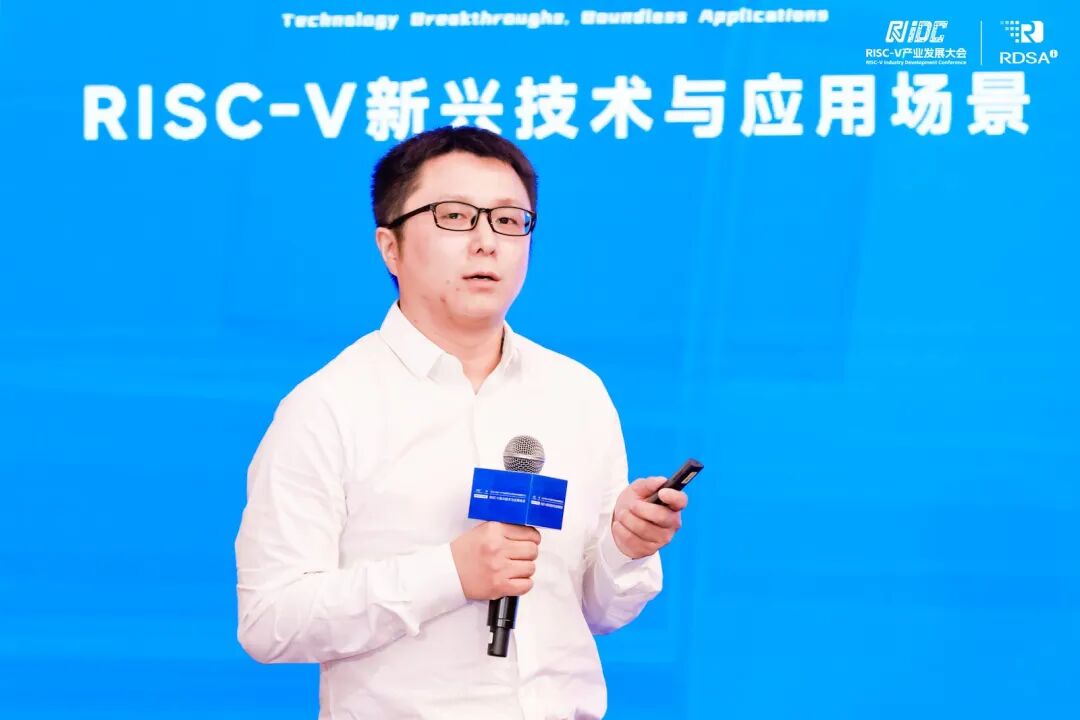
Liu Yu, General Manager of the Automotive Division at Yiswei Computing
In his speech, Liu Yu introduced the company’s products, such as EAI8800 (electronic rearview mirror), EAM4028 (regional controller), EAM2011 (general MCU + AI), and EAI8810 (HUD head-up display), highlighting their significant advantages in key indicators such as startup speed, power consumption, and AI adaptability. Liu Yu stated that in the future, RISC-V will play a core role in the complete link from environmental perception, driving decision-making to cockpit experience, becoming an indispensable computing cornerstone for the next generation of intelligent vehicles with its open, efficient, and secure characteristics.
Li Jianyu, Director of AI Solutions Ecosystem at Yiswei Computing, delivered a speech titled “Application of RISC-V Based AI SoC Chips in Edge Computing Scenarios” at the forum. He stated that due to advantages such as low latency, high security, and low cost, the demand for edge computing is rapidly growing. Based on the work chain of “scenario-data flow-chip definition,” Yiswei Computing has clearly planned the intelligent computing EIC77 series products.
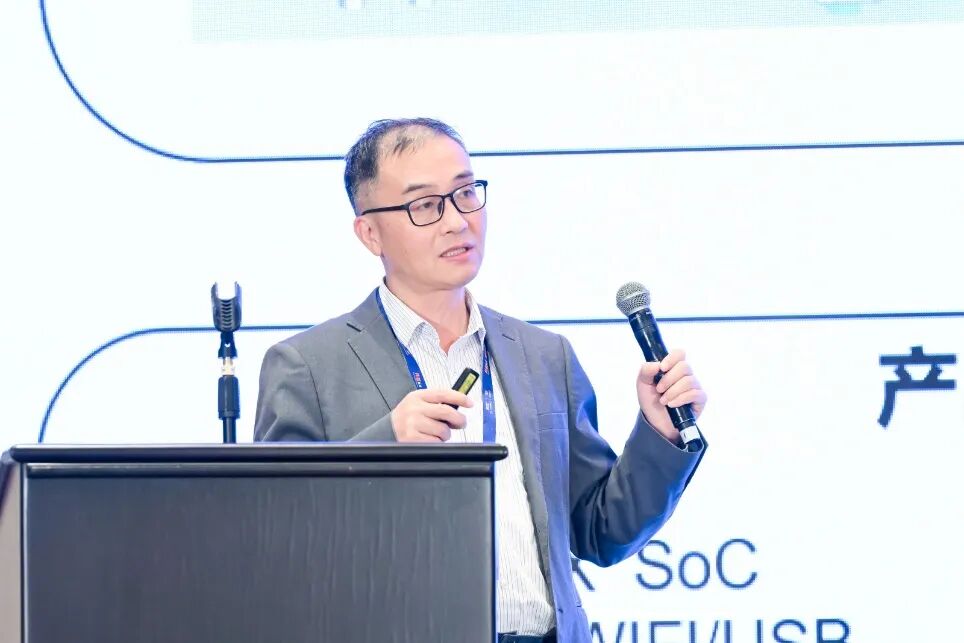
Li Jianyu, Director of AI Solutions Ecosystem at Yiswei Computing
According to reports, this series of chips has a powerful RISC-V core, large storage capacity, strong video processing capabilities, high-performance image processing capabilities, and high-speed interconnects with rich peripheral interfaces. Coupled with high-performance software-defined NPU and supporting SDK, it can provide extensive support for mainstream CNN models and LLM models. Based on the EIC77 series chips, Yiswei Computing has launched multiple form-factor products, including AI acceleration cards, AI boxes, single-board computers (SBCs), and AI PCs, which can be widely used in edge scenarios such as smart retail, smart laboratories, and multi-channel video transcoding, providing the industry with high-integration, high-efficiency RISC-V intelligent computing solutions.
Over the past few years, there has also been an important discussion around RISC-V regarding how this emerging architecture performs in high-performance processors. Yao Yongbin, Director of the RISC-V CPU Development Center and a technical expert at Yiswei Computing, shared in his speech titled “Exploring the Design Space of High-Performance RISC-V Processors” the design trends of key modules in high-performance processors, including branch prediction/instruction fetching/ICache, decoding/renaming, integer scheduling/execution, floating-point/vector, and Load/Store/DCache/L2, emphasizing: “In the future, the core competitiveness of high-performance RISC-V will come from the diversity of architectures driven by its flexibility, that is, architectural innovation, moving towards heterogeneity and integration.”
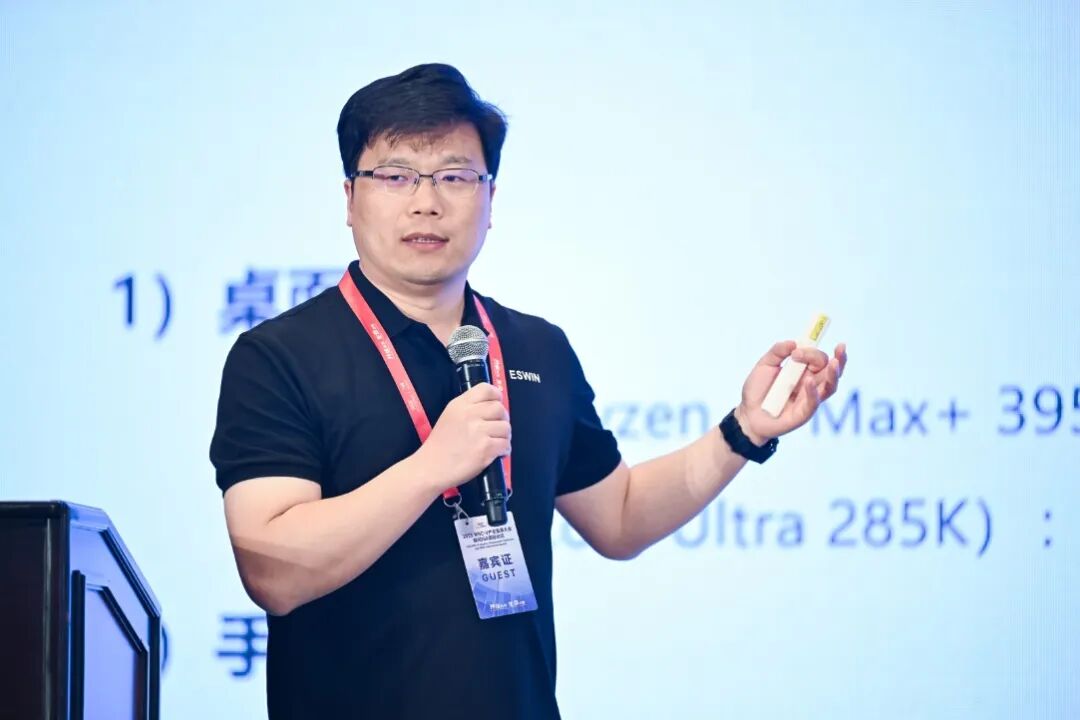
Yao Yongbin, Director of the RISC-V CPU Development Center and a technical expert at Yiswei Computing
Based on the above considerations, Yiswei Computing has launched the EIC770X series chips, providing a solid hardware foundation for the RISC-V software ecosystem through the heterogeneous integration of general computing power and dedicated acceleration, scenario-oriented storage and bandwidth optimization, and integrated software and hardware solutions.
The core competitiveness of RISC-V will stem from flexible architectural innovation and heterogeneous integration. “RVA23 lays the architectural foundation for running systems like Linux and Android. RISC-V is not a replacement for Arm; the trillion-dollar AI market offers vast prospects for RISC-V,” Yao Yongbin added.
Solidifying the Software Platform to Build a Prosperous Ecosystem
While vigorously developing hardware, Yiswei Computing is also focusing on software, ecosystem, and RISC-V talent cultivation, which are areas of great concern in the RISC-V industry.
Zheng Yu, Senior Director of Software and Ecosystem R&D at Yiswei Computing, highlighted in his speech titled “Development and Practice of RISC-V Basic Software” how the Yiswei Computing toolchain team has deeply participated in the ecological construction of the RISC-V GCC toolchain, providing core contributions in RISC-V instruction set extensions such as Zc*, Zicond, Vector Crypto, and BF16 extensions. In addition, four members of Yiswei Computing have obtained GCC maintainer write after approval permissions, and over 130 patches submitted by the company have been accepted by communities such as GCC and Binutils.
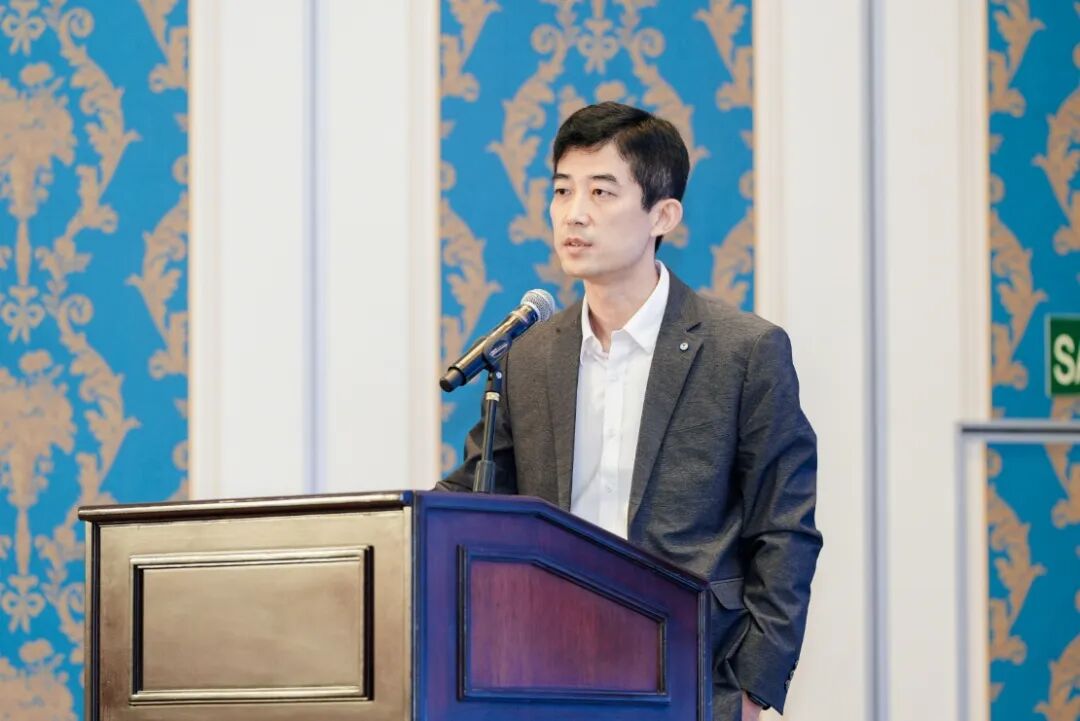
Zheng Yu, Senior Director of Software and Ecosystem R&D at Yiswei Computing
Regarding the currently popular AI applications, Zheng Yu showcased the adaptation results of the EIC7700X/7702X series chips on systems like Ubuntu and Debian, as well as the deployment practices of OpenStack/k8s under the RISC-V architecture. Additionally, he shared Yiswei Computing’s contributions to the open-source ecosystem on platforms like GitHub and Docker, providing strong support for the improvement of the RISC-V basic software ecosystem.
In the speech titled “Open, Cooperation, Win-Win: Breaking the RISC-V Talent Ecosystem,” Wang Wenqi, Executive Vice President and Chief Human Resources Officer of Yiswei Computing, deeply analyzed the core challenges faced by RISC-V talent cultivation in the AI era and Yiswei Computing’s investments and practices in this area.
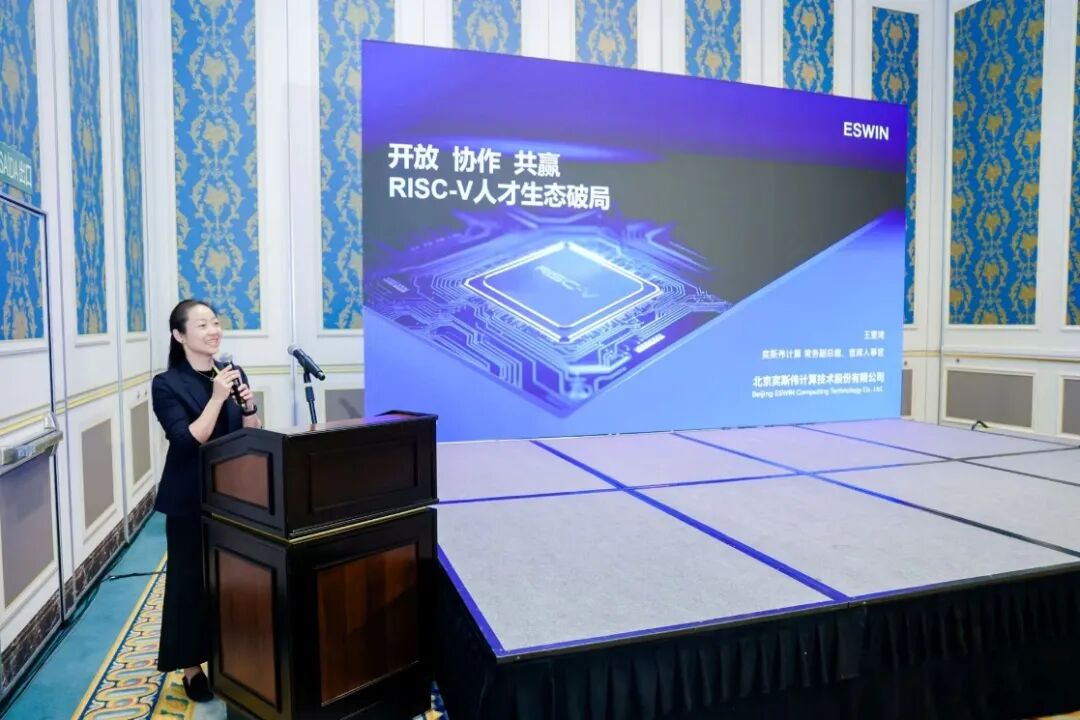
Wang Wenqi, Executive Vice President and Chief Human Resources Officer of Yiswei Computing
Wang Wenqi stated that the shortage of talent in the integrated circuit field has become a significant factor hindering the development of China’s chip industry. In the RISC-V field, this issue is particularly severe, with a lack of master-level senior experts, an overall shortage of talent, and a need to improve the adaptability of university graduates to job requirements.
In response, Yiswei Computing has launched a RISC-V talent cultivation system that integrates “combat training + deep industry-education integration + talent standard construction” in its specific practices.
Wang Wenqi advocated for a “government-school-enterprise” collaboration, starting from the higher education system, to enhance the visibility of RISC-V in the education system, improve university students’ ability to solve practical complex system-level problems, and vigorously promote a talent cultivation model that integrates “chip-software-algorithm” to jointly cultivate RISC-V compound talents and promote the prosperity of the RISC-V industry.
In terms of ecology, He Ning emphasized in his speech that to respond to the industry’s digital transformation needs, it is imperative to promote top-level design and accelerate the large-scale and systematic application of RISC-V in vertical industries. To this end, He Ning advocated for the upstream and downstream of the industry chain to collaboratively build the RISC-V Digital Infrastructure (RDI), linking the upstream and downstream of the industry chain with an open posture, breaking barriers, and promoting the collaborative iteration of standards and scenarios. At the same time, the industry should work together to deepen the integration of regional resources through multiple innovation centers, expand industry coverage, and form a pattern of “technology leadership + collaborative complementarity + scenario implementation” to jointly promote the development of the RDI industrial ecosystem and foster ecological prosperity and large-scale implementation.
Final Thoughts
Yiswei Computing has over 20 series of RISC-V cores, 500+ IP modules, and 100+ commercial solutions. At the exhibition site, Yiswei Computing showcased products and solutions aimed at human-computer interaction, multimedia control, intelligent connectivity, smart cockpits, intelligent control, and intelligent computing—such as the Touch, MNT Scaler, V2X SoC for vehicle networking, general automotive MCU, motor-specific MCU, and two intelligent computing SoCs (the RISC-V edge computing SoC EIC7700X with a self-developed high-performance NPU and the multi-purpose intelligent computing SoC EIC7702X, both featuring a RISC-V 64-bit out-of-order execution CPU).
Looking ahead, Yiswei Computing will continue to adhere to the technological development direction of RISC-V + AI, upholding the principles of openness and collaboration, and working hand in hand with global partners to promote RISC-V technological innovation and industrial integration, contributing to the construction of an independently innovative intelligent future.
Click here 👆 to follow and lock in more original content
*Disclaimer: The content of this article reflects the author’s personal views. Semiconductor Chip News reprints it solely to convey a different perspective and does not represent Semiconductor Chip News’s endorsement or support of this view. If there are any objections, please feel free to contact us.
Recommended Reading
100 trillion invested in semiconductors
Chip giants see significant market value drops
Jensen Huang: HBM is a technological miracle
Jim Keller: RISC-V will definitely prevail
The 10 highest-valued chip companies globally
If you like our content, please click“Looking”” to share with your friends~