Recently, RISC-V International and Infineon Technologies jointly held the 2025 RISC-V Automotive Conference in Munich, bringing together various stakeholders from the RISC-V automotive ecosystem to discuss the future of software-defined vehicles.
The theme of this conference was “Shaping the Future of Mobility with Open Standards and Close Collaboration,” focusing on the two core elements of future innovation: computing and software. Companies such as Synopsys, MIPS, Hightec, Lauterbach, Green Hills Software, Tasking, PLS, Qt, MathWorks, and Quintauris attended the summit.
Highlights of the Conference
Andrea Gallo, CEO of RISC-V International, stated that “software-defined means workload-driven design.” Workload-driven chips—where hardware and software are co-designed—require an open industry standard instruction set architecture (ISA) to be realized. An industry standard like RISC-V, developed by a global community, acts as a catalyst for innovation, providing growth and opportunities for a wide range of stakeholders.
Peter Schiefer, President and CEO of Infineon Technologies’ Automotive Division, provided insights into future development directions and outlined how to move from “vision to action.” Over the next five years, the automotive industry will undergo profound changes, necessitating the highest levels of reliability in hardware and software, as well as new architectures. RISC-V is the ideal choice for the future of software-defined vehicles (SDVs), enabling modular and composable system designs that maintain scalability across different performance levels and application scenarios while eliminating licensing barriers and promoting global collaboration.
Maite Bezerra, Senior Principal Analyst for Software-Defined Vehicles at OMDIA, discussed the reasons why “the era of software-defined vehicles has arrived” from a macro perspective and explored how different original equipment manufacturers (OEMs) will respond to SDVs. Traditional OEMs focus on improving, expanding, and iterating their leading positions, while emerging OEMs concentrate on exploring, innovating, and serving niche customer groups, potentially achieving breakthroughs. Maite also noted that in the past year, the acceptance of open-source software in the security domain has significantly increased, and the most promising applications for AI-driven vehicles are intelligent diagnostics and dynamic calibration of vehicle performance, rather than chatbots and infotainment systems.
Sameer Wasson, CEO of MIPS, proposed that the next era will be Physical AI, where applications in aerospace, industrial, and automotive sectors will be based on open standards, focusing on target workloads and hardware/software co-design.
Dr. Yankin Tanurhan, Senior Vice President of Engineering at Synopsys, outlined the exponential growth in software code size and computing power for each vehicle, detailing the importance of RISC-V-based processor IP for achieving the latest automotive technologies (such as autonomous driving and in-vehicle experiences), including the new architectures, safety, and security measures required for these technologies.
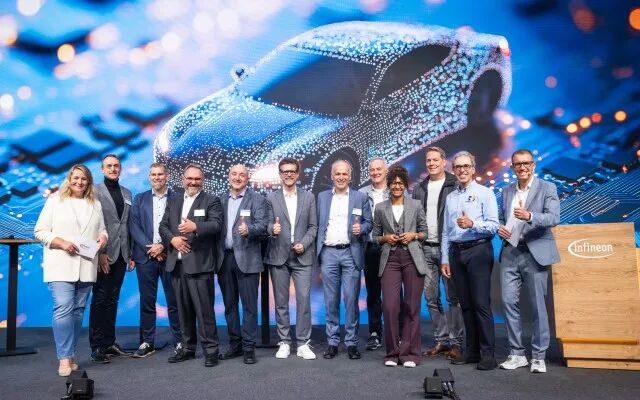
During a panel discussion that spanned the entire value chain, experts unanimously agreed that open standards are crucial, and there is a need for coordinated efforts to address common issues, thereby achieving their respective differentiation advantages.
In the exhibition area, the strength of the RISC-V automotive ecosystem was fully demonstrated, with computing IP suppliers and software and development solution providers showcasing their achievements, indicating that RISC-V is ready to enter the automotive sector, with relevant solutions and technologies matured, and the RISC-V automotive ecosystem is poised to shape the future of “software-defined vehicles.”
Source: RISC-V International Association