We all know that the Pro version of Xiaomi’s digital series has always been equipped with a 2K+ resolution screen, which is a major selling point as higher resolution means clearer screens, distinguishing it from mid-range and low-end phones. Even the standard version of the Xiaomi digital series only features a 1.5K level screen. Just when everyone thought that this year’s Xiaomi 17 series would be no exception,
the official announcement today revealed that the most expensive and top-tier Xiaomi 17 Pro Max uses a “super pixel” screen, which was later uncovered by netizens to have an actual resolution of only 1.5K instead of the traditionally expected 2K screen. This caused quite a stir among many Xiaomi fans, who were confused about why the Xiaomi 17 Pro Max was downgraded.
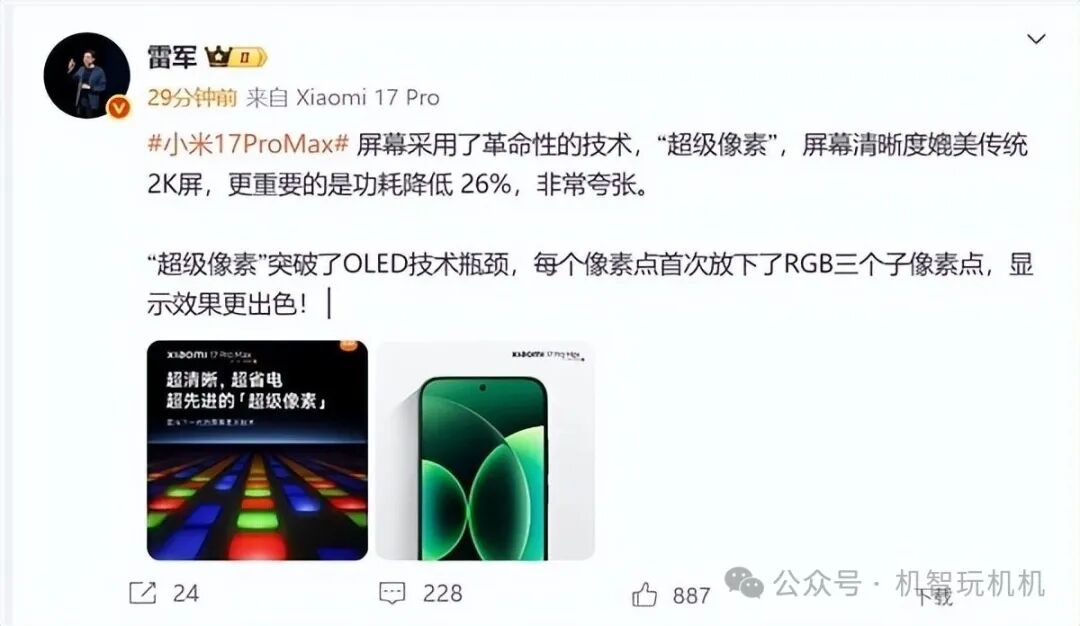
However, it is clear that since the official has openly released this new technology and prominently used it in the most expensive and top-tier model, there must be a reason behind it. Thus, Lei Jun and Lu Weibing took turns to explain, and everyone realized that this is indeed true black technology. After some investigation, it turns out that the principle is that the OLED screens currently used in phones have a pixel arrangement known as PenTile.
This arrangement shares sub-pixels, which reduces the overall clarity of the screen. This is why OLED’s 1080P appears blurrier compared to the previous LCD screens’ 1080P, especially at the edges of fonts and images. The only way to solve this problem is to crudely increase the resolution.
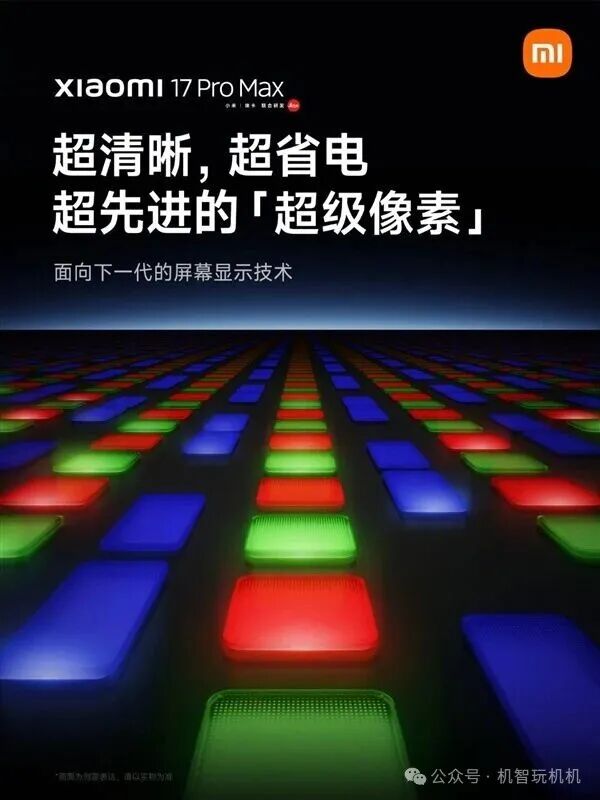
In other words, increasing to a 1.5K level will significantly improve clarity, potentially reaching the level of an LCD screen’s 1080P, while 2K resolution would be even better, providing clearer display effects, reaching the level of an LCD screen’s 1.5K. However, another problem arises: the phone’s CPU and GPU are rendering for a 2K resolution screen, and both power consumption and performance are based on this level of operation.
Yet the display effect can only be compromised, which means increased power consumption. The super pixel technology of the Xiaomi 17 Pro Max uses the same RGB standard pixel arrangement as LCD screens for the first time on an OLED screen, which does not share sub-pixels; thus, 1.5K resolution is truly 1.5K without any reduction.
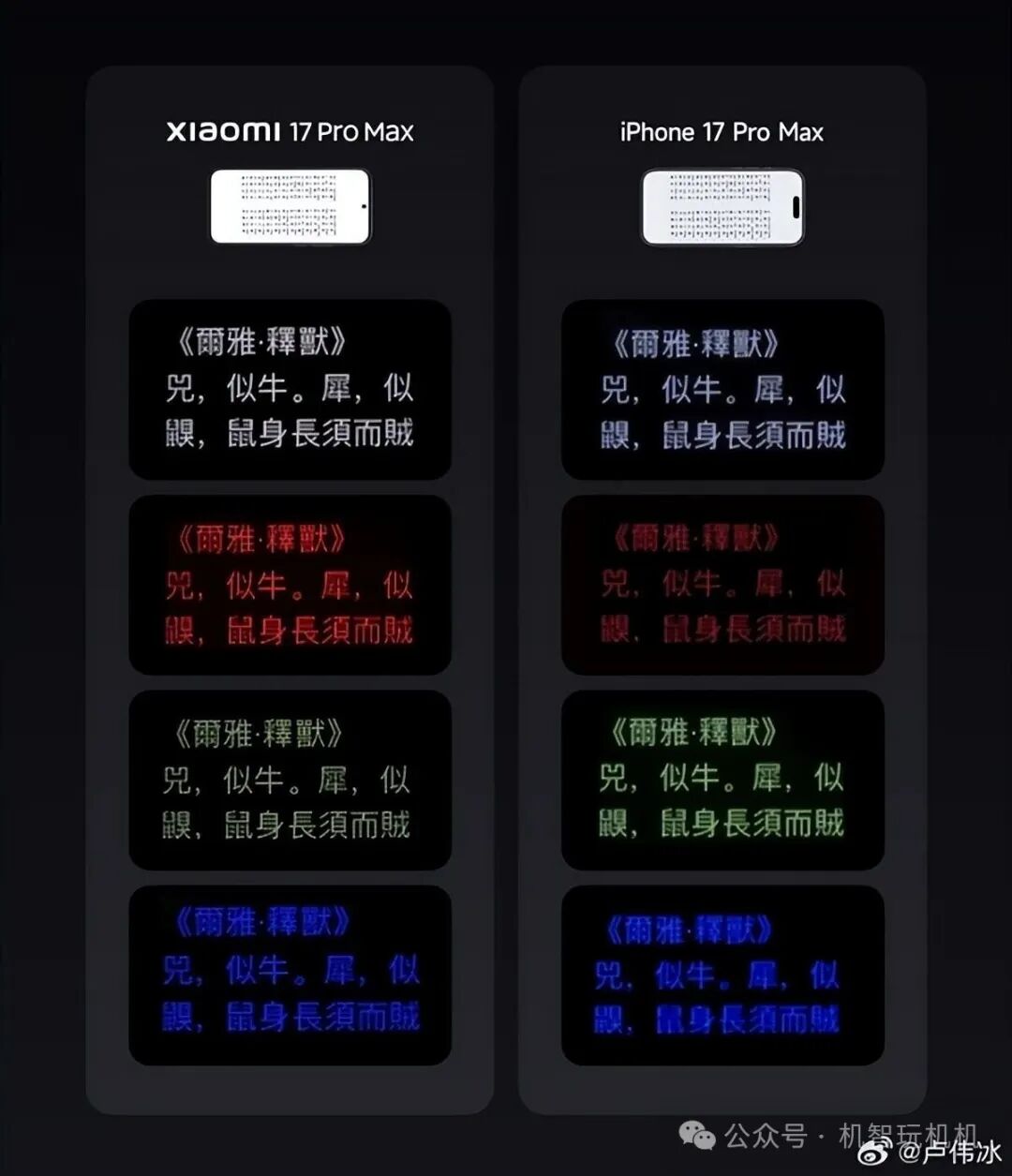
The display effect can rival the previous 2K resolution, but the processor renders for a 1.5K screen, leading to a significant reduction in power consumption. According to Lei Jun, power consumption has decreased by 26%, which is quite impressive. Coupled with the Xiaomi 17 Pro Max’s 7500mAh battery, the battery life is certainly promising. However, I was thinking, why not use the top-tier 1.5K LCD screen previously produced by BOE? It would solve eye protection issues as well, wouldn’t that be perfect? Haha, of course, I can only think about it.