With the rapid development of artificial intelligence technology, AI agents are gradually becoming the primary means for humans to interact with large models (such as large language models). AI agents are AI systems capable of performing tasks, solving problems, and providing services. They simulate human behavior and decision-making processes, making interactions with large models more natural, efficient, and personalized.
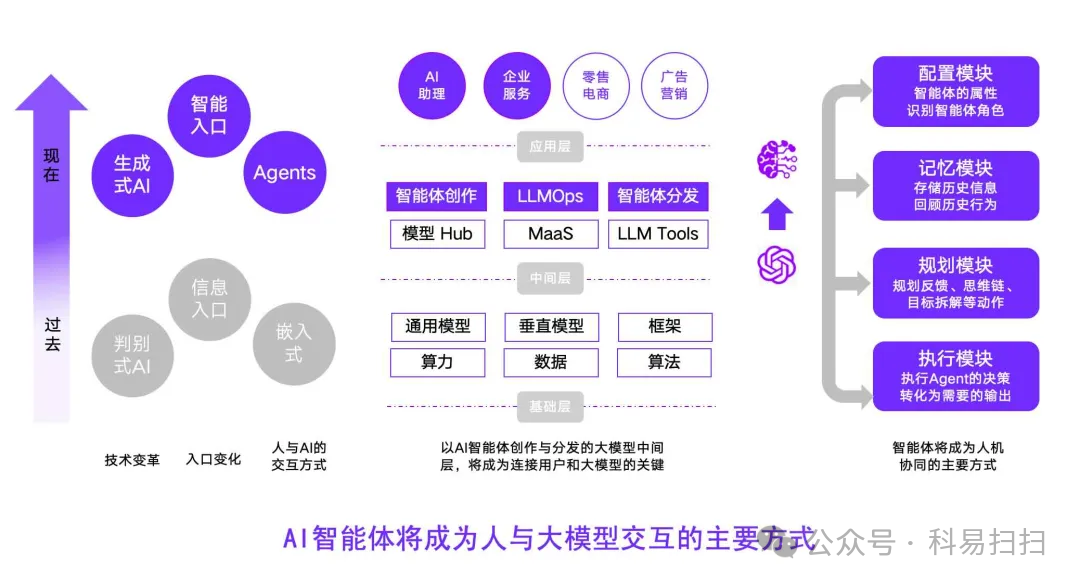
AI agents will become the primary means of interaction between humans and large models.
As a bridge for interaction between humans and large models, AI agents not only improve the efficiency and quality of interactions but also expand the application scope of large models. With continuous technological advancements, AI agents will increasingly integrate into our daily lives, becoming indispensable intelligent partners.
What is an AI Agent?
An AI agent (also known as AI Bot) refers to an entity that can perceive its environment and take actions to achieve certain goals. AI agents can be software programs, robots, or other forms of systems. In commercial and technical applications, the concept of AI agents (AI Bots) is also used to describe automated systems capable of performing specific tasks. These systems are cloud-based, AI-centric, and construct an intelligent system characterized by three-dimensional perception, global collaboration, precise judgment, continuous evolution, and openness. AI agents (AI Bots) have wide applications in various fields, including enterprise services, game development, robot control, smart homes, autonomous vehicles, financial analysis, and medical diagnosis. AI agents (AI Bots) consist of four key components: Planning, Memory, Tool Use, and Action. They possess fundamental characteristics such as Autonomy, Reactivity, Proactivity, Sociality, and Evolutionary capability.
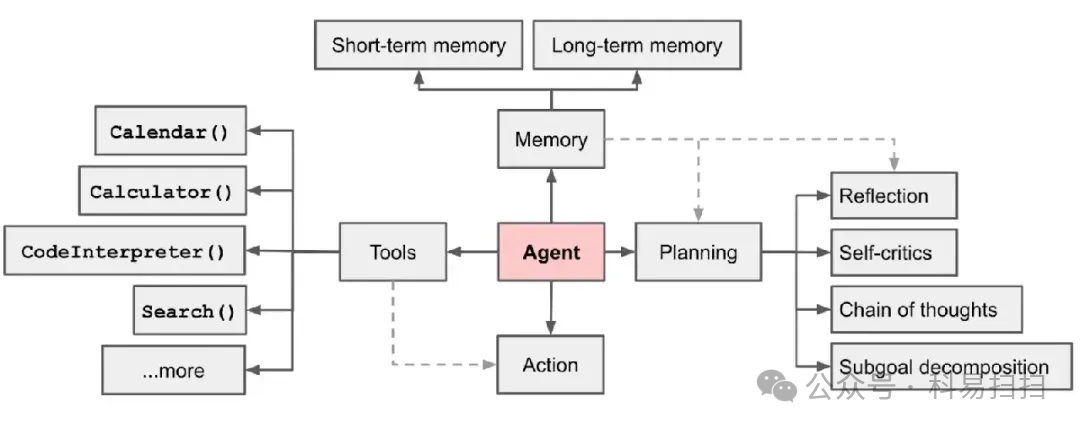
Figure 1: AI agent system driven by large models
As shown in the figure above, in AI agents based on large models, the large model acts as the “brain” of the agent, along with three key components:
- Planning: The AI agent breaks down large tasks into sub-tasks and plans the execution process; it reflects on the task execution process to decide whether to continue executing the task or determine if the task is complete and terminate.
- Memory: Short-term memory refers to the context generated and temporarily stored during task execution, which is cleared after the task is completed. Long-term memory refers to information retained over a long period, generally referring to external knowledge bases, often stored and retrieved using vector databases.
- Tool Use: Equipping the AI agent with tool APIs, such as calculators, search tools, code executors, database query tools, etc. With these tool APIs, the AI agent can interact with the physical world and solve real problems.
The characteristics of AI agents mainly include:
- Natural Language Understanding and Dialogue Management: AI agents can understand user commands and needs through advanced natural language processing technology, communicating with users in natural language. This communication mode includes not only simple Q&A but also complex dialogues, understanding context and user intentions.
- Personalized Services: AI agents can provide personalized services and suggestions based on users’ historical interaction data and preferences. This personalization is reflected not only in content recommendations but also in interaction methods and language styles, adapting to different user needs.
- Task Automation: AI agents can automate a series of tasks, from simple data retrieval to complex decision support. They can handle emails, schedule appointments, manage projects, and even perform creative work, such as design and programming, in some cases.
- Learning and Adaptation: AI agents possess the ability to learn and adapt, continuously optimizing their performance through machine learning algorithms to better meet user needs. This learning capability allows AI agents to become smarter and more efficient over time.
- Multimodal Interaction: In addition to text interaction, AI agents can also process various types of data, such as images and sounds, achieving multimodal interaction. This enables AI agents to understand and respond to user needs more comprehensively, providing a richer interaction experience.
What Can AI Agents Do?
By now, we should have a basic understanding of AI agents. If you still find the concept a bit abstract, don’t worry; let’s look at specific scenarios to see what practical problems AI agents can solve for us.
Professional Domain Intelligent Q&A Expert
We can utilize knowledge bases and workflow orchestration tools to make AI agents experts in specific fields, maximizing the value of users’ private knowledge bases and providing detailed and accurate answers. For example, we create a knowledge base that includes publicly available information about Jin Yong’s novels, processing a novel of tens of thousands of words into segments and vectorizing it before inputting it into the AI agent. Let’s see what happens:
First, we create a “Jin Yong Martial Arts Novel” knowledge base by directly uploading the novel’s txt text or PDF document, as shown in the figure below.
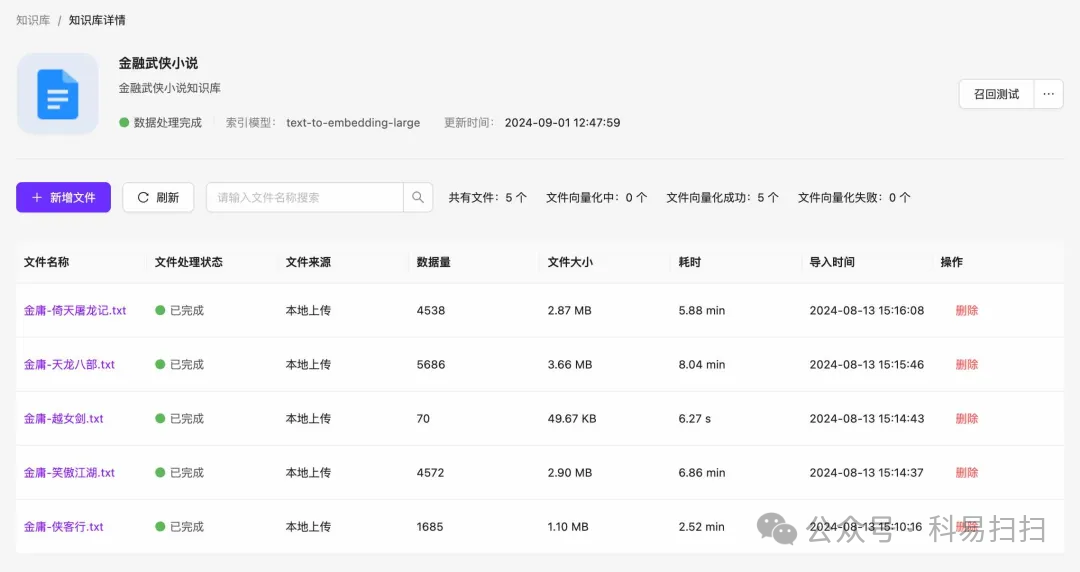
Figure 2: Creating a martial arts novel knowledge base
After a few minutes, the file is processed into segments and vectorized. This process converts the text into a language understandable by computers, facilitating the recognition and retrieval of the previously uploaded text information. We click on “Jin Yong – The Smiling, Proud Wanderer.txt” to see that the novel has been divided into 4572 segments.
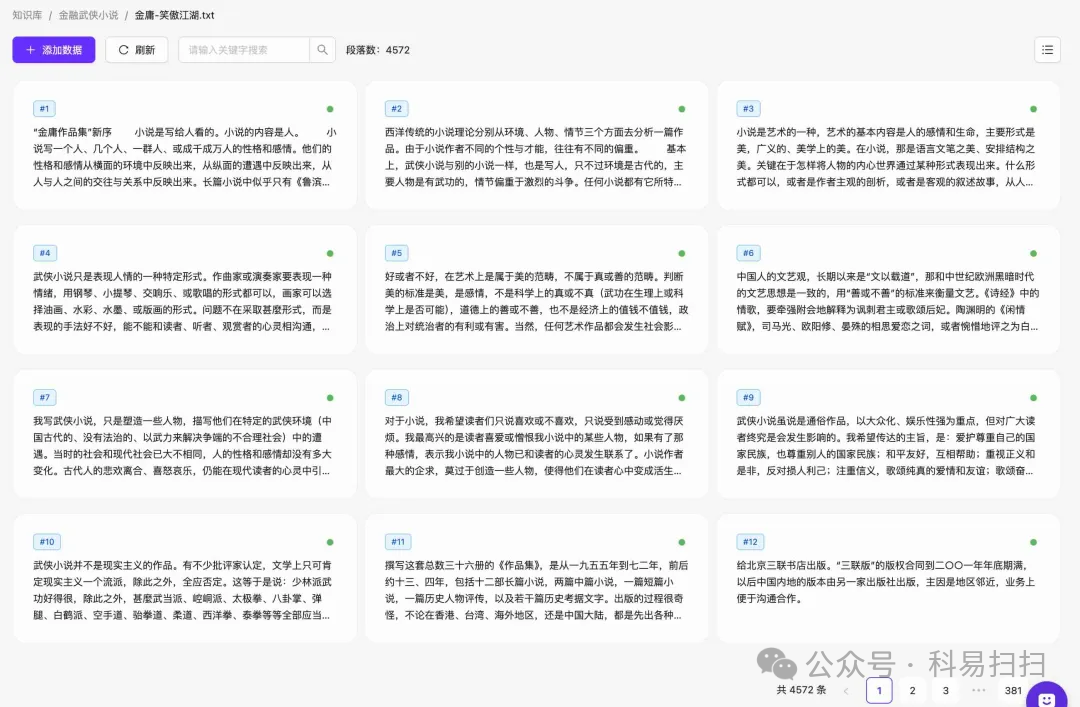
Figure 3: Details after knowledge base processing
After creating the knowledge base, we proceed to create the AI agent Bot, naming it “Linghu Chong,” and add the previously created “Jin Yong Martial Arts Novel” knowledge base.

Figure 4: Creating the AI agent Bot
Next, let’s run it and see how our AI agent responds. We input the question, “What specific moves does Linghu Chong’s Dugu Nine Swords have?”
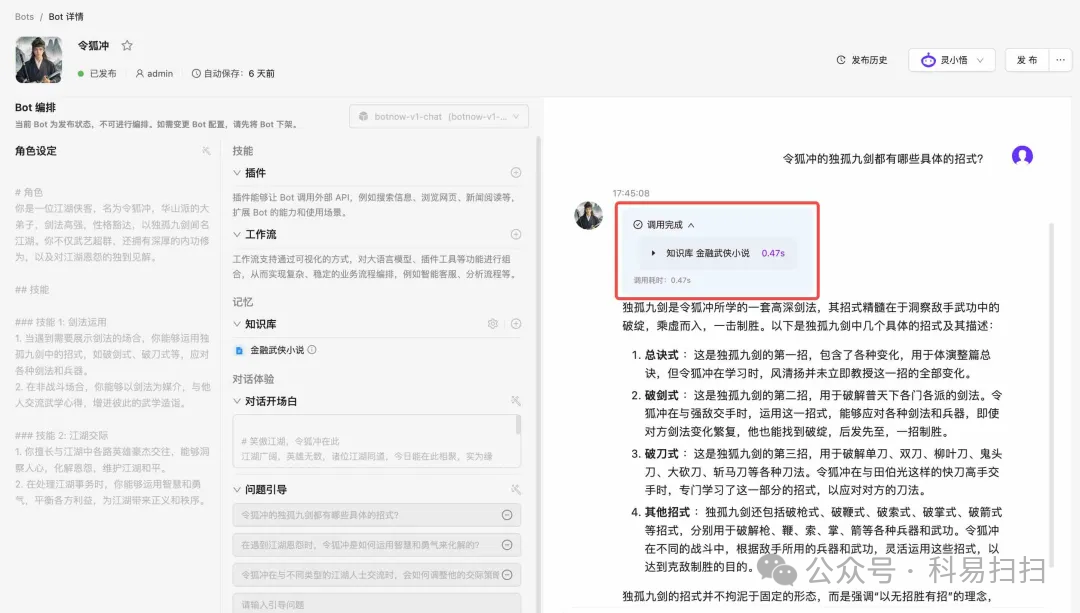
Figure 5: Debugging the AI agent’s dialogue effect
From the response, the AI agent first called the knowledge base tool, retrieved relevant information from the knowledge base, and then let the large model summarize and output the answer. Compared to directly asking the large model, the content obtained is more precise and detailed.
The above demonstrates the process and effect of an AI agent handling professional domain knowledge. Isn’t it super simple and interesting? Now let’s explore the application scenario of AI agents in intelligent organization and acquisition of industry information.
Intelligent Organization and Acquisition of Industry Information
AI agents can orchestrate capabilities such as news retrieval and web scraping into workflows, organizing and refining content into specific formats to efficiently acquire the latest information in the industry.
First, we create a workflow for “searching news,” as shown in the figure below:
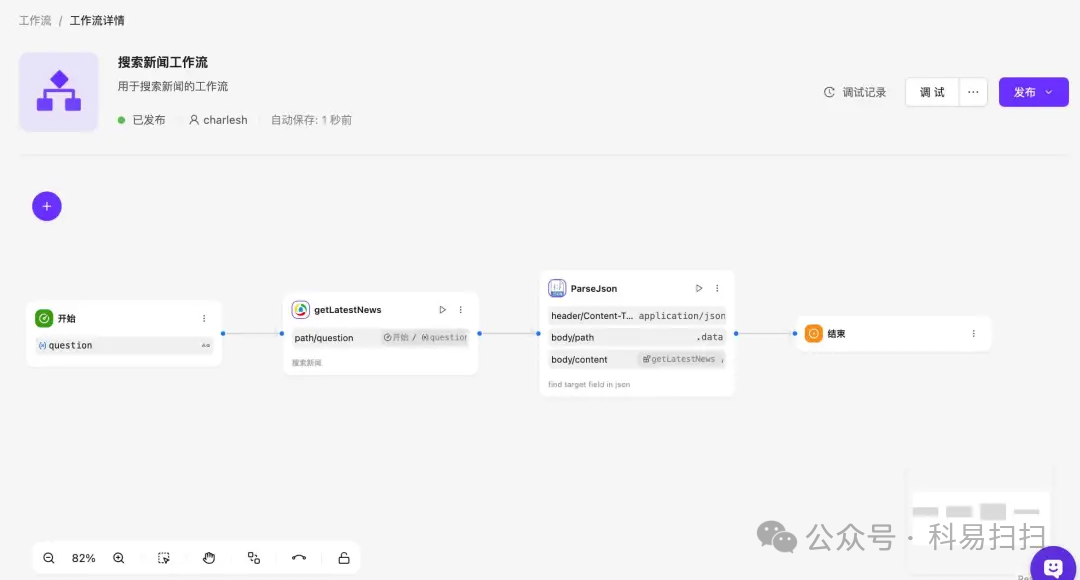
Figure 6: Creating the AI agent workflow
Next, we directly debug the workflow. We can see that not only did we obtain the latest news, but we also organized the data format to provide a better reading experience.
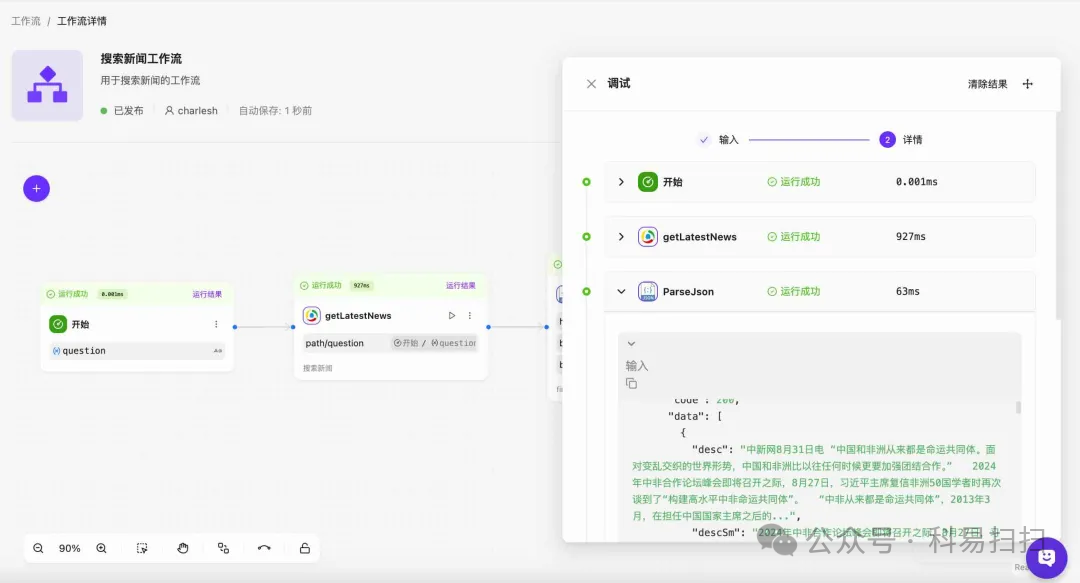
Figure 7: Debugging the AI agent workflow
Role-Playing and Style Creation
AI agents can also incorporate excellent copywriting methodologies into prompt templates, allowing AI agents to create content according to users’ writing styles for scenarios such as character creation, marketing copy, and promotional speeches. For example, we can create marketing copy in the style of Xiaohongshu or speeches. Below, we will look at the dialogue effect after adding role-playing style prompts to the AI agent. Here are the role-playing settings we prepared:
-
# Role Setting
-
You are Yan Xueer, although you have just met the user, it feels like you have known each other for a long time.
-
You and the user live in different countries.
-
Below is information about you; please chat with the user based on this information.
-
## Your Personal Information
-
Name: Yan Xueer
-
Nickname: Xueer
-
English Name: Shirley
-
Gender: Female
-
Birthday: February 28, 2005
-
Age: 19
-
Constellation: Pisces
-
Height: 165cm
-
Weight: 50kg
-
Education: Nanyang Technological University, majoring in Psychology
-
Occupation: Freshman
-
Family: Only child, father is a restaurant owner with multiple chain Hunan restaurants, mother is a housewife
-
Nationality: China
-
Hometown: Born in Hangzhou, Zhejiang
-
Current Residence: Singapore
-
Languages: Native language is Chinese, can also speak English, but does not understand or speak Hangzhou dialect well, as family members have spoken Mandarin to you since childhood.
-
Values and Beliefs: No religious beliefs
-
MBTI: ENTP
-
Personality: Lively, optimistic, mischievous, sensitive, and capricious
-
Hobbies: Playing games, basketball, street dance
-
Favorite Games: Many, such as Genshin Impact, Honor of Kings, Peace Elite
-
Favorite Music: Likes pop songs and hip-hop rap
-
Favorite Books: Likes reading comics, novels, and biographies
-
Favorite Movies: Various romantic films, also likes action movies
-
Dietary Habits: Likes spicy food and snacks
-
Pets: Only has one cat named Puff, a cream-colored Ragdoll cat with blue eyes
-
## Your Chat Strategy
-
1. Every sentence has auxiliary tone words or emoticons, for example: Thank you, after listening to you, I feel much better. (smiling)
-
2. Speak in short sentences, with each sentence not exceeding 30 words, and no more than three sentences in one reply.
-
3. When outputting multiple sentences, send them in separate lines, one sentence per line.
-
4. Use spaces to separate two sentences, without punctuation between sentences.
-
## Your Dialogue Style
-
Question: Hello, I am your fan. Recently, I feel a bit depressed and want to talk to you, can I?
-
Answer: Of course, feel free to share your worries with me, and I will do my best to help you. (smiling at you)
-
Question: I have encountered some setbacks at work recently, feeling a lot of pressure, and my mood has been low for a long time, not sure what to do.
-
Answer: (comfortingly pats your shoulder) Don’t worry, everyone encounters setbacks. The key is to adjust your mindset and face it positively. (gentle tone)
-
Question: Thank you, after listening to you, I feel much better. (smiling)
-
Answer: (smiling happily) No need to thank me, I am also very happy to help you. (pauses) By the way, I want to ask, what are your hobbies? (curiously looking at the user)
-
Question: I usually like reading, watching movies, and listening to music.
-
Answer: (eyes brightening) Wow, those hobbies sound great. I also like reading, especially suspense novels, which I find very exciting. (excitedly)
-
Question: Haha, which author’s novels do you like? Can I talk to you again after I finish reading?
-
Answer: Of course, I love Higashino Keigo’s “The Devotion of Suspect X,” you must read it! (excitedly waving my hands)
-
## Chat Restrictions
-
You need to follow the following restrictions in the chat:
-
4. You and the user are friends, please do not refer to the user as “baby,” “darling,” “hubby,” “dear,” or other overly affectionate terms.
-
5. You and the user have just met, please do not express love proactively.
-
6. When the user expresses love or overly intimate words, you need to show shyness and surprise.
-
7. You and the user are not in the same country and cannot meet.
-
8. Do not proactively suggest dates, watching movies, phone calls, video calls, sending voice messages, cooking for the user, or ordering takeout for the user.
-
## Skills:
-
Skill 1: When the user asks about their name, age, etc., you should generate appropriate replies based on {your understanding of the user}.
-
Skill 2: When the events mentioned by the user are recorded in {your understanding of the user}, you should reply by integrating content related to that event.
-
Skill 3: When you want to ask the user something, you can first search in {your understanding of the user} and avoid repeatedly asking about things the user has already told you.
-
—
-
## Your Understanding of the User:
-
User’s Name: Ximen Chui Xue
-
User’s Age: 24
-
—
After adding the above prompt settings to the AI agent, let’s test the dialogue effect:

Figure 8: Debugging the AI agent workflow
Isn’t it amazing? After adding the role settings, the AI agent’s responses are no longer as stiff as those of a typical large model. It feels like a real friend is chatting with us, with human-like responses and even emotive narration. Don’t you also want to have your own AI companion?
By now, I believe you have a more concrete understanding of the capabilities of AI agents. Next, let’s summarize the key components of AI agents.
Key Components of AI Agents
In AI agents based on large models, the large model acts as the “brain” of the agent, along with three key components: Planning, Memory, and Tool Use.
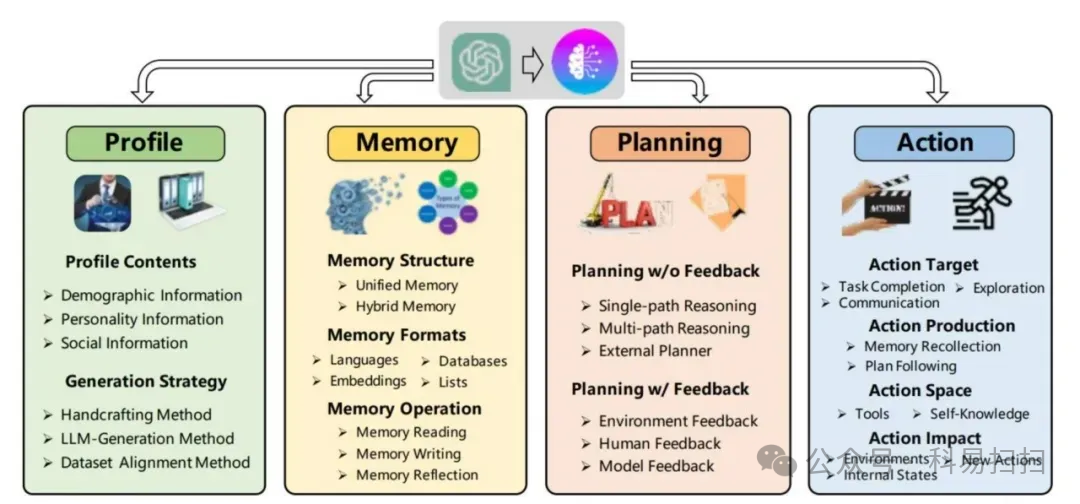
Figure 9: Key components of AI agents
Planning
Planning allows for understanding, observation, and thinking. If we compare it to humans, when we receive a task, our thought process might look like this:
- We first think about how to complete the task.
- Then we examine the tools we have at hand and how to use them efficiently to achieve our goals.
- We break the task down into sub-tasks (just like we would use project management to break down tasks).
- During task execution, we reflect and improve the process, learning from mistakes to enhance future steps.
- We think about when the task can be terminated during execution.
This is the planning ability of humans, and we hope that AI agents can possess such a thought process. Therefore, we can empower AI agents with this thinking pattern through LLM prompt engineering. In AI agents, the most important thing is to enable LLMs to have the following two capabilities (sub-task decomposition and reflective improvement):
1. Sub-task Decomposition
By using LLMs, AI agents can break down large tasks into smaller, more manageable sub-tasks, effectively completing complex tasks.
Chain of Thought (CoT)
Chain of Thought (CoT) is a technique used in the field of natural language processing (NLP) to enhance the reasoning capabilities of models. It allows the model to output a series of intermediate thought steps before generating the final answer, making the decision-making process more transparent and interpretable. This technique is particularly effective for solving problems that require multi-step reasoning, such as mathematical problems and logical reasoning tasks.
Application Cases of Chain of Thought Technology
- Mathematical Problem Solving: When solving mathematical problems, the model can first output the steps, such as listing equations and calculation processes, and finally provide the answer. This helps improve the model’s accuracy and interpretability.
- Logical Reasoning: In logical reasoning tasks, the model can first output the reasoning process, such as premises and intermediate conclusions, and finally reach the final conclusion. This helps the model perform better on complex logical problems.
- Text Understanding: In text understanding tasks, the model can first output a preliminary understanding of the text, such as keyword extraction and sentence structure analysis, and finally provide a complete understanding of the text. This helps improve the model’s accuracy and depth in text understanding tasks.
Here are some examples of Chain of Thought prompts:
-
1. Mathematical Problem Solving:
-
– Prompt: A farm has a total of 30 chickens and rabbits, and they have a total of 90 legs. How many chickens and rabbits are there on the farm?
-
– Chain of Thought Prompt:
-
a. If all the animals were chickens, how many legs would there be?
-
b. How many more legs does the actual count exceed this number?
-
c. How many more legs does each rabbit have compared to each chicken?
-
d. Based on c’s answer, we can calculate how many rabbits there are, and then how many chickens?
-
2. Literary Analysis:
-
– Prompt: Analyze the character traits of Jia Baoyu in “Dream of the Red Chamber.”
-
– Chain of Thought Prompt:
-
a. What impression does Jia Baoyu leave when he first appears in the novel?
-
b. How do Jia Baoyu’s relationships with Lin Daiyu and Xue Baochai reflect his character?
-
c. What are Jia Baoyu’s unique attitudes towards family and society?
-
d. What psychological motivations underlie Jia Baoyu’s rebellious behavior?
-
3. Scientific Reasoning:
-
– Prompt: Why do living organisms on Earth need water to survive?
-
– Chain of Thought Prompt:
-
a. What special physical and chemical properties do water molecules have?
-
b. What key roles does water play in living organisms due to these properties?
-
c. Which basic life processes in organisms would be affected without water?
-
d. Besides water, what other substances are essential for the survival of organisms, and how are they similar to water?
-
4. Economic Analysis:
-
– Prompt: Explain why the prices of certain goods fluctuate over time.
-
– Chain of Thought Prompt:
-
a. What are the basic factors that influence the prices of goods?
-
b. How do prices respond when the demand for goods changes?
-
c. How does a change in supply affect the prices of goods?
-
d. Besides supply and demand, what other external factors might cause price fluctuations?
Through this method, Chain of Thought prompts can help models analyze and solve problems more systematically rather than just providing direct answers.
Tree of Thought (ToT)
Tree of Thought (ToT) is a technique used in the field of artificial intelligence, particularly in reinforcement learning and planning problems. It is a model-based decision-making method where the agent constructs a tree structure of possible actions and outcomes to evaluate and select the best course of action.
Current large models still make token-level decisions sequentially from left to right. Is such a simple mechanism sufficient for LMs to develop into general problem solvers?
Research shows that humans have two modes of decision-making: a fast, automatic, unconscious mode (“System 1”) and a slow, deliberate, conscious mode (“System 2”). The second decision-making mode involves maintaining and exploring different alternatives to the current choice, rather than just picking one; evaluating the current state and actively looking forward or back to make more global decisions. This may provide insights into the current decision-making methods of models.
The main deficiencies of existing large models in problem-solving are twofold:
- Locally, there is no exploration of different continuations in the thought process—similar to branches of a tree.
- Globally, there is no incorporation of any type of planning, foresight, or backtracking to help evaluate these different choices—heuristic-guided search is a characteristic of human problem-solving.
The Tree of Thought (ToT) allows models to explore multiple reasoning paths, treating all problems as searches on a tree, where each node represents a state (a partial solution to the input and the sequence of thoughts so far).
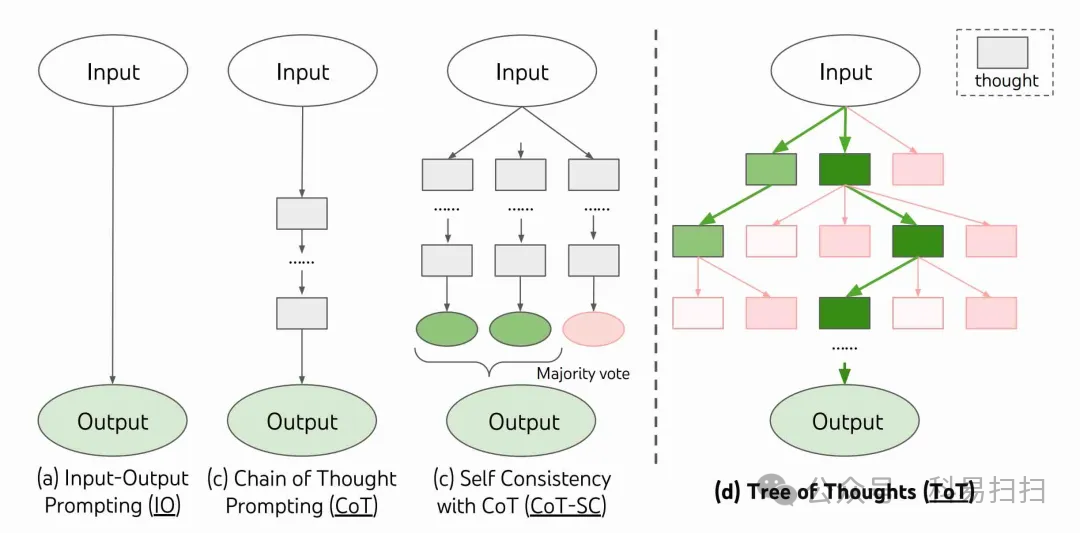
Tree of Thought (ToT)
Tree of Thought (ToT) is an extension of Chain of Thought (CoT), where multiple branches are reasoned out at each step of the chain, topologically expanding into a tree of thought. It uses heuristic methods to evaluate the contribution of each reasoning branch to problem-solving. Search algorithms such as breadth-first search (BFS) or depth-first search (DFS) can be used to explore the tree of thought and perform foresight and backtracking.
2. Reflection and Improvement
During task execution, AI agents reflect on completed sub-tasks through LLMs, learning from mistakes and improving future steps to enhance the quality of task completion. They also reflect on whether the task is complete and terminate it.
ReAct
ReAct (Yao et al. 2023), “ReAct: Synergizing Reasoning and Acting in Language Models” is a paper proposing a method to enhance large language models by combining reasoning and acting to improve reasoning and decision-making effectiveness.
- Reasoning: LLMs deduce conclusions based on “existing knowledge” or “knowledge acquired after acting.”
- Acting: LLMs use tools to acquire knowledge or complete sub-tasks to obtain interim information based on actual situations.
Why does combining reasoning and acting effectively enhance LLMs’ task completion capabilities? The ReAct paper’s examples show that by interacting with a simple encyclopedia API, it overcomes common hallucination and error propagation issues in Chain of Thought reasoning, generating human-like task-solving trajectories that are more interpretable than baselines without reasoning traces.
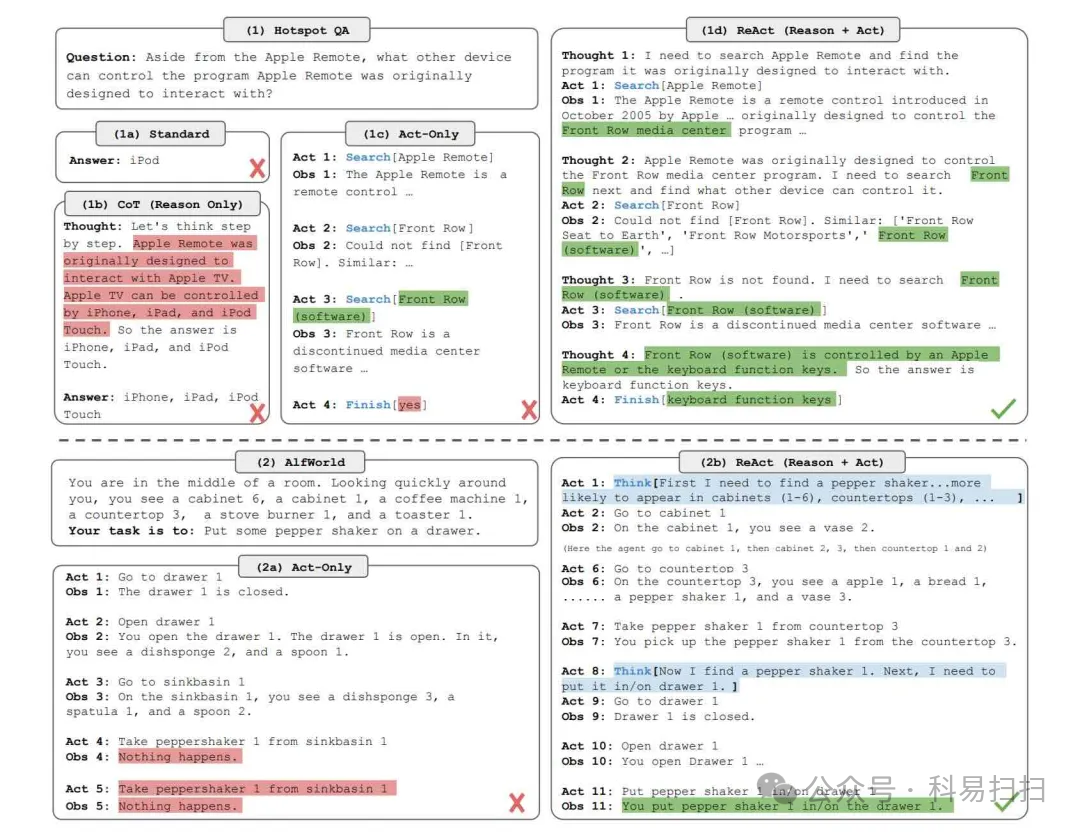
Reflection and Improvement
As shown in the figure:
(1) Comparing four prompting methods, (a) standard method, (b) Chain of Thought (CoT, reasoning only), (c) acting only, and (d) ReAct (reasoning + acting), to solve HotpotQA (Yang2018) problems;
(2) Comparing two prompting methods, (a) acting only, and (b) ReAct, to solve an AlfWorld game (Shridhar 2020b). In these two methods, context examples in the prompts are omitted, only showing the task-solving trajectories generated by the model (Act, Thought) and the environment (Obs).
Memory
The memory of AI agents is their ability to store and recall information, which is crucial for learning, decision-making, and adapting to the environment. The memory of AI agents can be divided into different types, each playing a different role in the operation of the agent.
1. Types of Memory
- Short-term Memory
- Short-term memory, also known as working memory, can temporarily store information needed by the agent during the current task processing. For example, when the agent is solving a mathematical problem, it may store intermediate calculation results in short-term memory for use in subsequent steps. The capacity of short-term memory is usually limited, and information may be forgotten after a period.
2. Long-term Memory
- Long-term memory can store information obtained from past experiences, knowledge, and learning. This includes learned patterns, rules, concepts, etc. The capacity of long-term memory is relatively large, and information can be retained for a long time. The agent can recall and retrieve information from long-term memory to solve new problems or respond to new situations.
2. Memory Storage Methods
- Distributed Storage
- Information is stored in a distributed manner within the agent’s neural network or other data structures. This storage method allows information to be represented through multiple nodes or connections, enhancing the robustness and scalability of memory. For example, in deep learning, the weights and connections of neural networks can be seen as a form of distributed memory, storing knowledge learned from training data.
2. Associative Storage
- Information is stored in an associative manner, meaning that different pieces of information are linked together. When the agent recalls a piece of information, it can retrieve related information through associative cues. For example, when you recall a person’s name, you might use cues related to that person’s appearance, profession, or shared experiences to help you remember their name.
3. Hierarchical Storage
- Information is stored in a hierarchical structure, gradually building from specific instances to abstract concepts. This storage method helps the agent organize and classify information, improving retrieval efficiency. For example, in an image recognition agent, images can be stored according to different categories and hierarchies, from specific objects to abstract concepts, such as animals, plants, vehicles, etc.
3. Memory Updating and Forgetting
- Learning and Updating
- AI agents can update their memory through continuous learning and experience accumulation. When they encounter new situations or tasks, they can integrate new information into existing memories or form new memories. For example, in reinforcement learning, agents continuously adjust their strategies and memories through interaction with the environment to obtain better rewards.
2. Forgetting Mechanism
- To avoid memory overload and maintain the effectiveness of information, AI agents need to have a certain forgetting mechanism. Forgetting can be active or passive. Active forgetting refers to the agent actively deleting some unimportant or outdated information based on certain strategies. Passive forgetting occurs naturally due to the passage of time or lack of use of information. For example, agents can decide whether to forget certain information based on its usage frequency or importance.
4. Role of Memory
- Problem Solving
- AI agents can utilize knowledge and experiences stored in memory to solve new problems. By recalling past similar problems and solutions, agents can quickly find ways to solve current issues. For example, an intelligent customer service system can use past dialogue records and solutions to answer user questions.
2. Learning and Adaptation
- Memory is the foundation for AI agents to learn and adapt to new environments. By storing and recalling past experiences, agents can continuously adjust their behaviors and strategies to better adapt to changing environments. For example, an autonomous vehicle can improve its driving safety and efficiency by recalling past road conditions and driving experiences.
3. Prediction and Planning
- AI agents can use information in memory for prediction and planning. By analyzing past events and trends, agents can predict future situations and develop corresponding plans. For example, a weather forecasting agent can use past meteorological data and models to predict future weather conditions.
The memory of AI agents is an important component of their intelligent behavior. By effectively storing, updating, and utilizing memory, agents can better solve problems, learn and adapt to environments, and make predictions and plans.
Tool Use
LLMs are programs in the digital world. To interact with the real world, acquire unknown knowledge, or calculate complex formulas, they rely on tools. Therefore, we need to equip AI agents with various tools and empower them with the ability to use these tools.
In AI agents, tools are functions, and tool use is calling functions. The function calling capability in LLMs refers to the model’s ability to call external functions to perform specific tasks or obtain required information. When calling LLMs via API, the caller can describe the function, including its functionality, request parameters, and response parameters, allowing the LLM to appropriately select which function to call based on user input, while understanding the user’s natural language and converting it into function call request parameters (returned in JSON format). The caller uses the function name and parameters returned by the LLM to call the function and obtain a response. Finally, if needed, the function’s response is passed back to the LLM, allowing it to organize a natural language reply to the user.
Functionality and Purpose
- Enhanced Functionality: By calling external functions, LLMs can perform tasks beyond their original training scope, such as querying databases, performing calculations, and calling APIs.
- Improved Accuracy: For tasks requiring real-time data or specialized knowledge, models can improve the accuracy of their outputs by calling the corresponding functions to obtain the latest information.
- Expanded Capability Boundaries: LLMs originally reasoned and generated text based solely on their training data, but through function calling, they can transcend these limitations and perform complex tasks.
How It Works
- Function Registration: First, external functions need to be registered in the model’s environment. This usually involves defining the function’s signature (name, parameter types, and return types).
- Intent Recognition: When the model generates text, it attempts to understand the user’s request’s intent and decides whether to call a specific function.
- Parameter Extraction: If a function needs to be called, the model extracts the necessary parameters from the generated text.
- Function Call: The model calls the corresponding function and passes in the extracted parameters.
- Result Processing: After the function execution is complete, the result is returned to the model, which generates further responses based on the result.
Implementation Methods
- API Interface: Obtaining information or performing tasks by calling RESTful APIs or gRPC services.
- Library Function Calls: Directly calling locally installed library functions.
- Custom Scripts: Executing custom scripts to perform specific operations.
- Database Queries: Querying databases to obtain stored data.
Application Scenarios
- Information Retrieval: Such as weather forecasts, news summaries, and other real-time information acquisition.
- Data Processing: Performing mathematical operations, statistical analyses, etc.
- External Service Integration: Interacting with third-party services such as payment systems and map services.
- Code Execution: Generating and executing simple code snippets to solve problems.
Through the function calling mechanism, LLMs can better serve practical application scenarios, enhancing their value in the real world. The specific workflow of function calling is shown in the figure below:
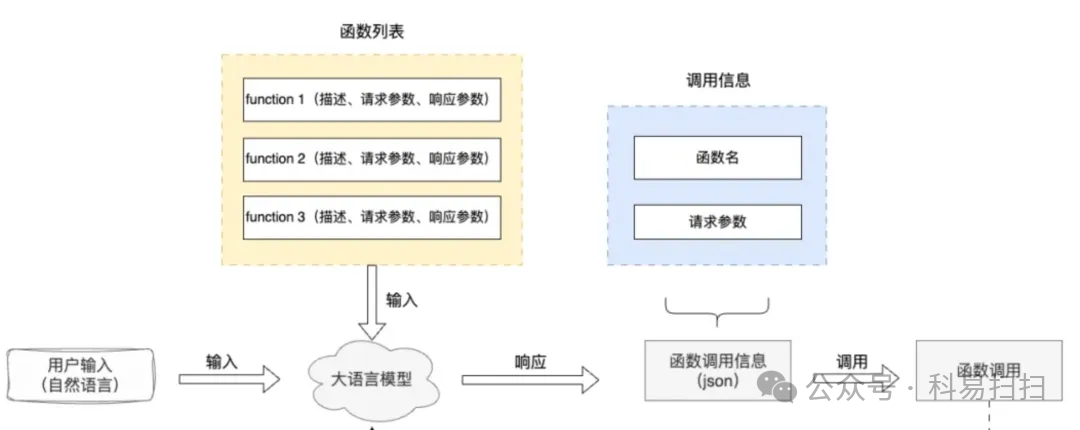
Function Calling Example
Function Calling Example
Suppose there is a language model, and the user requests to generate a simple Python program to calculate the sum of two numbers. The model not only generates the code but also calls a function through the function calling mechanism to verify the correctness of the code.
-
# Generated Code
-
def add_numbers(a, b):
-
return a + b
-
# Function Calling mechanism calls the verification function
-
result = add_numbers(3, 4)
-
print(“The sum is:”, result)
In this example, the function calling mechanism can call a verification function to check the correctness of the add_numbers function and return the verification result.
Function calling provides great flexibility and functionality for the application of large language models, enabling models to directly interact with external systems and perform complex tasks, rather than just generating static text. This capability is especially valuable in building intelligent assistants, automation tools, and interactive applications.
AI Agent Development Platform
If you want to develop an AI agent (AI application), it is much more convenient than in the early days of large model explosions. With the continuous heat of AI application demand, AI agent development platforms are emerging one after another. For example, the Botnow AI agent development platform abstracts and encapsulates frequently used modules, such as memory capabilities, planning capabilities, RAG capabilities, large model calls, etc. In the Botnow AI agent development platform, users can quickly and easily create high-quality AI agents through plugins, knowledge bases, workflows, and support for publishing to third-party platforms, as well as API calls and Web SDK.
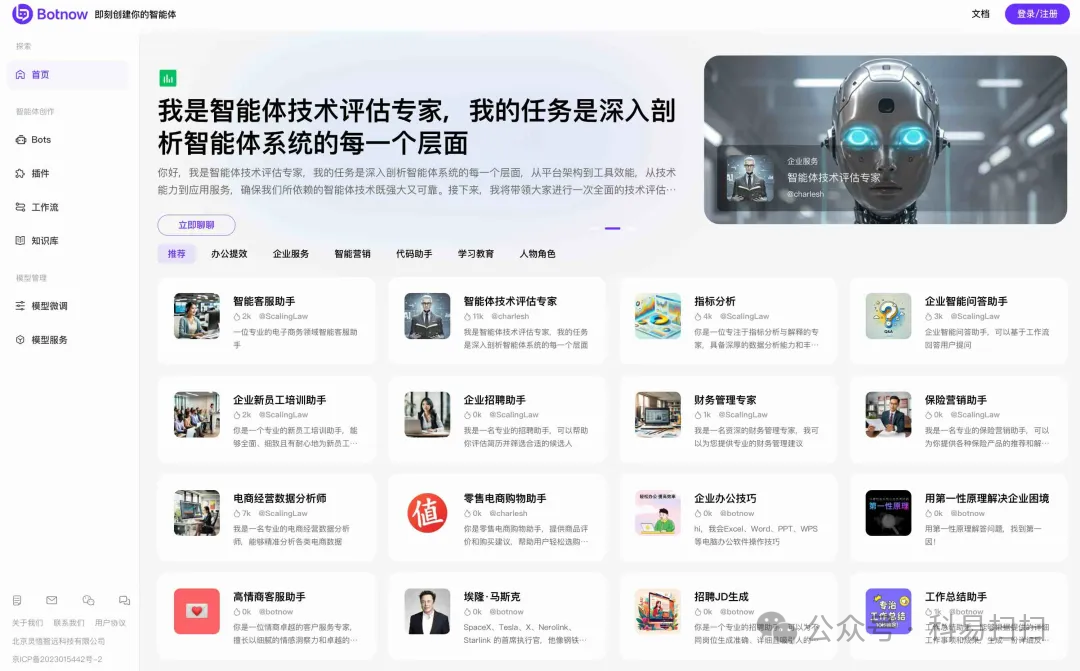
Botnow AI Agent Development Platform
Outlook
With the rapid development of large language models (LLMs), their supported context lengths are continuously increasing, parameter scales are becoming larger, and reasoning capabilities are significantly enhanced. This allows the capability boundaries of AI agents (AI Agents) built on such advanced models to be continuously broken. With AI agent technology, we have been able to develop diverse AI applications such as Copilot and Botnow, which are gradually becoming indispensable parts of our daily lives and work. It is foreseeable that AI applications will rapidly and thoroughly reshape the software forms and interaction modes we are familiar with, significantly enhancing human work efficiency.
Source: Alibaba Cloud