Editor: Duohang Source: Kelly deVos, Arizona State University

According to Arizona State University, from 2002 to 2021, oil pipeline accidents in the United States resulted in 276 deaths, over 1,100 injuries, and economic losses of up to $10 billion. Approximately 650 serious accidents occur each year, making the demand for safer and smarter pipeline inspection technologies more urgent than ever.
Despite the risks, many pipelines have not undergone thorough inspections for years. Some pipelines are even impossible to inspect. These sections, known as “unpiggable pipelines,” have complex geometries, old valves, and intricate connections that standard inspection tools cannot navigate. This has created costly blind spots in one of the most critical systems in the United States.
Researchers at Arizona State University are working to change this situation. With support from the National Science Foundation, their project is developing a new generation of innovative robotic systems and artificial intelligence (AI) models aimed at making pipeline inspections faster, safer, and more reliable than ever before.
Soft Robotics Technology Solves Challenges
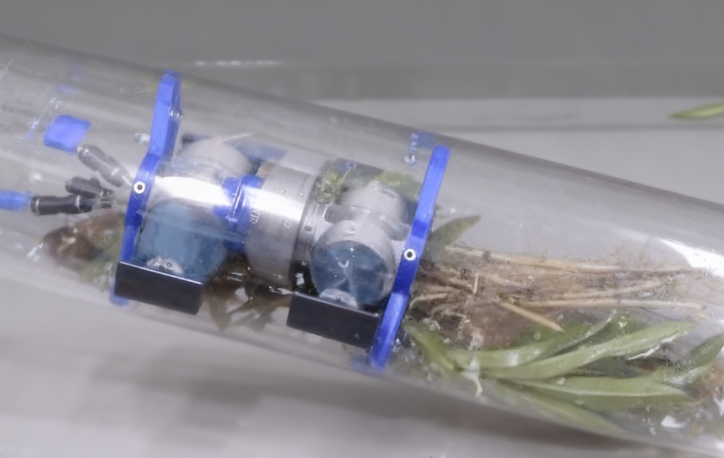
Leading this work is Professor Wenlong Zhang, an associate professor of manufacturing engineering at the Ira A. Fulton Schools of Engineering at Arizona State University. As the principal investigator, Professor Zhang oversees the project’s development and has led the creation of a new type of soft, flexible inspection robot capable of operating in pipelines that traditional tools cannot reach.
Professor Zhang states, “Pipelines can be inspected using online detection tools such as magnetic flux leakage and ultrasound. However, due to the complex geometries of pipelines, oversized or undersized valves, small bend radii, and other challenges, many critical segments of the 2.6 million miles of pipeline in the U.S. have not been inspected.”
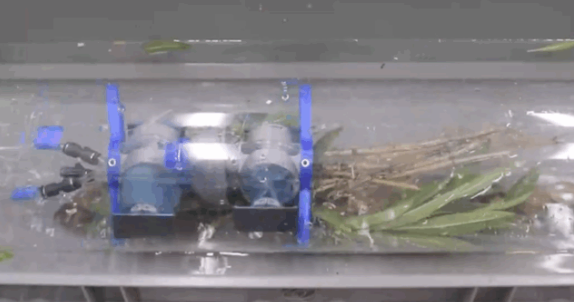
The solution proposed by his team is an autonomous soft robot inspired by the design of a pill bug, consisting of inflatable fabric actuators that allow it to grasp, extend, and navigate through narrow, curved pipelines. This robot can carry lightweight sensors to detect cracks and corrosion while adjusting its structure according to the shape of the pipeline.
Professor Zhang notes, “This project will enable us to significantly enhance the efficiency, durability, and autonomy of future pipeline robots.”
However, the impact of this technology extends far beyond robotics. Professor Zhang believes this technology can serve as a model for how intelligent robotics can transform aging infrastructure.
Predicting Failures to Prevent Disasters
The robots developed by Professor Zhang are responsible for collecting data, while Professor Yongming Liu, a mechanical and aerospace engineering professor at the Fulton Schools of Engineering, focuses on predicting the implications of this data. His research centers on understanding the failure mechanisms of pipelines under real-world conditions and predicting issues before they occur.
Professor Liu’s team combines theory with machine learning to build a predictive framework that helps utility companies identify problems before they become dangerous. His model can estimate the remaining lifespan of pipelines under daily complex conditions—conditions that include fluctuations in pressure, corrosion, and environmental factors—providing a smarter, more proactive approach to pipeline maintenance and safety.
Professor Liu states, “The safety of energy infrastructure is crucial for both the economy and public welfare. Many energy infrastructure systems are aging, and how to safely extend their lifespan is a significant scientific and societal challenge.”
AI Tools Help Stakeholders Understand the Big Picture
The core figure in the project’s data intelligence is Hao Yan, an associate professor of industrial engineering at the Fulton Schools of Engineering. Hao Yan and his team are developing a new type of AI that not only predicts when problems may arise but also explains the reasons behind these issues.
The team’s system integrates information from multiple sources, including real-time sensor data from within the pipelines, detailed physical simulations, and decades of accumulated accident reports. By synthesizing all these perspectives, the AI can identify subtle patterns and potential risks that no single data source could uncover.
Unlike traditional black-box algorithms, Professor Yan’s framework emphasizes transparency and trust. It not only makes predictions but also measures the confidence of those predictions, basing each decision on physical and engineering knowledge. Ultimately, it forms an intelligent system that engineers can interpret, regulators can trust, and operators can use to take action before small issues evolve into major failures.
Ultimately, Professor Yan envisions a future where utility operators receive early, data-driven warnings before failures occur.
Professor Yan states, “By training AI to read and learn from decades of pipeline accident reports, we can uncover recurring human, environmental, and mechanical risk factors that traditional models overlook. These findings can help utility companies issue early warnings of potential failures, ensuring public safety and minimizing costly service interruptions.”
Translating Research Outcomes into Practical Applications
To ensure the project’s technology is feasible in the real world, Professor Hanna Breetz, an associate professor at the School of Sustainability at Arizona State University, leads stakeholder engagement and policy analysis efforts. Her work aims to bridge the gap between engineering innovation and the complex regulatory and political environment surrounding energy infrastructure.
Professor Breetz’s team is interviewing policymakers, industry leaders, and public interest groups to identify emerging safety regulations and monitoring standards. Their insights will guide engineering teams in designing technologies that meet regulatory requirements while being easy to implement. As the project progresses, Breetz will also assist in translating research outcomes into publications and outreach materials aimed at industry and government leaders.
Smart Engineering for a Safer Future
What sets this project apart is its interdisciplinary nature. It integrates expertise from robotics, materials science, artificial intelligence, and policy research—fields that rarely intersect but are crucial for reimagining infrastructure management.
The team is also collaborating with Michigan State University and GTI Energy, which will conduct field demonstrations at its testing facility in Illinois. During this time, the robots and AI systems will be tested in real-world environments, with industry experts providing feedback to refine these tools before actual deployment.
Researchers hope their work will pave the way for a new generation of intelligent infrastructure systems capable of self-monitoring, predicting problems early, and assisting engineers in making data-driven maintenance decisions.
As Professor Liu states, “This project will demonstrate that proactive, data-driven safety management at the national level is possible.”
While the technologies emerging from this highly interdisciplinary collaboration may one day protect the pipelines beneath our feet, their true impact may extend far beyond that, transforming how we use robotics and AI to maintain the infrastructure that sustains modern life.
Related Articles ·
▷ Mechanical Design, Motion Analysis, and Dynamics Modeling of a Deformable Wheel-Leg Hybrid Mobile Robot
▷ Scientists Use the Power of Bubble Bursting to Propel Microrobots
▷ New Advances in Electronic Skin: Tactile Data Processing, Large-Scale Manufacturing, and Energy Autonomy Technologies
▷ Hardware Design and Verification of a Cat-Like Adaptive Quadruped Robot with New Biomimetic Capabilities
▷ Fundamental Principles and Solutions of Soft Robot Motion
▷ Design and Development of an Open-Source Quadruped Robot for Multi-Robot SLAM Applications
▷ Brain-Machine Interface Control Scheme for Lower Limb Assistive Robots Based on EEG
▷ Scientific Design of Soft Robots: Motivations, Methods, and Enabling Technologies
▷ Soft Robot Grippers (Part II): Flexible Grasping Technologies, Material Combinations, Physical Principles, and Device Architectures
▷ Autonomous Grape Harvesting Robot: Integrated System Architecture
▷ Energy Autonomous Electronic Skin (Part II): Self-Powered Electronic Skin, Energy Storage, and Wireless Charging Technologies