Click the blue text to follow us
Authors:Cai Su, Huang Andong, Li Jiangxu
Citation:Cai, S., Huang, A.D., Li, J.X. (2025). The Impact of Embedded Question Prompts on Students’ Reflective Thinking and Learning Behaviors in AR Learning Environments. Journal of Science Education and Technology. https://doi.org/10.1007/s10956-025-10249-6
The Impact of Embedded Question Prompts on Students’ Reflective Thinking and Learning Behaviors in AR Learning Environments
Abstract

The elementary science curriculum encourages students to engage in inquiry and practical activities through autonomy and collaboration, and can utilize Augmented Reality (AR) to present teaching experiments to avoid issues with real experimental equipment and safety. As AR inquiry classrooms are further developed, it has been confirmed that AR can enhance students’ problem-solving abilities, metacognitive awareness, and other higher-order thinking skills. This study selects the knowledge of water waves as an extension of the sound wave knowledge in elementary science, focusing on the development of teaching design and corresponding AR tool functionality based on the “predict-observe-explain” model; and combines the activity stages with the types of question prompts of “plan-activity-reflection” to design question prompts embedded in the AR tools. After continuous modifications and functional improvements, the AR tools with embedded question prompts and those without were used in two fifth-grade classes for three lessons on water waves. Before and after the course, questionnaires and tests were used to collect students’ learning outcomes (academic performance, cognitive load, and reflective thinking levels); during class, student interaction data with the software was collected to analyze students’ inquiry behaviors during group exploration through video recordings. The analysis of quantitative data reveals the impact of question prompts in AR tools on students’ learning outcomes, and the group software interaction and inquiry behaviors reveal the influence of embedded question prompts on students’ inquiry and reflective behaviors.
Keywords

Augmented Reality, Reflective Thinking, Question Prompts, Lag Sequential Analysis
Introduction

The “Compulsory Education Science Curriculum Standards” clearly states that inquiry practice is one of the core competencies and a primary method of scientific learning. Teachers should allow students to engage in inquiry and practice and encourage them to conduct activities through autonomy and collaboration. However, in practice, the various physical inputs required for inquiry experiments, such as equipment and consumables, as well as safety issues during experiments, are difficult to resolve in actual teaching. The “Opinions on Strengthening and Improving Experimental Teaching in Primary and Secondary Schools” and the “Opinions on Strengthening Science Education in Primary and Secondary Schools in the New Era” both propose that experimental teaching in basic education can utilize technologies such as Augmented Reality (AR) and Virtual Reality (VR) to present teaching experiments as a solution.
As an extension of virtual reality, Augmented Reality features a combination of real and virtual elements, real-time interaction, and three-dimensional registration, allowing users to see the real world along with virtual objects integrated into it and interact with them naturally; compared to VR, AR offers more realistic interactivity and simpler equipment requirements. Furthermore, numerous studies have confirmed the positive impact of AR on various higher-order thinking skills, such as problem-solving abilities, metacognitive awareness, and critical thinking skills, including evidence in the arts that AR can enhance students’ creative thinking abilities. Theoretical research suggests that AR provides more opportunities for reflection and self-analysis, but empirical studies focusing on students’ reflective thinking and specific facilitation methods are limited, thus the role of AR in cultivating reflective thinking requires further exploration.
Overview of the Main Text

AR Learning Tools
1
Content Selection
This study develops an extension course on “Water Waves” based on the “Sound” unit of the elementary science textbook. Students have already learned about properties such as loudness and pitch in the “Sound” unit, but have not yet connected these properties with the essence of mechanical waves, such as amplitude and frequency. Therefore, the “Water Waves” extension course aims to help students relate the properties of sound and water waves, leading to their common property—mechanical wave properties.
In the “Water Waves” extension course, first, water and a transparent water tank are needed; while the equipment is easy to obtain, the quantity is limited. Secondly, the amplitude of water wave fluctuations in a small water tank is small and can be affected by external factors, making the observed water wave phenomena less obvious and less regular. Additionally, if one wants to observe and statistically analyze the height and fluctuation frequency of water waves with a more mathematical approach, it becomes even more challenging to observe and record. Therefore, AR can be introduced as a scientific observation tool in the classroom, combining students’ observations and impressions of water waves in their lives to resolve these difficulties; it can make the water wave phenomena more apparent while introducing mathematical concepts, leveraging AR’s advantages in combining real and virtual elements and real-time interaction.
2
Learning Content
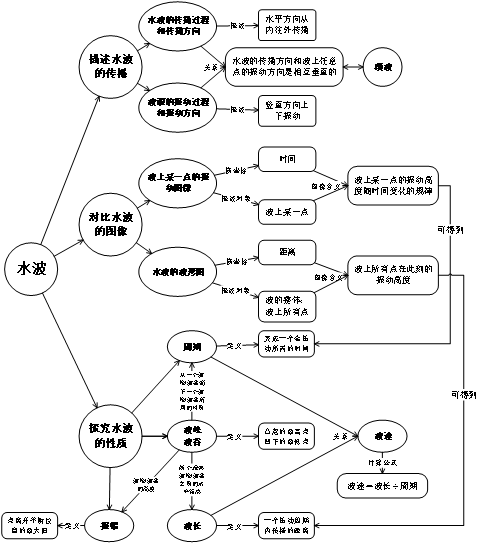
The “Water Waves” course will explore three parts: the description of the propagation process of water waves, the comparison of water wave vibration images and waveforms, and the exploration of the properties of water waves. The “Description of the Propagation Process of Water Waves” primarily aims to enable students to simply describe the formation and propagation process of water waves, i.e., to describe the vibration process of the wave source and the overall propagation process of the water wave. In the first lesson, students were already able to simply describe the vibration process of the wave source and the propagation process of the water wave. The “Vibration Image of Water Waves” builds on this by visualizing and flattening the water wave, describing the vibration process of the wave source and all points on the wave as a vibration image, and depicting the propagation process of the water wave as a waveform, allowing students to further understand the similarities and differences between the waveform of water waves and the vibration image at a certain point. In the “Exploration of the Properties of Water Waves,” students will explore the properties of water waves based on the two images they have already learned, including wave peaks, troughs, amplitude, wavelength, and period; by adjusting the values of each property, they will observe changes in the two images and summarize the meanings of each property; finally, by analogy with the three elements of distance, they will summarize the formula for calculating wave speed.
3
Specific Design of Question Prompts
The design of question prompts follows the classification found in the literature review: planning prompts, activity prompts, and reflection prompts, corresponding to the three stages of learning activities: prediction, observation, and explanation. Three types of prompts are embedded in the three learning activities. To encourage students to view question prompts and engage in corresponding operations and discussions, a checkbox is set for each question prompt; when the prompt pops up, checking the box indicates completion of that prompt’s content; while checking a question prompt, a star will light up on the overall activity interface. By displaying the number of completed prompts, students are encouraged to engage in activities and complete the corresponding prompts.
Table 1 List of Question Prompts
|
Prompt Type |
Question Prompt |
|
Planning Prompt |
1. Please predict the experimental results. 2. Please plan the experimental process for the questions to be explored. 3. What will you do next in the experiment? |
|
Activity Prompt |
1. Please explore the question: the relationship between wave speed, wavelength, and period. 2. Try changing only one parameter while keeping others constant, and observe the results. 3. Record the observed results on the learning sheet. 4. Derive conclusions based on the observed results. |
|
Reflection Prompt |
1. Were there any questions during the experiment? (CR) Was it due to incorrect experimental methods? (PreR) 2. Did you make predictions about the results? (PR) Were the predictions consistent with the experimental results? (CR) What is the reason? (PreR) 3. How did you conduct the experiment to ultimately reach the experimental conclusion? (PR) |
4
Software Development
The AR inquiry tool used in this study was designed and developed in a Windows 10 + Unity + Vuforia environment. First, models and animations were selected and modified using 3ds Max as needed, then Unity 3D was used as the graphics engine for development, importing animations into Unity 3D for coding and interface design, and Vuforia for Unity was used as the AR development tool, running on Android mobile devices through Unity 3D’s cross-platform capabilities.
On the Unity 3D platform, the scene layout and functionality were designed; models were imported and parameters adjusted; scripts were written to add interactivity to the models; UI was set up to place more adjustment and interaction functions on the UI; prompts were added to the AR software that needed embedded question prompts, and interactions were set; finally, all interaction times, behaviors, and counts were captured and saved in the backend files, i.e., software interaction data was obtained and saved. After initial development, new functions were added based on teaching design and user feedback, optimizing layout and interface.
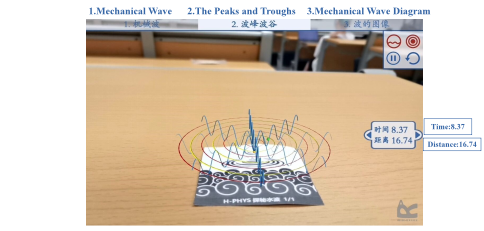
Fig.1 (a) Scenario 2: Peak and trough diagram
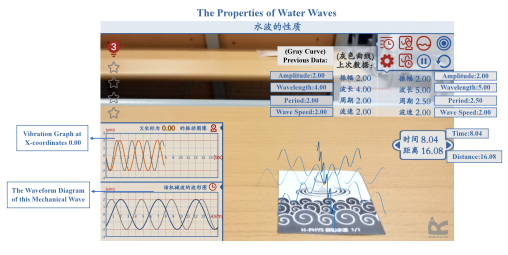
Fig.1 (b) Scenario 2: Change the x-coordinate of a point
Classroom Empirical Study
In the AR scientific inquiry activities, students from two fifth-grade classes in a school in Beijing participated in the experiment, consisting of 36 students in the experimental group and 42 students in the control group. Each scientific inquiry activity was conducted in groups of 3-4 students, who needed to collaborate to operate tablets and complete learning sheets. This study employed a quasi-experimental research method, applying three AR cases: “Description of the Propagation Process,” “Comparison of Water Wave Images,” and “Exploration of Water Wave Properties” in classroom teaching for empirical research, conducting a three-week teaching experiment with three lessons in two classes. The experimental class used AR learning tools with embedded question prompts for inquiry learning, while the control class used AR learning tools without question prompts for inquiry learning.
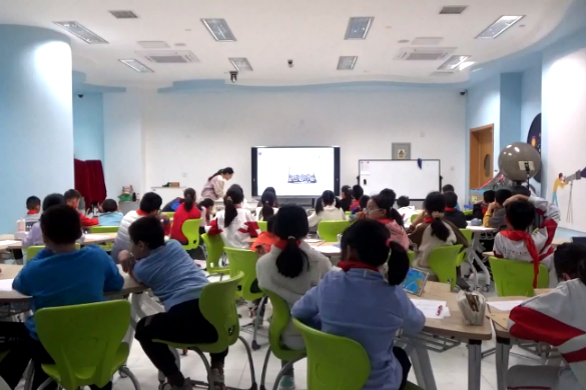
(a) Teacher demonstration 1
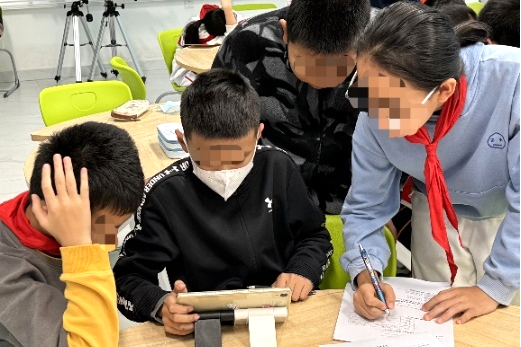
(b) Group exploration 1
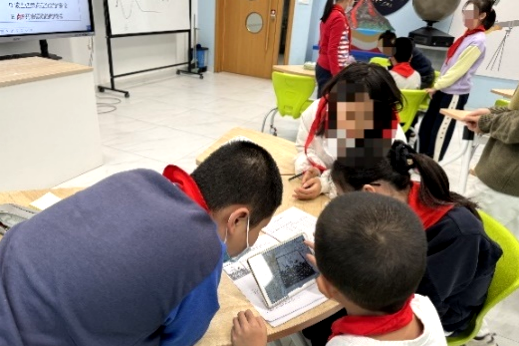
(c) Teacher demonstration 2
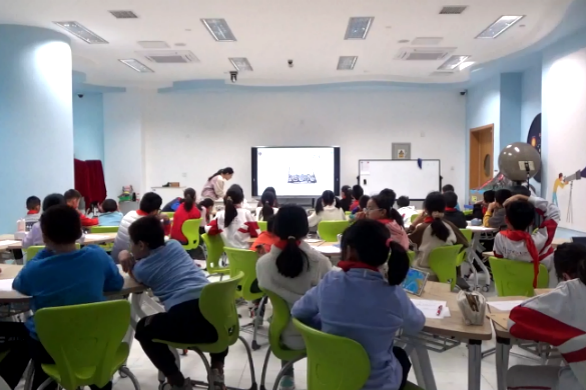
(d) Group exploration 2
Fig.2 Photos of the class. (a) Teacher demonstration. (b) Group exploration
Conclusion

To explore the effectiveness of embedded question prompts in AR tools and their impact on students’ reflective thinking, this study designed and developed AR learning tools with and without embedded question prompts, and conducted courses in two classes, collecting quantitative and qualitative data from students to analyze the differences between the two classes and the effects brought by the embedded question prompts.
This study developed a set of teaching cases based on the POE inquiry model, including three lessons on elementary science water wave knowledge, along with corresponding AR learning tools, and designed and developed corresponding question prompts embedded in the AR tools. Using these two types of AR tools, the study conducted a three-week science class with two fifth-grade classes, collecting data on students’ academic performance, cognitive load, reflective thinking levels, software interaction data during the learning process, and videos of group inquiry learning before and after the course. The research found that the embedded question prompts in AR tools significantly improved students’ academic performance and lower-order reflective thinking levels, with no significant impact on students’ cognitive load; moreover, the embedded question prompts prompted students to engage in more software operations, especially those related to inquiry, and to conduct more task coordination and reflection monitoring to assist in their inquiry.
END