High-Entropy Semiconductors and Programmable Band Gaps: How Multi-Component Systems Break Traditional Material Design Rules

High-Entropy Semiconductors and Programmable Band Gaps: How Multi-Component Systems Break Traditional Material Design Rules

In traditional semiconductor material systems, the desired band structure and carrier characteristics are often achieved through precise control of chemical composition and lattice structure. However, as Moore’s Law approaches its limits and the quantum fluctuation effects caused by device miniaturization intensify, single-component or simple binary semiconductor materials are increasingly unable to meet the demands for … Read more
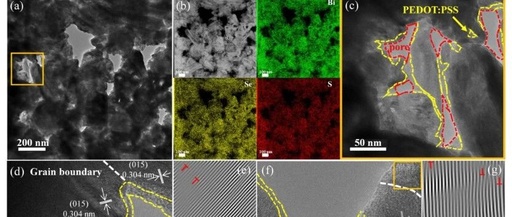

Recent Advances in Flexible Composite Thermoelectric Temperature Sensors (Songshan Lake Materials Laboratory AFM)

Recent Advances in Flexible Composite Thermoelectric Temperature Sensors (Songshan Lake Materials Laboratory AFM)

Thermal energy is an indispensable form of energy in modern society, but its uncontrolled accumulation can easily lead to safety accidents, making intelligent temperature sensing and early warning technologies crucial. Among various temperature-sensitive materials, thermoelectric (TE) materials are considered ideal solutions due to their unique advantage of directly converting temperature differences into electrical signals without … Read more

Third Additive Science Article on 3D Printing Technology in 2025

Third Additive Science Article on 3D Printing Technology in 2025

In February 2025, the third article in the field of 3D printing technology was published in Additive Science. Dr. Shengduo Xu, a Chinese scholar from the Austrian Institute of Science and Technology, is the first author of the article titled “Interfacial bonding enhances thermoelectric cooling in 3D-printed materials.” The researchers successfully prepared a high-performance thermoelectric … Read more