On July 19, 2023, Professor Ding Ping‘s research team from the Institute of Ecology at the College of Life Sciences, Zhejiang University, published their research findings in the international academic journal Proceedings of the Royal Society B: Biological Science, titled “The reliability of regional ecological knowledge to build local interaction networks: a test using seed-dispersal networks across land-bridge islands“.
High-precision ecological networks help enhance our understanding of the interactions between species and community structure. In biodiversity surveys, investigating species interactions is often more challenging than surveying the species themselves, requiring significant fieldwork. Therefore, in recent years, ecologists have proposed many indirect methods for constructing ecological networks. Although these methods can obtain interaction data for species over large regions and long time periods, they often underestimate the impact of local environmental and geographical factors on species interactions. Thus, a key question in ecological network research is how to appropriately use non-direct sampling methods to construct local ecological networks.
This study focused on frugivorous birds and fruiting plants on the land-bridge islands of Qiandao Lake in Zhejiang Province, proposing the idea of constructing interaction networks for individual islands using interaction data from the entire Qiandao Lake region and the species pool of local islands. The study demonstrates the feasibility and application prospects of constructing local species interaction networks using regional ecological information, providing critical reference information for ecological network research in biogeography and macroecology.
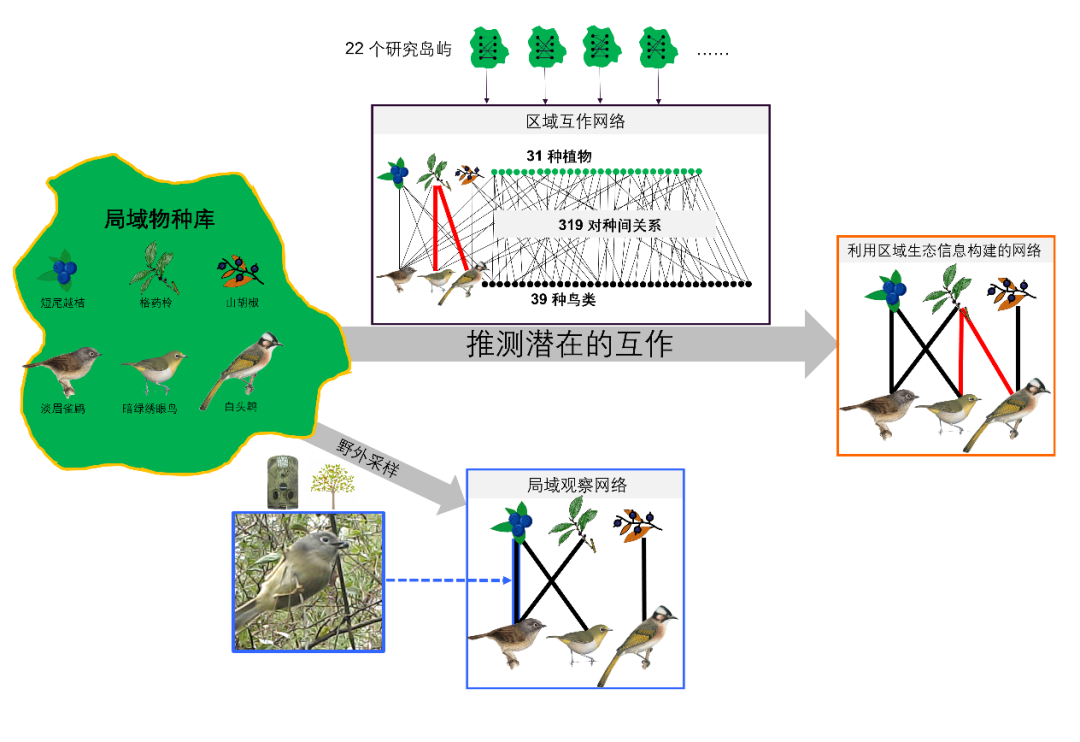
Figure 1: Conceptual framework for constructing local ecological networks using regional ecological information
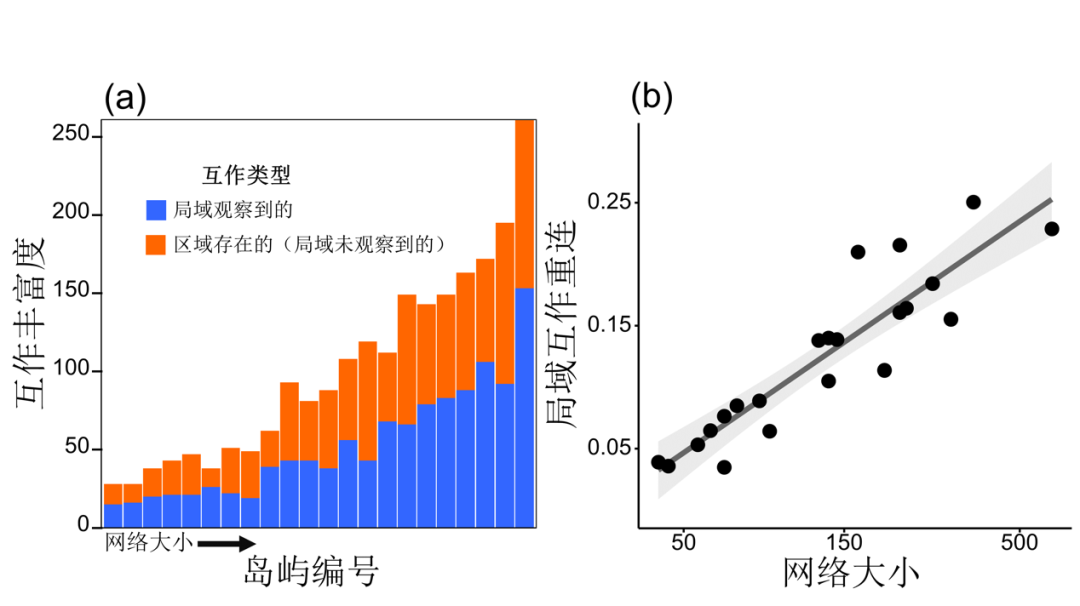
Figure 2: Proportions of different interaction types (a) and the relationship between local interaction reconnections and network size (b)
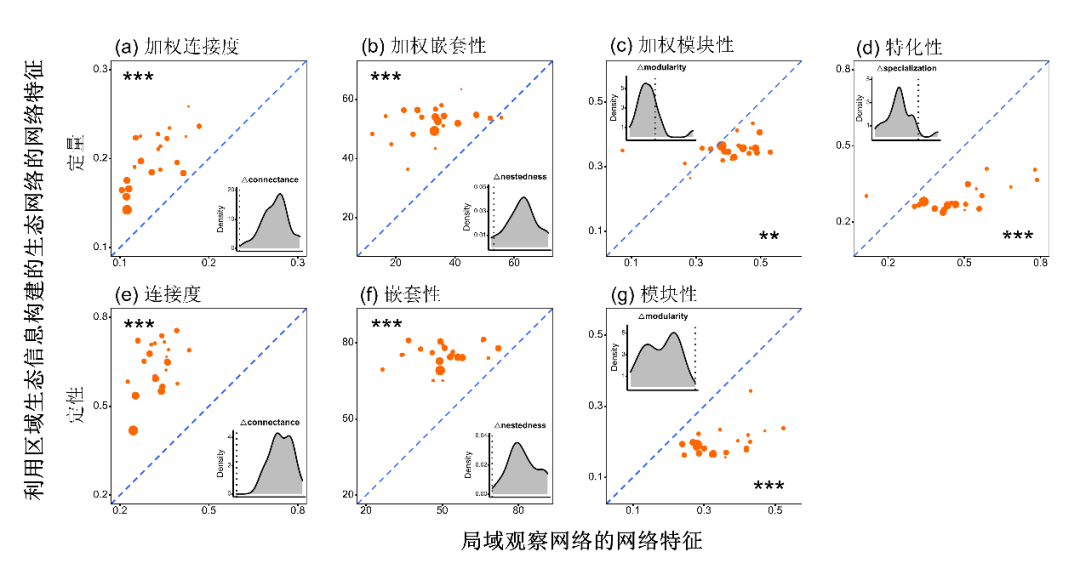
Figure 3: Differences in network characteristics between local observation networks and ecological networks constructed using regional ecological information
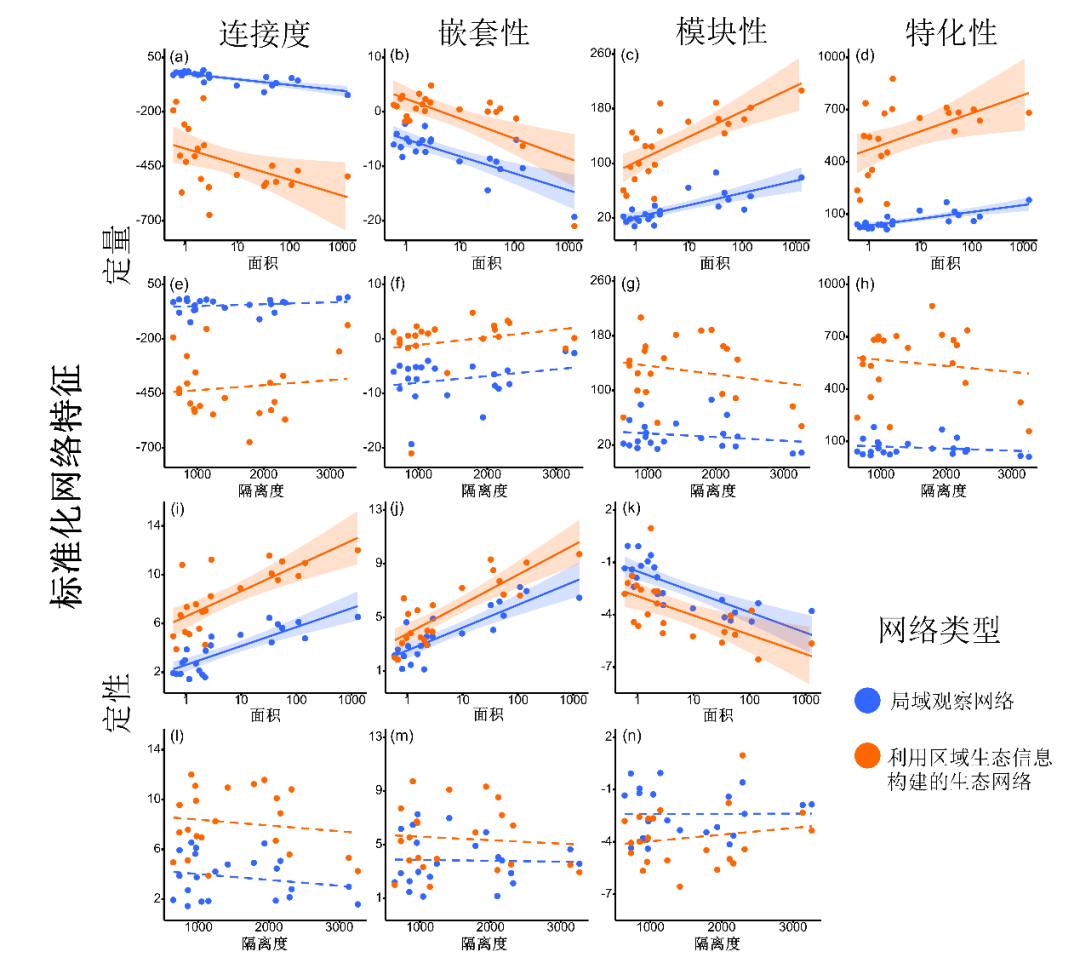
Figure 4: Relationship between standardized network characteristics of local observation networks and ecological networks constructed using regional ecological information and island attributes
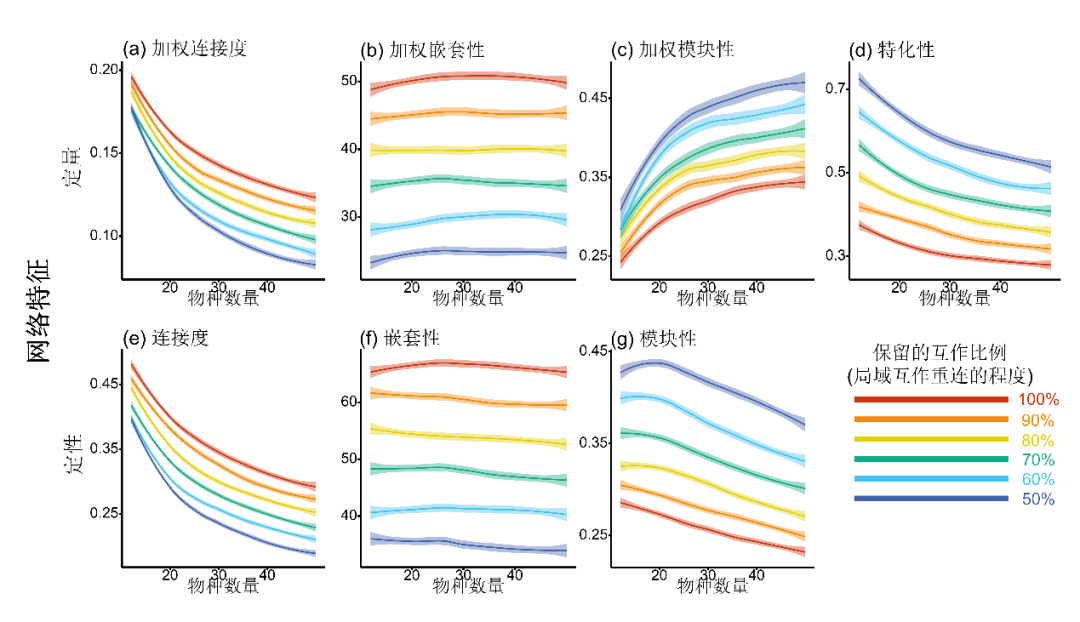
Figure 5: Response of network characteristics of ecological networks constructed using regional ecological information to changes in species numbers and local interaction reconnections

Doctoral students Zhu Chen from Zhejiang University and Li Wande from the School of Ecology and Environmental Sciences at East China Normal University are co-first authors, while Professor Ding Ping from Zhejiang University and Professor Si Xingfeng from East China Normal University are co-corresponding authors. Researcher Ahimsa Campos-Arceiz from the Xishuangbanna Tropical Botanical Garden, Associate Professor Bo Dalsgaard from the University of Copenhagen, postdoctoral researcher Ren Peng, doctoral students Zhang Xue, Si Qi, Sun Minghao, and master’s students Wang Duorun and Kang Yi from East China Normal University are co-authors. This research was supported by the National Natural Science Foundation, the Zhejiang Provincial Natural Science Foundation, the Shanghai High-level Talents Program (Oriental Scholar), the Qianjiangyuan National Park Research Project, and the National Scholarship Fund.

Team Introduction

Professor Ding Ping has been engaged in teaching and research in ecology, zoology, and conservation biology since 1983, particularly conducting long-term research in the fields of avian ecology and community ecology. The main research areas include: 1) Animal ecology; 2) Community ecology and island biogeography; 3) Ecology and conservation biology of rare and endangered species. In recent years, Professor Ding has focused on research related to habitat fragmentation effects, species diversity and community ecology, and island biogeography, exploring the spatiotemporal patterns and maintenance mechanisms of species diversity and the impact of human disturbances on species and community diversity. At the same time, he conducts various natural reserve and regional biodiversity surveys and monitoring, ecological impact assessments of major engineering projects, bird habitat restoration and construction, ecological education and airport bird strike prevention, as well as biodiversity conservation decision-making consulting.
The research field of Professor Ding Ping’s team is animal ecology and conservation biology, which has been conducting ecological and biodiversity research in Qiandao Lake for over twenty years, establishing the Qiandao Lake Ecological Field Scientific Observation and Research Station and long-term monitoring lines for birds, accumulating rich field survey data. To date, they have published over 160 papers in domestic and international academic journals such as Nature Ecology & Evolution, Ecology, Journal of Animal Ecology, Methods in Ecology and Evolution, Frontiers in Ecology and the Environment.
Welcome to visit Professor Ding Ping’s personal homepage:
https://person.zju.edu.cn/pingding
Email: [email protected]
Related Reading✦
(1) Professor Ding Ping’s team at the Institute of Ecology publishes in Nature Ecology & Evolution, revealing that forest edges buffer the negative impact of habitat area reduction on pollination networks
(2) Professor Ding Ping’s research team at the College of Life Sciences publishes in Methods in Ecology and Evolution, proposing a new integrated animal tracking technology
The original link is as follows or you can click the “Read the original” at the end to jump directly:
https://royalsocietypublishing.org/doi/10.1098/rspb.2023.1221

Image source | College of Life Sciences official website
Article edited by | College New Media Center Yang Yanqing
Editor | Wang Linjia Zhang Xiaoyi