Click the blue text to follow us
Nanozymes
01
Research Background
Piezocatalytic therapy has garnered attention as a non-invasive treatment strategy due to its ability to generate reactive oxygen species (ROS) through ultrasound activation with low oxygen dependency. However, its therapeutic efficacy is limited by the low charge carrier separation efficiency in piezoelectric materials. Recent research on piezoelectric materials has primarily focused on A-site chemical doping, while the influence mechanism of B-site doping on piezoelectric performance remains unclear, and precise control strategies for their electronic structure and chemical bonds have not been thoroughly explored.
Professor Yang Piaoping’s team at Harbin Engineering University successfully designed an iron-doped rare-earth hexagonal manganite nanomaterial through a synergistic strategy of B-site doping, polarization engineering, and chemical bond reconstruction, significantly enhancing its piezocatalytic performance and achieving synergistic tumor treatment under ultrasound activation.
02
Research Content
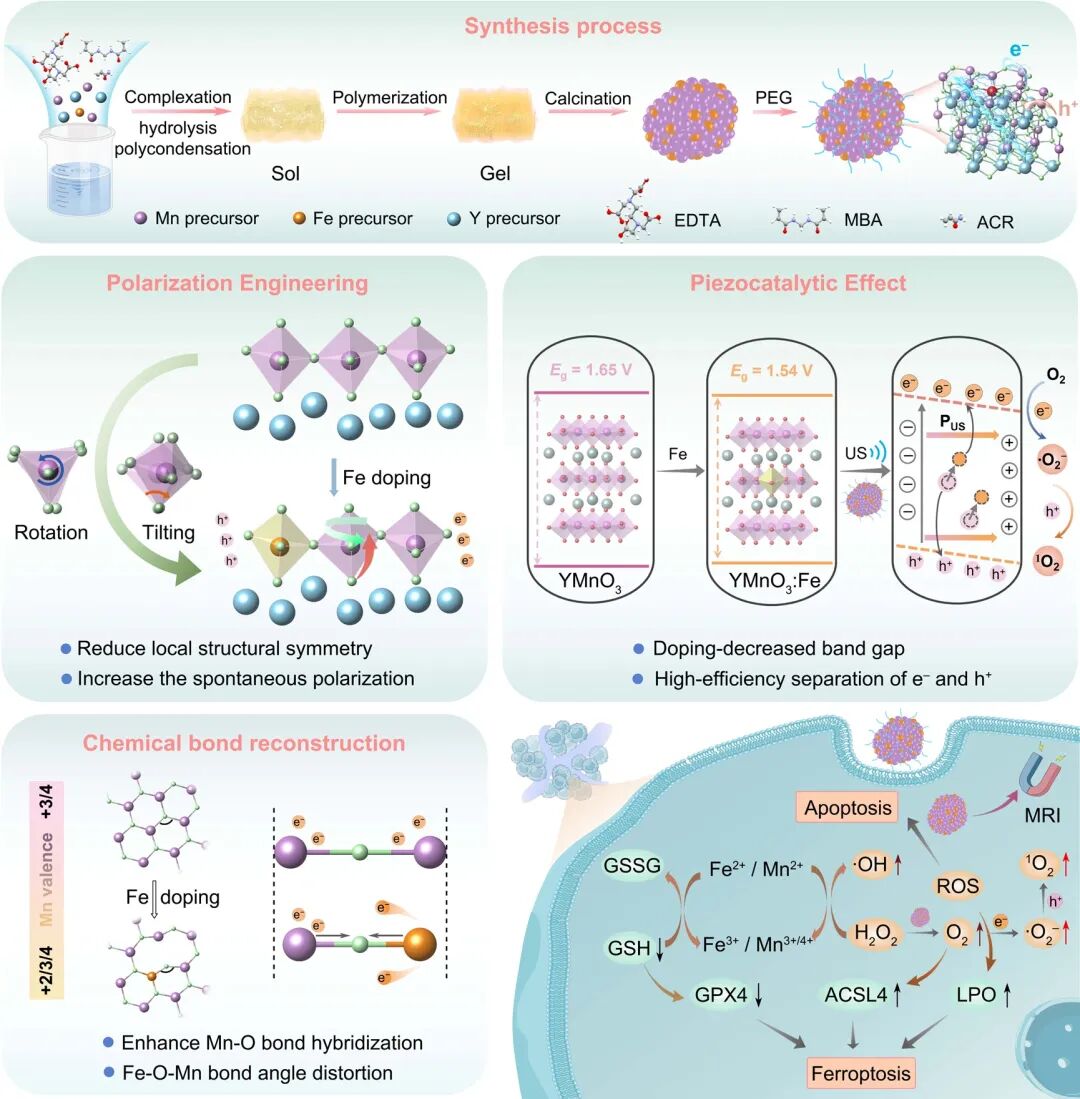
Figure 1. Synthesis process of YMnO3:Fe NPs, enhanced piezocatalysis, and therapeutic mechanism schematic
Based on the analysis of the performance bottlenecks of piezoelectric materials, hexagonal yttrium manganite with a high Curie temperature and narrow optical bandgap was selected as the research object. A B-site Fe3+ doping scheme was proposed through the analysis of doping strategies. This scheme optimizes material performance through a two-step strategy: the first step involves inducing the tilting of the MnO5 bipyramidal structure through Fe3+ doping, enhancing the spontaneous polarization of the crystal; the second step involves reconstructing chemical bonds through the formation of Fe-O-Mn bonds, optimizing electron transport, thereby improving the overall piezoelectric and catalytic activity of YMnO3. By comparing the piezoelectric performance and catalytic activity of YMnO3 materials with different Fe doping concentrations (0%, 3%, 5%, 7%, 10%), the 5% Fe-doped YMnO3 sample (YMnO3:Fe) was selected as the optimal material for subsequent studies.
First, the piezoelectric performance and enzyme-like activity of YMnO3:Fe were investigated. Compared to undoped YMnO3, the spontaneous polarization intensity of YMnO3:Fe was significantly enhanced, with a piezoelectric coefficientd33 reaching 2.02 nm V-1. YMnO3:Fe NPs exhibited various enzyme-like activities, including peroxidase, oxidase, and catalase. Since piezoelectric materials can convert mechanical energy into electrical energy, experiments further tested the ability of YMnO3:Fe to generate ROS under ultrasound irradiation. The results indicated that YMnO3:Fe could cascade produce various ROS, including·OH, O2·–, and1O2, demonstrating a significant enzyme-catalyzed-piezocatalytic synergistic amplification effect.
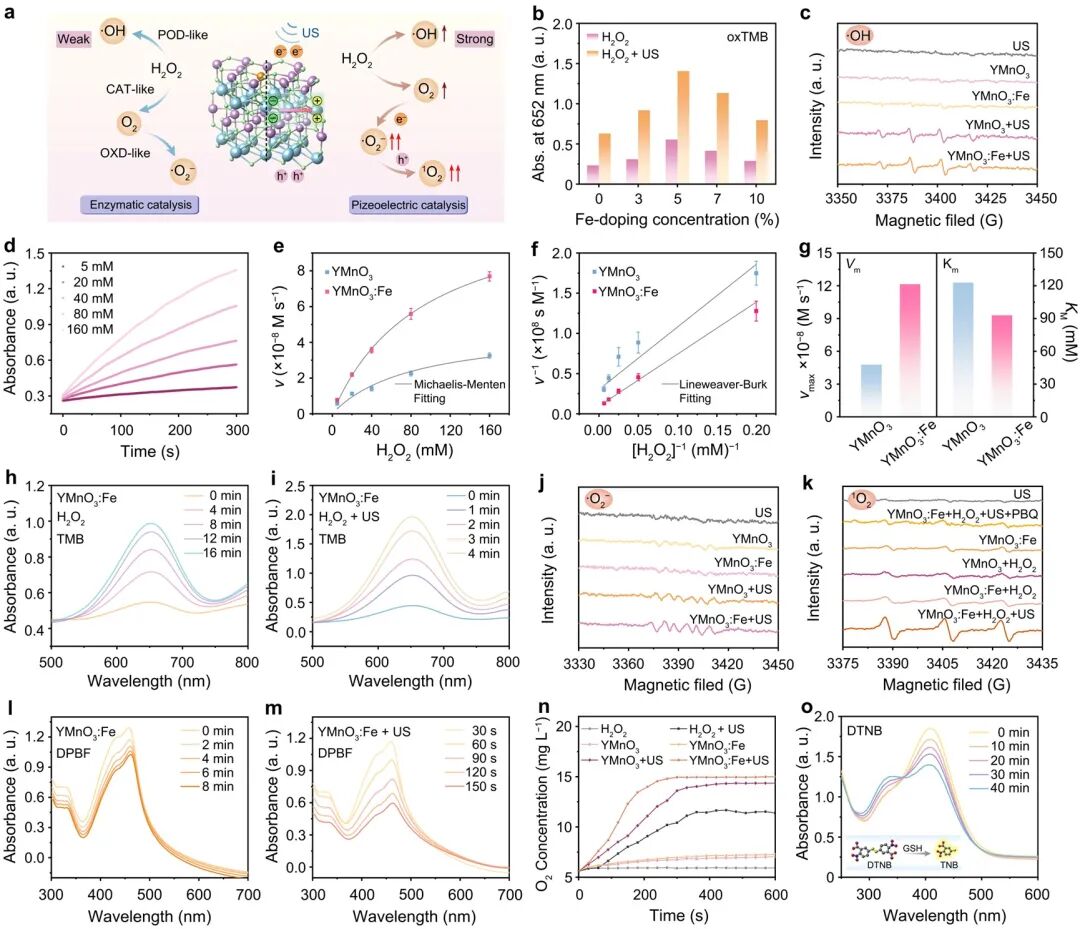
Figure 2. Enzyme-like and piezocatalytic performance of YMnO3:Fe
Next, the anti-tumor mechanism of YMnO3:Fe was explored, using CT26 tumor cells as a model. Confocal laser scanning microscopy recorded the ROS generation and lipid peroxidation of YMnO3:Fe within cells. Under ultrasound irradiation, the green fluorescence signal within the cells was significantly enhanced, indicating a large generation of ROS. To evaluate its induced ferroptosis effect, the experiment further employed Western blot analysis. The results showed that YMnO3:Fe downregulated GPX4 and upregulated ACSL4 under ultrasound action, leading to the accumulation of lipid peroxides and successfully activating the ferroptosis pathway. Additionally, mitochondrial membrane potential detection and flow cytometry results indicated that material treatment led to a decrease in mitochondrial membrane potential and a significant increase in cell apoptosis rate, with the apoptosis rate in the YMnO3:Fe-PEG + US treatment group reaching 77.4%. These results suggest that YMnO3:Fe effectively induces ferroptosis and apoptosis in tumor cells through explosive ROS generation.
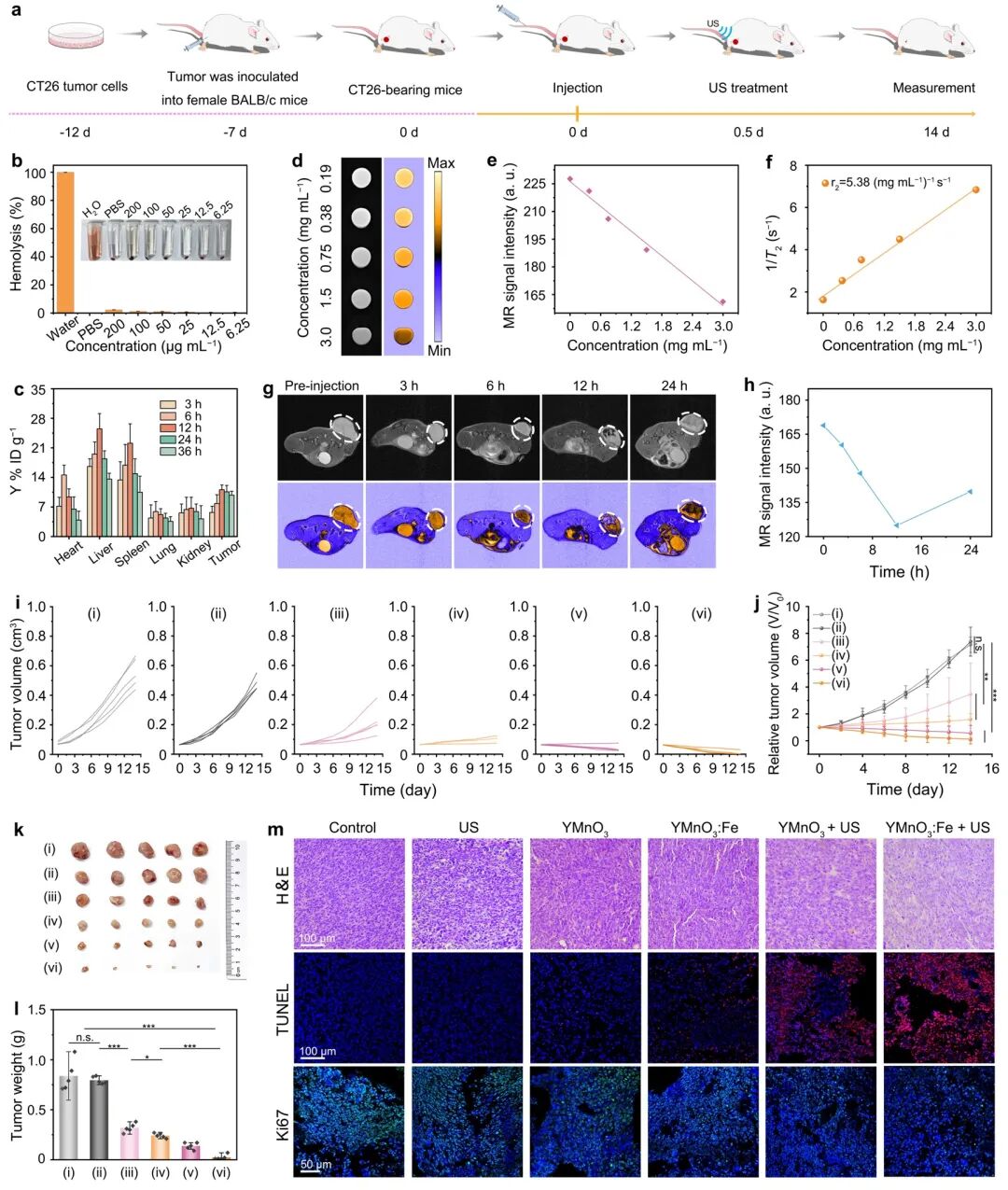
Figure 3. In vitro anti-tumor effect assessment of YMnO3:Fe
Furthermore, the magnetic resonance imaging capability of YMnO3:Fe was studied. First, the T2 weighted MRI signals of different concentrations of YMnO3:Fe were tested in vitro, showing a concentration-dependent signal darkening effect. Subsequently, in a CT26 tumor-bearing mouse model, tail vein injection of YMnO3:Fe resulted in the strongest MRI signal change at the tumor site after 12 hours, proving its effective accumulation in the tumor. Therefore, YMnO3:Fe can serve as a T2 weighted MRI contrast agent for in vivo treatment monitoring.
Through the above studies, YMnO3:Fe has been demonstrated to possess excellent piezocatalytic performance, multi-enzyme activity, and MRI functionality. Therefore, further exploration of the therapeutic effect of YMnO3:Fe on live tumors is warranted. Observations from tumor volume measurements and tissue section staining results indicate that YMnO3:Fe significantly enhances tumor treatment effects under ultrasound activation.
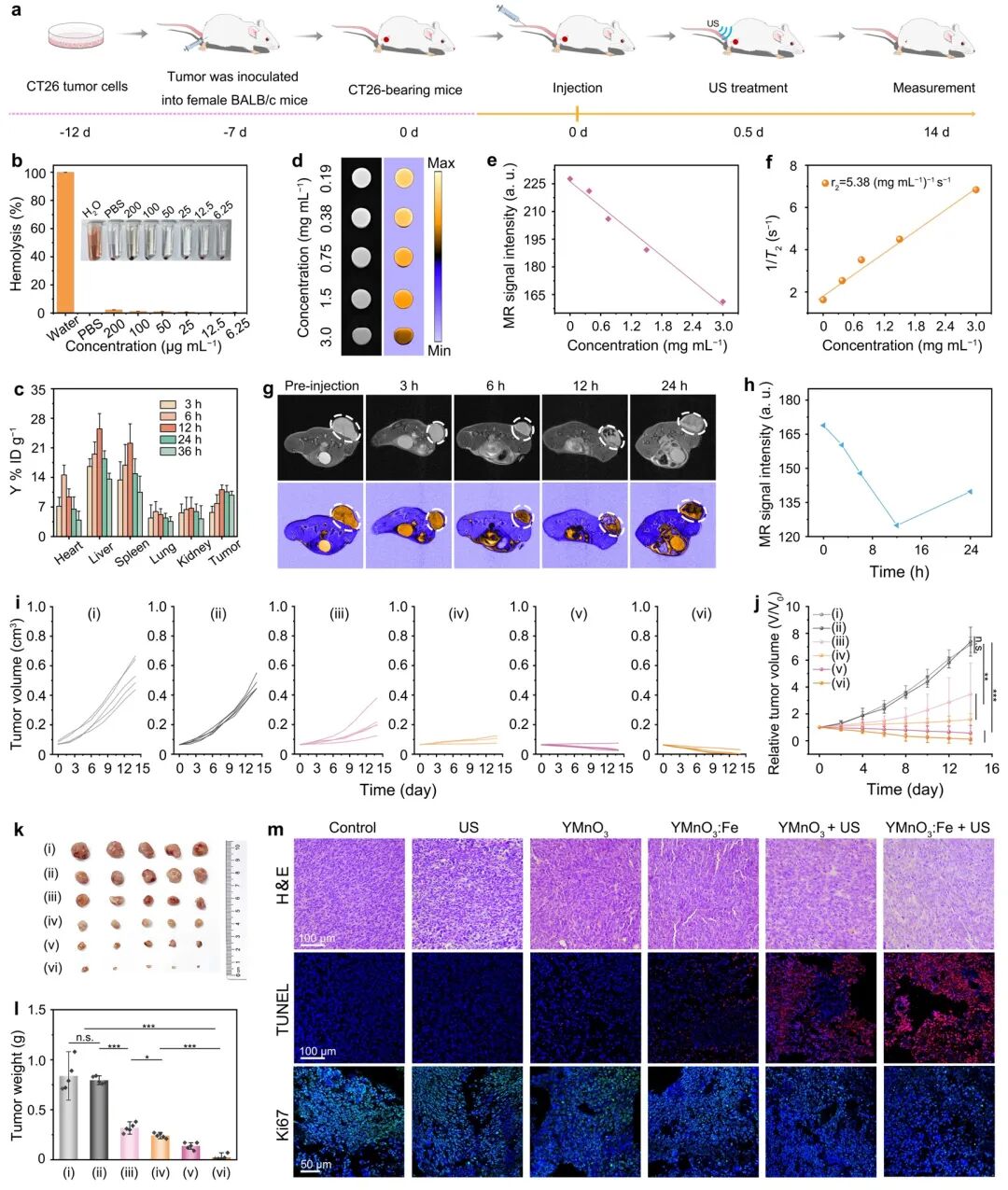
Figure 4. In vivo MRI imaging and anti-tumor performance of YMnO3:Fe
03
Conclusion and Outlook
In summary, this work proposes that B-site Fe3+ doping is an effective strategy to enhance the piezoelectric performance of hexagonal manganites by analyzing the key bottlenecks of piezocatalytic therapy, and that the polarization engineering and chemical bond reconstruction of metal clusters are two key factors affecting their catalytic activity. Based on this, an Fe-doped YMnO3 nanomaterial was constructed, which exhibits excellent piezocatalytic activity, multi-enzyme activity, and MRI functionality, effectively killing tumors and inducing ferroptosis. Currently, research on B-site doping-induced enhancement of piezocatalytic performance is still limited, and more investigations into the structure-activity relationship of piezocatalysis are urgently needed, such as optimizing the position and type of doping elements and the distortion modes of crystal structures. We believe that with the cross-integration of nanozymes and piezocatalysis, this mechanism-driven strategy is expected to guide the rational design of future integrated diagnostic and therapeutic nanoplatforms in the near future.
This research work titled “Polarization Engineering and Chemical Bond Reconstruction in Rare-Earth Hexagonal Manganite via Fe3+-Occupied B-Site Doping for Piezocatalytic Therapy and Ferroptosis” was published in the Journal of the American Chemical Society. The first author is Yang Meiqi, a doctoral student from the School of Materials Science and Chemical Engineering at Harbin Engineering University, and the corresponding authors are Professors Gai Shili and Yang Piaoping from Harbin Engineering University.
· Previous Recommendations
2024 | Nanozyme Research Artwork Exhibition
“Nanozymes” Reading Journey | Invitation · Books are as affectionate as old friends
Nanozymes selected as one of the World Economic Forum’s Top 10 Emerging Technologies for 2025
J. Am. Chem. Soc. | Natural Nitrogenase-Inspired Strategy, Fe–Mo Bimetallic Biomimetic Catalyst Aids Green Ammonia Synthesis
J. Am. Chem. Soc. | Amorphization Solves 4f Electron Regulation Problem, Rare Earth Nanozymes Achieve Efficient Anti-Tumor Activity
Written by: Yang Meiqi
Reviewed by: Cui Xiaomiao
Edited by: Zhang Zuhao