Happy Mother’s Day感恩母亲节Thank you for giving us lifeand the most precious love beyond lifeYou raised me, and I will accompany you as you grow old Click the blue text
 Follow us
FOCUS ON US
Recently, many friends have noticed that some beverage sales pages, product packaging, and display cases have introduced nutritional grading labels, categorizing beverages into four levels: A, B, C, and D. Many are unclear about the criteria for these levels, what they represent, and how to choose healthier drinks based on them. Let’s explore:
Beverages are classified into four levels (A to D) based on the amount of sugar and saturated fat per 100ml.
Level A:Less than 1g of sugar per 100ml,and an important condition is that it must not contain artificial sweeteners.
Level B:Up to 5g of sugar per 100ml. If a zero-added-sugar beverage contains no added sugars or saturated fats, it still falls into Level B.
Level C:5-10g of sugar per 100ml.
Level D:More than 10g of sugar per 100ml.
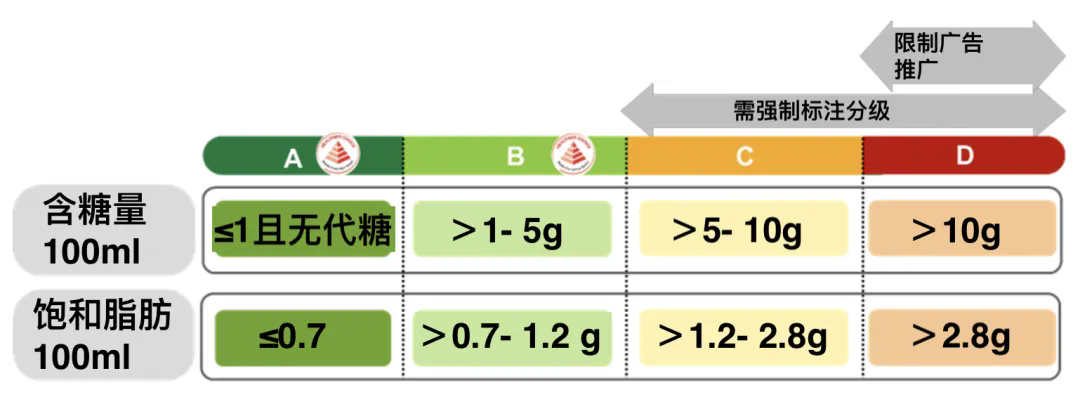
A—B—C—D Beverage Grading
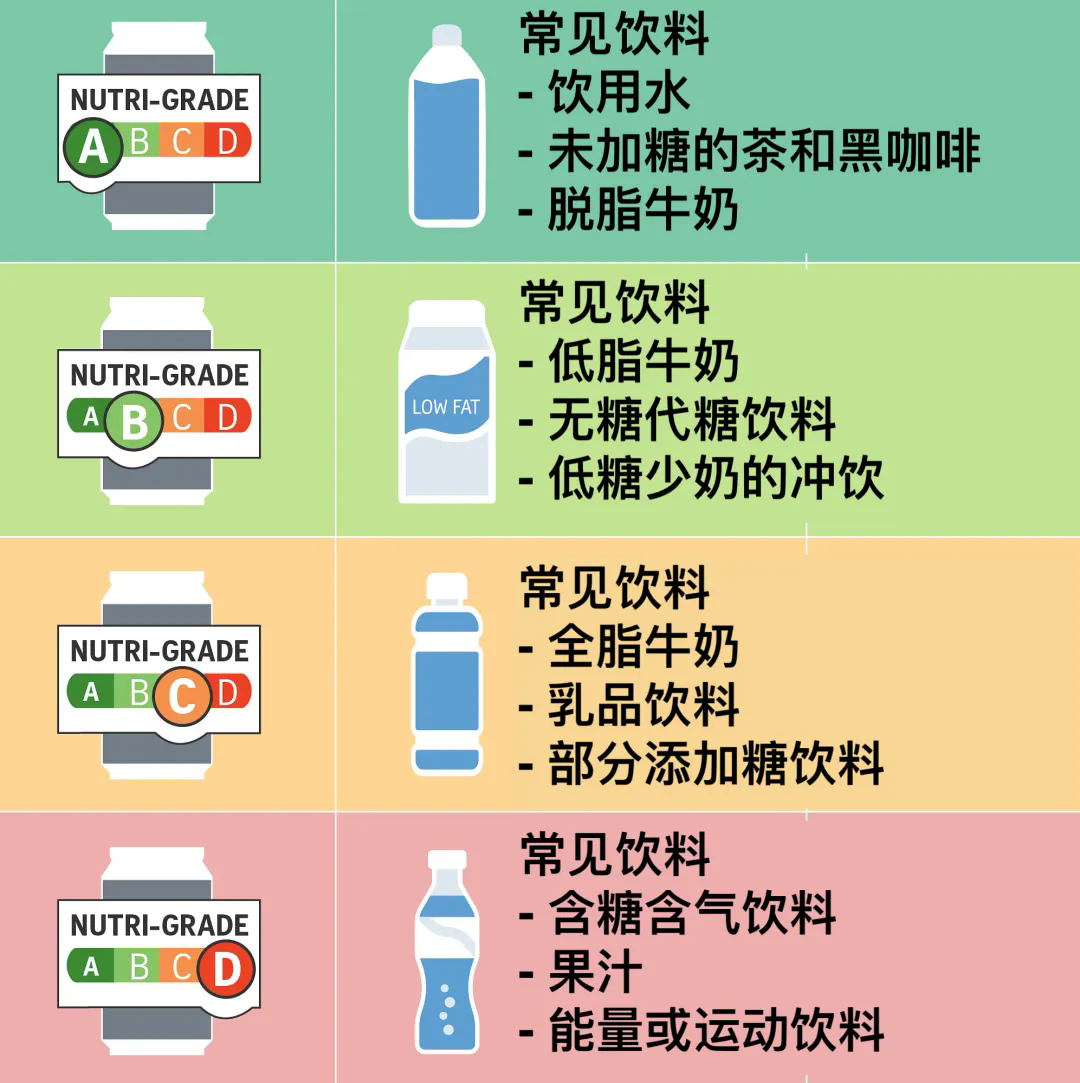
One surprising discovery is that, from the perspective of sugar content, the real culprits are not carbonated drinks, but rather dairy-containing fermented drinks, probiotic drinks, and what are generally perceived as healthier options like soy milk and fruit juices.
These drinks’ inherent “healthiness” seems to obscure the fact that they are not actually “healthy”. We should be cautious of these seemingly healthy drinks that are actually “added sugar traps”.
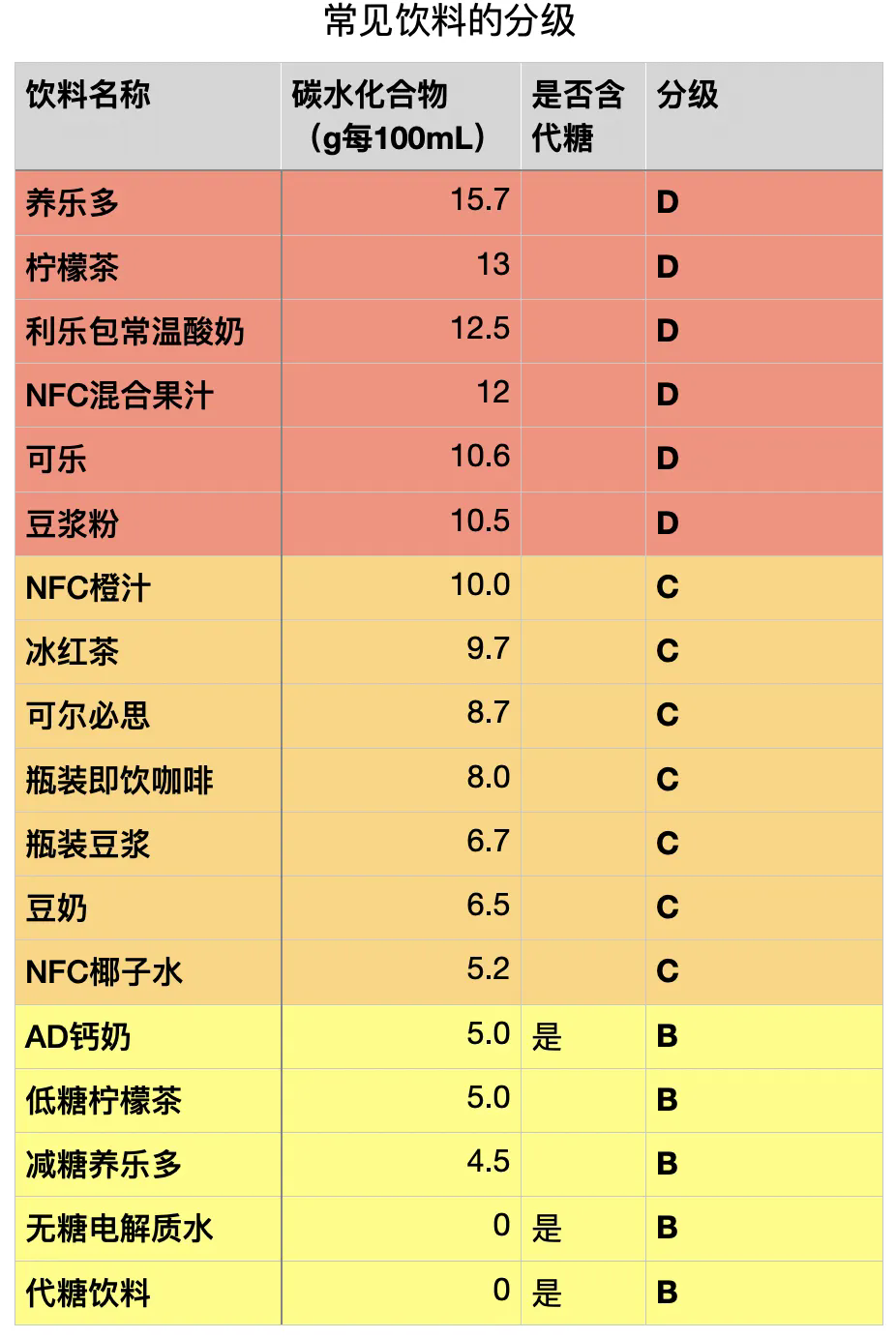
Whether it is the continuous rise in the consumption of sugary beverages or the lack of standardized nutritional labeling, it indicates that the current environment is more likely to lead to “obesity” rather than “promote health”. We hope that beverage grading will make us aware that most drinks are unlikely to reach Level A, prompting us to think more critically and make healthier choices when purchasing.

Reviewed by: Zhang Jing
Edited by: Health Education Department
Contributed by: Nutrition Department