A new study from Northwestern University is redefining the approach to obesity treatment. The research team has developed a system consisting of three wearable sensors that accurately identify five types of binge eating by capturing individuals’ eating behaviors in their daily lives, paving the way for personalized interventions.
The findings of this study were published in the journal npj Digital Medicine, titled “Unveiling overeating patterns within digital longitudinal data on eating behaviors and contexts.” The research team captured thousands of hours of eating data from participants through the sensors, discovering that binge eating behaviors are not a single pattern but can be categorized into five distinct types:
Takeout: Binge eating behavior characterized by an obsession with takeout or delivery food;
Overeating at Dinner Parties: Excessive intake during social dinners;
Late Night Cravings: Compulsive consumption of snacks late at night;
Unrestrained Pleasure Eating: Spontaneous and pleasurable binge eating behavior;
Stress-Driven Evening Snacking: Snack intake driven by anxiety.
Dr. Nabil Alshurafa, the study’s corresponding author and an associate professor in behavioral medicine and computer engineering at Northwestern University, noted: “Binge eating is a major contributor to obesity, yet most current treatments overlook the subconscious habits driving these behaviors. This study provides a clear roadmap for personalized interventions.”
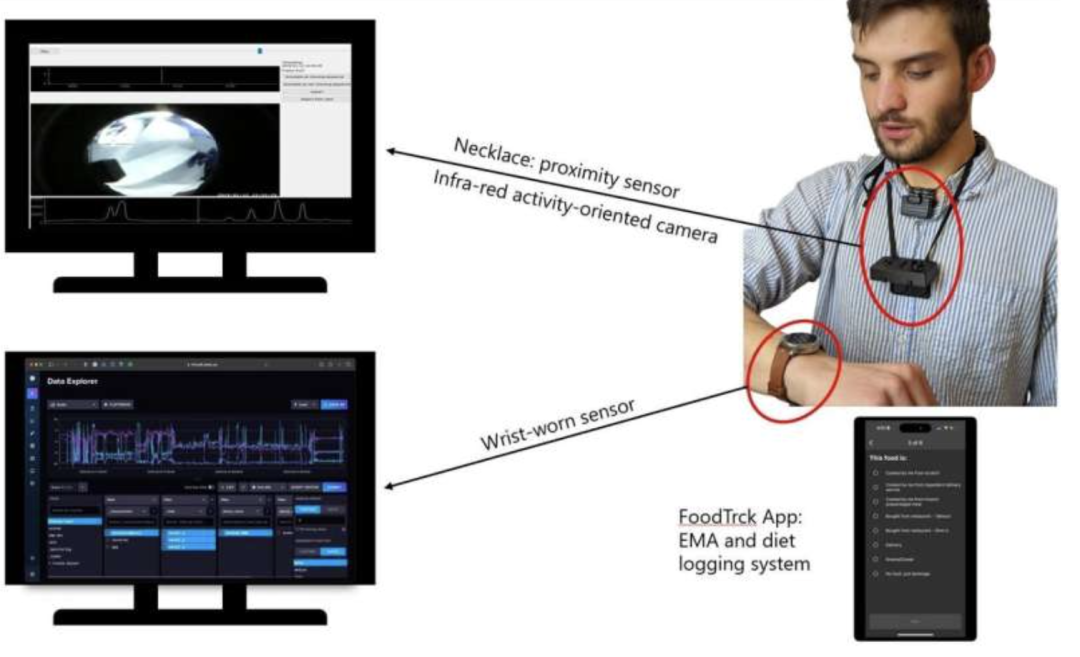
In the study, 60 obese adults wore three types of sensors: a necklace that records eating behavior, a wristband that tracks activity, and a specially designed body camera. Simultaneously, they recorded emotion and environmental snapshots related to eating through a smartphone app (e.g., who they were dining with, the activity at the time, etc.). These devices captured details such as participants’ eating speed, chewing frequency, and hand movements.
HabitSense is the world’s first patented activity-sensing camera that activates recording only when food enters its field of view using thermal sensing technology, thus protecting the privacy of bystanders. This design differs from traditional wide-angle cameras or wearer perspective cameras, focusing on recording behavior rather than the scene, reducing privacy concerns while capturing critical data.
The NeckSense necklace is another breakthrough technology that accurately records eating behaviors, including chewing speed and eating frequency. The research team stated that this data helps reveal hidden eating habits, opening new avenues for obesity treatment.
The research team indicated that these five binge eating patterns reflect the complex relationships between environment, emotions, and habits. With this data, scientists can tailor interventions for individuals. For example, for the “stress-driven evening snacking” type, interventions could focus on emotional management and stress relief; for the “late night cravings” type, healthier nighttime eating alternatives could be designed.
Dr. Farzad Shahabi, the first author of the study, stated: “Binge eating is not just a matter of willpower. With these sensors, we can reveal hidden eating patterns in the real world that are related to emotions, behaviors, and environments. Seeing these patterns emerge from the data is like turning on a light in a room we’ve been trying to navigate for a long time.”
The research team is currently collaborating with clinicians to develop personalized behavioral intervention programs based on these findings to help obesity patients manage their eating habits more effectively.