OpenAI has collaborated with Jony Ive to complete a prototype of AI hardware, aiming to launch a “more tranquil than smartphones” intelligent device by 2026, challenging Apple’s dominance and reshaping the paradigm of human-computer interaction.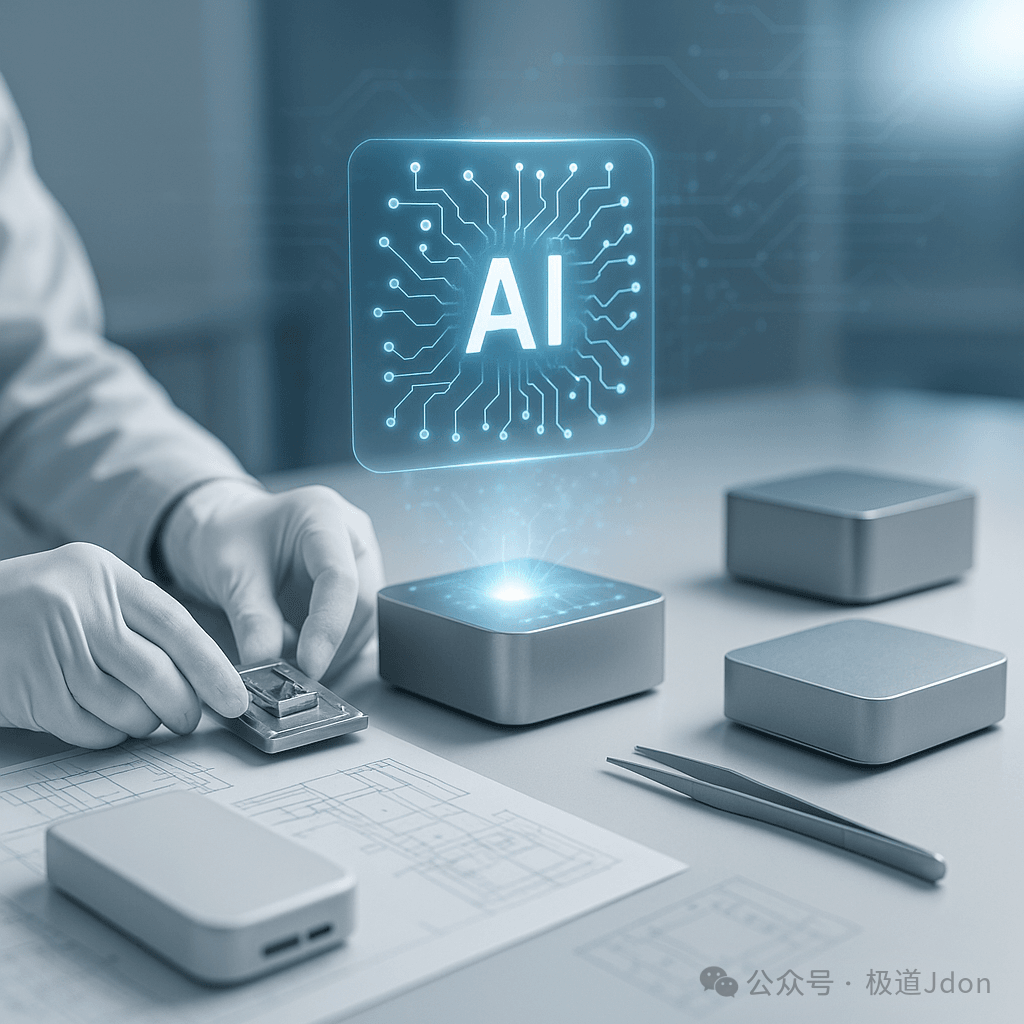
OpenAI, in collaboration with Apple’s legendary designer Jony Ive, has completed the first generation of AI hardware prototypes! This signifies that the company, which once focused solely on software and created a global sensation with ChatGPT, is now stepping boldly into the hardware arena, with the goal not of creating another smartwatch or headphones, but of completely redefining our understanding of “smartphones”.
Sam Altman has openly acknowledged that this device can “know everything you have ever thought, read, or said,” and can intelligently filter which information is worth your attention and which noise to block out. This is not science fiction; it is OpenAI’s first deliverable after acquiring Jony Ive’s startup, io, for $6.4 billion. More crucially, they plan to officially launch it between 2026 and 2027—perfectly timed with Apple’s significant upgrade to Siri being postponed until 2026.
Who is Jony Ive? He is the soul behind the iPhone, iPad, and MacBook, a genius whom Steve Jobs described as someone who could “change the world through design.” Now, he no longer works for Apple but has chosen to partner with the hottest AI company globally to create a digital companion that feels “as tranquil as sitting by a lakeside cabin.” This is not just product competition; it is a revolution in computing paradigms: shifting from “you chasing notifications” to “the world proactively quieting down for you.”
From a Pure Software Company to a Hardware Player, OpenAI’s Ambition Goes Beyond Just an AI Assistant
Many people think OpenAI is just a chatbot company, but Sam Altman’s ambitions have always gone beyond that. Over the past few years, OpenAI has built the infrastructure for an AI ecosystem step by step, including OpenAPI, the GPT store, enterprise APIs, and custom models. However, Altman understands that a true “personal intelligent agent” cannot just exist within a mobile app—it needs a dedicated physical carrier. Just as the iPhone was not an upgrade of the iPod but the beginning of a new interaction paradigm, OpenAI’s goal is to create that new terminal for “ambient intelligence.”
Interestingly, they did not start from scratch to develop hardware but instead invested $6.4 billion to acquire Jony Ive’s startup, io. The logic behind this deal is crystal clear: rather than spending a decade cultivating a hardware team, it is better to bring in someone who defined modern consumer electronics aesthetics.
It is worth noting that since leaving Apple, Ive has rarely made public appearances, let alone joined an AI company. This collaboration injects iPhone-level industrial design capabilities and user experience philosophy directly into AI hardware. Coupled with OpenAI’s over 200 million monthly active users, the world’s strongest large model technology, and their newly established partnership with Foxconn—although the current collaboration focuses on AI infrastructure—who can say that they won’t manufacture this mysterious device in the future? This is no longer a question of “can it be made?” but rather “will the world change once it is made?”
Jony Ive’s Design Philosophy: From “Stunning” to “Tranquil,” AI Devices Must Heal Digital Anxiety
Jony Ive’s past design keywords were “stunning,” “minimalist,” and “seamless.” However, this time, the words he and Altman repeatedly emphasize are “tranquil,” “peaceful,” and “focused.”
Why? Because today’s smartphones have become “notification hell”—WeChat red dots, Douyin push notifications, email alerts, calendar syncs… We are torn apart by countless fragments of information, and our attention is perpetually fragmented. The AI device envisioned by OpenAI aims to end this chaos. It will not passively wait for commands like Siri, nor will it mechanically respond like Alexa.
It will act like a true personal assistant that understands you: knowing which paper you were reading in the morning, who you called at noon, and what music you want to listen to in the evening; it can determine which messages are urgent and which can wait until tomorrow; it can even automatically dim the lights and play soothing white noise when you are feeling down.
This concept of “Ambient Computing” has been touted by Google and Amazon for years but has never truly materialized. The reason is simple: they lack the deep understanding of users. With OpenAI holding GPT-4 Turbo and even GPT-5, along with vast amounts of user behavior data, it is finally possible to upgrade “intelligence” from “reactive” to “predictive.” Jony Ive’s design will make this intelligence “invisible”—without flashy screens or complex buttons, the less noticeable the device is, the stronger the experience becomes. This is precisely the feeling he describes as “like being in a lakeside cabin”: technology no longer clamors but gently surrounds you.
Is Apple Falling Behind? Siri’s Delay to 2026 Leaves OpenAI a Golden Window
While OpenAI boldly announces its hardware progress, Apple is mired in AI anxiety. According to authoritative media reports from Bloomberg and others, Apple’s planned launch of the “AI version of Siri” in 2024 has officially been postponed to 2026. This means that for the next two years, iPhone users will still be using that sluggish, limited-function voice assistant.
Meanwhile, the Android camp has already deeply integrated AI features through Gemini, and manufacturers like Huawei and Xiaomi are accelerating their self-developed large models. For Apple, this is not only a signal of technological lag but also a loosening of ecological discourse power. It is worth noting that Siri was once a pioneer in mobile AI, but ten years later, it has barely moved forward.
OpenAI is not only going to create software but also hardware, effectively bypassing mobile operating systems to create an independent AI entry point. Ironically, Foxconn—this manufacturing giant that produces 90% of the world’s iPhones for Apple—has now also established a strategic partnership with OpenAI. Although the current collaboration focuses on data centers and AI servers, the channel for hardware manufacturing has already been opened. Once OpenAI’s device goes into mass production, Foxconn is highly likely to become its manufacturer. Imagine this: the same factory assembling iPhones while also assembling OpenAI AI terminals—the latter could very well be the “terminator” of the iPhone.
Apple’s dilemma is that it must advance the AI revolution while maintaining the stability of the iOS ecosystem, whereas OpenAI has no historical baggage and can go all-in on the next generation of interaction. In this race, Apple has already started a beat behind.
The Foxconn + io + GPT Triangle is Taking Shape for OpenAI
To create a groundbreaking hardware product, having ideas alone is far from enough. You also need: top-notch industrial design, world-class manufacturing capabilities, and foundational AI technology. Over the past year, OpenAI has precisely gathered all three pieces of this puzzle.
First is design—Jony Ive’s io team, although small, has many core members from Apple’s industrial design department, well-versed in how to translate complex technology into elegant experiences.
Second is manufacturing—collaboration with Foxconn not only brings production capacity assurance but also means OpenAI can advance mass production with Apple-level quality control standards. It is worth noting that Foxconn’s Zhengzhou factory can produce 500,000 iPhones a day; this scale effect is something startups can hardly reach.
Finally, the AI engine—the GPT series models are already the global de facto standard, and OpenAI is secretly training a more powerful GPT-5, which is rumored to possess long-term memory, cross-application reasoning, and even emotional understanding capabilities.
The combination of these three elements creates a “dimensionality reduction strike” advantage: other AI hardware companies may have models (like Rabbit R1), but they lack Ive’s design; they may have design (like Humane AI Pin), but they lack the ability to implement manufacturing; they may have manufacturing (like Xiaomi), but their model capabilities are still weak.
OpenAI, holding the strongest AI, the best design, and the best manufacturing—this “iron triangle” makes it the only player that can truly challenge the smartphone hegemony. More importantly, they do not intend to create a “replacement for smartphones” but rather the “first device of the post-smartphone era.” This strategic vision is what makes them most formidable.
What Kind of AI Hardware Do Users Really Need? A Paradigm Shift from “Tools” to “Companions”
Over the past decade, there have been numerous failures in smart hardware: Google Glass was criticized for invading privacy, Amazon Echo became a kitchen alarm clock, and Meta’s Ray-Ban glasses are rarely worn daily.
Why? Because they all still operate under a “tool mindset”—you actively invoke them, and they passively respond. However, what humans truly need is a “digital companion” that can proactively understand, anticipate, and accompany them. This is where OpenAI’s ambition lies. Their device will not have a main screen for you to swipe through, nor will it force you to download apps. Instead, it could be a wearable pendant, a desktop box, or even embedded in your home environment.
When you walk into a room, it knows you just finished a tiring meeting and automatically plays your favorite jazz music; when you get stuck reading a technical article, it gently explains key concepts; when you forget your mother’s birthday, it reminds you a week in advance. This experience is not about piling on functions but about creating an “atmosphere.”
Jony Ive once said, “Design is not about how it looks, but how it works.” OpenAI’s AI hardware aims to make “functioning” as invisible as possible—making you feel like you are not “using technology” but rather being “gently cared for by technology.” This is precisely what digital natives crave the most: reclaiming focus and inner peace in an age of information overload. If successful, this will not only be a product victory but also a reset of the values in the consumer electronics industry: shifting from “more functions” to “better experiences,” from “more active” to “more tranquil.”
The 2026 Showdown Approaches: OpenAI vs. Apple, Who Will Define the Next Decade?
The timeline is already very clear: OpenAI aims to release AI hardware between 2026 and 2027, while Apple’s AI version of Siri is also expected to launch in 2026. This means that the next two years will be a critical period for both parties’ technological reserves and ecological layouts. For Apple, it must deeply integrate generative AI into iOS 18/19 while rebuilding trust in Siri. However, the historical baggage is too heavy—Siri’s architecture is outdated, data privacy policies are strict, and cross-application calls are limited, all of which become obstacles to AI upgrades. OpenAI, on the other hand, has no such constraints and can freely design hardware OS, data flows, and interaction logic. More importantly, OpenAI has the world’s largest AI user base—200 million monthly active users of ChatGPT, which is a natural seed market. Once the hardware is released, these users are likely to be the first to try it out.
In contrast, while Apple users are loyal, they have long lost patience with Siri. This showdown is superficially a product competition but fundamentally a clash of two philosophies: Apple insists on a “device-centric” approach, where AI is just a functional module; OpenAI advocates an “AI-centric” approach, where the device is merely a carrier. Whoever wins will define the computing paradigm for the next decade. Jony Ive’s alignment may already hint at the answer— even the father of the iPhone believes that the golden age of smartphones is coming to an end.
A Spring for Creators and Educators? AI Hardware May Become a New Medium for Knowledge Lego
For users concerned about how AI will reshape education and creation, this device may bring unprecedented opportunities.
Imagine this: students wearing AI devices in class, which real-time convert the teacher’s explanations into knowledge graphs, automatically highlight key points, and generate personalized review cards; creators writing in a café, with the device quietly recording fragments of inspiration and automatically organizing them into structured drafts; teachers preparing lessons, with AI recommending the most suitable teaching cases based on students’ historical performance.
This kind of invisible intelligence is the ideal medium for “knowledge Lego”—skills are no longer locked in apps but flow, combine, and spread naturally through AI. More critically, if OpenAI opens the device’s AI capability interface, educators and creators can develop their own “intelligent modules,” such as “historical timeline generator,” “emotional resonance analyzer,” and “programming thinking coach”… These modules can be copied, shared, and disseminated like Lego blocks.
Jony Ive’s design ensures that these complex functions are presented in the simplest way, lowering the usage threshold. This is precisely the ecosystem that technology explorers dream of: powerful underlying capabilities + minimalist interaction + open creation. If OpenAI can deliver on its promises, the fields of education and content creation will usher in a new wave of productivity explosion.
Risks and Challenges: Privacy, Battery Life, User Habits, Which Barrier is the Hardest to Overcome?
Of course, the dream is beautiful, but reality is harsh. OpenAI has many hurdles to overcome.
First is privacy—if the device is to “know everything about you,” it means collecting a large amount of sensitive data. How can trust be established without causing user panic? Apple has won users over with the slogan “privacy is a fundamental human right”; can OpenAI achieve the same level of transparency?
Second is battery life. True ambient AI needs to run 24/7; can existing battery technology support this? If it requires charging twice a day, no matter how good the experience, it will be discarded.
Third is user habits. We have been trained to interact in an “active click” mode; can we accept a device that “decides for you”? Early users may find it magical, but the general public may feel out of control.
Finally, there is pricing—Jony Ive’s designs have always been expensive; if the price exceeds $2000, how will the mass market accept it?
Any one of these challenges could delay or even doom the project. But do not forget, OpenAI is not starting from scratch. They have funding, users, technology, and top talents like Ive on their side. More importantly, the times are calling for change—when young people worldwide begin to “digitally detox,” and attention becomes the scarcest resource, “tranquil technology” may be the breakthrough point.
Conclusion: This is Not Just a New Product, but a Quiet Revolution
The collaboration between OpenAI and Jony Ive, on the surface, appears to be a hardware release announcement, but in essence, it is a reflection and reconstruction of digital civilization. In an era dominated by algorithms, bombarded by notifications, and fragmented attention, they are attempting to use the power of AI and design to place the experience of “human” back at the center. If this device succeeds, it will prove that technology does not have to be noisy; intelligence can be gentle. It may not immediately replace smartphones, but it will quietly define a new era: from “connecting the world” to “returning to oneself.”