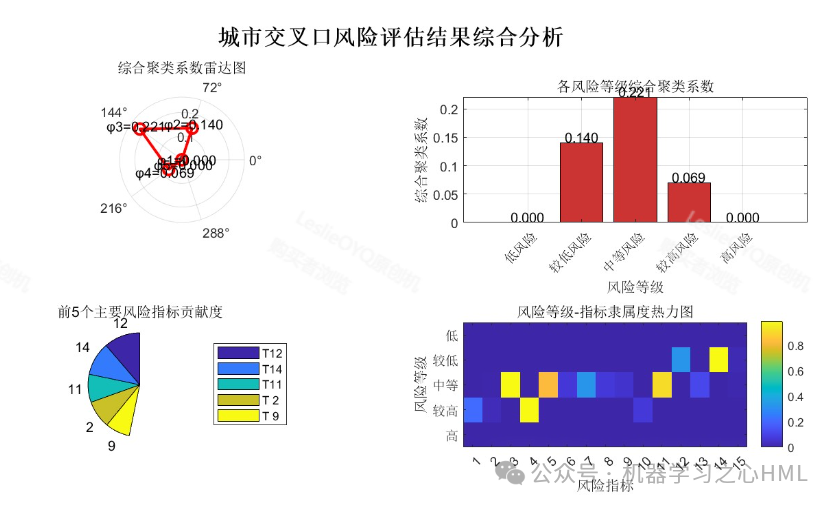
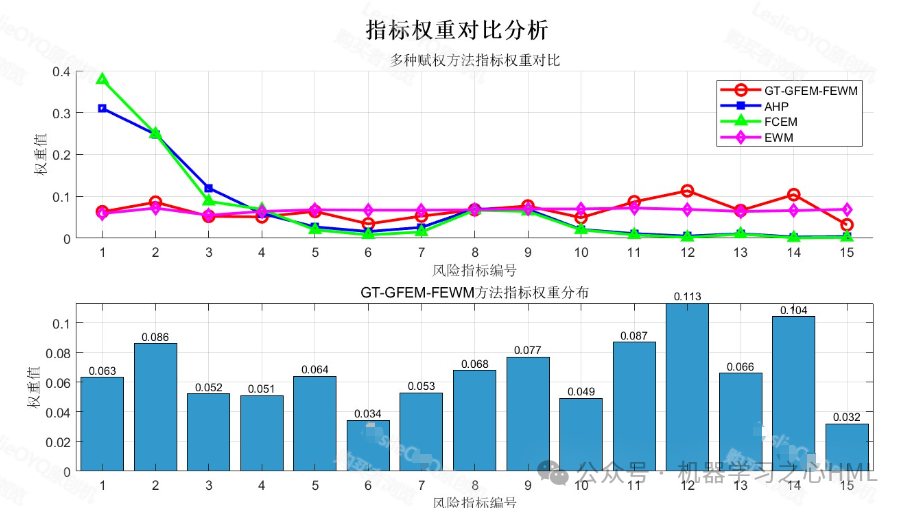
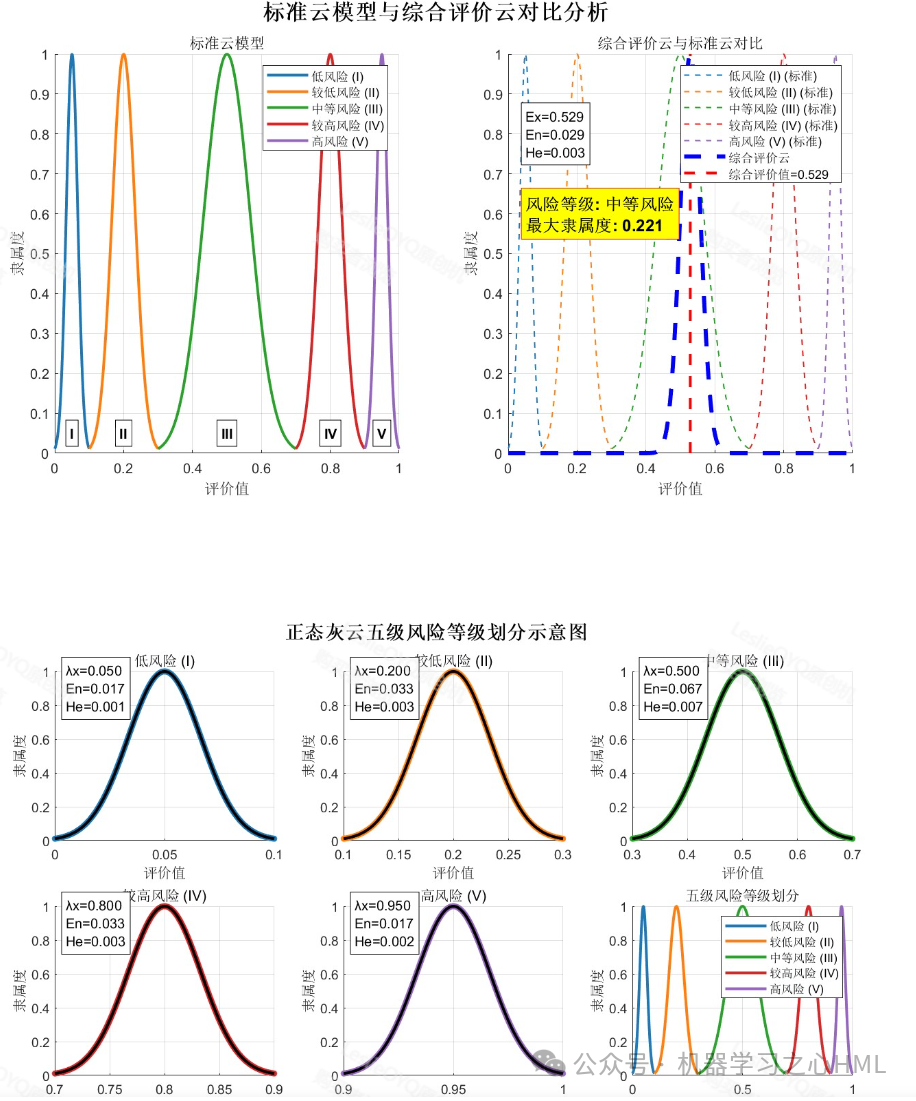
Risk Assessment Method for Urban Intersections Based on Game Theory and Combined Weighting
1. Core Idea
The core of this method lies in the concepts of “Equilibrium” and “Coordination”:
- Divide and Conquer: First, use the Subjective Weighting Method (such as AHP) and the Objective Weighting Method (such as Entropy Weight Method, CRITIC Method) to calculate the weights of risk assessment indicators from different perspectives. Subjective weighting reflects expert experience, while objective weighting uncovers data patterns.
- Game Integration: Then, treat the different weighting methods as “participants” in a game. Using game theory, find an optimal compromise weight vector that minimizes the “differences” or “conflicts” between this new weight and the weights obtained from various single methods. This is equivalent to finding a “Nash Equilibrium” point that is acceptable to all parties.
2. Method Implementation Steps
Step 1: Establish the Risk Assessment Indicator System
This is the foundation of all assessments. A scientific, comprehensive, and quantifiable set of indicators needs to be constructed. For example:
- Traffic Conflict Indicators: Number of rear-end collisions, right-angle collisions, crossing conflicts, etc.
- Traffic Flow Indicators: Traffic volume, speed, saturation, vehicle composition, etc.
- Geometric Design Indicators: Number of lanes, sight distance, channelization, turning radius, etc.
- Control Facility Indicators: Signal timing, completeness of signs and markings, lighting conditions, etc.
- Historical Accident Indicators: Accident frequency, severity, etc.
Assuming we ultimately determine <span>n</span> assessment indicators.
Step 2: Construct the Original Assessment Matrix
Step 3: Data Standardization Processing
Step 4: Calculate Subjective and Objective Weights Separately
-
Subjective Weight Calculation (using AHP as an example)
- Invite experts to conduct pairwise comparisons of indicators to construct a judgment matrix.
- Perform consistency checks (CR < 0.1).
- Calculate the eigenvector and normalize it to obtain the subjective weight vector ( W_s = (w_{s1}, w_{s2}, …, w_{sn}) ).
Objective Weight Calculation (using Entropy Weight Method as an example)
Step 5: Combined Weighting Based on Game Theory
-
Construct the Basic Weight Vector Set
-
Construct Combined Weights
-
Game Optimization Model Based on the differential properties of the matrix, the above optimization problem can be transformed into solving the following system of linear equations:
-
Calculate the Combined Coefficients
-
**Normalize and Calculate the Final Weights
Step 6: Calculate the Comprehensive Risk Value and Conduct Assessment
3. Advantages of the Method
- Scientific: Overcomes the one-sidedness of single weighting methods. AHP may overly rely on expert subjective judgment, while the entropy weight method may completely ignore the actual importance of indicators. Combined weighting achieves a dialectical unity of “experience” and “data”.
- Equilibrium: The game theory model is not designed to “overwhelm” any one method, but seeks a “consensus” or “equilibrium” solution, ensuring that the final weights neither deviate from expert experience nor contradict the inherent data patterns, making the results more convincing.
- Flexibility and Scalability: This method is not limited to AHP and the entropy weight method. Other subjective methods (such as the Delphi method) and objective methods (such as the CRITIC method, coefficient of variation method) can be easily introduced by simply increasing the number of “participants” in the game.
- Wide Applicability: This framework is not only applicable to intersection risk assessment but can be slightly modified for use in segment, regional road network, or other fields of multi-indicator comprehensive evaluation problems.
Conclusion
The “Risk Assessment Method for Urban Intersections Based on Game Theory and Combined Weighting” is an advanced, systematic comprehensive evaluation model that provides strong decision support for traffic management departments to accurately identify high-risk intersections, allocate improvement resources rationally, and formulate targeted safety measures.
Code Access (non-public, please do not misuse)