Introduction:
Recently, NVIDIA officially launched its next-generation edge computing platform, Jetson Thor, designed specifically for humanoid robots and physical AI, and successfully completed verification tests with 5G IoT. This significant advancement marks a key step in the deep integration of edge computing and cellular communication technology. Notably, the ecosystem partner Telit Cinterion has successfully adapted its 5G module (including the RedCap module) to the Jetson Thor platform, providing humanoid robots with high-reliability and high-performance connectivity.
So, what does this technological integration mean? How will it drive the development of the robotics industry? Let’s delve into the technical highlights to analyze the profound significance behind this integration.
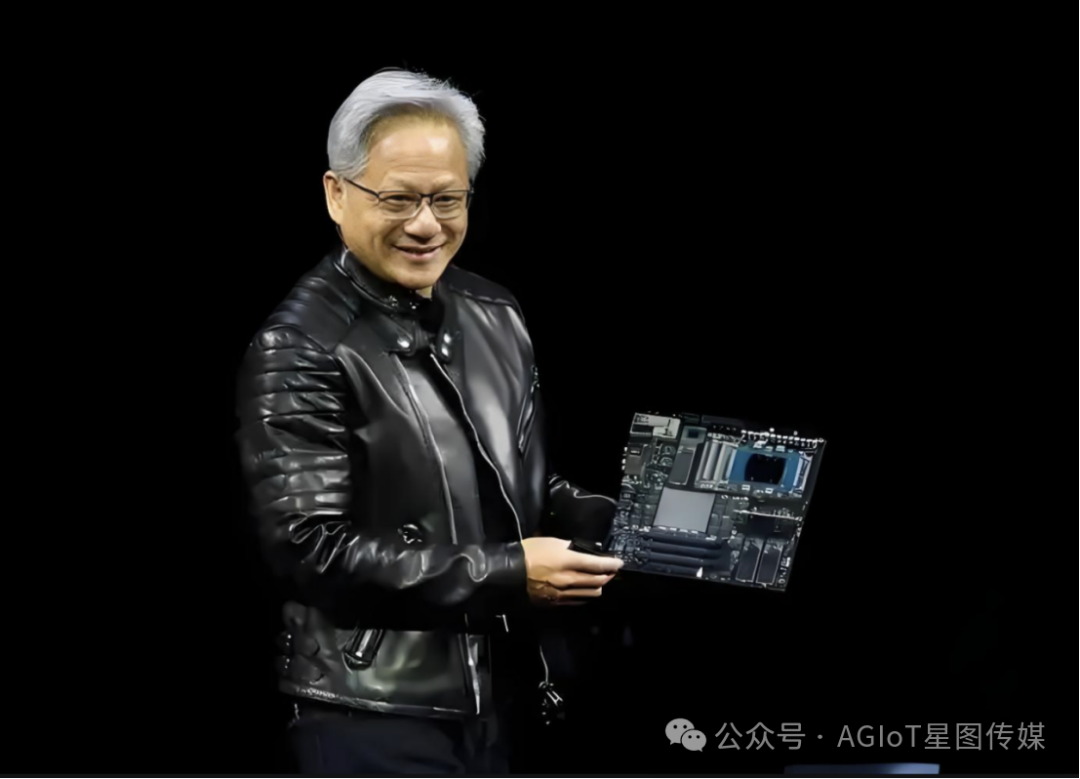
Jetson Thor Platform: The ‘Brain’ of Physical AI and Humanoid Robots
Jetson Thor is the latest member of NVIDIA’s Jetson product line, designed to handle complex physical AI tasks. It features the next-generation NVIDIA GPU architecture and powerful AI accelerators, offering the following core advantages:
1. High-Performance Computing Capability
Jetson Thor integrates NVIDIA’s next-generation AI accelerators, providing up to 275 TOPS of powerful computing power, supporting multimodal AI inference, including vision, speech, and motion control tasks, offering robust support for humanoid robots to make autonomous decisions in complex environments.
2. Real-Time Performance and Low Latency
The platform optimizes the real-time response capability of AI inference, ensuring that robots can react quickly in dynamic environments. For example, in factory, hospital, or home service scenarios, robots need to quickly identify obstacles and adjust their paths; Jetson Thor ensures millisecond-level responses.
3. Powerful Heterogeneous Computing Architecture
Jetson Thor not only supports GPU acceleration but also integrates various computing units such as CPU and NPU, achieving task parallel processing and enhancing overall efficiency. This heterogeneous architecture is particularly suitable for multitasking parallel systems like humanoid robots.
4. Mature Software Ecosystem
The Jetson platform is deeply integrated with the NVIDIA AI software stack, supporting mainstream AI frameworks such as TensorFlow and PyTorch, and providing support for ROS 2 robot operating system, significantly lowering the development threshold and accelerating product deployment.
5G RedCap Module: The ‘Nervous System’ of Humanoid Robots
RedCap (Reduced Capability) is a type of 5G new radio (NR) terminal defined by 3GPP in Release 17, designed for mid-to-high-speed IoT devices. Compared to traditional 5G devices, RedCap significantly reduces power consumption and costs while maintaining high-performance connectivity, making it ideal for edge AI devices like humanoid robots.
1. High Bandwidth and Low Latency
RedCap supports the Sub-6GHz frequency band, providing up to 200 Mbps downlink speed and 100 Mbps uplink speed, meeting the needs of robots to upload high-definition video and sensor data in real-time while ensuring low-latency experiences for remote control.
2. Network Slicing and QoS Assurance
5G RedCap supports network slicing technology, allowing dedicated communication resources to be allocated to humanoid robots, ensuring the stability and priority of mission-critical communications, enhancing the reliability of cloud collaboration.
3. Support for Massive Device Connectivity
The RedCap module has good connectivity density support capabilities, maintaining stable and efficient communication connections even in scenarios with dense deployments of humanoid robots, such as factories and logistics centers.
4. Power Consumption Optimization and Flexible Deployment
Compared to traditional 5G terminals, the RedCap module reduces power consumption by over 30% and supports various deployment forms (such as M.2, LGA, etc.), making it easy to integrate into humanoid robots.
Technological Integration Highlights: Jetson Thor + 5G RedCap = A New Paradigm for Robot Intelligence
The combination of Jetson Thor and 5G RedCap is not only a hardware adaptation but also a technological synergy of edge AI + 5G communication, forming several major integration highlights:
1. Distributed Computing and Cloud Collaboration
Jetson Thor is responsible for local AI inference, while 5G RedCap opens up the data channel between the robot and the cloud, enabling task distribution, model updates, and multi-machine collaboration. For example, after a robot identifies an object locally, it can upload the data to the cloud via the RedCap module for secondary analysis by a more powerful AI model, which then feeds back the results.
2. Multi-Robot Collaboration Becomes Possible
Multiple robots can connect to a unified network through 5G RedCap, sharing perception information, task status, and path planning, achieving collective intelligence and distributed decision-making, significantly improving efficiency in warehousing logistics and smart manufacturing scenarios.
3. Remote Control and Remote Maintenance
Through 5G RedCap, technicians can remotely view the operational status of robots in real-time and even directly control their actions, enabling remote inspections, fault diagnosis, and rapid response, reducing maintenance costs.
4. Enhanced Security and Data Encryption
The RedCap module supports end-to-end security mechanisms of the 5G network, ensuring the security of data transmission for robots, which is particularly important in scenarios with high data privacy requirements, such as healthcare and finance.
Industry Outlook: A Key Driver for the Large-Scale Deployment of Humanoid Robots
With the deep integration of Jetson Thor and 5G RedCap, humanoid robots are entering a “golden window period” for large-scale deployment. The following outlook is based on application scenarios, industry trends, and return on investment:
1. Accelerated Deployment of Typical Application Scenarios
– Smart Manufacturing: Humanoid robots can be used for tasks such as line inspection, material handling, and assembly assistance, enhancing production efficiency.
– Healthcare: Assisting nurses in delivering medications, accompanying patients, and performing basic vital sign monitoring in hospitals.
– Home Services: Home robots with autonomous navigation and voice interaction capabilities will become an important part of smart homes.
– Public Safety: Performing patrol, monitoring, and emergency response tasks in airports, stations, and other locations.
– Education and Interaction: Serving as educational assistants or interactive media to enhance teaching interactivity and personalization.
2. Industry Trends: From ‘Functional Robots’ to ‘Intelligent Agents’
Future robots will no longer be “tools that execute commands” but “intelligent agents” with autonomous perception, learning capabilities, and collaborative spirit. The AI brain provided by Jetson Thor and the communication neural network built by 5G RedCap will jointly promote the evolution of robots towards “embodied intelligence”.
3. Significant Improvement in Return on Investment
As the standardization and mass production of AI chips and 5G communication modules continue, the unit cost of humanoid robots is decreasing, while their efficiency improvements and labor replacement effects are significant. For example, in manufacturing, a humanoid robot can replace 2-3 workers in a year, with a payback period shortened to 2-3 years.
Future Outlook: Ecosystem Building and Standard Setting are Key
Although the integration of Jetson Thor and 5G RedCap has shown great potential, further efforts are needed to promote ecosystem development and unify communication standards for large-scale commercial use of humanoid robots.
1. Build an Open Robot Development Platform
The NVIDIA Jetson platform has formed a relatively complete developer ecosystem, but more manufacturers need to join, providing sensors, actuators, algorithm modules, and other components to form standardized interfaces and lower development barriers.
2. Establish Communication Standards for 5G RedCap in the Robotics Field
Currently, the RedCap standard mainly targets industrial IoT, and future refinements are needed in robotic communication scenarios, such as defining robot control commands, data formats, and QoS levels to ensure cross-vendor device compatibility.
3. Promote Policy and Regulatory Development
Humanoid robots entering public spaces face multiple challenges, including ethics, safety, and privacy, necessitating the joint development of relevant policies and regulations by governments, enterprises, and academia to ensure healthy technological development.
Conclusion: Jetson Thor × 5G RedCap, Ushering in a New Era of Embodied Intelligence
The deep integration of the NVIDIA Jetson Thor platform and 5G RedCap module is not only a significant technological breakthrough but also an important milestone for humanoid robots to enter the “intelligent agent” era. With the continuous evolution of AI, 5G, and edge computing, we are standing on the threshold of a new era—a future where humans and robots work side by side and innovate collaboratively is quietly approaching.
If you also look forward to seeing humanoid robots enter homes, factory floors, and city streets, let’s pay attention to every step of this technological revolution!
~END~
【AGIoT Star Map Media】is building an AGI+IoT ecosystem. Readers interested in joining the ecosystem are welcome to scan the QR code below.