Remember to star our public account ⭐️ to receive updates promptly.
Introduction: The Turning Point of Computing Power Revolution and the Robotics Industry
On August 25, 2025, the official release of NVIDIA Jetson Thor marks a milestone moment for robotics technology—this computing platform based on the Blackwell GPU architecture achieves a performance leap with 2070 FP4 TFLOPS of AI computing power, a 7.5-fold improvement over the previous generation Jetson Orin, and a 3.5-fold increase in energy efficiency. It can perform real-time inference for multimodal large models within a power consumption of 130W, accelerating the transition to the era of physical intelligence and general-purpose robotics.
Industry Growth Data Reveals the Arrival of a Critical Point: The edge AI chip market is expected to exceed $30 billion by 2025 (with a compound annual growth rate of over 70%), and the humanoid robot sector is even more aggressive—data from the International Federation of Robotics (IFR) shows that global industrial robot installations will reach 596,000 units in 2024, with China accounting for 52% and maintaining the top position for 12 consecutive years; Gartner predicts that the edge AI chip market will reach $42 billion by 2027, with the share of humanoid robots jumping from 5% to 35%.
However, behind this prosperity, insufficient computing power is becoming the core bottleneck for the large-scale implementation of the industry: multiple practitioners point out that running large parameter models requires performance support far exceeding that of the Orin series, while the market size of the robotic operating system is expected to reach only $122 million by 2030 (with a compound annual growth rate of 12.9%), highlighting the structural imbalance between hardware computing power and software demand. In this context, the launch of Jetson Thor is like a key—its 128GB large memory configuration can efficiently run large AI models, attracting leading companies like Agility Robotics and Amazon, pushing the robotics industry from “experimental R&D” to a “computing power-driven scale” transition.
The performance of the Chinese market is particularly crucial: by 2024, intelligent computing power is expected to reach 725.3 EFLOPS (a year-on-year growth of 74.1%), with companies like UBTECH and Yushutech signing large orders in the humanoid robot field. The domestic advantage of over 60% market share in quadruped robots resonates with the computing power revolution of Jetson Thor, jointly defining a new starting line for the global robotics industry.
Technical Breakthrough: Performance Leap Driven by Blackwell Architecture
Core Parameters and Generational Upgrades
Jetson Thor, leveraging the Blackwell architecture, has achieved a comprehensive surpassing of its predecessors, setting a new benchmark for robotic computing with its core parameter leap. The following comparison visually presents the generational differences:
| Parameter | Jetson Thor | Jetson Orin |
|---|---|---|
| AI Computing Power | 2070 FP4 TFLOPS | 275 INT8 TOPS |
| Performance Improvement | 7.5 times | – |
| Energy Efficiency Ratio | 15.9 TFLOPS/W | 4.5 TFLOPS/W |
| Power Consumption | 130W | – |
| Memory Configuration | 128GB LPDDR5 (supports ECC) + HBM3E | – |
The technological breakthroughs of the Blackwell architecture are the core driving force behind the performance leap: FP4 Precision Optimization significantly enhances computing power density compared to traditional precision, and Multi-Model Parallel Processing technology supports robots to run multiple AI models for environmental perception, motion control, and other tasks simultaneously. Coupled with 128GB of large memory and 1.5TB/s bandwidth, it can smoothly drive large models with hundreds of billions of parameters to run in real-time at the edge.
The low power consumption design of 130 watts brings revolutionary value to mobile robots. Compared to previous products, Thor provides 7.5 times the computing power while improving the energy efficiency ratio to 15.9 TFLOPS/W (previous generation 4.5 TFLOPS/W), which means that under the same battery capacity, the robot’s endurance can be increased by more than three times, making it particularly suitable for scenarios such as home service and outdoor inspections where frequent recharging is not possible.
Breakthroughs in Edge Computing and Real-Time Inference
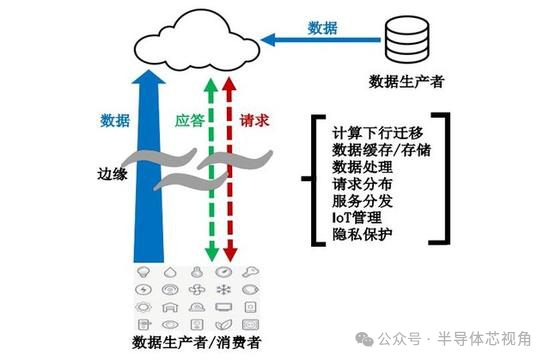
When surgical robots perform sub-millimeter precision operations, a 0.1-second delay in cloud data transmission can pose a fatal risk—this is precisely the critical shortcoming of traditional robots relying on cloud computing. General-purpose robots need to run inference AI, generative AI, and multimodal models simultaneously, processing data from multiple sensors such as cameras and acoustic radars, requiring massive data processing to be completed in an extremely short time. However, the latency and instability of cloud computing have become the biggest obstacles to real-time decision-making in robots.
The emergence of Jetson Thor has completely restructured the edge computing paradigm. As a chip designed specifically for edge generative inference, it achieves the edge deployment of Transformer models for the first time, reducing cloud dependency by 90% and enhancing data security to ISO 21434 standards. Through Holoscan Sensor Bridge technology, sensor data fusion latency is compressed to the microsecond level, enabling robots to process multimodal inputs such as vision and voice in real-time. Previously, humanoid robot loads that required two or more Orin chips can now be efficiently run on a single Thor chip, achieving a qualitative leap in computing power density.
Core Breakthrough: Thor supports the edge operation of large models such as LLMs and VLMs, achieving zero-shot object detection, video captioning, and other functions, with response latency reduced from seconds to milliseconds, meeting the operational needs of Boston Dynamics robots for 8 hours of continuous work.
On the commercial front, NVIDIA has simultaneously announced the developer kit pricing and mass production plans, further lowering the technical verification threshold for robot manufacturers. As the cost of edge computing continues to optimize, Thor is driving robots from laboratory prototypes to large-scale commercial use.
Chinese Industry Practice: From Technical Adaptation to Scene Implementation
Leading Enterprises’ Early Layout
In the wave of explosive growth in the Chinese robotics industry, leading companies such as UBTECH and Yushutech have taken the lead in integrating NVIDIA Jetson Thor into their core product lines, showcasing the “Chinese power” in the global industrial chain through deep integration of technological breakthroughs and scene implementation.
UBTECH: Collective Intelligence Drives Multi-Scene Breakthroughs
At the 2025 World Robot Conference (WRC 2025), the Walker S2 exhibited by UBTECH attracted industry attention—this industrial-grade humanoid robot, standing 1.76 meters tall and possessing 52 degrees of freedom, is not only the world’s first product to achieve autonomous battery swapping but also constructs an AI dual-circulation system through Collective Brain Network 2.0 + Co-Agent Technology, achieving end-to-end “human-like eye” binocular stereo vision perception. Its self-developed fifth-generation dexterous hand weighs only 1.2 kg but has 19 active degrees of freedom and a gripping capacity of 10 kg. Coupled with the powerful computing power of Jetson Thor, it can perform sub-millimeter precision operations and multi-machine collaborative tasks. The full-size wheeled humanoid robot Cruzr S2, released simultaneously, integrates visual laser navigation and learning-based motion control, becoming an efficient solution for logistics and service scenarios.
Yushutech: Cost Control Opens Up the Consumer Market
Yushutech rewrites industry rules with a “high cost-performance” strategy: the third humanoid robot, Unitree R1, enters the market with a starting price of 39,900 yuan, featuring a lightweight body driven by 26 joints weighing 25 kg, and achieves a running speed of over 2 m/s with motion control algorithms optimized by Jetson Thor. The commercial results are particularly impressive: in 2025, the order volume for industrial robots surged by 220% year-on-year, with contract amounts exceeding 1.2 billion yuan; in 2024, sales of robotic dogs reached 23,700 units, accounting for nearly 70% of the global market share, and 1,500 humanoid robots were delivered, confirming the market potential of technology accessibility.
Technological Empowerment Core Breakthroughs
- UBTECH: Jetson Thor supports the Collective Brain Network 2.0 to achieve multi-machine collaboration, enhancing the environmental response speed by 40% through the AI dual-circulation system.
- Yushutech: By optimizing the energy efficiency ratio with Thor, the hardware cost of humanoid robots has been reduced by 35%, promoting the popularization of the consumer market.
From industrial collaboration to home services, Chinese companies are relying on Jetson Thor to build a closed loop of “algorithm-hardware-scene”.
Policy and Ecological Synergy Effects
The explosive growth of the Chinese robotics industry stems from the triple force of policy guidance, market drive, and ecological synergy. At the national level, the Ministry of Industry and Information Technology’s “Guiding Opinions on the Innovative Development of Humanoid Robots” clearly outlines a “dual-stage goal”: to cultivate 2-3 global ecological enterprises by 2025, achieving breakthroughs in key technologies such as “brain, small brain, and limbs”; by 2027, the localization rate of core components will exceed 80%, building a safe and reliable industrial chain system. Local governments are also making efforts, with cities like Beijing, Shenzhen, and Shanghai launching intelligent embodied industry plans. Beijing plans to cultivate 50 core enterprises within three years, while Shanghai aims for the core industry scale to exceed 50 billion yuan by 2027, forming a “central + local” policy matrix.
The market demand side has already shown strong potential: by 2025, domestic humanoid robots are expected to ship 18,000 units in small batches, corresponding to a potential demand of about 22,000 Jetson Thor chips; combined with Robotaxi and medical scenarios, the annual demand for computing power chips will exceed 43,000 units, providing a “training ground” for technology implementation.
In terms of ecological synergy, companies represented by UBTECH are practicing the path of “technology introduction – digestion and absorption – independent innovation”: jointly launching the “Tian Gong + Kai Wu” ecosystem with the Beijing Humanoid Robot Innovation Center, establishing a 10 million yuan research fund, and co-building an algorithm research system with universities. Their “Tian Gong Xing Zhe” has already received over 100 intention orders, demonstrating the upgrade capability from “technical adaptation” to “scene definition”. This closed loop of “policy support – market traction – ecological self-sustaining” is accelerating the transition of the Chinese robotics industry from “catching up” to “running alongside”.
Core Synergy Points: The national 148 billion yuan manufacturing transformation and upgrading fund’s second phase focuses on the robotics field, local governments provide scene implementation support, and enterprises quickly accumulate experience through international technology cooperation (such as the application of Jetson Thor), forming a positive cycle of “funding – scene – technology”.
Industry Impact and Market Prospects: Computing Power Restructures the Robotics Value Chain
Technical Trends: The Fusion of Generative AI and Embodied Intelligence
Generative AI is becoming the core engine for breakthroughs in embodied intelligence, reconstructing the environmental adaptability boundaries of robots through multimodal perception fusion and autonomous learning capabilities. It not only achieves real-time collaboration of multimodal data such as vision, language, and force control but also accelerates algorithm iteration through digital twin simulation technology, improving efficiency by over 30% in scenarios such as collaborative industrial manufacturing, precision control in medical surgeries, and precise operations in agricultural automation.
The computing power revolution drives a leap in design paradigms. MIT has utilized diffusion models to optimize the structure of micro-jumping robots, autonomously generating breakthrough physical solutions that increase jumping height by 41% to 61 cm, while the landing failure rate plummets by 84%, validating the unique value of generative AI in breaking physical limits. This “AI design – simulation verification – physical landing” model is becoming a new paradigm for robot R&D.
Generative AI Empowers the Robot Capability Map• Multimodal Interaction: Integrating visual, language, and force control data to enhance environmental adaptability.• Simulation Training: Digital twin technology reduces physical testing costs and accelerates algorithm iteration.• Structural Optimization: Autonomously generating innovative physical solutions to break traditional design bottlenecks.• Collective Collaboration: This field’s intelligent technology enables efficient collaboration among multiple robots.
NVIDIA Jetson Thor builds a technical closed loop between edge AI and physical robots by optimizing mainstream large models such as Cosmos Reasoner, DeepSeek, and Llama. Coupled with the Remembr open-source memory system, robots can infer decisions based on environmental information during long-term deployment, clearing the barriers of computing power adaptation and context processing for general-purpose robots.
Market Landscape: From Technological Leadership to Ecological Dominance
The global robotics computing platform market is expanding steadily, with a projected compound annual growth rate of 5.9% from 2024 to 2029, growing from $9.8 billion to $13 billion. In this arena, NVIDIA has built a solid ecological barrier through the Jetson series—currently boasting 2.2 million developers and over 7,000 enterprise users, the Orin series attracted 1,000 customers and 150 partners within just six months of its release, forming a positive cycle of “technology – developers – industrial applications”.
China has demonstrated strong innovative vitality in the robotics field, with humanoid robot-related patent applications reaching 5,688 in the past five years, leading globally, while Yushutech’s robotic dogs lead the quadruped robot sector with a 69.75% global market share.
We are deep observers penetrating the technological fog anchored by chips. Focusing on hardcore analysis of chip technology, tracking global production capacity and policy dynamics, and collecting real-world stories from engineers. We deconstruct industries with technical details and connect ecosystems with warmth—understanding the industrial code of each chip, remember to follow us!