A recent study provides an in-depth overview of the latest advancements in infrared sensor technology, focusing on new materials, enhanced detection capabilities, and the expansion of this technology in industrial, medical, security, and environmental applications. The study explores how quantum dots, graphene, and novel nanomaterials are revolutionizing the field of infrared detectors, laying the groundwork for more efficient and multifunctional sensor systems.
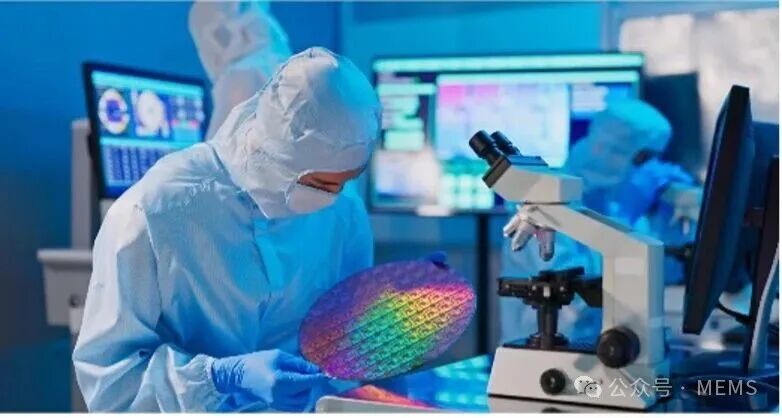
Innovative semiconductor materials for infrared sensors
After three generations of development, infrared sensor technology has made significant progress. According to MEMS Consulting, a recent study conducted by research teams from MAT4NRG in Germany, KU Leuven in Belgium, and the National Technical University of Athens in Greece provides a comprehensive review of the field of infrared sensors. The study, titled “IR Sensors, Related Materials, and Applications,” was published in the Sensors journal and emphasizes the core role of emerging materials in enhancing the performance of infrared sensors and expanding market applications.
The Expanding Role of Infrared Sensors
Infrared sensors can detect radiation beyond the visible spectrum, playing a critical role in various fields such as thermal imaging, security, medical diagnostics, environmental monitoring, and space exploration. The research indicates that infrared radiation is divided into four frequency bands: short-wave infrared (SWIR, 1~3µm), mid-wave infrared (MWIR, 3~5µm), long-wave infrared (LWIR, 8~12µm), and very long-wave infrared (VLWIR, >12µm). Each band has specific applications, with mid-wave and long-wave infrared being particularly important in thermal imaging and monitoring technologies.
Traditional infrared detection relies on semiconductor materials such as mercury cadmium telluride (MCT) and indium antimonide (InSb), as well as quantum well infrared photodetectors (QWIP). However, the study emphasizes that breakthroughs in nanotechnology and quantum materials are reshaping this field, not only enhancing the performance of infrared sensors but also giving rise to many new functionalities.
Emerging Materials Transforming Infrared Sensing
The study highlights that new semiconductor materials will be the core driving force behind the future development of infrared detection technology, specifically including the following categories:
· Quantum Dot Infrared Photodetectors (QDIP): Quantum dots (QD) possess unique electronic properties that can significantly enhance the sensitivity of infrared sensors, reduce dark current, and achieve multi-color detection capabilities.
· Graphene and Two-Dimensional Materials: Graphene and transition metal dichalcogenides (TMD) exhibit high carrier mobility and tunable electronic properties, providing possibilities for developing “low cooling requirement, high-performance” infrared detectors.
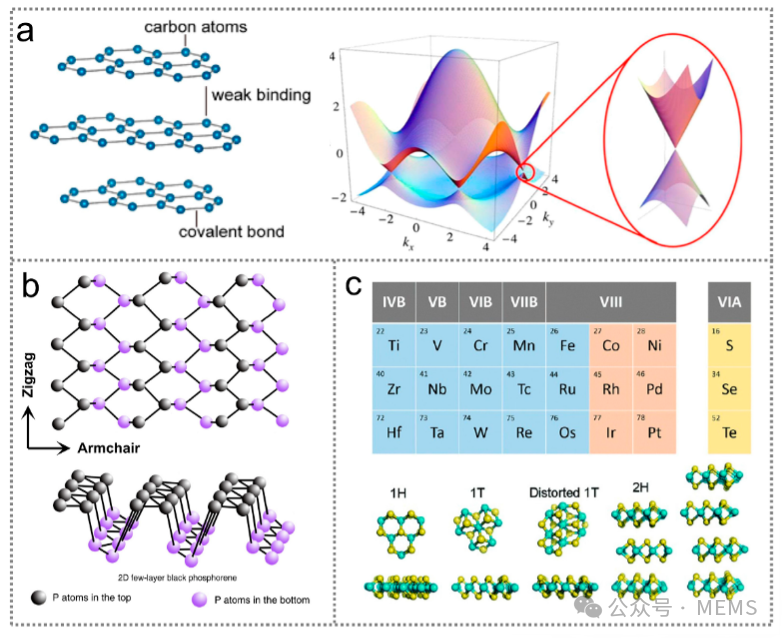
Two-dimensional materials for infrared sensors: (a) Atomic structure and band structure of graphene; (b) Atomic structure of black phosphorus (BP); (c) Constituent elements and structure of transition metal sulfide compounds.
· Colloidal Quantum Dots (CQD) and Type II Superlattices: Compared to traditional bulk semiconductors, these materials have stronger infrared absorption capabilities and can operate stably in higher temperature environments.
Despite the breakthroughs achieved with the above technologies, the research also reveals current challenges: for example, the quantum efficiency of quantum dot infrared detectors is relatively low, and the fabrication of large-area graphene-based detectors is quite difficult. However, ongoing research on “material uniformity optimization” and “nanofabrication technology upgrades” is expected to gradually overcome these challenges.
Technological Advances in Infrared Sensor Structure and Function
This study categorizes infrared sensors into two main types based on detection principles: photon detectors and thermal detectors. Photon detectors, such as photoconductive and photovoltaic detectors, generate an electrical response when photons interact with carriers; thermal detectors, such as pyroelectric and thermopile detectors, sense infrared radiation by detecting changes in material properties caused by heat generated from absorbed radiation.
Additionally, the study discusses the differences between active and passive infrared sensors: active infrared sensors can autonomously emit and detect infrared light, making them valuable in applications such as robotic proximity sensing and security monitoring; while passive infrared (PIR) sensors, commonly used for motion detection, do not require active signal emission and rely entirely on the infrared radiation emitted by objects themselves to operate.
Future Outlook: Artificial Intelligence (AI) and Biomimetic Sensor Systems
The study outlines the future vision for infrared sensors, where advanced electronic technologies and artificial intelligence will play a core supporting role in upgrading sensor functionalities. AI-driven adaptive sensor systems are expected to enhance real-time image processing capabilities, optimize signal analysis accuracy, and achieve biomimetic solutions—such as single-pixel multispectral detection technology.
Furthermore, researchers anticipate significant breakthroughs in the miniaturization and cost control of infrared sensors, which will enable high-performance infrared detection technology to be more widely applied in consumer electronics, medical diagnostics, and environmental monitoring. At the same time, innovations in multispectral and hyperspectral imaging technologies are expected to further expand their applications in agriculture, food safety, and climate science.
Driven by breakthroughs in quantum materials, nanotechnology, and integrated artificial intelligence technologies, infrared sensor technology is undergoing a revolutionary transformation. Although material optimization and large-scale fabrication remain current challenges, the future of infrared sensor technology shows a clear outlook: continuous improvement in sensitivity, gradual reduction in costs, and expanding application scenarios will play an increasingly important role in the technological innovation processes across various industries.