The traditional fiduciary duty of directors requires them to act in the best interests of the company and its shareholders. However, the Nexperia incident illustrates that, in special circumstances involving national strategic interests and the stability of critical supply chains, the scope of directors’ duties has been publicly extended and reshaped by external forces—whether administrative or judicial. This marks a blurring of the boundaries of corporate governance and suggests that, in an increasingly complex global geopolitical context, multinational corporate boards must face scrutiny from a broader range of stakeholders and public interests.
1. The Nexperia Incident: National Security vs. Corporate Governance
Recently, a ruling by a Dutch court regarding the internal governance of global semiconductor giant Nexperia has sent shockwaves through the business community, pushing the traditional core issue of directors’ fiduciary duties to the forefront of the intersection with national security and social responsibility.
Nexperia, headquartered in the Netherlands, was acquired by China’s Wingtech Technology. The core of the Nexperia incident revolves around two independent yet closely related actions: first, the Dutch government threatened to take over Nexperia due to allegations that its CEO improperly transferred technology to foreign entities (with Wingtech being placed on the U.S. Commerce Department’s Entity List in 2024), jeopardizing the strategic autonomy and supply security of the Netherlands and Europe; second, the Amsterdam Court of Appeal’s corporate court, based on suspicions of “improper governance and business conduct,” suspended the CEO’s position and appointed an interim non-executive director while transferring the company’s shares to a trustee for management.
Although the court’s ruling is legally independent of the government’s administrative orders, its core rationale—recognition of “improper governance”—is essentially a judicial review of the fulfillment of directors’ fiduciary duties. The cumulative effect of these actions clearly demonstrates the deep intervention of the court and government into the internal governance of a multinational company under the guise of national security or social responsibility (ensuring the social responsibility of critical chip supply).
2. The Publicization of Directors’ Fiduciary Duties Will Become an International Investment Trend
The deeper significance of the Nexperia incident lies in its revelation that, under the global wave of ESG (Environmental, Social, and Governance) investment concepts, directors’ fiduciary duties are undergoing a fundamental shift from “shareholder primacy” to “stakeholder capitalism.” From the perspective of ESG, the intervention of the Dutch court and government is an extreme manifestation of this publicization trend in corporate governance.
Traditional corporate law theory holds that directors’ fiduciary duties, namely the duty of loyalty and the duty of care, primarily aim at maximizing the interests of the company and its shareholders. However, the rise of ESG investment concepts requires companies to incorporate environmental (E), social (S), and governance (G) factors into their core strategies and daily operations. In the Nexperia incident, the court’s ruling on “improper governance” and the government’s focus on “supply security” directly touch upon the “G” and “S” elements of ESG.
First, governance (G) is no longer merely about internal procedural compliance; it also concerns the public acceptability and transparency of board decisions. The corporate court’s suspension of the CEO was based on suspicions of “improper business conduct,” indicating that judicial institutions are beginning to scrutinize directors’ diligence and loyalty against stricter standards that transcend short-term financial performance. When directors’ actions are perceived as potentially harming the company’s long-term stability, reputation, or even the public interest of the operating location, they may be deemed to violate fiduciary duties, even if they formally align with shareholders’ short-term interests.
Second, the weight of social (S) factors has significantly increased. The chips produced by Nexperia are critical components for the European automotive industry and consumer electronics, and their supply stability has been elevated by the Dutch government to the level of “strategic autonomy and supply security.” This indicates that, for multinational enterprises in critical infrastructure or strategic industries, their social responsibilities are no longer optional but an inherent part of directors’ fiduciary duties. The obligation of directors to protect company assets and technology from improper transfer is thus endowed with an extended meaning of safeguarding national and regional public interests.
This publicization of directors’ fiduciary duties is an inevitable trend in the governance of multinational enterprises. In the context of escalating global geopolitical tensions, worsening climate change, and increasing social inequality, governments and regulatory bodies are increasingly inclined to use legal and policy tools to internalize external costs and require companies to assume broader social responsibilities. For example, the EU’s Corporate Sustainability Due Diligence Directive (CSDDD) mandates that companies bear legal responsibility for their global and environmental impacts.
3. Conclusion: Reassessing Fiduciary Duties Through the Lens of ESG
For directors of multinational enterprises, fulfilling fiduciary duties is no longer merely about being accountable to the parent company or controlling shareholders; it requires seeking a dynamic balance among shareholder interests, long-term corporate value, public interests of the operating location, national security, and ESG standards. The Nexperia incident serves as a strong signal: in companies involved with critical technologies and strategic resources, any actions perceived as detrimental to local public interests or improper governance may trigger deep judicial and administrative intervention, effectively publicizing directors’ fiduciary duties and making them a benchmark for measuring corporate global citizenship responsibilities.
The Nexperia incident serves as a wake-up call for all multinational enterprises, especially those involved in critical technologies and strategic resources. In the face of the publicization of directors’ fiduciary duties and the overlay of geopolitical risks, companies must proactively adjust their corporate governance and compliance systems, focusing on the independence and transparency of multinational subsidiary governance, deeply integrating ESG concepts into the fulfillment of fiduciary duties, and establishing crisis communication and legal response plans.
The Nexperia incident is a mirror reflecting the complexity of multinational corporate governance in the context of globalization. Only by combining traditional fiduciary duties with emerging considerations of ESG, national security, and other public interests can sustainable development be achieved in an increasingly challenging international environment.
Thanks to Beijing Dingxiang Law Firm for providing legal support!

Certificate Display

Product Display
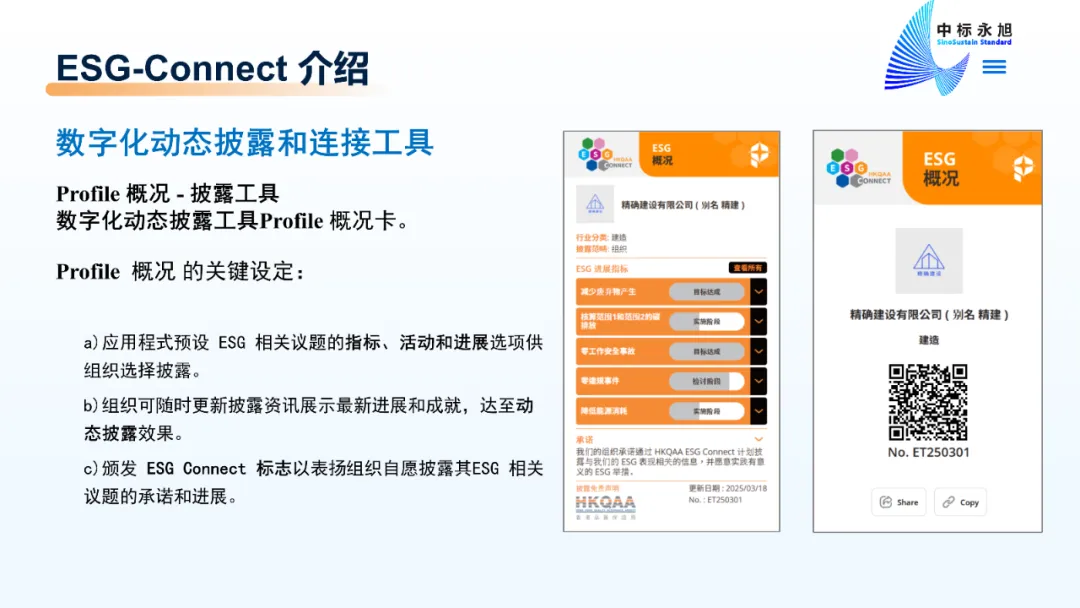
Climate Risk Financial Impact Assessment and Compliance Solutions
Previous Excellent Articles
| From Global Experience to Sustainable Bubble Mart: The ESG Transformation Path of the Trend Toy Industry | ESG Perspectives | China’s Cross-Border E-commerce Fined 150 Million Euros by France, Analyzing Electronic Privacy Protection in the ESG Framework |
| $63 Billion “ESG Poison Pill”: How Bayer’s Acquisition of Monsanto Redefined the Cost of Corporate Sustainability | Going Global—How Much Do You Know About Cross-Border Data Compliance with GDPR, CCPA, COPPA? |
| Winning Bid Yongxu Partners with Hong Kong Quality Assurance Agency to Start a New Journey of International Standardization Registration, Injecting Strong Momentum into Industry Development! | Winning Bid Yongxu Awarded the “Hong Kong Green and Sustainable Contribution Award 2025” |
| 2025 Sustainable Development Innovation Forum and Beijing Sustainable Information Disclosure and Application Pilot Promotion Meeting Successfully Held | Leading Sustainable Development Talent Building, Beijing’s First ESG High-End Accounting Talent Training Program |