On November 19, the global sensation surrounding the “Netherlands’ seizure of Nexperia” finally reached a turning point.
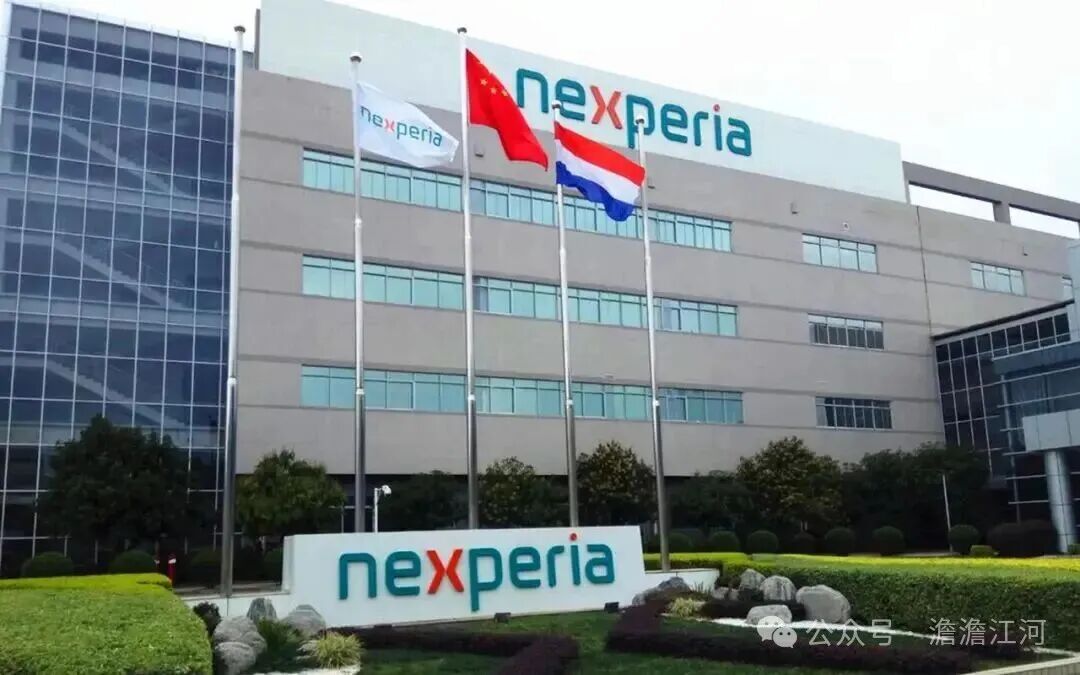
Dutch Minister of Economic Affairs, Karremans, publicly announced on the X platform that administrative intervention in Nexperia would be suspended. Upon hearing the news, many exclaimed, “China has won,” but peeling back the surface of this apparent easing reveals that the multinational game surrounding the chip supply chain still has a long way to go before a true conclusion is reached—The Netherlands is not conceding; it has merely found a more dignified way to “pause its attack.”
The shift from the Netherlands’ aggressive stance in October to its current willingness to ease pressure is closely tied to the power struggle between China and the United States, and the complexity of this chess game far exceeds ordinary expectations.
First, let’s discuss the United States, the “originator” of this situation.
When the Netherlands initially sought control over Nexperia, it proclaimed adherence to the U.S. “50% penetration principle”—meaning that if an independent company is more than 50% owned by entities on the U.S. Entity List, it would be subject to sanctions. The logic from the Dutch side sounds quite “reasonable”: if they do not take over Nexperia, the company would be dragged down by its 99% Chinese parent company, Wingtech Technology, losing its international market; only by transforming it into a “pure Dutch company” could they avoid sanctions.
However, this is merely a self-deceiving excuse. As early as 2023, before the U.S. penetration order was even a consideration, the Netherlands had already been eyeing Nexperia, repeatedly demanding a restructuring of its management to transfer core power to the Dutch side, only to be firmly resisted by Wingtech Technology. When the U.S. issued the penetration order on September 29, 2024, it conveniently provided the Netherlands with a “justifiable” opportunity to intervene.
But the Netherlands never anticipated that on October 31, the U.S. and China would reach the “Busan Consensus,” and the U.S. would suddenly announce a suspension of the enforcement of the penetration rules. In an instant, the Netherlands’ “justifiable reason” collapsed: continuing to regulate Nexperia would be without justification; conceding would mean admitting to the world that their previous actions were unreasonable. In the following 20 days, the Netherlands maintained a “hardline” stance publicly while privately communicating frequently with the Chinese side, with one core demand: to find a way to resolve the issue without losing face.
During this period, the Netherlands exemplified the phrase “hard on the outside, soft on the inside.” On November 13, Karremans made bold statements to a Guardian reporter: “Even if given another chance, I would still make the same decision.” Yet just a week later, he slapped his own face by announcing the suspension of intervention in Nexperia—this is the reality of international politics, where strength speaks louder than words.
Now, looking at China’s response, it can be described as a textbook-level maneuver.
On September 30, just as the Netherlands took action, China precisely retaliated by announcing export controls on Nexperia’s finished chips. This move struck directly at the Netherlands’ Achilles’ heel: although Nexperia is headquartered in the Netherlands, nearly 80% of its products rely on China’s packaging and testing capacity. One in every four cars globally uses Nexperia’s power chips, and the “final process” for these chips is completed in China.
Once China’s export controls were announced, the global automotive supply chain was thrown into chaos, with German car manufacturers being the most affected. It is important to note that the automotive industry accounts for 8% of Germany’s GDP, and giants like Volkswagen, BMW, and Mercedes-Benz rely on Nexperia chips for over 60% of their production. A chip supply interruption means production line shutdowns and order defaults, which is a loss that Germany cannot afford. The Netherlands initially thought it could rely on the EU for support, but once China’s control order was issued, the Netherlands panicked—failing to deliver would incur exorbitant penalties for breach of contract, while global customer orders continued to flood in, leaving them with an “empty shell headquarters” but unable to provide qualified products, making the business untenable.
During this time, the Netherlands also attempted some tricks: suspending salaries for Nexperia’s Chinese employees, cutting off supplies of certain wafer materials, and even accusing Nexperia China of owing payments, but these small tactics were all neutralized by the Chinese side. Chinese companies stabilized domestic production capacity while actively communicating with global car manufacturers, and what truly forced the Netherlands to relent was the “exemption policy” introduced by China after the U.S.-China consensus on October 31—”We welcome companies facing actual difficulties to contact the Ministry of Commerce or local commerce authorities in a timely manner, and we will comprehensively consider the actual situation of the companies and grant exemptions for eligible exports.”
Many people are puzzled: why did China proactively offer exemptions when the Netherlands had not fully compromised? This is precisely China’s brilliance; this move can be described as “cutting off the firewood at the bottom,” directly undermining the foundation of the Netherlands’ strategy.
First, the exemption is not a “one-size-fits-all” approach, but rather a “tailored response.” China’s countermeasures have never been indiscriminate; they are precise strikes against the originators while avoiding collateral damage. German car manufacturers, who had been pressuring China alongside the Netherlands, suddenly lost their resolve once China’s exemption policy was announced—who would want to wade through muddy waters with the Netherlands as long as they could obtain chips? The German Chancellor Merz, who was still shouting on October 23 that “China’s controls are unacceptable,” fell silent by November, and the EU’s united pressure campaign quickly crumbled, leaving the Netherlands isolated.
Secondly, this policy directly cut off the “financial lifeline” of Nexperia’s Dutch headquarters. The previous supply process was: car manufacturers signed contracts and made payments to Nexperia’s Dutch headquarters, which then issued production instructions to the Chinese factory, with the Chinese factory acting as a “worker” without the qualification to directly connect with customers. However, China’s exemption policy effectively communicated to global car manufacturers: “If you want chips, you no longer need to go through the Netherlands; you can deal directly with the Chinese factory, signing contracts and making payments in one go, and you will receive supplies immediately.”
As a result, Nexperia’s Dutch headquarters became a complete “empty shell”—without orders, without cash flow, left with only a brand name. Even if they seized “control,” it would merely be a worthless shell. The Netherlands, which had gone to great lengths to seize what was a €9 billion premium asset, was not interested in a burden that only costs money without generating profit. When China held onto the core business and customers, the Netherlands clinging to an empty shell became a joke, forcing them to actively suspend their intervention.
However, the situation is not over yet; the Netherlands’ “suspension” is by no means a “return” and hides greater calculations.
The statement from China’s Ministry of Commerce is very clear: “China welcomes the Netherlands’ active suspension of the administrative order, but there is still a gap from resolving the root causes of the global semiconductor supply chain turmoil and chaos, which is the ‘repeal of the administrative order.'” The underlying message is: you have only temporarily halted your actions, not fully admitted your mistakes, and we will not let our guard down.
This involves two key orders related to the Netherlands’ seizure of Nexperia: one is the suspension, and the other is still in effect, which is the core of the issue.
The first order is the ministerial order issued by the Dutch Minister of Economic Affairs on September 30, which requires that Nexperia’s 30 global affiliates cannot adjust core elements such as assets, intellectual property, and personnel within a year, effectively freezing Nexperia’s global operations. Karremans’ current suspension pertains to this ministerial order. This order itself has no judicial binding force; suspending it can demonstrate a “compromising posture” without incurring substantial costs, allowing the Netherlands to exchange a “non-critical concession” for breathing space.
The second order is the judicial ruling from the Dutch corporate court on October 7, which is the real “hard nut to crack.” This ruling directly suspended the position of the Chinese CEO Zhang Xuezheng and placed the 99% stake held by the Chinese side under third-party custody, effectively stripping Wingtech Technology of its control over Nexperia from a legal standpoint. More critically, this judicial ruling remains fully in effect and is not affected by the suspension of the ministerial order—so long as this ruling is not revoked, Wingtech Technology cannot truly regain management rights over Nexperia, and the Netherlands still holds core decision-making power.
The Netherlands is calculating more shrewdly than anyone else: suspending a ministerial order that has no legal effect, preserving the face of “judicial independence,” while continuing to control Nexperia through an effective judicial ruling, allowing for flexible maneuvering. More insidiously, Karremans has also left a backdoor, publicly hinting that “if Nexperia’s production or intellectual property is threatened, the Netherlands has the right to resume intervention,” which effectively gives them an excuse to “turn back” at any time.
In the long run, the essence of this game is the power restructuring of the semiconductor supply chain among China, the U.S., and Europe. The Netherlands’ compromise is merely a phase result, and many variables remain for the future.
First, the trend of “securitization” of economic and trade relations with China in Europe is becoming increasingly evident. The Netherlands’ concession this time is more a reluctant response to changes in U.S. rules and pressure from German car manufacturers rather than a genuine willingness to cooperate with China. Some analysts point out that in the future, Europe will increasingly bind economic and trade issues with “national security,” and key industry chain companies like Nexperia will become targets for Europe to “control,” increasing the risks for Chinese companies’ overseas investments.
Secondly, the U.S. attitude remains the biggest variable. The U.S. suspension of the penetration rules is a phase compromise in the U.S.-China game and does not represent a long-term relaxation of pressure on China’s semiconductor industry. The U.S. has explicitly demanded that the Netherlands replace the Chinese management of Nexperia and adjust its governance structure; should the U.S.-China game escalate in the future, the U.S. is likely to reinstate relevant rules, and the Netherlands may again follow suit, putting Nexperia at risk of “second seizure.”
Ultimately, the Netherlands’ current suspension of intervention is merely a “graceful retreat” rather than a complete surrender. This time, China has won a critical battle in the supply chain game through precise export controls and flexible exemption strategies, preserving core production capacity while dismantling the opponent’s alliance, showcasing the wisdom of a mature great power in strategic maneuvering. However, to fully regain control over Nexperia and strengthen the safety net for Chinese companies’ overseas investments, two hard battles remain: one is to push the Netherlands to revoke the erroneous judicial ruling and truly restore Chinese management rights; the other is to remain vigilant against future joint actions from the U.S. and the Netherlands, proactively building a more resilient industrial chain system.
The game over Nexperia is just a microcosm of the challenges faced by China’s high-end manufacturing industry as it “goes global.” In the context of global industrial chain restructuring and intensified great power competition, such confrontations will only increase. But this also precisely indicates that Chinese companies have transitioned from “purely making money” to “participating in the formulation of global rules,” and China’s national strength is becoming the strongest backing for enterprises. This battle over chips and the industrial chain is far from reaching its conclusion, and the true victory will undoubtedly belong to those countries and enterprises that can both safeguard core technologies and adeptly employ strategic wisdom.